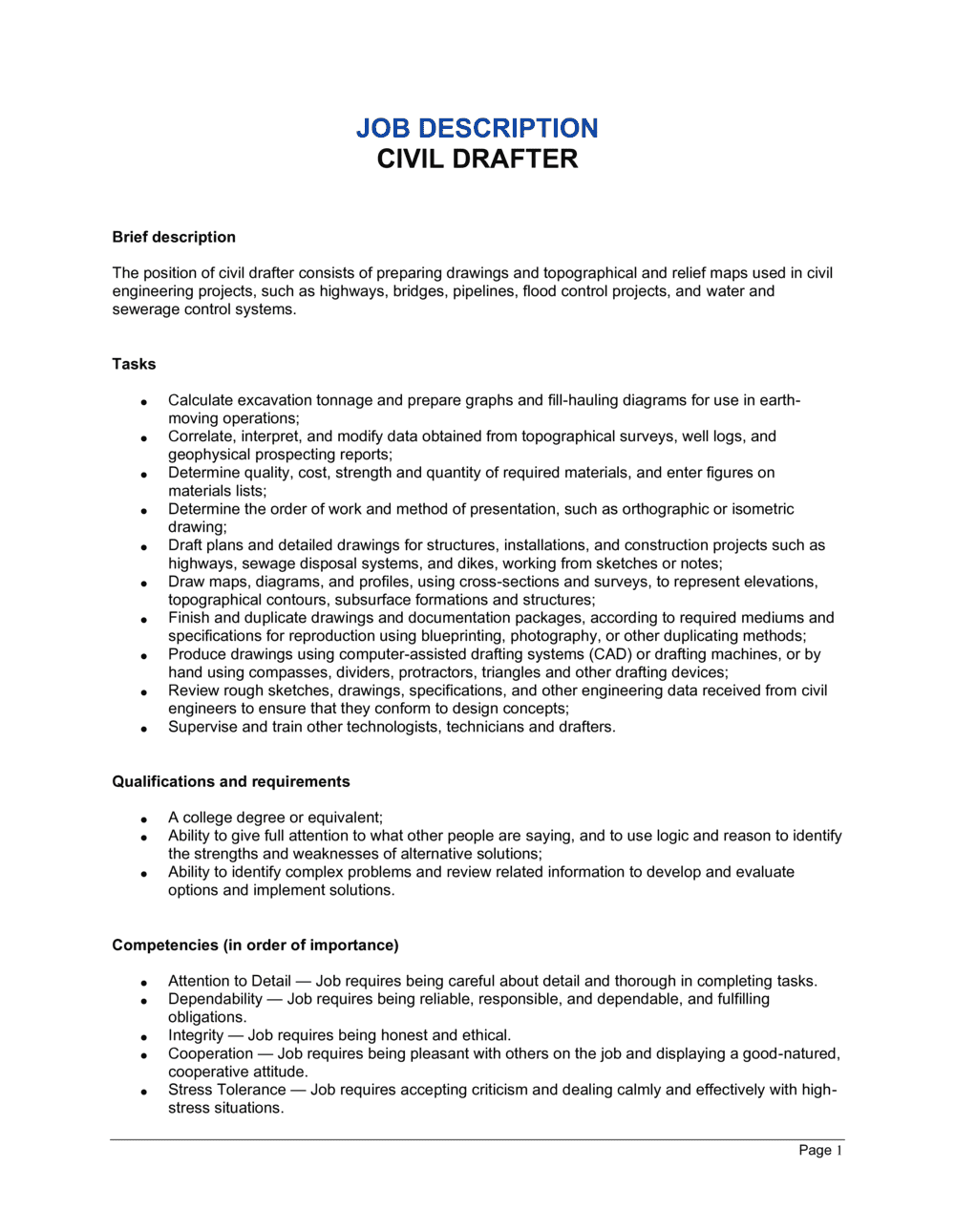
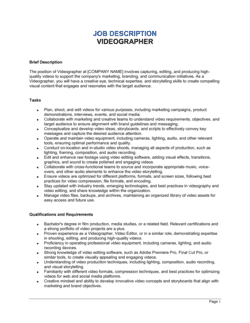
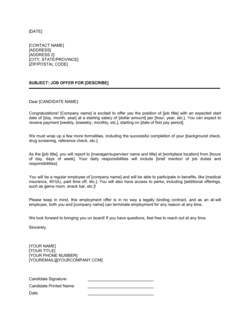
Civil Drafter Job Description Template

Free Word download β€’ Edit online β€’ Save & share with Drive β€’ Export to PDF

2 pagesβ€’20–30 min to fillβ€’Difficulty: Standardβ€’Signature requiredβ€’Legal review recommended
Learn more ↓
FreeCivil Drafter Job Description Template

At a glance

What it is
A Civil Drafter Job Description is a formal binding document that defines the scope of work, required qualifications, reporting structure, and performance expectations for a civil drafting role within an engineering or construction organization. This free Word download is ready to edit online and export as PDF for posting on job boards, attaching to offer letters, or filing as part of an employment or contractor agreement.
When you need it
Use it when hiring, promoting, or reclassifying a civil drafter β€” whether full-time, part-time, or contract β€” and whenever a documented record of role expectations is needed for performance management or compensation benchmarking.
What's inside
Position title and department, reporting structure, core duties and deliverables, required and preferred qualifications, software and tool proficiencies, physical and environmental working conditions, compensation range, and an acknowledgment signature block for employer and employee.

What is a Civil Drafter Job Description?

A Civil Drafter Job Description is a formal document that defines the scope of work, minimum qualifications, software proficiencies, reporting structure, physical requirements, and compensation parameters for a civil drafting role within an engineering, construction, or land development organization. When signed by both the hiring manager and the employee, it becomes a legally significant record of agreed-upon performance expectations β€” one that courts, HR auditors, and regulatory agencies reference in wage disputes, ADA accommodation analyses, and wrongful-termination proceedings. This free Word download covers every essential clause, from FLSA classification and essential-functions language to pay-range transparency and acknowledgment signatures.

Why You Need This Document

Operating without a documented civil drafter job description exposes an engineering firm to several concrete, costly risks simultaneously. Without FLSA classification language, a misclassified drafter can file a wage-and-hour complaint covering up to three years of unpaid overtime β€” a figure that compounds quickly at professional hourly rates. Without documented physical requirements and ADA language, the employer has no legal baseline for evaluating accommodation requests, making denial of any request difficult to defend. Without a signed acknowledgment on file, performance-management conversations devolve into credibility disputes over what the employee was ever asked to do. In states with active pay-transparency enforcement β€” Colorado, California, New York, and Washington β€” publishing a posting without a salary range generates regulatory fines per violation. This template closes all four gaps in under 30 minutes, and its signature block creates the contemporaneous paper trail that HR attorneys consistently identify as the single most valuable document in employment litigation.

Which variant fits your situation?

If your situation is…Use this template
Hiring a full-time salaried civil drafter with full benefitsCivil Drafter Job Description (Full-Time)
Engaging a freelance or contract drafter for a specific projectIndependent Contractor Agreement
Hiring a drafter with structural or architectural focusArchitectural Drafter Job Description
Posting a senior or lead drafter role with supervisory dutiesSenior Civil Drafter Job Description
Onboarding a drafter into a broader engineering team with defined IPEmployment Agreement (Engineering)
Documenting a part-time or intern drafting rolePart-Time Employment Contract
Creating a performance review framework tied to this roleEmployee Performance Review

Common mistakes to avoid

❌ Misclassifying the drafter as FLSA exempt

Why it matters: Civil drafters who execute drawings under supervision typically do not meet the FLSA learned-professional or administrative exemptions. Misclassification results in unpaid overtime liability that can accrue over three years.

Fix: Apply the DOL's duties test before classifying. If the drafter does not exercise independent judgment on matters of significance β€” and most production drafters do not β€” classify as non-exempt and pay overtime accordingly.

❌ Setting education requirements above what the role actually demands

Why it matters: Requiring a bachelor's degree for a role where an associate's degree or certificate holder is fully qualified may constitute disparate-impact discrimination under Title VII, as it can screen out protected-class candidates at a higher rate.

Fix: Tie the minimum education requirement to the actual complexity of the work. For production civil drafting, a two-year technical degree or equivalent certificate is defensible; a four-year requirement is not unless supervisory or PE-support duties are included.

❌ Omitting physical requirements and ADA language

Why it matters: Without documented physical requirements, the employer has no baseline for evaluating accommodation requests β€” and no legal defense if it denies an accommodation it claims the role cannot absorb.

Fix: Include specific physical demands with measurable thresholds (e.g., 'sitting for up to 7 hours per day,' 'lifting up to 30 lbs') and add standard ADA language confirming the company will consider reasonable accommodation.

❌ Publishing a pay range that violates state pay-transparency laws

Why it matters: Colorado, California, New York, and Washington require salary ranges in job postings. Omitting or falsifying the range triggers regulatory complaints and fines of up to $10,000 per violation in some states.

Fix: Research the pay-transparency requirements for every state where the posting will be visible β€” remote roles are subject to the law in any state where candidates are being recruited, not just where the employer is headquartered.

❌ Filing the job description separately from the employment contract

Why it matters: When a job description and employment contract contain conflicting duty language, courts in wrongful-termination cases often favor whichever document benefits the employee β€” creating unintended liability.

Fix: Cross-reference the job description by title and date in the employment contract, attach it as a Schedule A, and have the employee initial each document separately at signing.

❌ Using a generic drafter template without engineering-specific standards

Why it matters: A job description that omits the applicable drafting standards β€” DOT conventions, local municipality specifications, ASCE references β€” fails to put the employee on notice of the quality benchmarks against which their work will be evaluated.

Fix: Name the specific standards the drafter is expected to follow (e.g., 'ASCE 38-02 for subsurface utility engineering,' 'State DOT CAD standards') and include them in the essential duties section.

The 10 key clauses, explained

Position identification and department

In plain language: States the official job title, department, employment type (full-time, part-time, contract), FLSA classification, and the effective date of the description.

Sample language
Job Title: Civil Drafter | Department: [DEPARTMENT NAME] | Reports To: [TITLE] | FLSA Status: Non-Exempt | Employment Type: Full-Time | Effective Date: [DATE]

Common mistake: Omitting the FLSA classification. If the role is misclassified as exempt and the employee works overtime, the employer owes back pay at 1.5Γ— the regular rate plus potential penalties.

Position summary

In plain language: A 3–5 sentence overview of the role's purpose, what the drafter produces, and how the role contributes to the organization's engineering or project delivery function.

Sample language
The Civil Drafter prepares detailed technical drawings, plans, and maps for civil engineering projects under the direction of licensed engineers. This role is responsible for translating engineering concepts into accurate CAD drawings and supporting project delivery from design through construction documentation.

Common mistake: Writing the summary as a generic recruiting pitch rather than a functional description. Vague summaries fail ADA essential-functions analysis and create ambiguity in performance reviews.

Essential duties and responsibilities

In plain language: A detailed enumeration of the core tasks the employee is expected to perform regularly β€” these constitute the legally significant 'essential functions' of the role.

Sample language
Prepare, revise, and finalize civil engineering drawings including grading plans, site plans, road alignments, drainage layouts, and utility plans using AutoCAD and Civil 3D. Review drawings for accuracy and completeness against engineering specifications and applicable standards.

Common mistake: Using a single catch-all bullet point like 'performs other duties as assigned' as the only flexibility clause. Courts have upheld employees' refusals to perform tasks entirely absent from the description when the role is at a professional level.

Required qualifications

In plain language: States the minimum education, certifications, years of experience, and technical skills an applicant must possess to be considered for the role.

Sample language
Associate's degree or certificate in Civil Drafting, Civil Engineering Technology, or related field; minimum [X] years of experience with AutoCAD and/or Civil 3D; demonstrated ability to read and interpret engineering specifications and survey data.

Common mistake: Setting education requirements higher than the job actually demands β€” requiring a bachelor's degree for a role a certificate holder can perform exposes the employer to disparate-impact discrimination claims.

Preferred qualifications

In plain language: Lists additional skills, experience, or credentials that are desirable but not mandatory β€” used to differentiate candidates without excluding otherwise qualified applicants.

Sample language
Experience with [BIM SOFTWARE]; familiarity with [STATE/PROVINCE] DOT standards; CADD certification from the American Design Drafting Association (ADDA); experience on [PROJECT TYPE] projects valued over $[X]M.

Common mistake: Listing preferred qualifications that are effectively required in practice. If only candidates with the 'preferred' credential ever get hired, the distinction collapses and screening becomes legally indefensible.

Software and tools proficiency

In plain language: Specifies the exact software platforms, versions, and any proprietary internal tools the drafter must operate β€” forms the basis for skills-testing during hiring.

Sample language
Proficiency required in AutoCAD [VERSION] and Autodesk Civil 3D [VERSION]. Working knowledge of [PROJECT MANAGEMENT TOOL] and [FILE MANAGEMENT SYSTEM]. Familiarity with GIS platforms (e.g., ArcGIS) preferred.

Common mistake: Specifying a single software version so narrowly that a qualified candidate using a newer or older release is screened out automatically. State the platform and note version flexibility where the organization supports multiple releases.

Physical requirements and working conditions

In plain language: Describes the physical demands of the role β€” sitting, lifting, field visits β€” and the primary work environment, which is necessary for ADA reasonable accommodation analysis.

Sample language
Primarily sedentary office-based work at a CAD workstation for up to [X] hours per day. Occasional site visits requiring ability to traverse uneven terrain. Must be able to lift up to [X] lbs when transporting drawing sets or equipment.

Common mistake: Omitting physical requirements entirely. Without them, the employer cannot conduct a lawful ADA analysis when an applicant or employee requests accommodation for a drafting-related physical limitation.

Reporting structure and supervision

In plain language: Identifies who the drafter reports to, whether they supervise others, and the nature of oversight they receive β€” independent professional judgment vs. close supervision.

Sample language
Reports directly to [TITLE β€” e.g., Project Engineer / Engineering Manager]. Receives general supervision on standard tasks and closer oversight on new or complex project types. Does not supervise other employees in this role.

Common mistake: Describing the drafter as 'independent' in a supervisory sense when they actually work under an engineer's stamp β€” this can trigger licensing board scrutiny in jurisdictions where unsupervised technical work requires a PE license.

Compensation and benefits

In plain language: States the pay range, pay frequency, overtime eligibility, and a reference to the company's benefits program β€” keeping benefits at the category level to avoid amendment obligations when plans change.

Sample language
Salary Range: $[MIN] – $[MAX] per year, paid [bi-weekly / semi-monthly]. Eligible for overtime compensation at 1.5Γ— the regular rate for hours exceeding 40 per week. Eligible to participate in the Company's standard benefits program as in effect from time to time.

Common mistake: Publishing a pay range that doesn't comply with state or local pay-transparency laws. Colorado, New York, California, and Washington all require salary ranges in job postings β€” non-compliance triggers regulatory fines.

Acknowledgment and signature block

In plain language: A signed acknowledgment by both the employer representative and the employee confirming that the employee has received, read, and understood the job description.

Sample language
I acknowledge that I have received and reviewed this job description, understand its contents, and agree that it accurately reflects the essential functions and expectations of my position. Employee Signature: ___________ Date: [DATE] | Manager Signature: ___________ Date: [DATE]

Common mistake: Filing a signed job description separately from the employment contract so the two documents contradict each other on duties or hours. Keep both in the same personnel file and cross-reference them explicitly.

How to fill it out

  1. 1

    Enter the position and department details

    Fill in the official job title, department, FLSA classification (typically non-exempt for civil drafters below a supervisory level), employment type, and the date the description takes effect.

    πŸ’‘ Confirm the FLSA classification with payroll or HR before publishing β€” misclassifying a non-exempt drafter as exempt is one of the most common wage-and-hour violations in engineering firms.

  2. 2

    Write a clear position summary

    In 3–5 sentences, describe what the drafter produces, which engineering disciplines they support, and how the role connects to the organization's project delivery process.

    πŸ’‘ Avoid recruiting language like 'exciting opportunity' in the summary β€” this section is read by lawyers and HR auditors, not just candidates.

  3. 3

    List essential duties with specificity

    Enumerate each core task β€” grading plans, utility layouts, site plans, drawing revisions, red-line markups β€” as a separate bullet. Include the software platform and any applicable standards (e.g., DOT drafting standards, local municipality conventions).

    πŸ’‘ Mark duties as 'essential' vs. 'marginal' in the document if your organization performs ADA accommodation reviews β€” this distinction is legally significant.

  4. 4

    Set minimum and preferred qualifications separately

    List only genuinely required credentials as minimums. Move 'nice to have' skills β€” BIM experience, GIS familiarity, ADDA certification β€” to the preferred section so qualified candidates are not inadvertently screened out.

    πŸ’‘ Audit your last three hires for this role: if none of them had the stated minimum education, the requirement may not be defensible as a bona fide occupational qualification.

  5. 5

    Specify software versions and platforms precisely

    Name the exact CAD platforms and versions currently in use. If the organization is migrating between versions, note both and specify which is required at hire versus which will be trained.

    πŸ’‘ Include a brief note on internal file-naming and layer-standard conventions β€” this saves onboarding time and prevents deliverable rejections during the first project.

  6. 6

    Document physical requirements and work environment

    State the percentage of time spent at a workstation, whether field visits are required, and any lifting or mobility requirements with specific weight and distance thresholds.

    πŸ’‘ If the role involves field work even occasionally, include it β€” courts have found that employers cannot add unannounced physical demands to roles where none were disclosed at hire.

  7. 7

    Add the salary range and benefits reference

    Enter the pay range and pay frequency. Confirm the range complies with any state pay-transparency law applicable to the posting location. Reference benefits by category only β€” not by specific plan details.

    πŸ’‘ In states with pay-transparency requirements, the range must reflect what you will actually pay, not just the broadest possible band β€” regulators compare posted ranges against offer letters.

  8. 8

    Obtain signatures before or on day one

    Have both the hiring manager and the employee sign and date the acknowledgment block before or on the first day of work. File the signed copy in the employee's personnel file alongside the employment contract.

    πŸ’‘ A signed job description that predates or is contemporaneous with the employment contract is far stronger evidence in a wrongful-termination dispute than one signed weeks later.

Frequently asked questions

What does a civil drafter do?

A civil drafter prepares technical drawings and plans for civil engineering projects β€” including road alignments, grading plans, site layouts, drainage systems, utility corridors, and land subdivisions. They work primarily in CAD software such as AutoCAD and Civil 3D, translating engineer-approved concepts into precise, construction-ready documents that meet applicable drafting standards and local regulatory requirements.

What qualifications should a civil drafter have?

Most civil drafter positions require at minimum an associate's degree or certificate in civil drafting, civil engineering technology, or a related technical field. Practical proficiency in AutoCAD and Civil 3D is typically required from day one. Preferred qualifications often include familiarity with GIS platforms, BIM workflows, state DOT drafting standards, and ADDA certification. Senior roles may require a bachelor's degree and supervisory experience.

Is a civil drafter the same as a civil engineering technician?

Not exactly. A civil drafter focuses primarily on producing drawings and plans in CAD software under the direction of a licensed engineer. A civil engineering technician typically performs a broader set of tasks β€” including field surveys, material testing, calculations, and project coordination β€” in addition to drafting. Job descriptions for the two roles should clearly distinguish duties to avoid misclassification and compensation disputes.

Does a civil drafter need a professional engineering license?

No. Civil drafters are not licensed engineers and do not stamp or seal drawings. All drawings produced by a civil drafter must be reviewed and sealed by a licensed Professional Engineer (PE) before submission to regulatory authorities. The job description should make this supervision requirement explicit to avoid exposure to unauthorized-practice-of-engineering complaints in jurisdictions where technical work must be performed under PE oversight.

What software should a civil drafter job description specify?

At minimum, specify AutoCAD and the applicable version of Autodesk Civil 3D, as these are the industry-standard platforms for civil drafting in North America. Depending on the organization's project types, also consider listing MicroStation, Bentley OpenRoads, ArcGIS, or internal project management and document control platforms. Specifying exact versions and noting version flexibility reduces candidate screening errors.

Do I need a signed job description if I already have an employment contract?

Yes β€” and both documents should be cross-referenced. An employment contract governs compensation, IP, confidentiality, and termination. A job description governs duties and performance expectations. Courts treat them as complementary documents. A signed job description that pre-dates the first day of work strengthens the employer's position in performance-management disputes, wrongful-termination claims, and ADA accommodation analyses.

What FLSA classification applies to civil drafters?

Most civil drafters are classified as non-exempt under the FLSA, meaning they are entitled to overtime pay at 1.5Γ— their regular rate for hours over 40 per week. The FLSA's learned-professional exemption requires that the employee's primary duty involve advanced knowledge in a field of science or learning customarily acquired by a prolonged course of specialized intellectual instruction β€” a standard that production-level drafters typically do not meet. Confirm the classification with an employment attorney if the role involves significant independent judgment on engineering matters.

How is a civil drafter job description different from a general drafter job description?

A civil drafter job description is specific to infrastructure and land development projects β€” road design, grading, drainage, utilities, and subdivision planning β€” and references the software platforms, standards, and regulatory frameworks specific to that discipline. A general drafter description covers mechanical, architectural, electrical, or mixed-discipline work and omits civil-specific tools like Civil 3D and DOT standards. Using the correct discipline-specific template avoids scope creep, candidate confusion, and downstream performance disputes.

Can I use this job description for a contractor rather than an employee?

The template can be adapted for a contractor engagement, but it should then be attached to an Independent Contractor Agreement rather than an employment contract. Note that a job description defining specific hours, tools, and supervision levels may support an employee-classification argument if the relationship is challenged. In jurisdictions applying the ABC test β€” California, Massachusetts, New Jersey β€” a contractor who performs work that is part of the company's usual course of business is presumptively an employee regardless of how the engagement is labeled.

How this compares to alternatives

vs Civil Engineer Job Description

A civil engineer job description covers a licensed PE or EIT who designs, calculates, and seals drawings. A civil drafter job description covers the technical professional who produces those drawings in CAD under the engineer's direction. The two roles are distinct in education requirements, FLSA classification, and licensing obligations β€” using the wrong template creates compensation and supervisory ambiguity.

vs Architectural Drafter Job Description

An architectural drafter job description focuses on building floor plans, elevations, and construction details β€” typically referencing Revit and BIM workflows. A civil drafter job description covers site, infrastructure, and land development drawings in AutoCAD and Civil 3D. The disciplines overlap in mixed-use projects but require different software proficiencies and standard references.

vs Independent Contractor Agreement

An independent contractor agreement governs a self-employed drafter engaged for project-based work with no employment entitlements. A civil drafter job description attached to an employment contract governs a staff employee with benefits, overtime eligibility, and ongoing performance obligations. Using a job description without the correct underlying agreement risks worker misclassification and benefit-liability exposure.

vs Employment Agreement

An employment agreement covers compensation, confidentiality, IP assignment, and termination terms. A job description covers the specific duties and qualifications of the role. They are complementary documents β€” the employment agreement without a signed job description leaves performance expectations undocumented, while a job description without an employment agreement leaves IP and termination terms unenforceable.

Industry-specific considerations

Civil and Infrastructure Engineering

Civil drafters in engineering firms produce road alignments, bridge approach plans, grading drawings, and utility corridor layouts under PE supervision β€” the job description must reference applicable ASCE and DOT drafting standards.

Construction and General Contracting

General contractors hire civil drafters to produce shop drawings, as-built documentation, and site logistics plans β€” requiring explicit language on construction-phase drawing coordination and RFI markup responsibilities.

Municipal and Government Agencies

Public-sector positions must comply with civil service posting requirements, equal-opportunity language, and salary-band transparency rules β€” the description must align with the agency's classification system and union agreements where applicable.

Land Development and Real Estate

Land developers use civil drafters to prepare subdivision plats, grading plans, and stormwater management drawings for regulatory submission β€” the description should specify familiarity with local jurisdiction submittal standards and planning software.

Jurisdictional notes

United States

FLSA classification is the primary compliance risk β€” most production civil drafters are non-exempt and entitled to overtime. Colorado, California, New York, and Washington require salary ranges in job postings; failure to include them triggers regulatory fines. The ADA requires that physical requirements be documented to support accommodation analysis. At-will employment is the default in 49 states, but a signed job description can be used as evidence of an implied contract in states like Montana and California if it contains termination-limiting language.

Canada

Provincial employment standards acts set minimum requirements for job posting content in some provinces. Quebec requires French-language job descriptions for provincially regulated employers. Human rights legislation across all provinces prohibits setting education or experience requirements that have a discriminatory impact without a bona fide occupational justification. Ontario's Pay Transparency Act requires salary ranges in postings β€” confirm current provincial requirements before publishing.

United Kingdom

Employers must provide a written statement of employment particulars β€” which the job description supplements β€” on or before day one under the Employment Rights Act 1996. The Equality Act 2010 prohibits job requirements that indirectly discriminate against protected characteristics unless objectively justified. Working Time Regulations 1998 govern hours and rest periods; the description should not state expected hours that exceed the 48-hour average weekly maximum without a valid opt-out.

European Union

The EU Transparent and Predictable Working Conditions Directive requires that workers receive written information on their role and conditions within seven days of starting. The EU Pay Transparency Directive (effective 2026) will require employers to disclose salary ranges in job postings and prohibit pay secrecy clauses. GDPR applies to any personal data collected during the recruitment process; candidate data must be handled under a lawful basis and retained only as long as necessary.

Template vs lawyer β€” what fits your deal?

PathBest forCostTime
Use the templateSmall engineering firms and HR teams hiring standard civil drafters for domestic rolesFree20–30 minutes
Template + legal reviewEmployers in pay-transparency states, government contractors, or firms adding non-compete or IP clauses to the description$200–$5001–2 days
Custom draftedLarge engineering organizations, union environments, multi-jurisdiction postings, or roles with complex licensing and supervisory obligations$800–$2,500+1–2 weeks

Glossary

Civil Drafter
A technical professional who produces detailed drawings, plans, and maps for civil engineering projects such as roads, bridges, drainage systems, and land development.
CAD (Computer-Aided Design)
Software used to create precision technical drawings and plans β€” AutoCAD and Civil 3D are the most common platforms in civil drafting.
Civil 3D
Autodesk's engineering design software specifically built for civil infrastructure work, including grading, alignment, and pipe network design.
Scope of Work
A defined list of tasks, deliverables, and responsibilities attached to a specific role or project, used to set performance expectations and limit disputes.
FLSA Classification
The Fair Labor Standards Act classification β€” exempt or non-exempt β€” that determines whether a worker is entitled to overtime pay in the United States.
At-Will Employment
Employment that either party may end at any time for any lawful reason without advance notice β€” the default in most US states.
Essential Functions
Job duties that are fundamental to the position and cannot be removed without fundamentally changing the role β€” a legally significant concept under the ADA.
Reasonable Accommodation
A modification to the work environment or job duties that allows a qualified individual with a disability to perform essential job functions without undue hardship to the employer.
ADA (Americans with Disabilities Act)
A US federal law prohibiting discrimination against qualified individuals with disabilities and requiring employers to provide reasonable accommodations.
BIM (Building Information Modeling)
A digital process for creating and managing information about a built asset, increasingly intersecting with civil drafting as infrastructure projects adopt 3D modeling.
Right-to-Work
State-level laws in the US that prohibit requiring union membership as a condition of employment β€” relevant when hiring in manufacturing or infrastructure-heavy states.

Part of your Business Operating System

This document is one of 3,000+ business & legal templates included in Business in a Box.

  • Fill-in-the-blanks β€” ready in minutes
  • 100% customizable Word document
  • Compatible with all office suites
  • Export to PDF and share electronically

Create your document in 3 simple steps.

From template to signed document β€” all inside one Business Operating System.
1
Download or open template

Access over 3,000+ business and legal templates for any business task, project or initiative.

2
Edit and fill in the blanks with AI

Customize your ready-made business document template and save it in the cloud.

3
Save, Share, Send, Sign

Share your files and folders with your team. Create a space of seamless collaboration.

Save time, save money, and create top-quality documents.

β˜…β˜…β˜…β˜…β˜…

"Fantastic value! I'm not sure how I'd do without it. It's worth its weight in gold and paid back for itself many times."

Managing Director Β· Mall Farm
Robert Whalley
Managing Director, Mall Farm Proprietary Limited
β˜…β˜…β˜…β˜…β˜…

"I have been using Business in a Box for years. It has been the most useful source of templates I have encountered. I recommend it to anyone."

Business Owner Β· 4+ years
Dr Michael John Freestone
Business Owner
β˜…β˜…β˜…β˜…β˜…

"It has been a life saver so many times I have lost count. Business in a Box has saved me so much time and as you know, time is money."

Owner Β· Upstate Web
David G. Moore Jr.
Owner, Upstate Web

Run your business with a system β€” not scattered tools

Stop downloading documents. Start operating with clarity. Business in a Box gives you the Business Operating System used by over 250,000 companies worldwide to structure, run, and grow their business.

Free Forever PlanΒ Β·Β No credit card required