Business Strategy Templates

4.7from 280+ reviews Trusted by 20M+ businesses

Plan, analyze, and execute your strategy with ready-to-use templates for every stage of the process.

WordEditable onlinePDF57+ business strategy templates

Other Administration categories

10 Strategies For Multi Million Growth Template
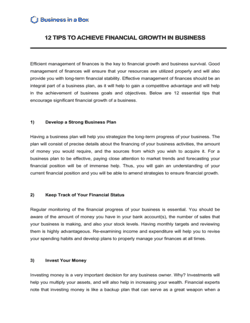
12 Tips To Achieve Financial Growth In Business
5 Strategies For Business Future Proofing Template
60 Ways To Grow Your Business Template
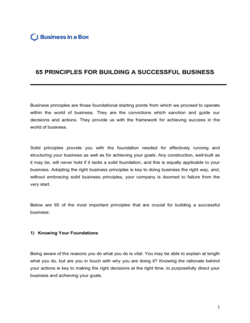
65 Principles For Building A Successful Business
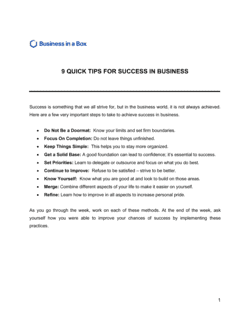
9 Quick Tips For Success In Business Template
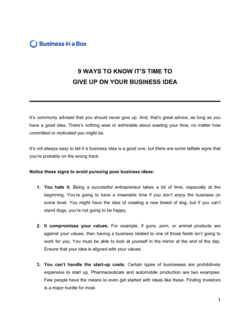
9 Ways To Know It's Time To Give Up On Your Business
Business Development Strategy Template
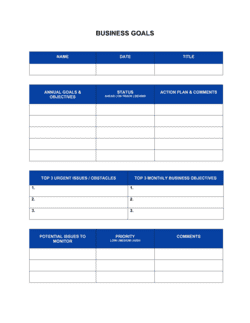
Business Goals Template
Business Growth Plan Template
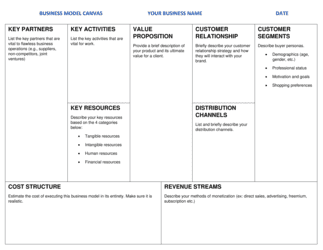
Business Model Canvas Template
Business Strategy For Growth Template
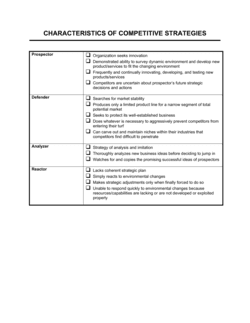
Characteristics Of Competitive Strategies Template
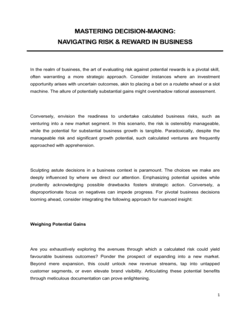
Decision Making Framework Template
Digital Transformation Roadmap Template
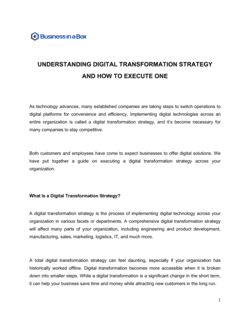
Digital Transformation Strategy Template
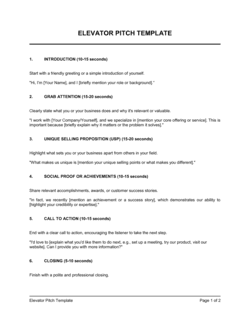
Elevator Pitch Template
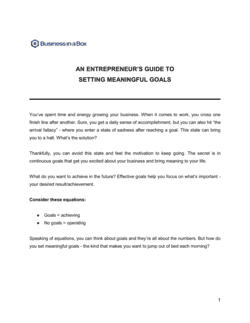
Entrepreneur's Guide to Setting Meaningful Goals
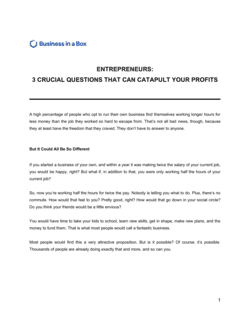
Entrepreneurs 3 Crucial Questions Template
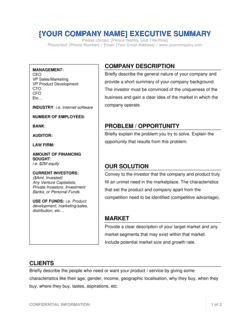
Executive Summary for Investors Template
Executive Summary Template
Fundraising Plan Template
Fundraising Strategy Template
How To Become A Sustainable Business Template
How To Choose The Right Business Model Template
How To Come Up With A Business Name
How To Conduct A Merger Or Acquisition Template
How To Create A Wealth Mindset Template
How to Earn Money While You Sleep Template
How To Find New Business Opportunities Template
How To Generate Positive Social Impact With Your
How To Grow A Business Template
How To Grow Your Business Quickly Template
How To Plan For Business Growth Template
How To Reach Your Business Goals Template
Intellectual Property Business Plan Template
List of Business Goals Template
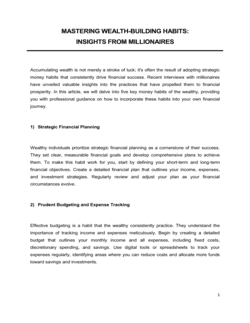
Mastering Wealth Building Habits Template
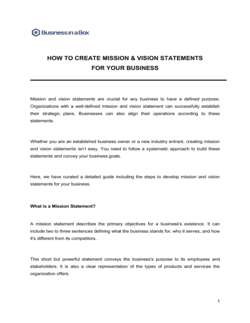
Mission and Vision Statement Template
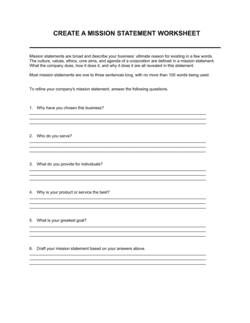
Mission Statement Worksheet Template
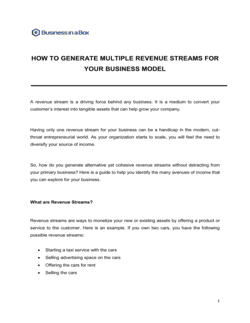
Multiple Revenue Streams Template
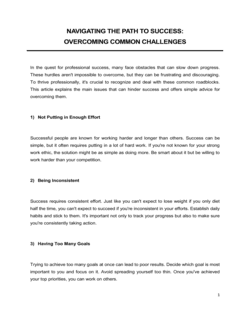
Navigating The Path To Success Overcoming Common
XLS
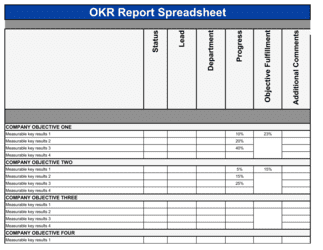
OKR Template
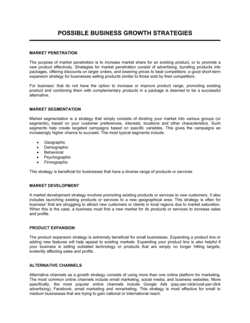
Possible Business Growth Strategies Template
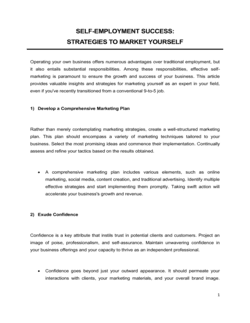
Self Employment Success Strategies Template
Seven Wealth Accelerators For Business Success
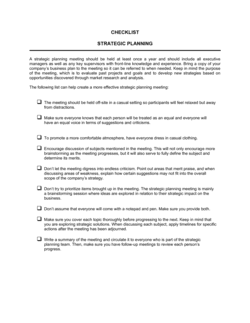
Strategic Planning Checklist Template
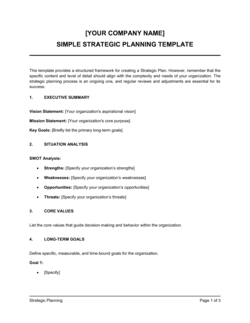
Strategic Planning Template
Strategies That Increase Business Profit Template
Strategy Plan for Business Development Template
Sustainable Business Strategies Template
Top 200 Business Ideas List Template
Top 3 Fundamental Ways To Grow Your Business Template
Top 54 Business Models Template
Vision Board Ideas and Benefits for Entrepreneurs
Vision Board Template
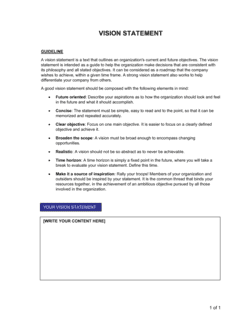
Vision Statement Template
250K+Clients
20M+Free users
20+Years
190+Countries
10,000+Law firms
50M+Downloads

Trusted across review platforms

  • Capterra★★★★☆4.649 reviews
  • G2★★★★☆4.713 reviews
  • GetApp★★★★☆4.649 reviews
  • Google Play★★★★☆4.6179 ratings
  • Google Reviews★★★★☆4.567 reviews

Related categories

Frequently asked questions

What should a business strategy template include?
A complete business strategy template should include a situational analysis, mission and vision statements, strategic objectives, competitive positioning, resource allocation, risk assessment, and KPIs. Some templates also include an implementation timeline and an accountability structure that names the owner of each objective. Templates that omit the resource and risk sections tend to produce strategies that look good on paper but stall in execution.
How often should a business strategy be updated?
Most organizations update their strategy annually, with a lighter quarterly review to check progress against KPIs. Companies in fast-moving markets — technology, retail, media — often do a formal refresh every six months. A significant external shock (a new competitor, a regulatory change, a recession) typically warrants an unscheduled review regardless of timing.
What is the difference between a strategic plan and a business plan?
A strategic plan defines direction, priorities, and competitive approach for an existing business over a 1–3 year horizon. A business plan is a detailed document that describes the business model, market, team, and financial projections — typically written to secure funding. Strategy plans are internal management tools; business plans are often written for an external audience of investors or lenders.
Is a SWOT analysis enough to build a strategy?
A SWOT analysis is a useful starting point but not a complete strategy on its own. It surfaces internal and external factors worth considering, but it doesn't prioritize them, allocate resources to address them, or define how the company will compete. Use SWOT outputs as inputs to a fuller strategic planning process that includes competitive analysis, goal setting, and risk assessment.
How long should a business strategy document be?
For most small and mid-sized businesses, 8–15 pages is sufficient to cover situational analysis, objectives, competitive positioning, and an execution plan. Larger organizations may produce longer documents, but the operative summary that leaders reference day-to-day is usually 2–3 pages. Length is less important than specificity — a four-page strategy with named owners and funded objectives outperforms a 40-page document with vague priorities.
Can I use a business strategy template for a startup?
Yes, with adjustments. Early-stage companies have less historical data and less certainty about the market, so strategy templates work best as a thinking framework rather than a rigid planning document. The situational analysis, goal setting, and risk assessment sections are particularly valuable for founders. A lean canvas or market opportunity analysis is often a better starting point than a full multi-year strategic plan at seed stage.
What is a risk register and when do I need one?
A risk register is a living document that catalogs every identified risk facing a business or project — including probability, potential impact, the owner responsible for managing it, and the current mitigation status. You need one any time a project or plan has material execution risk: a product launch, a market expansion, a major operational change, or an M&A transaction. It should be reviewed and updated at every strategy review cycle.
How is a PESTLE analysis different from a SWOT analysis?
A PESTLE analysis examines six macro-environmental factors — political, economic, social, technological, legal, and environmental — that affect a business from outside. A SWOT analysis looks at both internal factors (strengths, weaknesses) and external factors (opportunities, threats). The two are complementary: PESTLE findings typically feed into the opportunities and threats columns of a SWOT. Use both when entering a new market or conducting an annual strategy review.

Business Strategy vs. related documents

Business Strategy vs. Business plan

A business strategy defines direction, priorities, and competitive approach — the "what" and "why" of where the company is going. A business plan is a more detailed operational and financial document typically written for investors or lenders. Strategy comes first; the business plan operationalizes it. Many companies use strategy templates internally while reserving full business plans for fundraising.

Business Strategy vs. SWOT analysis

A SWOT analysis is one tool within a broader strategy process, not a strategy itself. It surfaces internal strengths and weaknesses alongside external opportunities and threats to inform decision-making. A full strategic plan uses SWOT outputs as inputs — identifying where to invest, where to defend, and where to exit based on what the SWOT reveals.

Business Strategy vs. OKRs (Objectives and Key Results)

OKRs are a goal-tracking methodology that typically lives inside a strategy framework, not a replacement for it. Strategic planning templates set the direction and multi-year priorities; OKR templates break those priorities into quarterly, measurable targets. Both are useful, and they work best when the strategy is set first.

Business Strategy vs. Business model canvas

A business model canvas maps how a company creates, delivers, and captures value on a single page. A business strategy template addresses how to win in a market — competitive positioning, resource allocation, and growth priorities. The canvas is useful for startups validating a concept; strategy templates are more suited to ongoing planning cycles in operating companies.

Key clauses every Business Strategy contains

Regardless of which strategy template you use, every effective business strategy document is built from the same core components.

  • Mission and vision statement. Defines why the company exists and what it aims to become — the anchor for all strategic choices.
  • Situational analysis. An assessment of internal capabilities and external conditions, typically through SWOT, PESTLE, or competitor analysis.
  • Strategic objectives. Specific, time-bound goals the organization commits to achieving, usually over a 1–3 year horizon.
  • Competitive positioning. Defines how the company differentiates itself from competitors and which customers it targets.
  • Resource allocation. Maps budget, headcount, and priorities to each strategic objective to ensure commitments are funded.
  • Risk assessment. Identifies the material threats to executing the strategy and the actions taken to reduce their impact.
  • Key performance indicators (KPIs). Measurable metrics that signal whether the strategy is on track or needs adjustment.
  • Review and accountability cadence. Defines who reviews progress, how often, and what triggers a course correction.

How to write a business strategy

A business strategy is most useful when it's specific enough to drive real decisions. Here's how to build one that actually gets used.

  1. 1

    Conduct a situational analysis

    Run a SWOT analysis and a PESTLE scan to understand your internal position and the external environment before setting any direction.

  2. 2

    Clarify your mission and vision

    Write a concise mission statement (why you exist) and a vision statement (what you're building toward) that senior leaders can repeat without notes.

  3. 3

    Define 3–5 strategic objectives

    Translate the vision into a small number of specific, time-bound priorities that the whole organization can rally around.

  4. 4

    Analyze the competitive landscape

    Use a competitor analysis worksheet to understand who else is competing for your customers and what differentiates your offering.

  5. 5

    Assess and document key risks

    Complete a risk assessment matrix to identify threats to execution, rate their likelihood and impact, and assign mitigation owners.

  6. 6

    Allocate resources to each objective

    Confirm that each strategic objective has a budget, a named owner, and a realistic timeline — unresourced objectives are wishes, not strategy.

  7. 7

    Set KPIs and a review cadence

    Define 2–4 measurable indicators per objective and schedule quarterly reviews to assess progress and adjust course.

At a glance

What it is
A business strategy template is a structured document that guides a company through the process of setting direction, analyzing competitive position, managing risk, and allocating resources to reach measurable goals.
When you need one
Any time a company is planning a new year, entering a new market, responding to competitive pressure, or aligning a team around shared priorities, a strategy template keeps the process disciplined and the output actionable.

Which Business Strategy do I need?

The right template depends on whether you're analyzing your current position, setting direction and goals, managing risk, or evaluating specific markets and competitors. Match your situation to the template below.

Your situation
Recommended template

Mapping internal strengths and weaknesses against external threats

The go-to framework for a quick, structured situational assessment.

Building a full multi-year strategic plan for the business

Covers mission, vision, objectives, and execution milestones in one document.

Evaluating whether a new market is worth entering

Quantifies market size, growth, and competitive intensity before you commit.

Identifying and prioritizing risks across the organization

Plots risks by probability and impact so leaders can triage and respond.

Scanning macro-environmental factors affecting the business

Covers political, economic, social, technological, legal, and environmental factors.

Setting measurable company-wide goals for the year

Aligns leadership around shared, tracked objectives across every department.

Developing a plan to grow revenue and expand the business

Structures growth initiatives around markets, products, and resource allocation.

Tracking all known risks in a single living document

Maintains an ongoing log of risks, owners, and mitigation status.

Glossary

Strategic objective
A specific, time-bound goal that moves the organization toward its long-term vision.
SWOT analysis
A framework that maps an organization's Strengths, Weaknesses, Opportunities, and Threats to support strategic decision-making.
PESTLE analysis
A macro-environmental scan covering Political, Economic, Social, Technological, Legal, and Environmental factors.
Risk register
A document that records identified risks, their likelihood and impact, the owner responsible, and the current mitigation status.
Competitive positioning
How a company differentiates its offering from competitors in the minds of target customers.
KPI (Key Performance Indicator)
A measurable value used to track whether a strategic objective is being achieved.
Situational analysis
An assessment of internal capabilities and external conditions that informs strategic choices.
Resource allocation
The process of assigning budget, people, and time to strategic priorities so they can be executed.
Business impact analysis
An assessment of how disruptions to operations would affect the business, used to prioritize continuity planning.
Strategic planning cycle
The recurring process — typically annual — by which an organization sets, reviews, and adjusts its strategy.
Competitive strategy
The approach a company takes to outperform rivals in its chosen market, such as cost leadership, differentiation, or focus.

What is a business strategy template?

A business strategy template is a structured document that guides a company through the process of defining where it is going, why it will win in its chosen market, and how it will allocate resources to get there. Rather than starting from a blank page, a strategy template gives leadership teams a tested framework — with the right sections in the right order — so that analysis leads to clear objectives, and objectives lead to accountable execution.

Business strategy documents range from high-level situational analyses (SWOT, PESTLE, competitor analysis) to full multi-year strategic plans with funded objectives, KPIs, and quarterly review structures. Some templates are analytical tools used to inform a strategy; others are planning tools used to document and communicate one. Most mature planning processes use both: analysis templates first, then planning templates to synthesize the findings into direction and action.
The discipline behind a strategy template matters as much as the document itself. Teams that work through a structured template surface assumptions they haven't tested, risks they haven't mitigated, and objectives they haven't resourced — before those gaps become expensive problems in execution.

When you need a business strategy template

Any time a business is facing a decision that will shape the next 12 to 36 months, a strategy template brings structure to what would otherwise be a scattered conversation. Common triggers:

  • Annual planning: setting priorities, KPIs, and budgets for the coming year
  • Entering a new market or launching a new product line
  • Responding to a new competitor or a significant shift in the market
  • Preparing a growth plan for investors, a board, or a bank
  • Aligning a new leadership team around shared goals
  • Managing a period of rapid growth, restructuring, or cost reduction
  • Assessing whether the current business model is still viable
  • Building a risk management framework ahead of a major operational change

Skipping formal strategy work doesn't save time — it defers the cost. Teams without a documented strategy tend to chase short-term opportunities at the expense of long-term positioning, duplicate effort across departments, and struggle to explain their decisions when results disappoint. A well-used strategy template turns intent into a shared, reviewable plan that the whole organization can execute against.

Award-winning platform

  • Great Place to Work 2025
  • BIG Award — Product of the Year 2025
  • Smartest Companies 2025
  • Global 100 Excellence 2026
  • Best of the Best 2025

Create your document in 3 simple steps.

From template to signed document — all inside one Business Operating System.
1
Download or open template

Access over 3,000+ business and legal templates for any business task, project or initiative.

2
Edit and fill in the blanks with AI

Customize your ready-made business document template and save it in the cloud.

3
Save, Share, Send, Sign

Share your files and folders with your team. Create a space of seamless collaboration.

Save time, save money, and create top-quality documents.

★★★★★

"Fantastic value! I'm not sure how I'd do without it. It's worth its weight in gold and paid back for itself many times."

Managing Director · Mall Farm
Robert Whalley
Managing Director, Mall Farm Proprietary Limited
★★★★★

"I have been using Business in a Box for years. It has been the most useful source of templates I have encountered. I recommend it to anyone."

Business Owner · 4+ years
Dr Michael John Freestone
Business Owner
★★★★★

"It has been a life saver so many times I have lost count. Business in a Box has saved me so much time and as you know, time is money."

Owner · Upstate Web
David G. Moore Jr.
Owner, Upstate Web

Run your business with a system — not scattered tools

Stop downloading documents. Start operating with clarity. Business in a Box gives you the Business Operating System used by over 250,000 companies worldwide to structure, run, and grow their business.

Free Forever Plan · No credit card required