10 Strategies For Multi-Million Growth

Free Word download β€’ Edit online β€’ Save & share with Drive β€’ Export to PDF

4 pagesβ€’20–30 min to fillβ€’Difficulty: Standard
Learn more ↓
Free10 Strategies For Multi-Million Growth Template

At a glance

What it is
The 10 Strategies For Multi Million Growth template is a structured Word document that guides leadership teams through ten discrete, evidence-based growth levers β€” from market penetration and pricing optimization to strategic partnerships and operational scalability. This free Word download gives you a ready-to-customize framework you can edit online and present to boards, investors, or executive teams as a concrete growth roadmap.
When you need it
Use it when your business has achieved initial product-market fit and you are ready to build a deliberate plan to scale revenue from six figures to seven figures and beyond. It is equally useful for growth-stage companies preparing for a funding round or conducting an annual strategic planning cycle.
What's inside
A ten-section growth framework covering market expansion, revenue diversification, customer retention, pricing strategy, operational efficiency, digital channels, strategic alliances, talent strategy, financial controls, and scalable systems β€” each section includes an analysis prompt, strategic actions, and KPI targets.

What is a 10 Strategies For Multi Million Growth Document?

A 10 Strategies For Multi Million Growth document is a structured operational plan that maps ten discrete, evidence-based revenue-scaling levers β€” from market expansion and pricing optimization to strategic partnerships and operational scalability β€” into a single actionable framework for leadership teams. Unlike a general business plan, this document is built entirely around forward-looking execution: every section defines a specific growth mechanism, assigns ownership, sets numeric targets, and ties directly into a 90-day sprint plan and KPI dashboard. It functions as both an internal leadership alignment tool and a credible growth narrative for investors or board members who need to understand not just where the business is going, but precisely how it will get there.

Why You Need This Document

Without a structured growth strategy, scaling decisions get made reactively β€” the loudest channel gets the budget, retention problems go unaddressed while acquisition spend climbs, and the leadership team pursues five priorities simultaneously and finishes none of them. The cost is concrete: businesses that lack a written growth framework consistently underperform their revenue potential by failing to identify and resource their highest-leverage levers. A well-completed growth strategy document forces the hard prioritization conversations before capital is deployed, not after it has been spent on low-impact initiatives. It creates the accountability infrastructure β€” named owners, numeric targets, 90-day milestones β€” that separates businesses that talk about reaching seven figures from those that actually do it. This template gives you that structure in a format you can fill in, present, and update every quarter.

Which variant fits your situation?

If your situation is…Use this template
Presenting growth strategy to external investors at a fundraising stageInvestor Business Plan
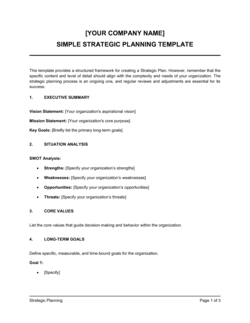
Aligning the full leadership team on a 3–5 year operating directionStrategic Planning Template
Mapping out revenue growth channel by channelMarketing Plan
Tracking execution of growth initiatives against quarterly targetsBusiness Action Plan
Rapid one-page internal alignment before building the full planOne-Page Business Plan
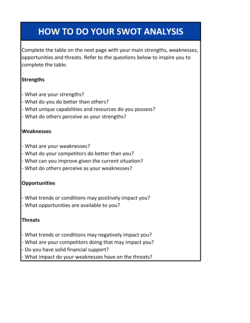
Analyzing competitive positioning as part of growth planningSWOT Analysis
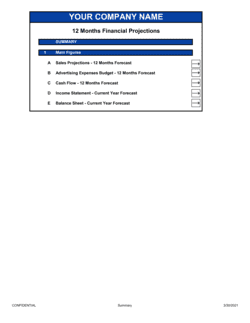
Forecasting the financial impact of proposed growth strategiesFinancial Projections (12 Months)

Common mistakes to avoid

❌ Pursuing all ten strategies simultaneously

Why it matters: Spreading limited budget, management attention, and headcount across ten fronts means no single strategy gets enough resource to generate a measurable result within a quarter.

Fix: Use the impact-readiness matrix to select three to five strategies for the first 90-day sprint, and activate the remainder in subsequent cycles as resources and learnings accumulate.

❌ Setting revenue targets without linking them to specific actions

Why it matters: A target of '$5M ARR by year-end' with no defined acquisition channel, pricing change, or retention initiative is a wish, not a plan β€” and provides no basis for weekly accountability.

Fix: For every revenue target, write out the precise actions, owners, and timelines that will produce it. If you cannot trace a target back to specific actions, the number is not credible.

❌ Ignoring retention while scaling acquisition

Why it matters: Pouring budget into acquiring new customers while churn exceeds 20% annually is like filling a leaky bucket β€” CAC rises as the most-winnable customers are exhausted first.

Fix: Set a gross revenue retention floor (e.g., 85% annually) as a non-negotiable baseline before allocating budget to acquisition-heavy strategies.

❌ No named owner for each strategy

Why it matters: Strategies assigned to a team or department rather than a named individual lose accountability at the first competing priority β€” reviews devolve into status updates with no decisions.

Fix: Before finalizing the document, confirm that every strategy section has a single named owner with the authority and resources to execute it.

❌ Skipping the financial controls section

Why it matters: Growth plans without guardrails on burn rate and gross margin floors can produce revenue growth that actually destroys value β€” hitting $5M ARR at a 20% gross margin is worse than $3M ARR at 65%.

Fix: Set explicit monthly burn ceilings, a gross margin floor, and a reallocation trigger rule before presenting the plan to any investor or board.

❌ Treating the document as a one-time deliverable

Why it matters: A growth strategy written in January and reviewed in December has guided zero real-time decisions β€” by the time the miss is visible, six to nine months of runway have been consumed.

Fix: Build a quarterly update cycle into the plan itself β€” schedule the 90-day review on the same day you finalize the initial version.

The 10 key sections, explained

Current State Assessment

Market Expansion Strategy

Pricing and Revenue Model Optimization

Customer Retention and Expansion

Digital Channel and Demand Generation

Strategic Partnerships and Alliances

Talent and Leadership Scaling

Operational Efficiency and Scalable Systems

Financial Controls and Capital Allocation

90-Day Sprint Plan and KPI Dashboard

How to fill it out

  1. 1

    Complete the current state assessment first

    Fill in your revenue baseline, customer count, gross margin, CAC, LTV, and churn rate before touching any strategy section. Every strategic target is meaningless without a documented starting point.

    πŸ’‘ If you cannot fill in a metric, that gap is itself a finding β€” add 'establish [METRIC] measurement' as a 30-day action item.

  2. 2

    Rank the ten strategies by impact and readiness

    Score each strategy on two dimensions: estimated revenue impact (high/medium/low) and your organization's readiness to execute it today (high/medium/low). Prioritize high-impact, high-readiness strategies for the first 90-day sprint.

    πŸ’‘ A 2Γ—2 impact-readiness matrix takes 30 minutes to build and prevents leadership teams from spending the next quarter on a strategy that requires six months of groundwork.

  3. 3

    Set specific numeric targets for each strategy

    Replace every placeholder with a concrete number β€” ARR target, CAC ceiling, churn reduction percentage, or partner revenue contribution. Qualitative objectives cannot be tracked or held accountable.

    πŸ’‘ If a number feels uncertain, record your assumption and the data source behind it β€” this makes the plan stress-testable, not just aspirational.

  4. 4

    Assign a named owner to each strategy

    Every strategy section must have a single named owner β€” not a team or a department. Write the person's name and title, not 'marketing' or 'leadership.'

    πŸ’‘ Strategies with shared ownership are rarely executed. If two people are both responsible, neither is.

  5. 5

    Build the 90-day sprint plan from the prioritized strategies

    Take the top three to five strategies from your impact-readiness ranking and convert them into a 30/60/90-day milestone schedule with specific actions and measurable outputs at each checkpoint.

    πŸ’‘ Keep the sprint plan to a single page β€” a sprint plan that needs to be interpreted is a strategy document, not an execution tool.

  6. 6

    Define the KPI dashboard and review cadence

    Identify one to two leading indicators per strategy that can be tracked weekly, then set a standing weekly or bi-weekly review meeting to assess progress against the sprint milestones.

    πŸ’‘ Leading indicators (pipeline volume, trial signups, partner conversations) predict outcomes 4–8 weeks earlier than lagging indicators (closed revenue, churn) β€” track both but act on the leading ones.

  7. 7

    Present the completed plan to leadership or the board

    Export the completed document as PDF and pair it with a 10–15 slide executive summary deck for presentation. The full document serves as the reference; the deck drives the discussion.

    πŸ’‘ Open the presentation with the current state assessment β€” grounding the audience in today's numbers before introducing growth targets sets a credible, evidence-based tone.

  8. 8

    Schedule a 90-day review and update cycle

    Set a calendar reminder for 90 days out to update the current state metrics, assess sprint performance, and reprioritize strategies based on what the data has shown.

    πŸ’‘ A growth strategy document that is never updated is a historical artifact. Block 4 hours per quarter for the update β€” put it in the calendar the day you complete the first version.

Frequently asked questions

What is a multi-million growth strategy document?

A multi-million growth strategy document is a structured operational plan that identifies the specific levers a business will use to scale revenue from its current baseline to a seven-figure or eight-figure target. It combines market analysis, strategic prioritization, financial guardrails, and a near-term execution plan into a single reference document for leadership teams, boards, and investors.

Who should use this growth strategy template?

Growth-stage CEOs, founders preparing for a funding round, VPs of strategy or operations running an annual planning cycle, and business consultants delivering growth assessments all benefit from this template. It is designed for businesses that have achieved initial product-market fit and are ready to build a deliberate, resource-backed scaling plan.

How is this different from a standard business plan?

A business plan covers the full context of a business β€” history, market, team, and financials β€” primarily for external audiences like banks or investors. This growth strategy document focuses entirely on the forward- looking operational levers that will drive revenue scaling, and is designed for internal execution and leadership alignment rather than external credibility. The two documents complement each other.

How many strategies should we activate at once?

Three to five strategies in a 90-day sprint is the practical maximum for most teams. Activating all ten simultaneously dilutes focus, spreads budget, and makes it impossible to isolate which actions are driving results. Use an impact-readiness matrix to rank strategies and sequence them across quarterly sprints as earlier initiatives reach steady state.

What financial metrics should we define before filling out this template?

At minimum, establish your current ARR or MRR, gross margin percentage, CAC, CAC payback period, LTV, and annual churn rate before completing any strategy section. These six numbers form the baseline against which every strategic target is measured. If any of them are unknown, make establishing that measurement a first-30-day action item.

How long should the completed document be?

A working version typically runs 15–25 pages, including the 90-day sprint plan and KPI dashboard. Presentations to boards or investors often pair the full document with a 10–15 slide executive summary. The goal is specificity, not length β€” a 12-page plan with named owners and numeric targets is more useful than a 40-page plan with narrative aspirations.

How often should this document be updated?

Update it at the end of every 90-day sprint cycle β€” typically four times per year. Each update should refresh the current state metrics, assess which strategies hit their sprint milestones, reprioritize the next sprint based on results, and adjust financial guardrails to reflect actuals versus plan.

Can this template be used for a pre-revenue startup?

It is best suited for businesses with at least $500K in revenue and established unit economics. Pre-revenue startups typically need a business plan or go-to-market strategy first to validate product-market fit before a scaling-focused growth document adds real value. The financial controls and retention sections in particular require operational data that pre-revenue companies do not yet have.

Do I need a consultant to complete this template?

For most growth-stage businesses, the leadership team can complete this template with honest internal data and 8–15 hours of structured work. Engage a growth consultant when the team lacks agreement on the root cause of a growth constraint, when the business is preparing for a material capital raise above $2M, or when an external benchmark against industry peers would strengthen the plan's credibility.

How this compares to alternatives

vs Strategic Planning Template

A strategic planning template covers the full organizational direction over 3–5 years β€” mission, vision, objectives, and resource allocation across all departments. This growth strategy document focuses specifically on the revenue-scaling levers and near-term execution plan. Use the strategic plan to set direction; use this document to operationalize the growth portion of that direction.

vs Business Plan

A business plan is an external-facing document combining market context, team background, and financial history with forward projections β€” designed for banks and investors. This growth strategy template is an internal execution document for leadership teams. The business plan explains what the business is; this document explains precisely how it will grow.

vs Marketing Plan

A marketing plan covers demand generation, brand positioning, and channel strategy in depth. This growth strategy template includes digital channel strategy as one of ten levers, but also addresses pricing, retention, operations, talent, and financial controls. Use the marketing plan for campaign-level detail; use this template for the full-stack growth view.

vs Financial Projections (12 Months)

A financial projections template models revenue, expenses, and cash flow over 12 months. This growth strategy document defines the strategic actions that justify and generate those numbers. The two documents work together β€” the projections quantify the outcome; the growth strategy explains the mechanisms. Investors expect to see both.

Industry-specific considerations

SaaS / Technology

Growth strategies center on NRR expansion, product-led growth loops, and reducing CAC payback through onboarding optimization and self-serve conversion.

Professional Services

Scaling levers focus on moving from time-for-money billing to productized services, building referral networks, and improving billable utilization rates above 70%.

E-commerce / Retail

Growth priorities typically involve improving repeat purchase rates, reducing blended CAC through owned channels (email, SMS), and expanding average order value through bundling.

Manufacturing

Multi-million growth hinges on capacity utilization improvements, distribution channel expansion, and operational leverage through process automation and supplier consolidation.

Healthcare / MedTech

Growth strategies must account for regulatory timelines, reimbursement pathway development, and the long sales cycles of hospital and payer procurement.

Food and Beverage

Scaling strategies focus on retail distribution channel expansion, co-manufacturing partnerships to increase production capacity, and brand investment to support premium pricing.

Template vs pro β€” what fits your needs?

PathBest forCostTime
Use the templateGrowth-stage founders and CEOs building a scaling plan for internal leadership alignment or a seed-stage investor conversationFree8–15 hours over 1–2 weeks
Template + professional reviewBusinesses preparing for a Series A raise or a bank loan above $500K who need an independent stress-test of their assumptions$500–$2,500 for a growth advisor or fractional CFO review2–3 weeks
Custom draftedPrivate equity-backed businesses or companies pursuing growth through acquisition where institutional-grade analysis is required$5,000–$20,000 for a management consulting engagement4–8 weeks

Glossary

Market Penetration
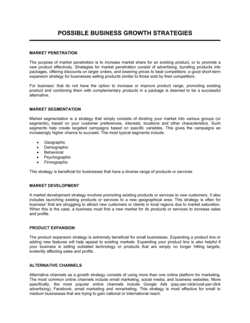
A growth strategy focused on increasing revenue from existing products in existing markets β€” typically through pricing, promotion, or improved distribution.
Revenue Diversification
Reducing dependence on a single income stream by adding new products, services, customer segments, or geographic markets.
Customer Lifetime Value (LTV)
The total gross profit a business expects to generate from a single customer across the entire duration of the relationship.
Customer Acquisition Cost (CAC)
Total sales and marketing expenditure in a period divided by the number of new customers acquired in that same period.
Net Revenue Retention (NRR)
The percentage of recurring revenue retained from an existing customer cohort after accounting for upgrades, downgrades, and churn β€” above 100% signals expansion revenue.
Scalable System
A process, technology, or organizational structure capable of handling significantly higher volume without a proportional increase in cost or headcount.
Strategic Alliance
A formal agreement between two non-competing businesses to share resources, distribution channels, or customers to achieve mutually beneficial growth.
Pricing Power
A company's ability to raise prices without losing a material share of customers, typically a result of strong brand differentiation or switching costs.
Operational Leverage
The degree to which fixed costs are spread across increasing revenue, improving margins as volume grows without proportional cost increases.
Growth Lever
A specific, actionable driver β€” such as a new channel, pricing change, or product addition β€” that when activated produces a measurable increase in revenue or customer count.
Churn Rate
The percentage of customers or recurring revenue lost in a given period, typically measured monthly or annually.

Part of your Business Operating System

This document is one of 3,000+ business & legal templates included in Business in a Box.

  • Fill-in-the-blanks β€” ready in minutes
  • 100% customizable Word document
  • Compatible with all office suites
  • Export to PDF and share electronically

Create your document in 3 simple steps.

From template to signed document β€” all inside one Business Operating System.
1
Download or open template

Access over 3,000+ business and legal templates for any business task, project or initiative.

2
Edit and fill in the blanks with AI

Customize your ready-made business document template and save it in the cloud.

3
Save, Share, Send, Sign

Share your files and folders with your team. Create a space of seamless collaboration.

Save time, save money, and create top-quality documents.

β˜…β˜…β˜…β˜…β˜…

"Fantastic value! I'm not sure how I'd do without it. It's worth its weight in gold and paid back for itself many times."

Managing Director Β· Mall Farm
Robert Whalley
Managing Director, Mall Farm Proprietary Limited
β˜…β˜…β˜…β˜…β˜…

"I have been using Business in a Box for years. It has been the most useful source of templates I have encountered. I recommend it to anyone."

Business Owner Β· 4+ years
Dr Michael John Freestone
Business Owner
β˜…β˜…β˜…β˜…β˜…

"It has been a life saver so many times I have lost count. Business in a Box has saved me so much time and as you know, time is money."

Owner Β· Upstate Web
David G. Moore Jr.
Owner, Upstate Web

Run your business with a system β€” not scattered tools

Stop downloading documents. Start operating with clarity. Business in a Box gives you the Business Operating System used by over 250,000 companies worldwide to structure, run, and grow their business.

Start freeΒ Β·Β No credit card required