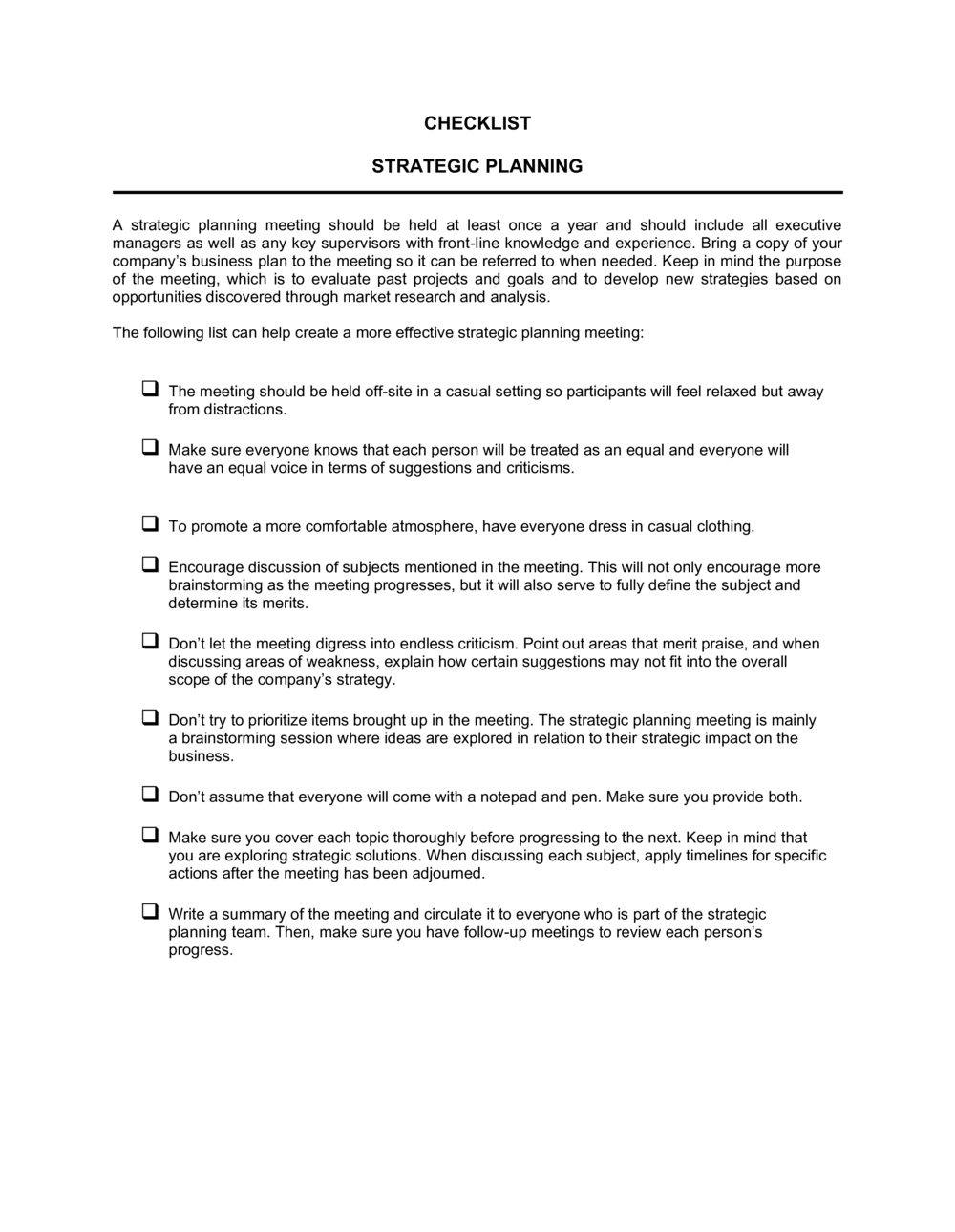
Checklist Strategic Planning

Free download β€’ Use as a template β€’ Print or share

1 pageβ€’40–55 min to useβ€’Difficulty: Expert
Learn more ↓
FreeChecklist Strategic Planning Template

At a glance

What it is
A Strategic Planning Checklist is a structured form that guides leadership teams through every step of the annual or multi-year planning process β€” from environmental scanning and goal setting to initiative prioritization and progress tracking. This free Word download gives you a ready-to-use checklist you can edit online and export as PDF to share with your executive team or board.
When you need it
Use it at the start of each annual or quarterly planning cycle, before a board strategy session, or whenever the business is entering a new phase of growth and needs a structured process to realign priorities.
What's inside
Mission and vision review, environmental scan (SWOT), strategic goal definition, initiative prioritization, resource and budget allocation, KPI assignment, accountability owners, and a timeline with review milestones.

What is a Strategic Planning Checklist?

A Strategic Planning Checklist is a structured form that guides leadership teams through each required step of the strategy development process β€” from reviewing the mission and completing an environmental scan to setting measurable goals, prioritizing initiatives, confirming resource allocation, assigning accountability owners, and scheduling progress reviews. Unlike a full strategic plan document, it functions as a process tool: a running record of decisions made and steps confirmed during the planning session, ensuring nothing critical is overlooked and everyone leaves with a shared, documented understanding of priorities.

Why You Need This Document

Strategic planning sessions that run without a structured checklist routinely produce the same failure modes: goals framed as activities that can never be measured, initiatives approved without confirmed budget, and accountability spread across teams instead of named individuals. The result is a strategy that looks complete on the day it is agreed and quietly falls apart in the first quarter. A completed checklist forces each of those gaps to be resolved before the session closes β€” creating a record that doubles as an accountability baseline for every review meeting that follows. This template gives any leadership team a ready-to-use framework they can complete in a half-day, whether they are running their first formal planning cycle or standardizing a process that has relied on ad hoc slides for years.

Which variant fits your situation?

If your situation is…Use this template
Full multi-year strategic plan with financials for investors or a boardStrategic Plan
One-page snapshot for quick leadership alignmentOne-Page Business Plan
Quarterly goal-setting and OKR trackingOKR Planning Template
Situation analysis before the planning session beginsSWOT Analysis Template
Tracking execution of approved strategic initiativesAction Plan Template
Annual marketing strategy planningMarketing Plan Template
Department-level operational planningOperational Plan Template

Common mistakes to avoid

❌ Setting goals as activities rather than outcomes

Why it matters: Activity-based goals like 'improve the website' can be declared complete after any minor change, making it impossible to know whether the underlying business problem was solved.

Fix: Rewrite every goal to specify a measurable result and a deadline β€” 'increase website conversion rate from 1.8% to 3.0% by December 31.'

❌ Assigning ownership to a team instead of a named individual

Why it matters: When two or more people share accountability, each assumes the other is driving β€” resulting in missed milestones and no clear escalation path when things slip.

Fix: Name one person as the accountable owner for each goal and each initiative. Others can be listed as contributors, but one name carries the outcome.

❌ Skipping resource allocation during the planning session

Why it matters: Strategies agreed without confirmed budget or headcount are aspirations, not plans β€” the first quarter becomes a negotiation rather than an execution.

Fix: Require finance or an operations lead to confirm resource availability for each approved initiative before the planning session closes.

❌ No interim milestones between session and year-end review

Why it matters: Without quarterly or monthly checkpoints, a strategy that is off track in March is not discovered until the annual review in December β€” leaving no time to course-correct.

Fix: Enter at least two interim milestone dates per initiative in the checklist and schedule the first review meeting on the same day the plan is signed off.

The 9 key fields, explained

Mission and Vision Review

Environmental Scan Completed

Strategic Goals Defined

Initiative Prioritization

Resource and Budget Allocation

KPI Assignment

Accountability Owners

Timeline and Milestones

Review Cadence and Next Meeting Date

How to fill it out

  1. 1

    Confirm the planning horizon and scope

    Decide whether this cycle covers 1 year, 3 years, or both. Note the start and end dates of the planning period at the top of the checklist before filling in any other field.

    πŸ’‘ Anchor every subsequent field to the same horizon β€” mixing 1-year goals with 3-year goals in the same checklist creates conflicting priorities.

  2. 2

    Review and update mission and vision

    Read the current mission and vision statements aloud with the leadership team. Mark each as current, needing revision, or requiring a full rewrite, and note any proposed changes.

    πŸ’‘ If more than half the room is uncertain whether the mission still applies, schedule a separate session to rewrite it before proceeding.

  3. 3

    Complete or attach the environmental scan

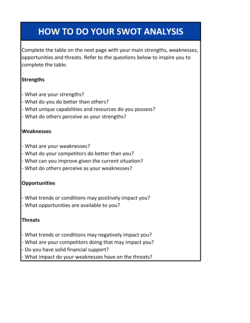
    Run a SWOT analysis or equivalent environmental scan, document key findings, and attach the output to this checklist. Check the field as complete only when findings are in writing.

    πŸ’‘ Use data β€” customer survey results, competitor pricing, NPS scores β€” rather than opinions to populate the SWOT.

  4. 4

    Define no more than five strategic goals

    Draft each goal as a measurable outcome statement with a target date. Limit the list to five goals for the planning period β€” more than five dilutes focus.

    πŸ’‘ If the team generates ten candidate goals, force-rank them by strategic impact and carry only the top five forward.

  5. 5

    Prioritize and approve initiatives

    List all proposed initiatives, score each on impact and effort, and formally approve, defer, or cancel each one. Record the rationale for deferred items.

    πŸ’‘ A simple 2Γ—2 impact-effort matrix takes under 30 minutes and surfaces the high-impact, low-effort wins that should always be funded first.

  6. 6

    Assign KPIs, owners, and budget

    For each approved goal and initiative, record one primary KPI with a baseline and target, name a single accountable owner, and confirm the budget allocation.

    πŸ’‘ If you cannot name a specific individual as owner within the session, the initiative is not ready to be approved.

  7. 7

    Set milestones and schedule reviews

    Enter at least two interim milestones per initiative and lock the date for the first strategy review meeting before the planning session closes.

    πŸ’‘ Put the first review date in everyone's calendar before they leave the room β€” a date that is not scheduled does not happen.

Frequently asked questions

What is a strategic planning checklist?

A strategic planning checklist is a structured form that guides a leadership team through every step of the strategy development process β€” from reviewing the mission and completing an environmental scan to setting goals, assigning owners, allocating resources, and scheduling reviews. It ensures nothing is skipped and creates a documented record of planning decisions.

How is a strategic planning checklist different from a strategic plan?

A strategic plan is a full narrative document β€” typically 20–35 pages β€” covering market analysis, competitive positioning, and multi-year financial projections. A strategic planning checklist is the process tool used to build that plan: it captures decisions, confirms steps are complete, and assigns accountability. Think of the checklist as the meeting agenda and decision log, and the strategic plan as the finished deliverable.

How often should a strategic planning checklist be used?

Most organizations run a full strategic planning cycle annually, aligned to the fiscal year. The checklist should be completed at the start of each cycle to structure the planning session. A lighter version β€” covering goal progress, KPI updates, and initiative status β€” is useful at each quarterly review meeting throughout the year.

Who should be involved in completing the checklist?

The CEO or executive director, direct reports, and any department heads whose resources will be committed to approved initiatives should all participate. For smaller organizations, the full leadership team typically fits in a single session. For larger organizations, input is gathered in advance and the checklist is completed in an executive team workshop.

How many strategic goals should a checklist include?

Three to five strategic goals is the widely accepted range for a single planning period. Fewer than three may signal a lack of ambition; more than five typically exceeds the organization's capacity to execute without spreading resources too thin. If the team generates more than five strong candidates, prioritize by strategic impact and defer the rest to the next cycle.

Can a small business use this checklist?

Yes β€” the checklist is designed to work for organizations of any size. A small business with five employees can complete it in a half-day session and emerge with clear goals, named owners, and a review schedule. Larger organizations may need to run input-gathering sessions in advance and use the checklist to consolidate decisions at the executive level.

What should happen after the checklist is completed?

The completed checklist should be distributed to all participants as the authoritative record of planning decisions. Approved initiatives move into action plans with detailed task breakdowns. The first strategy review meeting β€” already scheduled in the checklist β€” uses it as the baseline against which progress is measured.

What is the difference between a strategic planning checklist and an action plan?

A strategic planning checklist covers the full planning process β€” environmental scan, goal setting, prioritization, resource allocation, and accountability assignment. An action plan drills into a single initiative or goal, listing every specific task, owner, and due date required to deliver it. The checklist produces the strategy; action plans execute it.

How this compares to alternatives

vs Strategic Plan Template

A strategic plan is a full narrative document covering market analysis, competitive positioning, and multi-year financials β€” the finished output of the planning process. A strategic planning checklist is the process tool that structures and documents each step used to build that plan. Use the checklist to run the planning session; produce the strategic plan as the formal deliverable for boards, investors, or lenders.

vs SWOT Analysis Template

A SWOT analysis is a single analytical framework that captures internal strengths and weaknesses alongside external opportunities and threats. It is one input into the broader planning process. The strategic planning checklist incorporates the SWOT as a step, then moves through goal-setting, prioritization, and accountability β€” giving the SWOT findings a structured path to action.

vs Action Plan Template

An action plan breaks a single approved initiative into granular tasks, owners, and due dates for execution. A strategic planning checklist operates at the strategy level β€” deciding which initiatives to approve, who owns each goal, and when to review progress. The checklist comes first; action plans are the next layer of detail for each approved initiative.

vs Marketing Plan Template

A marketing plan defines the specific campaigns, channels, and budgets that support revenue goals for a given period. It is a functional-level document. A strategic planning checklist covers the full organization β€” including marketing, operations, finance, and people β€” and produces the goals that a marketing plan is then built to support.

Industry-specific considerations

Professional Services

Used to align partner groups on revenue targets, service-line expansion, and talent acquisition priorities for the coming fiscal year.

Healthcare

Guides clinical and administrative leadership through regulatory compliance goals, patient experience targets, and capital investment decisions.

Nonprofit and Education

Structures board and staff planning sessions around program impact goals, funding diversification targets, and community partnership priorities.

Manufacturing

Coordinates production capacity planning, supplier strategy, and operational efficiency goals across plant and corporate leadership.

Template vs pro β€” what fits your needs?

PathBest forCostTime
Use the templateLeadership teams running an annual or quarterly planning session without a dedicated strategy functionFreeHalf-day planning session
Template + professional reviewOrganizations using a facilitator or strategy consultant to run the planning process$500–$3,000 for a facilitated half-day or full-day session1–2 days including preparation
Custom draftedLarge enterprises or complex multi-entity organizations needing a fully customized planning framework integrated with existing governance processes$5,000–$25,000+ for a consulting engagement4–12 weeks

Glossary

Strategic Planning
A structured process through which an organization defines its direction, sets priorities, allocates resources, and establishes accountability for results over a defined period.
SWOT Analysis
A framework that identifies an organization's internal Strengths and Weaknesses alongside external Opportunities and Threats.
Strategic Goal
A high-level, measurable outcome the organization intends to achieve within a defined planning horizon β€” typically 1 to 3 years.
KPI (Key Performance Indicator)
A quantifiable metric used to evaluate whether a strategic goal or initiative is on track.
Initiative
A specific project or program of work designed to advance one or more strategic goals, with a defined owner, budget, and timeline.
Environmental Scan
A review of internal capabilities and external market conditions β€” covering competitors, regulation, technology, and economic trends β€” that informs strategic choices.
Resource Allocation
The process of assigning budget, headcount, and time to initiatives based on their strategic priority.
Accountability Owner
The named individual responsible for driving a specific initiative or goal to completion and reporting on its progress.
Planning Horizon
The time period a strategic plan covers β€” commonly 1 year for operational plans and 3 to 5 years for strategic plans.
Review Cadence
The scheduled frequency β€” monthly, quarterly, or annually β€” at which progress against strategic goals is formally reviewed and adjusted.

Part of your Business Operating System

This document is one of 3,000+ business & legal templates included in Business in a Box.

  • Fill-in-the-blanks β€” ready in minutes
  • 100% customizable Word document
  • Compatible with all office suites
  • Export to PDF and share electronically

Create your document in 3 simple steps.

From template to signed document β€” all inside one Business Operating System.
1
Download or open template

Access over 3,000+ business and legal templates for any business task, project or initiative.

2
Edit and fill in the blanks with AI

Customize your ready-made business document template and save it in the cloud.

3
Save, Share, Send, Sign

Share your files and folders with your team. Create a space of seamless collaboration.

Save time, save money, and create top-quality documents.

β˜…β˜…β˜…β˜…β˜…

"Fantastic value! I'm not sure how I'd do without it. It's worth its weight in gold and paid back for itself many times."

Managing Director Β· Mall Farm
Robert Whalley
Managing Director, Mall Farm Proprietary Limited
β˜…β˜…β˜…β˜…β˜…

"I have been using Business in a Box for years. It has been the most useful source of templates I have encountered. I recommend it to anyone."

Business Owner Β· 4+ years
Dr Michael John Freestone
Business Owner
β˜…β˜…β˜…β˜…β˜…

"It has been a life saver so many times I have lost count. Business in a Box has saved me so much time and as you know, time is money."

Owner Β· Upstate Web
David G. Moore Jr.
Owner, Upstate Web

Run your business with a system β€” not scattered tools

Stop downloading documents. Start operating with clarity. Business in a Box gives you the Business Operating System used by over 250,000 companies worldwide to structure, run, and grow their business.

Free Forever PlanΒ Β·Β No credit card required