An Entrepreneurs Guide To Setting Meaningful Goals

Free to read β€’ Save or share with one click

FreeAn Entrepreneurs Guide To Setting Meaningful Goals Template

At a glance

What it is
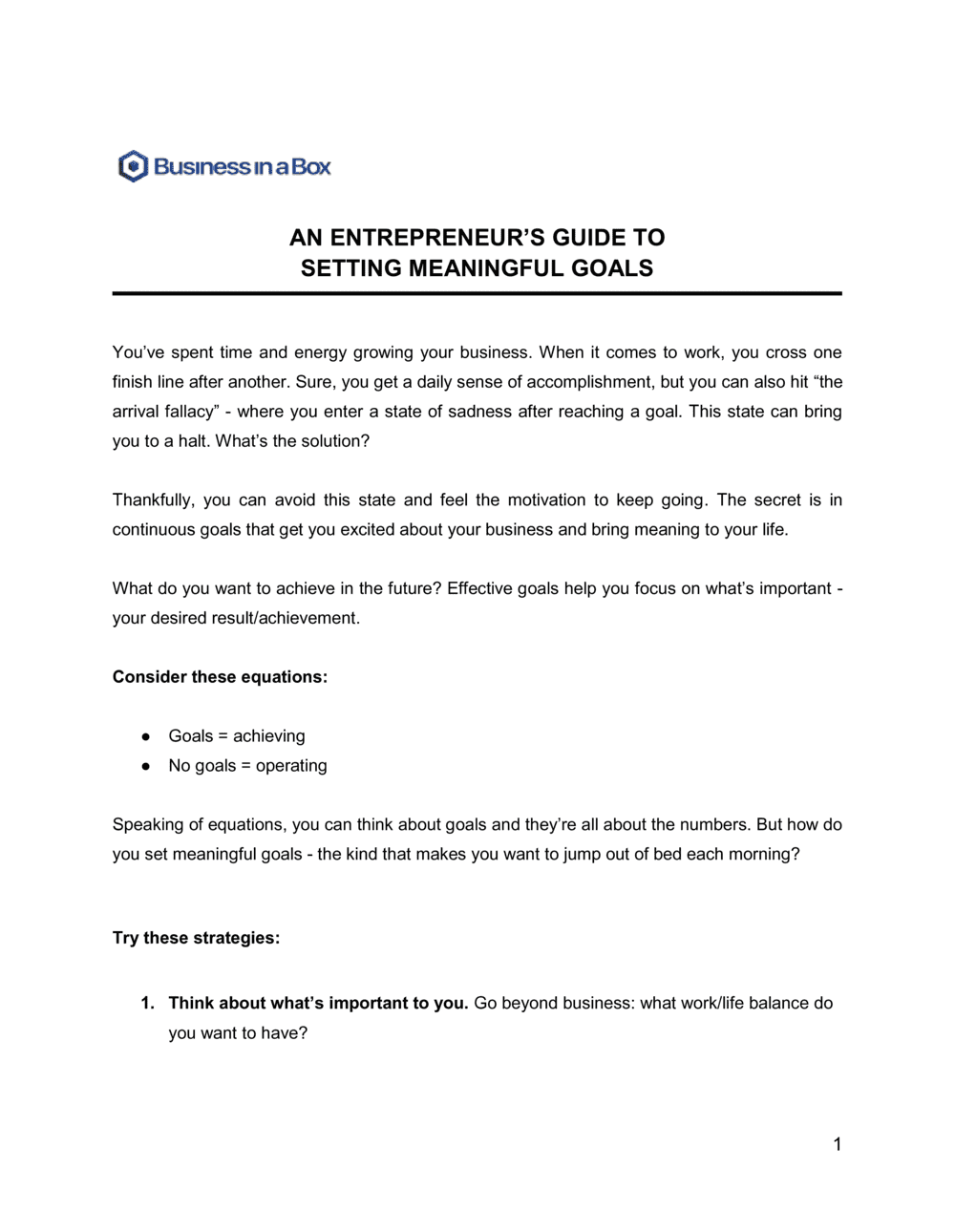
An Entrepreneur's Guide to Setting Meaningful Goals is a structured Word document that walks founders and business owners through a proven framework for defining, prioritizing, and tracking goals that are directly tied to business outcomes. This free Word download provides a step-by-step planning format you can edit online and export as PDF to share with co-founders, investors, or your leadership team.
When you need it
Use it at the start of a new fiscal year, after a funding round, when pivoting strategy, or whenever the business lacks a clear and shared definition of success across its team.
What's inside
Vision and values alignment, SMART goal criteria, priority-setting frameworks, milestone mapping, resource allocation, accountability structures, and a progress review cadence β€” all in a single editable document.

What is an Entrepreneur's Guide to Setting Meaningful Goals?

An Entrepreneur's Guide to Setting Meaningful Goals is a structured planning document that walks founders and business owners through a step-by-step framework for defining, prioritizing, and tracking goals that are grounded in business strategy and tied to measurable outcomes. Unlike a generic to-do list or informal annual resolution, this guide connects each goal to the company's long-term vision, assigns a named owner, maps interim milestones, and defines the leading indicators that allow the entrepreneur to monitor progress week by week β€” not just at year end. It is designed to function as a live management tool that is revisited quarterly, not a filed document that is forgotten after January.

Why You Need This Document

Entrepreneurs who operate without a structured goal-setting framework consistently report the same problems: too many priorities pulling in competing directions, no clear definition of success for the current quarter, and no early-warning system when execution drifts off course. The cost is concrete β€” resources get spread across low-impact activities, team members work toward inconsistent objectives, and the gap between vision and day-to-day action widens until it is visible to investors and customers alike. A completed goal-setting guide forces the hard prioritization work up front, before budget is committed and calendar time is consumed. It gives every stakeholder β€” co-founder, advisor, investor, or employee β€” a single source of truth for what the business is trying to achieve and who is accountable for each outcome. This template provides the structure so you can spend your time on the decisions, not the formatting.

Which variant fits your situation?

If your situation is…Use this template
Setting company-wide goals aligned to a 3–5 year strategyStrategic Planning Template
Translating goals into quarterly team objectives and key resultsOKR Planning Template
Tracking goal progress against KPIs on a monthly basisKPI Dashboard Template
Defining personal productivity and professional development goalsPersonal Development Plan
Aligning department-level goals within a growing teamDepartmental Goals and Objectives Plan
Presenting goals and milestones to an investor or boardBusiness Plan Template

Common mistakes to avoid

❌ Setting too many goals at once

Why it matters: Pursuing more than five major goals simultaneously fragments attention and resources, reducing the likelihood of completing any single goal at a meaningful level of quality.

Fix: Rank all candidate goals by impact-to-effort ratio and commit to no more than three to five priorities per quarter. Move the rest to a backlog for future review.

❌ Writing activity-based goals instead of outcome-based goals

Why it matters: Goals like 'improve our marketing' give no signal of success or failure and cannot be measured, making accountability impossible and progress invisible.

Fix: Reframe every goal as a measurable outcome with a specific target and deadline β€” 'increase website-generated leads from 40 to 100 per month by September 30.'

❌ Skipping the current-state baseline

Why it matters: Without a documented starting point, you cannot calculate the gap to close, sequence milestones realistically, or prove progress to investors or advisors.

Fix: Pull actual metrics from your accounting, CRM, and product analytics before setting any targets, and record them explicitly in the current state assessment section.

❌ No named owner for each goal

Why it matters: Shared ownership diffuses accountability β€” when a quarterly review reveals a goal is off track, there is no single person who owns the explanation and the corrective action.

Fix: Assign one named individual as goal owner for every goal in the plan, with explicit authority to make resource and priority decisions to keep it on track.

❌ Treating the plan as a filed document after January

Why it matters: A goal plan that is not reviewed quarterly becomes a historical record of intentions, not a management tool β€” and the business reverts to reactive, ad hoc decision-making.

Fix: Put quarterly review meetings in every owner's calendar on day one and treat them as non-negotiable, the same way you would a board meeting or investor update.

❌ Tracking only lagging indicators

Why it matters: Monitoring revenue or profit alone tells you what already happened β€” by the time a lagging indicator signals a miss, there is often no runway left to correct course.

Fix: Identify two to three leading indicators for each goal and review them weekly so you can intervene when the goal is at risk, not after the quarter closes.

The 9 key sections, explained

Vision and values alignment

Current state assessment

Goal prioritization framework

SMART goal definitions

Milestone and checkpoint mapping

Resource and capacity allocation

Accountability and ownership structure

Leading indicators and tracking metrics

Review and recalibration process

How to fill it out

  1. 1

    Write your vision and values statement

    Before listing any goals, articulate where the business is headed in 3–5 years and the 3–5 values that define how you will get there. Every goal you set should be traceable back to at least one of these.

    πŸ’‘ If you cannot connect a proposed goal to your vision statement, it belongs in a backlog β€” not in this plan.

  2. 2

    Complete the current state assessment

    Fill in your current revenue, headcount, customer count, and key product metrics. Use actuals from the last completed quarter, not projections.

    πŸ’‘ Pull numbers from your accounting software and CRM rather than estimating β€” anchoring to real data keeps the plan credible when you share it with advisors or investors.

  3. 3

    Generate and score candidate goals

    Brainstorm all the goals you could pursue this year, then score each on Impact (1–5) and Effort (1–5). Limit your Priority 1 list to the top 3–5 goals that score highest on impact relative to effort.

    πŸ’‘ A prioritized list of three goals executed well delivers more value than a list of ten goals executed poorly.

  4. 4

    Convert each priority into a SMART goal

    Rewrite each priority using the SMART format: state the specific outcome, the measurable target, why it is achievable, how it connects to strategy, and the exact deadline.

    πŸ’‘ Read your SMART goal aloud β€” if you cannot explain in one sentence what success looks like on a specific date, the goal needs tightening.

  5. 5

    Map milestones for each goal

    Break each annual goal into at least three quarterly milestones. Set a review trigger β€” if actual progress falls below 80% of a milestone, escalate to a specific decision within two weeks.

    πŸ’‘ Quarterly milestones are not always equal β€” revenue ramps, product launches, and hiring often front-load or back-load a year. Model the realistic shape of progress, not a straight line.

  6. 6

    Assign owners and set the review cadence

    Name a single owner for each goal, define the weekly or monthly check-in format, and put the quarterly review dates in every owner's calendar before you close the document.

    πŸ’‘ Use a shared project management tool β€” not email β€” to track goal status so updates are visible to the whole team in real time.

  7. 7

    Define leading indicators for each goal

    For each goal, identify the 2–3 upstream activities or metrics that, if hit consistently, will produce the target outcome. These become your weekly management dials.

    πŸ’‘ If a leading indicator is something you measure less than weekly, it is not specific enough to serve as an early warning signal.

  8. 8

    Schedule the quarterly recalibration

    Block 90 minutes at the end of each quarter to review actuals versus milestones, run a root-cause analysis on any gap above 20%, and decide whether to stay course, adjust, or retire each goal.

    πŸ’‘ Retiring a goal that no longer serves the strategy is a sign of disciplined management β€” not failure. Document the rationale so the decision is visible to future reviewers.

Frequently asked questions

What is a meaningful goal in an entrepreneurial context?

A meaningful goal in an entrepreneurial context is one that is directly connected to the company's long-term vision, has a specific and measurable outcome, and is realistic given current resources and capacity. It differs from a general aspiration by having a named owner, a defined deadline, and leading indicators that allow you to track whether you are on course week by week, not just at year end.

How many goals should an entrepreneur set at one time?

Three to five major goals per quarter is the practical upper limit for most solo entrepreneurs and small teams. Fewer goals with focused execution consistently outperform long goal lists. If your list exceeds five, apply an impact-to-effort ranking and move the lower-scoring items to a backlog rather than attempting them in parallel.

What is the difference between a goal and a task?

A goal is an outcome you want to achieve by a future date β€” 'generate $50,000 in new monthly recurring revenue by December 31.' A task is a specific action that contributes to reaching the goal β€” 'schedule ten discovery calls this week.' Goals set direction; tasks are the execution steps that move you toward them. Confusing the two is one of the most common reasons goal-setting frameworks fail in practice.

How is this guide different from a standard strategic plan?

A strategic plan maps a 3–5 year vision, competitive positioning, and resource allocation across the whole business. This guide focuses specifically on translating vision into individual, measurable goals for the entrepreneur and their team, with a practical emphasis on prioritization, accountability, and weekly tracking. The two documents complement each other β€” the strategic plan sets the direction, this guide converts it into daily and weekly execution.

How often should goals be reviewed and updated?

Weekly check-ins on leading indicators, monthly reviews of milestone progress, and quarterly recalibrations of the full goal set is the recommended cadence. Annual goals should be revisited at each quarter to confirm they are still relevant β€” market conditions, funding status, and team capacity change faster than a 12-month planning cycle anticipates.

Can I use this template for a team, or is it designed for solo use?

The template works for both. Solo entrepreneurs use it to structure personal and business goals in a single document. Teams use it by assigning named owners to each goal and running the quarterly review as a group meeting. For teams larger than 10, consider cascading company-level goals into department-level OKR documents that link back to this master guide.

What is the SMART framework and should I use it?

SMART stands for Specific, Measurable, Achievable, Relevant, and Time-bound. It is the most widely used goal-writing framework in business planning because it forces every goal to answer five basic questions before it is committed to paper. Use it as a checklist when drafting each goal β€” if you cannot fill in all five criteria, the goal is not ready to go into the plan.

How do I handle a goal that becomes irrelevant mid-year?

Retire it explicitly during your next quarterly review rather than leaving it on the plan untouched. Document the reason β€” market shift, pivot, resource reallocation β€” so the decision is visible. Then replace it with a goal that reflects the current priority. A plan that is honestly maintained, even with retired goals, is more useful than one that preserves outdated targets for the appearance of consistency.

How this compares to alternatives

vs Strategic planning template

A strategic plan maps a 3–5 year vision across the whole organization, covering market positioning, competitive strategy, and resource allocation. This goal-setting guide translates that vision into specific, individual goals with owners and leading indicators. The strategic plan sets the destination; this guide defines the weekly steps to get there. Both are needed, but in sequence β€” strategy first, then goal-setting.

vs Business plan template

A business plan is an external-facing document for investors and lenders, combining market analysis, competitive positioning, and financial projections. This guide is an internal operational tool focused on the entrepreneur's personal and company-level goals, prioritization, and accountability. The business plan answers 'why should we fund this'; the goal guide answers 'how we will execute it week by week.'

vs Action plan template

An action plan is a task-level document that lists specific steps, owners, and deadlines for completing a defined project. This goal guide operates at a higher level β€” setting outcomes, priorities, and success metrics before any tasks are defined. The goal guide drives what goes into action plans; each major goal typically generates one or more action plans to manage execution.

vs OKR planning template

OKRs (Objectives and Key Results) are a specific goal-setting methodology designed for team alignment and quarterly cycles, widely used in fast-growing technology companies. This guide is methodology-agnostic and suited to a broader range of business types, planning horizons, and experience levels. Entrepreneurs new to structured goal-setting will find this guide more accessible; those running larger teams with an existing OKR culture may prefer to migrate to a dedicated OKR format.

Industry-specific considerations

SaaS / Technology

Goal-setting focuses on MRR growth targets, churn reduction, product adoption milestones, and net revenue retention benchmarks tracked weekly in a CRM or analytics dashboard.

Professional Services

Goals center on billable utilization rate, average bill rate, client acquisition targets, and referral pipeline development, with quarterly reviews tied to capacity planning.

Retail / E-commerce

Entrepreneurs track average order value, repeat purchase rate, conversion rate by channel, and inventory turnover as the leading indicators behind revenue goals.

Food & Beverage

Goal frameworks address unit economics per location, covers per day, food cost percentage targets, and franchise or catering expansion milestones within defined time horizons.

Template vs pro β€” what fits your needs?

PathBest forCostTime
Use the templateSolo entrepreneurs, small business owners, and founding teams setting annual or quarterly goals independentlyFree2–4 hours to complete the initial plan
Template + professional reviewEntrepreneurs preparing goals for a board presentation, investor update, or business coach engagement$200–$800 for a session with a business advisor or executive coach1–2 days including review and revision
Custom draftedGrowth-stage companies building a company-wide OKR or goal-cascading system across multiple departments$2,000–$8,000 for a facilitated strategic planning engagement2–6 weeks

Glossary

SMART Goals
Goals that are Specific, Measurable, Achievable, Relevant, and Time-bound β€” a framework that converts vague intentions into actionable targets.
OKR (Objectives and Key Results)
A goal-setting method pairing a qualitative objective with 2–5 quantitative key results that define what success looks like.
Key Performance Indicator (KPI)
A specific, quantifiable metric used to evaluate whether a goal or business activity is on track.
Milestone
A discrete, time-bound checkpoint that marks meaningful progress toward a larger goal.
Leading Indicator
A forward-looking metric that predicts future performance β€” such as number of sales calls made β€” as opposed to lagging indicators like revenue closed.
Lagging Indicator
A metric that reflects outcomes already achieved β€” such as quarterly revenue β€” useful for evaluating results but not for steering toward them.
North Star Metric
The single metric that best captures the core value a business delivers to customers and that the whole company rallies around.
Accountability Partner
A person β€” co-founder, advisor, or peer β€” who regularly reviews progress on stated goals and holds the entrepreneur to their commitments.
Goal Horizon
The time frame a goal is set against β€” typically 90-day, annual, or 3-year β€” which determines the level of specificity and the review cadence.
Priority Stack
An ordered ranking of goals by impact and urgency, used to direct time and resources when capacity is limited.

Part of your Business Operating System

This document is one of 3,000+ business & legal templates included in Business in a Box.

  • Fill-in-the-blanks β€” ready in minutes
  • Compatible with all office suites
  • Export to PDF and share electronically

Create your document in 3 simple steps.

From template to signed document β€” all inside one Business Operating System.
1
Download or open template

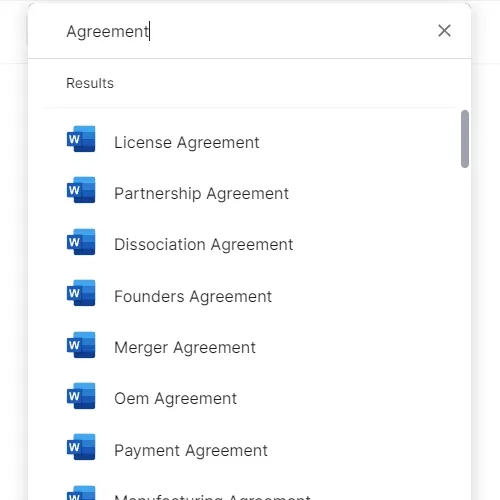
Access over 3,000+ business and legal templates for any business task, project or initiative.

2
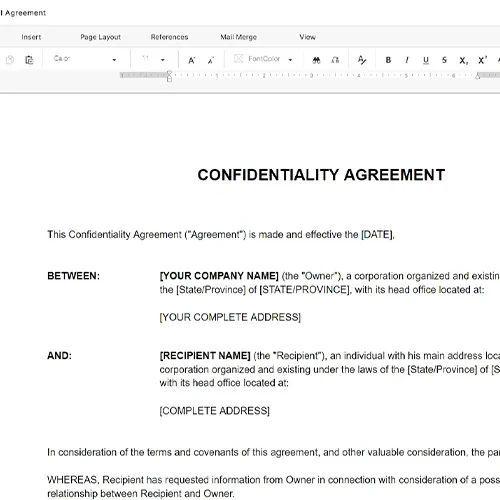
Edit and fill in the blanks with AI

Customize your ready-made business document template and save it in the cloud.

3
Save, Share, Send, Sign

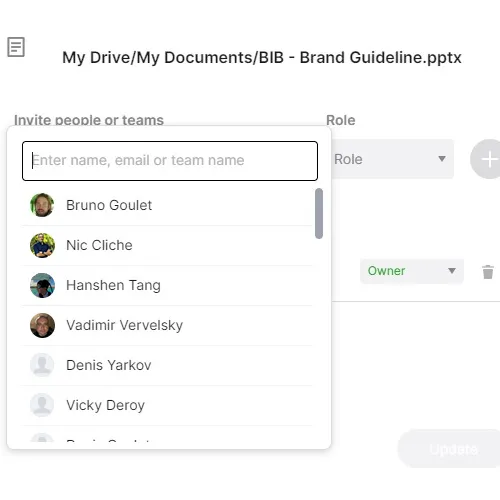
Share your files and folders with your team. Create a space of seamless collaboration.

Save time, save money, and create top-quality documents.

β˜…β˜…β˜…β˜…β˜…

"Fantastic value! I'm not sure how I'd do without it. It's worth its weight in gold and paid back for itself many times."

Managing Director Β· Mall Farm
Robert Whalley
Managing Director, Mall Farm Proprietary Limited
β˜…β˜…β˜…β˜…β˜…

"I have been using Business in a Box for years. It has been the most useful source of templates I have encountered. I recommend it to anyone."

Business Owner Β· 4+ years
Dr Michael John Freestone
Business Owner
β˜…β˜…β˜…β˜…β˜…

"It has been a life saver so many times I have lost count. Business in a Box has saved me so much time and as you know, time is money."

Owner Β· Upstate Web
David G. Moore Jr.
Owner, Upstate Web

Run your business with a system β€” not scattered tools

Stop downloading documents. Start operating with clarity. Business in a Box gives you the Business Operating System used by over 250,000 companies worldwide to structure, run, and grow their business.

Free Forever PlanΒ Β·Β No credit card required