- Competitive Strategy
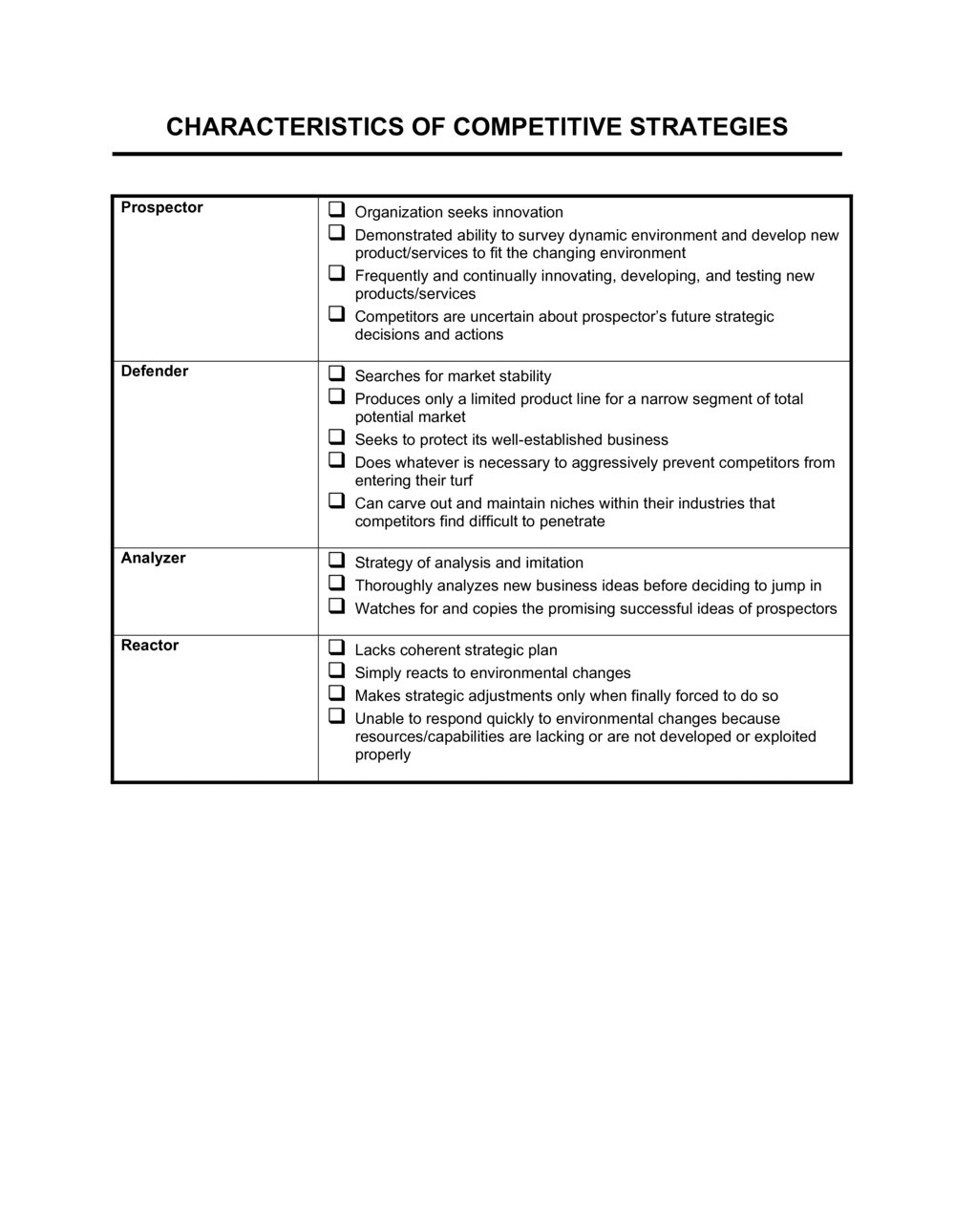
- The set of choices a company makes about how it will attract customers, outperform rivals, and achieve sustainable profitability in a defined market.
- Cost Leadership
- A strategy in which a company aims to be the lowest-cost producer in its industry, enabling it to undercut rivals on price or capture higher margins at parity pricing.
- Differentiation Strategy
- A strategy in which a company offers products or services with attributes — quality, design, brand, or features — that customers value enough to pay a premium for.
- Focus Strategy
- A strategy that targets a narrow customer segment or geographic niche, applying either cost leadership or differentiation within that limited scope.
- Competitive Advantage
- A capability or position that allows a company to consistently outperform rivals on metrics that matter to customers — price, quality, speed, or service.
- Value Proposition
- The specific combination of benefits a company promises to deliver to customers in exchange for their business, distinguishing it from alternatives.
- Porter's Five Forces
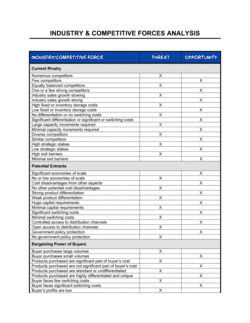
- A framework that analyzes competitive intensity using five factors: rivalry among existing competitors, threat of new entrants, bargaining power of suppliers and buyers, and threat of substitutes.
- Strategic Positioning
- The deliberate choice of how a company will differ from competitors in the eyes of its target customers, determining where and how it competes.
- Competitive Moat
- A durable structural advantage — such as network effects, proprietary technology, switching costs, or scale — that is difficult for rivals to replicate.
- Blue Ocean Strategy
- An approach in which a company creates uncontested market space by offering a fundamentally different value proposition rather than competing in existing saturated markets.