Vision Statement Template

Free Word download β€’ Edit online β€’ Save & share with Drive β€’ Export to PDF

1 pageβ€’20–30 min to fillβ€’Difficulty: Standardβ€’Signature requiredβ€’Legal review recommended
Learn more ↓
FreeVision Statement Template

At a glance

What it is
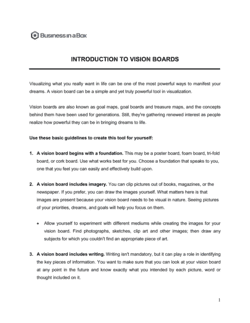
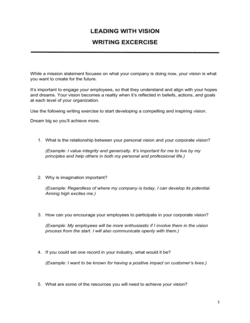
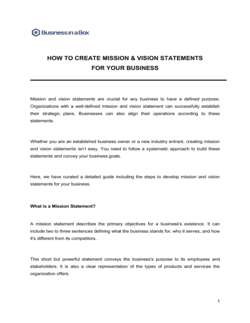
A Vision Statement is a formal organizational document that articulates a company's long-term purpose, aspirational destination, and the future state it intends to create. This free Word download gives you a structured, board-ready starting point you can edit online and export as PDF β€” covering purpose declaration, strategic horizon, stakeholder scope, and alignment commitments in a single cohesive document.
When you need it
Use it when founding a new organization, undergoing a strategic planning cycle, rebranding, seeking investment, applying for grants, or aligning leadership and staff around a shared long-term direction.
What's inside
Purpose declaration, strategic horizon statement, core values alignment, stakeholder impact scope, organizational commitments, and an adoption and acknowledgment block for board or executive sign-off.

What is a Vision Statement?

A Vision Statement is a formal organizational document that declares the long-term future state a company, nonprofit, or institution intends to create β€” the world as it should look if the organization fully succeeds in its purpose. Unlike a mission statement, which describes what an organization does today, a vision statement is aspirational and forward-looking: it names the specific change to be made, the beneficiaries of that change, and the approximate horizon over which the organization is working to achieve it. When formally adopted by a board or founding team and signed by all authorized parties, it becomes the governance anchor for strategic planning, resource allocation, hiring, and external communications.

Why You Need This Document

Operating without a formally adopted vision statement creates compounding strategic drift: leadership teams make resource decisions based on conflicting assumptions, employees cannot evaluate whether proposed initiatives align with organizational direction, and investors or grant funders encounter no credible evidence that the organization has thought beyond the next 12 months. For nonprofits, the absence of a board-ratified vision statement is a disqualifying condition in many foundation grant applications and accreditation reviews. For startups, it signals to investors that the founding team has not worked through the hard question of what long-term success actually looks like. A signed, specific, and time-anchored vision statement transforms an organizational aspiration into an accountable commitment β€” one that every hire, budget decision, and strategic pivot can be tested against. This template gives you the structure to produce that document in a single working session.

Which variant fits your situation?

If your situation is…Use this template
Defining both purpose and day-to-day operational direction in one documentMission and Vision Statement
Communicating organizational values alongside long-term visionCore Values Statement
Presenting vision within a full investor-ready strategy documentBusiness Plan
Aligning teams around a 3–5 year strategic roadmap with measurable goalsStrategic Plan
Summarizing vision, mission, and values for external stakeholder communicationCompany Profile
Embedding the vision statement into a nonprofit governance recordNonprofit Business Plan
Communicating vision to new hires as part of formal onboarding documentationEmployee Handbook

Common mistakes to avoid

❌ Confusing vision with mission

Why it matters: A vision describes the future state you want to create; a mission describes what you do today to get there. Conflating them produces a document that answers neither question clearly, leaving employees and investors without a coherent sense of strategic direction.

Fix: Write the vision statement first β€” the desired future state β€” then write the mission statement as the answer to 'what do we do every day to move toward that future.' Keep them in separate documents that explicitly cross-reference each other.

❌ Using aspirational language with no specificity

Why it matters: Phrases like 'a world where everyone can thrive' and 'the global leader in innovation' are so generic they provide no decision-making guidance and are immediately dismissed as marketing copy by investors, grant committees, and serious employees.

Fix: Name a specific beneficiary group, a specific condition being changed, and an approximate time horizon. A vision statement that could apply to any organization is functionally useless as a strategic instrument.

❌ Omitting the review and renewal clause

Why it matters: An organization that formally adopts a vision statement but never reviews it will find the document diverging from operational reality within 3–5 years β€” creating a credibility gap between what the organization says and what it does.

Fix: Include an explicit review cadence β€” typically every 3–5 years β€” and assign accountability for that review to a named role or governing body in the document itself.

❌ Collecting only one signature for a multi-founder or board-governed organization

Why it matters: A vision statement signed by only one person carries the authority of that individual, not the organization β€” creating vulnerability when leadership changes, ownership disputes arise, or grant applications require evidence of board adoption.

Fix: Identify all signatories required under your governance documents β€” typically all board members for a nonprofit, or all co-founders for an early-stage company β€” and collect every signature before the document takes effect.

❌ Writing the vision statement in isolation without stakeholder input

Why it matters: A vision drafted by one person in an afternoon and then announced to the organization produces low ownership and rapid disengagement β€” employees who had no voice in it feel no obligation to act in alignment with it.

Fix: Run at least one structured session β€” a leadership workshop, an all-hands input exercise, or a board working session β€” before drafting, so the final document reflects perspectives beyond the founder or CEO.

❌ Treating the vision statement as a marketing tagline

Why it matters: A vision statement is a governance document and a strategic instrument, not a slogan. Optimizing it for catchiness rather than clarity produces a document that sounds good externally but provides no internal strategic guidance.

Fix: Write first for internal strategic clarity β€” can every employee and board member use this statement to evaluate a proposed decision? Once it passes that test, refine the language for external readability.

The 9 key clauses, explained

Organization identification

In plain language: Names the legal entity or organization adopting the vision statement and the date of formal adoption or ratification.

Sample language
This Vision Statement is adopted by [LEGAL ORGANIZATION NAME], a [ENTITY TYPE] organized under the laws of [STATE / PROVINCE / COUNTRY], effective [DATE].

Common mistake: Using a trade name or brand name instead of the registered legal entity name β€” creating a mismatch with governance records, grant applications, and investor documents that reference the legal entity.

Purpose declaration

In plain language: States, in one to three sentences, the fundamental reason the organization exists beyond financial return β€” the 'why' behind all strategic activity.

Sample language
[ORGANIZATION NAME] exists to [CORE PURPOSE STATEMENT] so that [BENEFICIARY GROUP] can [DESIRED OUTCOME].

Common mistake: Conflating purpose with product description. 'We exist to sell software to mid-market companies' is a business model, not a purpose β€” it fails to articulate why that work matters.

Future state aspiration

In plain language: Describes the specific, aspirational future condition the organization intends to bring about β€” the world as it should look if the organization succeeds.

Sample language
We envision a future where [FUTURE CONDITION] β€” in which [IMPACT DESCRIPTION] is the standard experience for [BENEFICIARY GROUP] by [APPROXIMATE HORIZON].

Common mistake: Writing a future state so vague it could apply to any organization β€” 'a world where everyone thrives' provides no strategic direction and cannot be used to prioritize decisions or evaluate trade-offs.

Strategic horizon

In plain language: Defines the time frame the vision is aimed at β€” typically 5, 10, or 20 years β€” giving the aspiration a temporal anchor that shapes planning cycles.

Sample language
This vision represents the organizational aspiration for the period through [YEAR], subject to review and renewal at [REVIEW INTERVAL]-year intervals by the [BOARD / LEADERSHIP TEAM].

Common mistake: Omitting any time horizon entirely, making the vision impossible to evaluate, update, or hold leadership accountable to β€” reducing it to a decorative statement rather than a strategic tool.

Stakeholder impact scope

In plain language: Identifies the specific groups whose lives or conditions the organization intends to change β€” customers, employees, communities, the environment, or broader society.

Sample language
The primary beneficiaries of this vision are [STAKEHOLDER GROUP 1], [STAKEHOLDER GROUP 2], and [STAKEHOLDER GROUP 3], whose [CONDITION / EXPERIENCE] this organization is committed to improving.

Common mistake: Listing every conceivable stakeholder group without prioritization β€” creating a scope so broad that the vision provides no meaningful guidance on where to focus resources or make difficult trade-off decisions.

Core values alignment

In plain language: References or names the core values that will guide how the organization pursues the vision β€” distinguishing the aspirational destination from the principled path to get there.

Sample language
In pursuing this vision, [ORGANIZATION NAME] commits to acting in accordance with its core values of [VALUE 1], [VALUE 2], and [VALUE 3], as defined in the organization's separate Core Values Statement dated [DATE].

Common mistake: Embedding a full values manifesto inside the vision statement β€” the two documents serve different functions and should be separate, cross-referenced instruments to allow each to be updated independently.

Organizational commitments

In plain language: States the specific, high-level commitments the organization makes in pursuit of the vision β€” areas of sustained investment, behaviors, or accountabilities.

Sample language
To advance this vision, [ORGANIZATION NAME] commits to [COMMITMENT 1], [COMMITMENT 2], and [COMMITMENT 3], allocating resources and leadership attention in alignment with these priorities.

Common mistake: Writing commitments so general β€” 'we commit to excellence and innovation' β€” that they cannot be used to evaluate whether strategy or budgets are actually aligned with the stated vision.

Review and renewal clause

In plain language: Establishes the cadence for formally reviewing, updating, or reaffirming the vision statement β€” ensuring it remains relevant as the organization and its environment evolve.

Sample language
This Vision Statement shall be reviewed by the [BOARD OF DIRECTORS / EXECUTIVE TEAM] no less than every [X] years, or upon a material change in organizational strategy, leadership, or operating context.

Common mistake: Treating the vision as a permanent, unchangeable document β€” organizations that fail to build in formal review cycles end up with a vision that is publicly stated but privately ignored by leadership.

Adoption and ratification block

In plain language: Records the formal approval of the vision statement by authorized signatories β€” founders, board members, or executives β€” along with their titles and the date of adoption.

Sample language
Adopted by the [BOARD OF DIRECTORS / FOUNDING TEAM] of [ORGANIZATION NAME] on [DATE]. Signed: [SIGNATORY 1 NAME], [TITLE] _______________ | [SIGNATORY 2 NAME], [TITLE] _______________

Common mistake: Collecting only one signature when the organization has a board or co-founders β€” a single-signature adoption is vulnerable to being challenged or dismissed as a personal rather than an organizational commitment.

How to fill it out

  1. 1

    Enter the organization's legal name and adoption date

    Use the full registered legal name of the entity β€” not the brand name or DBA β€” and enter the date the document will be formally adopted by the board or founding team.

    πŸ’‘ Cross-reference your articles of incorporation or certificate of organization to confirm the exact legal name before any signatory signs.

  2. 2

    Draft the purpose declaration

    Write one to three sentences answering the question 'Why does this organization exist beyond making money?' Focus on the change you intend to create for a specific beneficiary group, not on what you sell or how you operate.

    πŸ’‘ Test the purpose declaration by asking whether a competitor could plausibly say the same thing β€” if they could, it is not specific enough.

  3. 3

    Describe the future state aspiration

    Write a concrete, specific description of the world β€” or the relevant corner of it β€” as it should look if your organization fully succeeds. Name the condition you are trying to change and the condition you are trying to create.

    πŸ’‘ Avoid superlatives like 'best,' 'leading,' and 'world-class' β€” they describe competitive rank, not a meaningful future state that stakeholders can rally around.

  4. 4

    Set the strategic horizon

    Choose a time frame β€” 5, 10, or 20 years β€” that is ambitious enough to require transformation but close enough to feel actionable. Enter the target year and the review interval.

    πŸ’‘ For early-stage organizations, a 10-year horizon is typically the most useful β€” long enough to be aspirational, short enough to feel reachable within a founder's active tenure.

  5. 5

    Define the stakeholder scope

    List the two or three stakeholder groups whose conditions this vision is specifically designed to improve. Prioritize rather than list every conceivable group β€” the prioritization itself is a strategic signal.

    πŸ’‘ If you find yourself listing more than three primary stakeholder groups, you likely have a mission scope problem β€” the vision is trying to do too many different things.

  6. 6

    Reference your core values

    Either name the core values that will guide the pursuit of the vision or reference your separate Core Values Statement by title and date. Do not embed a full values discussion inside this document.

    πŸ’‘ If your organization does not yet have a formal Core Values Statement, use this step as a prompt to create one β€” the two documents reinforce each other significantly.

  7. 7

    Write specific organizational commitments

    State two to four concrete, high-level commitments the organization makes in pursuit of the vision β€” areas where resources, attention, and accountability will be consistently allocated.

    πŸ’‘ Each commitment should be testable: if you cannot point to a budget line, a KPI, or a program that reflects the commitment, rewrite it until you can.

  8. 8

    Collect signatures from all authorized signatories

    Have every founding member, board member, or executive whose authorization is required under the organization's governance documents sign the adoption block before the effective date.

    πŸ’‘ For organizations with a formal board, record the vision statement adoption as a resolution in the board meeting minutes β€” this creates the governance paper trail needed for grants, investor diligence, and accreditation applications.

Frequently asked questions

What is a vision statement?

A vision statement is a formal document declaring the long-term future state an organization intends to create β€” the world as it should look if the organization fully succeeds in its purpose. It is distinct from a mission statement, which describes what the organization does today. A well-crafted vision statement names a specific beneficiary group, a specific condition to be changed, and an approximate time horizon, giving leadership a concrete north star for strategic decision-making.

What is the difference between a vision statement and a mission statement?

A vision statement describes where the organization is going β€” the aspirational future it is working to create. A mission statement describes what the organization does today to move toward that future. The two documents are complementary and should cross-reference each other, but they answer fundamentally different questions. Conflating them produces a document that answers neither clearly, leaving employees and investors without a coherent strategic narrative.

Does a vision statement need to be signed?

For a vision statement to carry formal organizational authority β€” binding the board, eligible for grant applications, useful in investor diligence, or embedded in governance records β€” it should be signed by all authorized signatories: typically all board members for a nonprofit, or all co-founders and the CEO for a company. An unsigned vision statement is an aspiration; a signed one is an organizational commitment with accountability attached.

How long should a vision statement be?

The aspiration itself β€” the core future-state description β€” should be one to three sentences, short enough to be memorized and cited by any employee. The full vision statement document, including purpose declaration, stakeholder scope, organizational commitments, review clause, and adoption block, typically runs one to two pages. Longer documents tend to dilute the core message and reduce the likelihood that the statement will actually be used in strategic decision-making.

How often should a vision statement be updated?

Most organizations review their vision statement every 3–5 years, or upon a material change in strategy, leadership, market position, or operating context. Early-stage organizations often revisit it annually for the first three years as the business model and stakeholder focus clarify. The review cadence should be written into the document itself and recorded in board meeting minutes to create a formal accountability loop.

Can a small business or startup use a vision statement template?

Yes β€” in fact, the discipline of completing a structured vision statement is particularly valuable for early-stage organizations, where strategic direction is most at risk of drifting. Investors, accelerators, and early employees frequently ask for a vision statement as evidence that leadership has thought clearly about long-term direction. A well-completed template is generally sufficient for these purposes, though organizations seeking significant grant funding or board governance formalization may benefit from a brief professional review.

What makes a vision statement legally enforceable or formally binding?

A vision statement is not a contract in the traditional sense β€” it does not create obligations between two parties the way an employment agreement or service contract does. Its binding nature is organizational and governance-based: when formally adopted by the board and recorded in meeting minutes, it creates an accountability framework that can be referenced in strategic planning, grant agreements, investor term sheets, and employment materials. In some jurisdictions, a vision statement incorporated by reference into a grant agreement or nonprofit charter takes on greater legal weight. Consider consulting a lawyer if the document will be embedded in a regulated governance instrument.

What is the difference between a vision statement and a company profile?

A company profile is a comprehensive external-facing document that covers the organization's history, products or services, team, and market position β€” used for business development and public relations. A vision statement is a focused internal governance document describing where the organization is going and why. The vision statement is typically one input into the company profile, not a substitute for it. Organizations typically maintain both as separate documents.

Do nonprofits need a vision statement?

Yes β€” nonprofits often need a vision statement more urgently than for-profit businesses. Grant funders, accreditation bodies, and major donors routinely require evidence of a formally adopted, board-ratified vision as part of the application process. It also anchors program design and impact measurement to a stated long-term outcome, which is central to demonstrating organizational effectiveness to foundations and government funders.

How this compares to alternatives

vs Mission Statement

A mission statement answers what the organization does today and for whom; a vision statement answers where the organization is going and what future it is creating. The two documents are complementary and should be created together but kept separate so each can evolve independently. Use the mission statement for operational guidance and the vision statement for long-term strategic direction.

vs Strategic Plan

A strategic plan is a detailed roadmap β€” objectives, initiatives, KPIs, and resource allocation β€” for achieving the vision over a 3–5 year horizon. The vision statement is the destination; the strategic plan is the route. Organizations need both: the vision without a strategic plan is aspiration without execution, and a strategic plan without a vision is activity without direction.

vs Company Profile

A company profile is an external-facing document describing what the organization is, what it offers, and who it serves β€” used for business development and public relations. A vision statement is an internal governance document describing where the organization is going. The vision statement is typically one input into a company profile, not a substitute for it.

vs Business Plan

A business plan is a comprehensive document covering market analysis, competitive positioning, operations, team, and financial projections β€” used primarily for capital raising and lending. The vision statement is a single governance instrument establishing long-term purpose. A business plan typically includes a vision statement in its opening sections, but the two documents serve fundamentally different audiences and purposes.

Industry-specific considerations

Technology / SaaS

Vision statements in SaaS companies anchor product roadmap prioritization and are used in investor decks to articulate market transformation thesis beyond current product capabilities.

Nonprofit and social enterprise

Board-ratified vision statements are frequently required attachments in foundation grant applications and are central to IRS Form 1023 narrative sections for 501(c)(3) organizations.

Healthcare

Hospital systems and health networks use vision statements to anchor patient-experience standards, accreditation submissions, and community health improvement plans required by the ACA.

Professional Services

Law firms, consulting practices, and accounting firms use vision statements to differentiate on purpose and culture during lateral partner recruitment and client relationship-building.

Education

Schools and universities embed vision statements in accreditation documentation, strategic enrollment materials, and faculty hiring criteria to signal institutional direction.

Manufacturing

Manufacturing organizations use formally adopted vision statements to anchor ESG commitments, supply chain ethics policies, and investor sustainability reporting frameworks.

Jurisdictional notes

United States

In the US, a vision statement has no standalone legal enforceability under contract law but carries significant weight when incorporated by reference into nonprofit bylaws, 501(c)(3) IRS filings, grant agreements, or investor term sheets. State nonprofit corporation acts in Delaware, California, and New York require governing documents to reflect the organization's stated charitable purpose β€” a board-adopted vision statement supports that alignment. For-profit companies face no legal mandate to adopt one but may face investor scrutiny if none exists.

Canada

Canadian nonprofits incorporated under the Canada Not-for-profit Corporations Act or provincial equivalents benefit from a board-ratified vision statement that aligns with the organization's stated objects in its articles of incorporation. Federal and provincial grant programs, particularly through organizations like the Canada Council for the Arts and provincial foundations, frequently require a formal vision statement as part of application packages. Quebec organizations should ensure the French-language version of the document is equally authoritative where required by language law.

United Kingdom

UK charities registered with the Charity Commission are required to have a clear statement of purposes; a formally adopted vision statement complements and supports that statutory requirement. Companies House-registered entities have no legal mandate for a vision statement, but the Financial Reporting Council's UK Corporate Governance Code encourages boards of larger companies to articulate long-term purpose in governance documents. A board-adopted vision statement signed by all directors provides evidence of governance engagement with organizational purpose.

European Union

EU member states vary significantly in their governance requirements for purpose documentation, but the Corporate Sustainability Reporting Directive (CSRD) β€” applicable to large companies and listed SMEs from 2024–2026 β€” requires companies to articulate their business model and long-term strategy in sustainability reports. A formally adopted vision statement that addresses stakeholder impact and long-term direction directly supports CSRD narrative disclosures. Nonprofits and foundations applying for EU structural funds typically require formal purpose documentation as a precondition for eligibility.

Template vs lawyer β€” what fits your deal?

PathBest forCostTime
Use the templateStartups, small businesses, and nonprofits creating a vision statement for internal alignment, onboarding, or early-stage investor conversationsFree2–4 hours
Template + legal reviewOrganizations embedding the vision statement in a grant agreement, board charter, or accreditation submission where formal language and governance structure matter$200–$6001–3 days
Custom draftedLarge nonprofits, regulated institutions, or organizations incorporating the vision statement into founding documents, articles of incorporation, or a regulatory filing$1,000–$3,000+1–2 weeks

Glossary

Vision Statement
A formal declaration of the future state an organization intends to create, typically aspirational, long-horizon, and stakeholder-facing.
Mission Statement
A description of what an organization does today β€” its purpose, who it serves, and how β€” distinct from the forward-looking vision.
Strategic Horizon
The time frame β€” typically 5 to 20 years out β€” that a vision statement is designed to describe and inspire action toward.
Core Values
The non-negotiable principles and behaviors that guide how an organization pursues its vision, regardless of external circumstances.
Stakeholder Scope
The defined set of groups β€” employees, customers, communities, shareholders, or the broader public β€” whose lives the vision is intended to impact.
Board Adoption
The formal act by which a governing board votes to ratify and record the vision statement as an official organizational document.
Organizational Alignment
The degree to which an organization's strategies, structures, budgets, and behaviors are consistently directed toward the stated vision.
Purpose-Driven Organization
A company or nonprofit whose strategic decisions are explicitly anchored to a stated social, environmental, or community impact beyond financial return.
Brand Narrative
The external story a company tells about itself β€” often derived directly from the vision and mission statements β€” used in marketing and public communications.
Ratification
Formal approval of a document by authorized signatories β€” such as founders, executives, or board members β€” giving it official organizational standing.

Part of your Business Operating System

This document is one of 3,000+ business & legal templates included in Business in a Box.

  • Fill-in-the-blanks β€” ready in minutes
  • 100% customizable Word document
  • Compatible with all office suites
  • Export to PDF and share electronically

Create your document in 3 simple steps.

From template to signed document β€” all inside one Business Operating System.
1
Download or open template

Access over 3,000+ business and legal templates for any business task, project or initiative.

2
Edit and fill in the blanks with AI

Customize your ready-made business document template and save it in the cloud.

3
Save, Share, Send, Sign

Share your files and folders with your team. Create a space of seamless collaboration.

Save time, save money, and create top-quality documents.

β˜…β˜…β˜…β˜…β˜…

"Fantastic value! I'm not sure how I'd do without it. It's worth its weight in gold and paid back for itself many times."

Managing Director Β· Mall Farm
Robert Whalley
Managing Director, Mall Farm Proprietary Limited
β˜…β˜…β˜…β˜…β˜…

"I have been using Business in a Box for years. It has been the most useful source of templates I have encountered. I recommend it to anyone."

Business Owner Β· 4+ years
Dr Michael John Freestone
Business Owner
β˜…β˜…β˜…β˜…β˜…

"It has been a life saver so many times I have lost count. Business in a Box has saved me so much time and as you know, time is money."

Owner Β· Upstate Web
David G. Moore Jr.
Owner, Upstate Web

Run your business with a system β€” not scattered tools

Stop downloading documents. Start operating with clarity. Business in a Box gives you the Business Operating System used by over 250,000 companies worldwide to structure, run, and grow their business.

Start freeΒ Β·Β No credit card required