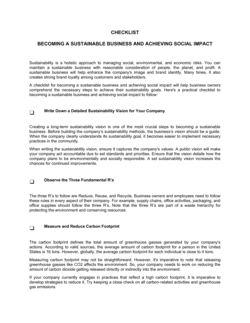
How To Generate Positive Social Impact With Your Business

Free to read β€’ Save or share with one click

FreeHow To Generate Positive Social Impact With Your Business Template

At a glance

What it is
How To Generate Positive Social Impact With Your Business is a structured operational guide and planning template that helps business owners and leaders define, implement, and communicate a concrete social impact strategy. Available as a free Word download, it walks you through setting social goals, identifying community initiatives, engaging stakeholders, and measuring outcomes β€” all in a single editable document you can export as PDF for internal alignment or external reporting.
When you need it
Use it when launching a CSR program, responding to stakeholder or investor requests for social accountability, applying for a B Corp certification, or integrating social goals into an annual business or strategic plan. It is also useful when repositioning a brand around purpose-driven values.
What's inside
A company social purpose statement, stakeholder identification, social impact goals with measurable KPIs, community and charitable initiative plans, employee engagement strategy, environmental and ethical sourcing considerations, and a reporting and communication framework.

What is How To Generate Positive Social Impact With Your Business?

How To Generate Positive Social Impact With Your Business is a structured operational planning guide that helps business owners and leaders move from vague social intentions to documented, measurable commitments. It defines a company's social purpose, maps stakeholder priorities, sets specific impact goals with KPIs, and outlines the community initiatives, employee programs, and supply chain standards needed to deliver on those goals. Unlike a one-time donation or an ad hoc volunteer day, this document creates a repeatable framework that integrates social responsibility into the way the business operates every day.

Why You Need This Document

Businesses that operate without a documented social impact strategy make inconsistent decisions about community giving, supplier selection, and employee programs β€” and have no evidence to show stakeholders, lenders, or mission-aligned customers when they ask. Purpose-washing is an increasing reputational risk: public claims about social commitment that are not backed by operational evidence attract scrutiny from media, NGOs, and informed buyers. A written plan with named owners, measurable KPIs, and a reporting cadence closes that gap β€” turning social intentions into accountable business practice. It also positions your company for B Corp certification, ESG investor inquiries, and grant applications that require documented social performance, without the cost of hiring a dedicated sustainability function.

Which variant fits your situation?

If your situation is…Use this template
Reporting social impact outcomes to investors or the public at year-endCSR Annual Report
Setting environmental sustainability goals alongside social onesEnvironmental Sustainability Plan
Establishing a formal policy on ethical supplier practicesSupplier Code of Conduct
Outlining employee volunteer and community engagement programsEmployee Volunteer Program Policy
Applying for B Corp certification requiring impact evidenceB Impact Assessment Preparation Guide
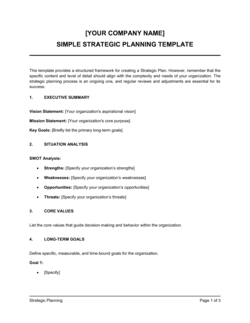
Communicating social commitments as part of a broader strategic planStrategic Plan
Creating a charitable giving policy aligned with business valuesCorporate Giving Policy

Common mistakes to avoid

❌ Setting goals with no measurable baseline

Why it matters: A goal like 'increase community engagement' is impossible to evaluate. Without a starting point, you cannot demonstrate improvement or identify where programs are underperforming.

Fix: Record a current-state number for every goal before publishing the plan β€” even an estimate is more useful than no baseline.

❌ Launching too many unrelated initiatives at once

Why it matters: Ten small, unfocused programs spread resources thin and produce no visible impact. Stakeholders β€” and employees β€” cannot identify what the company actually stands for.

Fix: Choose two to three focus areas directly connected to your core business and stakeholder priorities. Depth of commitment matters more than breadth.

❌ Treating social impact as a marketing exercise only

Why it matters: Purpose-washing β€” making social claims not backed by operational changes β€” creates reputational risk when scrutinized by media, NGOs, or informed customers.

Fix: Ground every public commitment in an internal operational change: a policy, a supplier standard, a budget line, or a hiring target. Document the evidence before publishing the claim.

❌ Failing to assign ownership and budget

Why it matters: Social impact plans without a named owner and dedicated resources consistently go unimplemented β€” they become aspirational documents with no operational traction.

Fix: Name a specific role responsible for each initiative and confirm a budget allocation before the plan is finalized. No owner and no budget means no execution.

❌ Ignoring employee input in program design

Why it matters: Top-down CSR programs that do not reflect employee values have low participation rates and are often perceived as performative rather than genuine.

Fix: Survey or workshop employees before finalizing your social impact priorities. Participation rates for employee-shaped programs are consistently higher than for mandated ones.

❌ Reporting only positive outcomes

Why it matters: Selective disclosure of only successful metrics undermines stakeholder trust and makes year-over-year comparisons meaningless.

Fix: Include metrics that are below target alongside those on track. Transparent reporting of shortfalls, with a corrective action plan, builds more credibility than curated success stories.

The 8 key sections, explained

Company social purpose statement

Stakeholder identification and mapping

Social impact goals and KPIs

Community and charitable initiatives

Employee engagement and workplace practices

Ethical sourcing and supply chain responsibility

Environmental impact considerations

Reporting, communication, and accountability

How to fill it out

  1. 1

    Draft your company social purpose statement

    Write one to three sentences describing the social commitment that is most authentic to your business β€” grounded in what you actually do, not what sounds impressive. Tie it to your core product or service where possible.

    πŸ’‘ Test the statement by asking whether it could belong to a different company. If yes, make it more specific to your industry, location, or customer community.

  2. 2

    Identify and map your stakeholders

    List every group that your operations affect or that has a stake in your conduct. Group them by influence (high/medium/low) and by proximity to your operations (direct employees, supply chain, local community, broader society).

    πŸ’‘ Use a simple 2Γ—2 matrix β€” impact on stakeholder vs. stakeholder influence on the business β€” to prioritize which groups your strategy should address first.

  3. 3

    Set specific social impact goals with baselines

    Choose three to five focus areas and write one measurable goal for each. Record the current baseline figure, the target, and the deadline. Align goals with the stakeholder priorities identified in the previous step.

    πŸ’‘ Limit yourself to goals you can actually measure with data you already collect or can collect within 90 days β€” unmeasurable goals erode accountability.

  4. 4

    Plan your community and charitable initiatives

    Select one or two nonprofit partners or community programs closely aligned with your purpose statement. Define the contribution type (cash, volunteer hours, in-kind), the timeline, and the expected community outcome.

    πŸ’‘ A multi-year partnership with one organization produces more measurable impact β€” and stronger brand association β€” than annual one-off donations to ten different causes.

  5. 5

    Define employee engagement programs

    Document the specific internal programs you will offer: paid volunteer days, donation matching, D&I hiring targets, or internal social impact committees. Assign an owner and a budget to each.

    πŸ’‘ Survey employees before finalizing programs β€” initiatives employees helped shape have significantly higher participation rates than those announced top-down.

  6. 6

    Document your ethical sourcing standards

    Write the minimum social and environmental standards all suppliers must meet. Reference an established framework (SA8000, Sedex, or your own code of conduct) rather than inventing criteria from scratch.

    πŸ’‘ Start with your top ten suppliers by spend β€” applying standards to your highest-value relationships first covers the majority of your supply chain risk with manageable effort.

  7. 7

    Set your reporting cadence and assign accountability

    Decide how often you will measure and publish impact data (annual is the minimum), name the person responsible for gathering it, and choose the channels through which you will communicate results to each stakeholder group.

    πŸ’‘ Publish results even when progress is below target β€” transparent reporting builds more trust than selective disclosure of only positive outcomes.

  8. 8

    Review and align with your strategic plan

    Cross-reference the social impact goals in this document with your annual strategic or business plan to confirm that budget, staffing, and timelines are consistent. Unresourced commitments damage credibility faster than no commitment at all.

    πŸ’‘ Schedule a quarterly check-in on impact KPIs alongside financial KPIs β€” treating them on equal footing signals to employees and stakeholders that the commitments are genuine.

Frequently asked questions

What does it mean for a business to generate positive social impact?

Generating positive social impact means a business deliberately structures its operations, partnerships, and resource allocation to improve the well-being of communities, employees, and society β€” beyond what the law requires. This can include fair wage policies, community investment, ethical sourcing, employee volunteer programs, and environmental stewardship. The key distinction from philanthropy is that social impact is embedded in how the business operates, not just what it donates.

Why do small businesses need a social impact plan?

Small businesses have an outsized influence on the communities they operate in β€” often employing locally, sourcing regionally, and serving a defined customer base that shares their geography and values. A documented social impact plan helps small businesses communicate those contributions clearly, attract mission-aligned employees and customers, and identify gaps where more intentional action would increase community benefit. It also provides structure for decisions that otherwise happen informally and inconsistently.

What is the difference between CSR and social impact?

Corporate Social Responsibility (CSR) is the broader framework of policies and practices a company adopts to act ethically and contribute positively to society. Social impact refers specifically to the measurable outcomes those practices produce in communities or for stakeholders. A company can have an active CSR program with poorly measured impact, or it can generate significant social impact without formal CSR branding. This template bridges both by connecting commitments to measurable outcomes.

How do I measure social impact for my business?

Measurement starts with choosing indicators relevant to your specific initiatives β€” volunteer hours donated, percentage of spend with local suppliers, employee diversity metrics, tonnes of waste diverted, or number of community members served by a partner nonprofit. Record a baseline before the program begins, set a target, and track progress on the same cadence as your financial reporting. Third-party frameworks like the UN Sustainable Development Goals or B Impact Assessment provide standardized metrics if you need external comparability.

Do I need a sustainability consultant to complete this template?

No β€” the template is designed for business owners and managers without a dedicated sustainability function. The structure guides you through each decision sequentially. Consider engaging a sustainability consultant if you are pursuing B Corp certification, reporting under a formal framework like GRI or SASB, or managing supply chains with significant environmental or labor risk. For most small and mid-sized businesses, the template alone is sufficient to build a credible, actionable plan.

How does a social impact plan relate to ESG reporting?

ESG reporting is primarily aimed at investors and uses standardized frameworks (GRI, SASB, TCFD) to disclose environmental, social, and governance performance data. A social impact plan is an operational document that drives the decisions and programs that ESG data later reflects. Building a solid social impact plan first makes formal ESG reporting significantly easier because the goals, KPIs, and accountability structures are already in place.

Can a for-profit business genuinely generate positive social impact?

Yes β€” and the most durable social impact often comes from for-profit businesses embedding social goals into their operating model rather than treating them as optional add-ons. Companies that pay living wages, source locally, employ people from underrepresented groups, and reduce their environmental footprint generate compounding community benefits that one-off charitable donations rarely match. This template is designed to help for-profit businesses make those practices intentional and measurable.

What is the difference between this template and a CSR report?

This template is a forward-looking planning document β€” it helps you define what you intend to do and how you will measure it. A CSR report is a backward-looking publication that communicates what you have already accomplished to external stakeholders. You need this plan first; the report follows once you have data to share. Many businesses use the goals documented here as the structure for their annual CSR report.

How often should a social impact plan be updated?

Review and update the plan annually, aligned with your fiscal year or strategic planning cycle. At minimum, refresh the KPI baselines, record progress against prior-year goals, and add or retire initiatives based on performance and stakeholder feedback. A plan that goes two or more years without an update signals to employees and external stakeholders that social commitments are not actively managed.

How this compares to alternatives

vs Strategic plan

A strategic plan addresses the full scope of business direction β€” financial goals, market positioning, competitive strategy, and resource allocation. This social impact template focuses specifically on community, environmental, and stakeholder commitments. The two documents are complementary: social impact goals should be embedded within or appended to the strategic plan to ensure they receive the same resources and accountability as financial targets.

vs CSR annual report

A CSR annual report communicates past social and environmental performance to external stakeholders. This template is the planning document that precedes the report β€” it defines goals, baselines, and accountability structures. Without a plan, the report has no benchmark to measure against. Build this plan first, then publish the report once you have a year of data.

vs Employee handbook

An employee handbook documents internal workplace policies, conduct standards, and employee rights. This social impact template addresses the external and community dimensions of the business, as well as internal programs like volunteer time and D&I hiring targets. The two documents overlap on employee-facing commitments but serve distinct audiences and purposes.

vs Business plan

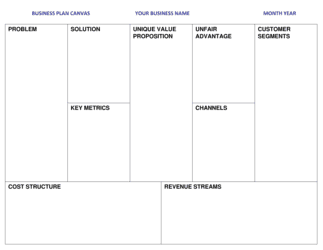
A business plan covers the full commercial model β€” market opportunity, competitive positioning, operations, and financial projections. This social impact template is a focused companion document that addresses the non-financial dimensions of business performance. Purpose-driven investors increasingly expect both: a credible commercial model and a documented social impact strategy.

Industry-specific considerations

Retail and consumer goods

Ethical sourcing from certified suppliers, plastic reduction targets, living wage commitments for hourly workers, and cause-related marketing campaigns tied to product lines.

Professional services

Pro bono service hours donated to nonprofits, diversity in hiring and promotion pipelines, and community economic development through local supplier spend.

Technology and SaaS

Digital equity programs, responsible AI governance, employee volunteer programs leveraging technical skills, and carbon-neutral cloud infrastructure commitments.

Food and beverage

Local and regenerative sourcing, food waste reduction partnerships with community organizations, fair trade ingredient certification, and nutrition equity initiatives.

Manufacturing

Supply chain labor audits, community investment in plant-adjacent neighborhoods, apprenticeship programs for underemployed youth, and industrial waste reduction targets.

Healthcare

Community health education programs, equitable access pricing models, staff mental health and wellness initiatives, and partnerships with underserved clinic networks.

Template vs pro β€” what fits your needs?

PathBest forCostTime
Use the templateSmall and mid-sized businesses building a first social impact plan without a dedicated CSR teamFree4–8 hours over 1–2 weeks
Template + professional reviewBusinesses pursuing B Corp certification, formal ESG disclosure, or investor-facing social impact reporting$500–$2,000 for a sustainability consultant review2–3 weeks
Custom draftedLarge enterprises, regulated industries, or companies required to report under GRI, SASB, or TCFD frameworks$5,000–$25,000 for a full CSR strategy engagement6–12 weeks

Glossary

Corporate Social Responsibility (CSR)
A business model in which companies integrate social and environmental concerns into their operations and interactions with stakeholders beyond what is legally required.
Social Impact
The effect a business's actions have on the well-being of a community or society, measured in concrete outcomes rather than intentions.
Stakeholder
Any person or group affected by or with an interest in a company's activities β€” including employees, customers, suppliers, communities, and investors.
ESG (Environmental, Social, and Governance)
A framework investors and rating agencies use to evaluate a company's performance on environmental stewardship, social responsibility, and governance practices.
Triple Bottom Line
An accounting framework that measures business performance across three dimensions: financial profit, social impact ('people'), and environmental impact ('planet').
Impact KPI
A specific, measurable indicator used to track progress toward a social or environmental goal β€” for example, 'volunteer hours donated per employee per year.'
B Corp Certification
A third-party certification awarded by B Lab to companies that meet verified standards of social and environmental performance, accountability, and transparency.
Cause-Related Marketing
A collaborative marketing strategy in which a business ties product sales or campaigns to a charitable cause, sharing revenue or visibility with a nonprofit partner.
Social Procurement
The practice of intentionally sourcing goods and services from suppliers who employ marginalized groups, support local communities, or operate as social enterprises.
Materiality Assessment
A process of identifying the social and environmental issues most relevant to a business's operations and most important to its stakeholders, used to prioritize CSR focus areas.

Part of your Business Operating System

This document is one of 3,000+ business & legal templates included in Business in a Box.

  • Fill-in-the-blanks β€” ready in minutes
  • Compatible with all office suites
  • Export to PDF and share electronically

Create your document in 3 simple steps.

From template to signed document β€” all inside one Business Operating System.
1
Download or open template

Access over 3,000+ business and legal templates for any business task, project or initiative.

2
Edit and fill in the blanks with AI

Customize your ready-made business document template and save it in the cloud.

3
Save, Share, Send, Sign

Share your files and folders with your team. Create a space of seamless collaboration.

Save time, save money, and create top-quality documents.

β˜…β˜…β˜…β˜…β˜…

"Fantastic value! I'm not sure how I'd do without it. It's worth its weight in gold and paid back for itself many times."

Managing Director Β· Mall Farm
Robert Whalley
Managing Director, Mall Farm Proprietary Limited
β˜…β˜…β˜…β˜…β˜…

"I have been using Business in a Box for years. It has been the most useful source of templates I have encountered. I recommend it to anyone."

Business Owner Β· 4+ years
Dr Michael John Freestone
Business Owner
β˜…β˜…β˜…β˜…β˜…

"It has been a life saver so many times I have lost count. Business in a Box has saved me so much time and as you know, time is money."

Owner Β· Upstate Web
David G. Moore Jr.
Owner, Upstate Web

Run your business with a system β€” not scattered tools

Stop downloading documents. Start operating with clarity. Business in a Box gives you the Business Operating System used by over 250,000 companies worldwide to structure, run, and grow their business.

Free Forever PlanΒ Β·Β No credit card required