Strategy Plan For Business Development

Free Word download β€’ Edit online β€’ Save & share with Drive β€’ Export to PDF

11 pagesβ€’25–35 min to fillβ€’Difficulty: Complex
Learn more ↓
FreeStrategy Plan For Business Development Template

At a glance

What it is
A Strategy Plan for Business Development is a structured document that maps out how a company will grow revenue, expand into new markets, and build strategic partnerships over a defined 12–36 month horizon. This free Word download gives you a ready-to-edit framework covering objectives, target markets, competitive positioning, partnership strategies, and measurable KPIs β€” export as PDF to share with leadership, boards, or investors.
When you need it
Use it when entering a new market, launching a new revenue stream, restructuring your sales and partnership approach, or preparing an annual business development review for leadership or a board of directors.
What's inside
Executive summary, company and market overview, growth objectives, target customer and partner profiles, competitive analysis, go-to-market approach, partnership and alliance strategy, resource and budget plan, KPIs and milestones, and an implementation roadmap.

What is a Strategy Plan for Business Development?

A Strategy Plan for Business Development is a structured document that defines how a company will grow revenue, penetrate new markets, and build strategic partnerships over a 12–36 month planning horizon. It translates high-level growth ambitions into specific, measurable objectives β€” with named target customer profiles, prioritized go-to-market channels, partnership deal structures, and a phased implementation roadmap with KPIs. Unlike a general business plan, a BD strategy plan is an internal execution document owned by the revenue team and presented to leadership or a board to secure alignment and resource approval.

Why You Need This Document

Without a written business development strategy plan, BD efforts fragment across too many markets, too many partnership conversations, and too many channels simultaneously β€” producing pipeline that is wide but shallow and difficult to close. The cost of this fragmentation is concrete: deals stall because no one owns the follow-through, partnerships are signed but never activated, and quarterly revenue reviews reveal activity metrics rather than outcomes. A formally documented BD plan forces the team to prioritize two or three high-return markets over five speculative ones, assign named owners to every initiative, and define success in numbers before spending a dollar of budget. This template gives you the structure to move from strategic intent to an approved, resourced, and measurable plan in days rather than weeks.

Which variant fits your situation?

If your situation is…Use this template
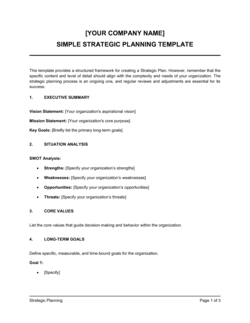
Planning growth across the entire organization for the next fiscal yearStrategic Planning Template
Raising equity or debt capital alongside a growth strategyBusiness Plan
Expanding into a specific new geographic marketMarket Entry Strategy Plan
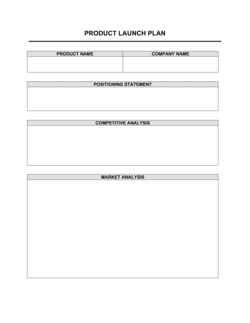
Launching a specific new product or service lineProduct Launch Plan
Outlining marketing channels and campaigns to support BD goalsMarketing Plan
Quick one-page alignment tool for early-stage BD ideationOne-Page Business Plan
Tracking quarterly business development performance against targetsQuarterly Business Review Template

Common mistakes to avoid

❌ Objectives with no numeric targets

Why it matters: A BD team cannot prioritize or pace effort against goals like 'grow partnerships' β€” and leadership cannot determine whether execution is on track at the quarterly review.

Fix: Rewrite every objective to include a specific number and a deadline. 'Sign 6 new channel partners generating $400K in sourced revenue by Q4' is an objective; 'grow partnerships' is a theme.

❌ Pursuing too many markets simultaneously

Why it matters: BD resources spread across five target markets at once rarely achieve meaningful penetration in any of them, producing pipeline that is broad but shallow and difficult to close.

Fix: Rank target markets by deal size, sales cycle length, and competitive intensity. Commit fully to the top two markets before opening a third.

❌ Signing partner agreements without an activation plan

Why it matters: Most channel and referral partnerships that generate no revenue fail not because of a bad agreement, but because neither party defined the enablement, co-marketing, and pipeline review steps needed to make the relationship productive.

Fix: Attach a 90-day partner activation checklist to every signed agreement and assign an internal owner responsible for completing each step.

❌ Setting KPIs after the plan is already written

Why it matters: KPIs chosen as a final step tend to measure activity β€” calls made, meetings booked β€” rather than outcomes, which gives the BD team a way to look busy while missing revenue targets.

Fix: Define KPIs at the same time as growth objectives, before channels or tactics are selected, so every tactical choice is made in service of a measurable outcome.

❌ No owner assigned to roadmap initiatives

Why it matters: Initiatives without a named owner in a BD roadmap consistently slide to the next quarter without consequence, compounding into a pattern of missed milestones that erodes board and leadership confidence.

Fix: Every row in the implementation roadmap must have a name β€” not a role or a department β€” assigned as accountable. If no one person can own it, break the initiative into smaller tasks that can each be owned.

❌ Presenting the plan without a budget allocation

Why it matters: A BD plan with ambitious revenue targets and no budget breakdown cannot be approved or funded β€” it reads as wishful thinking rather than an executable strategy.

Fix: Break the BD budget into at least four buckets: personnel, technology, events/outreach, and partner enablement β€” with a dollar figure and percentage of total for each.

The 10 key sections, explained

Executive Summary

Company and Market Overview

Growth Objectives

Target Customer and Partner Profiles

Competitive Analysis

Go-to-Market and Outreach Strategy

Partnership and Alliance Strategy

Resource and Budget Plan

KPIs, Milestones, and Reporting Cadence

Implementation Roadmap

How to fill it out

  1. 1

    Define your growth objectives before anything else

    Set 3–5 specific, measurable growth objectives that the plan exists to achieve. Tie each objective to a number β€” revenue target, new logo count, or partnership count β€” and a deadline.

    πŸ’‘ If you cannot state the objective as a number and a date, it is not an objective β€” it is a wish. Rewrite it until it is measurable.

  2. 2

    Complete the company and market overview with current data

    Summarize your current revenue, markets, and customer base in 2–3 sentences. Then source at least two independent market reports to frame the external opportunity and growth rate.

    πŸ’‘ Date every data point in this section. A reviewer who spots an undated market statistic will question all the numbers in the plan.

  3. 3

    Build your ideal customer and partner profiles

    Define ICP criteria specifically enough that a new BD rep could use them to qualify a cold lead in 5 minutes. Include firmographics, current tools, pain points, and disqualifying signals.

    πŸ’‘ Interview your three best existing customers before writing the ICP. Their answers will be more accurate than internal assumptions.

  4. 4

    Map the competitive landscape and your differentiated position

    List at least three competitors. For each, write one sentence on their BD approach and one sentence on how you win against them on the buying criteria that matter most to your ICP.

    πŸ’‘ Pull recent competitor win/loss data from your CRM before writing this section β€” anecdotal competitive positioning is routinely contradicted by actual deal outcomes.

  5. 5

    Select and sequence your go-to-market channels

    Choose two or three primary outreach channels and rank them by expected return. Set a volume target for each channel β€” meetings per month, leads per quarter β€” and assign an owner.

    πŸ’‘ Start with the channel that produced your last three best deals, not the channel that feels most scalable in theory.

  6. 6

    Define your partnership structure and activation plan

    For each partnership type you will pursue, define the deal structure, target partner criteria, and the specific activation steps β€” onboarding, co-marketing, and joint pipeline review cadence β€” that will make the partnership revenue-productive.

    πŸ’‘ Budget at least 20% of your partnership budget for partner enablement. Unactivated partners generate near-zero revenue regardless of the agreement terms.

  7. 7

    Allocate budget and headcount to each initiative

    Enter the specific dollar amount and FTE count assigned to each section of the plan. Flag any resources that require leadership approval or are contingent on hitting Q1 targets.

    πŸ’‘ Present a base-case and a stretch-case budget β€” it signals planning discipline and gives leadership a clear decision point.

  8. 8

    Set KPIs and write the implementation roadmap last

    With objectives, targets, channels, and budgets defined, finalize the KPIs that will measure success and build the phased implementation roadmap with named owners for each initiative.

    πŸ’‘ Schedule the first quarterly BD review on the calendar the day the plan is approved β€” it signals accountability and ensures the roadmap is treated as a live document, not a filing exercise.

Frequently asked questions

What is a strategy plan for business development?

A strategy plan for business development is a structured document that defines how a company will grow revenue, expand into new markets, and build strategic partnerships over a 12–36 month period. It covers growth objectives, target customer and partner profiles, competitive positioning, go-to-market channels, resource allocation, and measurable KPIs. Unlike a general business plan, it focuses specifically on the BD function rather than the entire organization.

What is the difference between a business development plan and a business plan?

A business plan is a comprehensive document covering the entire organization β€” market analysis, operations, management team, and financial projections β€” typically used for capital raising. A business development strategy plan focuses specifically on how the company will grow revenue through new markets, partnerships, and customer acquisition. BD plans are used internally by revenue teams and presented to leadership or boards, not typically to investors or lenders.

How long should a business development strategy plan be?

For most mid-market companies, 15–25 pages is appropriate β€” detailed enough to guide execution, concise enough to be read by leadership. Startups may produce a 10-page version focused on ICP, channel strategy, and partnership targets. Enterprise BD plans with multiple market segments and large partner programs may run 30–40 pages plus supporting appendices for market data and financial models.

What KPIs should a business development plan include?

The most effective BD KPIs are outcome-based: qualified pipeline value by segment, new logo count per quarter, partnership-sourced revenue as a percentage of new bookings, average contract value for new customers, and BD-sourced revenue versus total revenue target. Activity metrics β€” calls made, emails sent, meetings booked β€” are useful internally but should not be the primary KPIs reported to leadership or boards.

How often should a business development strategy plan be updated?

A full plan update should happen annually, aligned to the fiscal year planning cycle. However, the implementation roadmap and KPI dashboard should be reviewed monthly by the BD team and quarterly with leadership. If a major market event occurs β€” a competitor acquisition, a new regulatory change, or a significant partnership win or loss β€” update the relevant sections immediately rather than waiting for the annual cycle.

Who should be involved in writing a business development strategy plan?

The BD or sales leader typically owns the plan, but effective plans incorporate input from marketing (channel and messaging alignment), finance (budget and revenue modeling), and product (roadmap dependencies). For partnership strategies, bringing in a senior account manager or customer success lead adds important context about what existing partners value. Final approval typically sits with the CEO and, for growth-stage companies, the board.

What is the difference between a business development plan and a marketing plan?

A marketing plan focuses on brand positioning, content, campaigns, and demand generation β€” the activities that create awareness and inbound leads. A business development plan focuses on outbound pursuit of new markets, direct partnerships, and strategic deals that typically involve a longer sales cycle and higher contract values. In most organizations, the BD and marketing plans are separate documents that reference each other's objectives and share pipeline targets.

Do I need a consultant to write a business development strategy plan?

For most companies, a structured template and internal leadership input are sufficient. Engage a strategy consultant when entering a market you have no prior experience in, when the plan must support a significant capital raise or M&A discussion, or when the internal team lacks the bandwidth to complete a rigorous market analysis alongside their day-to-day responsibilities. A 2–4 week consulting engagement typically costs $5,000–$20,000 depending on scope and firm size.

How do I present a business development strategy plan to a board?

Summarize the plan in a 10–12 slide deck that leads with the market opportunity, states the 3–5 growth objectives with numeric targets, shows the phased roadmap with Q1 milestones, and presents the budget and resource ask with expected return. Boards want to see that you understand the market, have a prioritized plan, and can measure whether it is working. Bring the full written plan as a leave-behind rather than presenting it slide by slide.

How this compares to alternatives

vs Strategic Planning Template

A strategic plan covers the entire organization β€” mission, values, company-wide goals, and cross-functional initiatives. A business development strategy plan focuses specifically on revenue growth, new markets, and partnerships. Most companies need both: the strategic plan sets the direction; the BD plan defines how the revenue side will execute against it.

vs Marketing Plan

A marketing plan covers brand positioning, campaigns, content, and inbound demand generation. A BD strategy plan covers outbound market pursuit, partnership structures, and direct revenue development β€” typically higher-value, longer-cycle deals. The two plans share pipeline targets and ICP definitions but drive different activities.

vs Business Plan

A business plan is a comprehensive external document covering the entire company β€” used for capital raises and including full financial projections and an operations overview. A BD strategy plan is an internal execution document focused narrowly on growth levers, partnerships, and new revenue channels. A BD plan may be annexed to a business plan but serves a different audience and purpose.

vs Sales Plan

A sales plan governs how the sales team will hit quota on existing products in existing markets β€” pipeline management, territory assignment, and sales process. A BD strategy plan focuses on creating new markets, new channels, and strategic partnerships that feed future pipeline. BD sets up the opportunities; sales closes them.

Industry-specific considerations

Technology / SaaS

Integration partnership strategy with complementary SaaS tools, co-sell motions with cloud marketplaces, and land-and-expand playbooks targeting enterprise accounts.

Professional Services

Referral network development, thought-leadership-driven BD, and cross-sell strategy for existing clients across service lines.

Manufacturing

Distribution partnership expansion, OEM relationship development, and new vertical market entry with industry-specific compliance and certification requirements.

Financial Services

Regulatory-aware market entry sequencing, white-label partnership structures, and BD approaches that account for long institutional sales cycles of 6–18 months.

Template vs pro β€” what fits your needs?

PathBest forCostTime
Use the templateBD managers, founders, and sales leaders building an internal annual plan or board presentationFree1–3 weeks (20–50 hours of research and writing)
Template + professional reviewCompanies entering a new market, scaling a partner program, or presenting to an active board or investor group$500–$3,000 for a strategy advisor or BD consultant review2–4 weeks
Custom draftedOrganizations pursuing M&A-adjacent BD, entering regulated markets, or requiring deep primary market research$5,000–$20,000 for a strategy consulting engagement4–8 weeks

Glossary

Business Development (BD)
The function responsible for identifying and pursuing growth opportunities through new markets, partnerships, and revenue streams β€” distinct from day-to-day sales.
Total Addressable Market (TAM)
The maximum revenue opportunity available if a company captured 100% of its target market, used to frame the scale of a growth opportunity.
Ideal Customer Profile (ICP)
A detailed description of the company type or individual most likely to buy, retain, and refer β€” used to focus BD outreach and prioritize pipeline.
Strategic Partnership
A formal relationship between two organizations that collaborate to generate mutual revenue, share distribution channels, or co-develop products.
Key Performance Indicator (KPI)
A quantifiable metric tied to a specific business objective β€” for BD plans, common KPIs include qualified pipeline value, partnership revenue, and new logo count.
Revenue Diversification
Reducing dependence on a single customer, product, or channel by deliberately building multiple revenue streams.
Go-to-Market (GTM) Strategy
The specific channels, messages, and sequencing a company uses to reach target customers and convert them into paying accounts.
SWOT Analysis
A structured assessment of a company's Strengths, Weaknesses, Opportunities, and Threats β€” commonly used to ground a BD strategy in current reality.
Pipeline
The aggregate of all active business development opportunities at various stages of qualification, valued by expected contract size and close probability.
Land and Expand
A BD motion where a company enters an account with a small, low-risk deal and grows revenue over time by expanding usage, seats, or scope.

Part of your Business Operating System

This document is one of 3,000+ business & legal templates included in Business in a Box.

  • Fill-in-the-blanks β€” ready in minutes
  • 100% customizable Word document
  • Compatible with all office suites
  • Export to PDF and share electronically

Create your document in 3 simple steps.

From template to signed document β€” all inside one Business Operating System.
1
Download or open template

Access over 3,000+ business and legal templates for any business task, project or initiative.

2
Edit and fill in the blanks with AI

Customize your ready-made business document template and save it in the cloud.

3
Save, Share, Send, Sign

Share your files and folders with your team. Create a space of seamless collaboration.

Save time, save money, and create top-quality documents.

β˜…β˜…β˜…β˜…β˜…

"Fantastic value! I'm not sure how I'd do without it. It's worth its weight in gold and paid back for itself many times."

Managing Director Β· Mall Farm
Robert Whalley
Managing Director, Mall Farm Proprietary Limited
β˜…β˜…β˜…β˜…β˜…

"I have been using Business in a Box for years. It has been the most useful source of templates I have encountered. I recommend it to anyone."

Business Owner Β· 4+ years
Dr Michael John Freestone
Business Owner
β˜…β˜…β˜…β˜…β˜…

"It has been a life saver so many times I have lost count. Business in a Box has saved me so much time and as you know, time is money."

Owner Β· Upstate Web
David G. Moore Jr.
Owner, Upstate Web

Run your business with a system β€” not scattered tools

Stop downloading documents. Start operating with clarity. Business in a Box gives you the Business Operating System used by over 250,000 companies worldwide to structure, run, and grow their business.

Free Forever PlanΒ Β·Β No credit card required