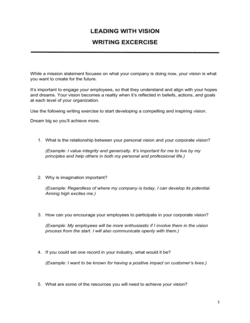
Vision Board Ideas and Benefits For Entrepreneurs Template

Free download • Use as a template • Print or share

3 pages20–30 min to useDifficulty: StandardSignature requiredLegal review recommended
Learn more ↓
FreeVision Board Ideas and Benefits For Entrepreneurs Template

At a glance

What it is
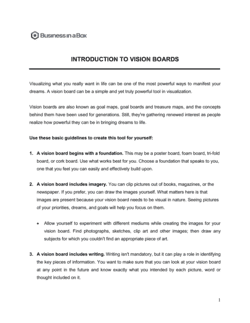
A Vision Board for Entrepreneurs is a structured planning document that captures your business goals, core values, target milestones, and growth aspirations in a single visual and written framework. This free Word download gives you a ready-to-edit template you can complete online and share with co-founders, partners, investors, or your leadership team as a binding reference for strategic alignment.
When you need it
Use it when launching a new venture, entering a new fiscal year, pivoting your business model, or onboarding a co-founder or leadership team member who needs to understand and commit to the company's direction.
What's inside
Core vision statement, 12-month and 3-year goal maps, values and guiding principles, key performance milestones, revenue and growth targets, team and culture aspirations, and a commitment acknowledgment section for co-founders or key stakeholders to sign.

What is a Vision Board for Entrepreneurs?

A Vision Board for Entrepreneurs is a structured planning and alignment document that translates a founder's long-term business ambitions into a written framework of goals, values, milestones, and commitments. Unlike a decorative mood board, this template combines a defined vision statement, SMART annual goals, a 3-to-5-year milestone roadmap, revenue targets, team culture aspirations, and a signed acknowledgment section — giving the vision operational weight rather than purely inspirational value. It functions as the strategic backbone behind a business plan, co-founder agreement, or investor pitch, and as a personal accountability tool the entrepreneur returns to quarterly.

Why You Need This Document

Entrepreneurs who operate without a written, shared vision make slower decisions, experience higher co-founder conflict, and struggle to communicate strategic direction to early hires and advisors. Without a documented vision, every major decision — a new hire, a product pivot, a partnership — gets evaluated in isolation rather than against a coherent long-term direction. Co-founders who have never aligned in writing on values, culture, and growth ambition discover their differences at the worst possible moment: during a fundraise, a key departure, or a dispute. A completed, signed vision board forces those conversations early, creates a reference point for every subsequent strategic decision, and gives investors and advisors a clear signal that the founding team is genuinely aligned. This template gives you the structure to capture that alignment in under four hours — and the signed acknowledgment section to hold everyone to it.

Which variant fits your situation?

If your situation is…Use this template
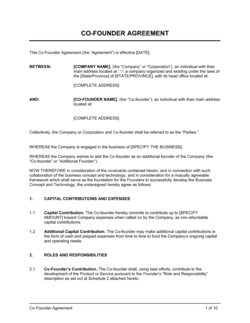
Aligning two or more co-founders on shared business goalsCo-Founder Agreement
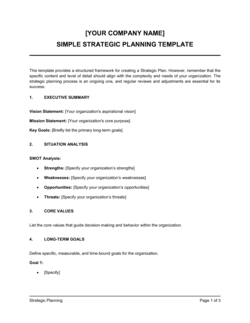
Setting company-wide OKRs and performance targets for the yearStrategic Planning Template
Mapping a new product or service launch with milestonesNew Product Launch Plan
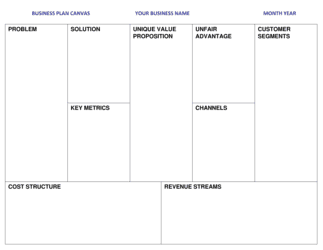
Creating a one-page overview of the business for investorsOne-Page Business Plan
Documenting personal and professional annual goalsAnnual Goal Setting Template
Sharing vision with a new executive hire before their start dateExecutive Employment Agreement
Building a full investor-ready strategic narrativeBusiness Plan Template

Common mistakes to avoid

❌ Vague vision statement with no measurable endpoint

Why it matters: A vision like 'build a great company' gives no benchmark for progress. Teams cannot align around it, and investors cannot evaluate it.

Fix: Rewrite the vision statement to include a specific revenue or market position target, a named geography or customer segment, and a target year.

❌ Setting more than 5 annual goals without prioritizing

Why it matters: Ten equally-weighted goals produce the same diffusion of effort as no goals at all. Nothing receives the sustained focus needed to move the needle.

Fix: Force-rank all goals and commit resources only to the top 3–5. Move the rest to a named backlog to be revisited in the next planning cycle.

❌ Omitting the personal development section

Why it matters: Entrepreneur skill gaps, delegation failures, and leadership burnout are among the top causes of business stagnation — a vision document that ignores the builder ignores the primary constraint.

Fix: Include at least two specific personal development goals — a skill to acquire and a habit to build — with target dates and a method of accountability.

❌ Skipping co-founder or partner sign-off

Why it matters: A vision board reviewed only by the lead founder carries no binding weight with partners. Misalignment discovered 18 months in is far more costly than alignment work done upfront.

Fix: Require all co-founders and named key partners to read, discuss, and sign the acknowledgment section before the document is filed or shared externally.

❌ Creating the vision board and never reviewing it

Why it matters: A vision board that is written once and filed becomes irrelevant within one quarter. Goals drift, markets shift, and the document loses its alignment function.

Fix: Schedule a fixed quarterly review of the document — update milestones against actuals, revise targets where assumptions have changed, and re-sign the acknowledgment if material changes are made.

❌ Using generic values with no behavioral definitions

Why it matters: Values like 'excellence' and 'teamwork' mean nothing without behavioral anchors. They are ignored in hiring, performance reviews, and conflict resolution — the exact moments they matter most.

Fix: For each value, write one sentence describing the specific behavior it produces. If the behavior is not observable, the value is not operational.

The 9 key clauses, explained

Core Vision Statement

In plain language: A 1–3 sentence declaration of the entrepreneur's ultimate ambition for the business — where it will be in 5–10 years and the impact it will have.

Sample language
[COMPANY NAME] will become the leading [PRODUCT/SERVICE TYPE] provider for [TARGET MARKET] in [GEOGRAPHY] by [YEAR], generating $[REVENUE TARGET] in annual revenue and serving [CUSTOMER COUNT] customers.

Common mistake: Writing a vague aspirational phrase like 'be the best' without quantifying scope, geography, or timeline — making it impossible to measure progress or hold anyone accountable.

Mission and Purpose Clause

In plain language: Defines what the business does today, who it serves, and why it exists — anchoring the vision in present-tense operational reality.

Sample language
[COMPANY NAME] exists to [VERB — solve/enable/deliver] [SPECIFIC OUTCOME] for [TARGET CUSTOMER] by [MECHANISM/METHOD].

Common mistake: Merging the mission and vision into a single statement. They serve different functions — conflating them creates confusion about both current purpose and future direction.

Core Values and Guiding Principles

In plain language: Lists 3–6 non-negotiable values that define how decisions are made, people are treated, and the business is operated — regardless of external pressure.

Sample language
Our operating values are: [VALUE 1] — [one-sentence definition]; [VALUE 2] — [one-sentence definition]; [VALUE 3] — [one-sentence definition].

Common mistake: Listing generic corporate values like 'integrity' and 'innovation' without behavioral definitions. Values without behavioral anchors are never applied consistently.

12-Month Goal Map

In plain language: A structured list of 3–5 SMART goals to be achieved within the current fiscal year, each with a target metric, deadline, and named owner.

Sample language
Goal 1: Reach $[X] in monthly recurring revenue by [MONTH, YEAR]. Owner: [NAME/ROLE]. Goal 2: Hire [X] full-time employees in [DEPARTMENT] by [QUARTER, YEAR]. Owner: [NAME/ROLE].

Common mistake: Setting more than 5 annual goals without prioritizing them. A list of 10 equally-weighted goals produces the same result as no goals — nothing gets the focused effort it requires.

3-to-5-Year Milestone Roadmap

In plain language: Maps the major business milestones expected over the next 3–5 years in sequence, showing the logical progression from current state to vision.

Sample language
Year 1: [MILESTONE]. Year 2: [MILESTONE]. Year 3: [MILESTONE]. Year 5: [VISION STATE — revenue, customers, markets, team size].

Common mistake: Jumping directly from today's reality to the 5-year vision without mapping intermediate milestones. Missing the middle steps makes the vision feel disconnected from daily operations.

Revenue and Growth Targets

In plain language: States specific annual revenue, customer count, or market share targets for each year of the planning horizon, serving as the financial backbone of the vision.

Sample language
Year 1 revenue target: $[X]. Year 3 revenue target: $[X]. Target customer count by Year 3: [X]. Target gross margin by Year 3: [X]%.

Common mistake: Stating revenue targets without linking them to the operational assumptions that drive them — headcount, pricing, channel mix, or conversion rate — making the numbers unactionable.

Team, Culture, and Hiring Vision

In plain language: Describes the type of organization the entrepreneur is building — team size, culture attributes, leadership style, and key hires planned over the roadmap period.

Sample language
By [YEAR], [COMPANY NAME] will be a team of [X] people. We will build a culture defined by [ATTRIBUTE 1], [ATTRIBUTE 2], and [ATTRIBUTE 3]. Key hires planned: [ROLE 1] by [DATE], [ROLE 2] by [DATE].

Common mistake: Omitting the team and culture section entirely, treating the vision board as a financial document only. Culture mis-hires and misaligned co-founders are among the top reasons early-stage businesses fail.

Personal Growth and Entrepreneurial Development Goals

In plain language: Captures the skills, habits, networks, and personal milestones the entrepreneur intends to develop over the planning period to support the business vision.

Sample language
By [DATE], I will complete [COURSE/CERTIFICATION]. By [DATE], I will build a network of [X] senior advisors in [INDUSTRY]. I commit to [DAILY/WEEKLY HABIT] to support my capacity as a leader.

Common mistake: Treating the vision board as purely a business document and ignoring personal development. Entrepreneur capacity constraints — skill gaps, burnout, poor delegation — are the most common limiter of business growth.

Accountability and Commitment Acknowledgment

In plain language: A signed statement by the entrepreneur (and co-founders or key partners, where applicable) acknowledging the vision and committing to review progress on a defined schedule.

Sample language
I, [FULL NAME], commit to the vision, goals, and principles outlined in this document. I will review progress against this plan on [MONTHLY/QUARTERLY] basis. Signed: [SIGNATURE] Date: [DATE]. Co-founder/Partner: [SIGNATURE] Date: [DATE].

Common mistake: Treating the acknowledgment as optional or skipping it entirely. Without a signed commitment, the vision board remains aspirational rather than operational — accountability requires a named party and a date.

How to fill it out

  1. 1

    Write your core vision statement first

    Draft a 1–3 sentence statement describing where your business will be in 5–10 years. Include a specific revenue, customer, or market position target and a named year.

    💡 Read the vision statement aloud. If it could apply to any business in your industry, it is too generic — add one specific detail that makes it unmistakably yours.

  2. 2

    Define your mission in present tense

    Write a single sentence describing what your business does today, for whom, and to what measurable outcome. This is distinct from your vision — it describes now, not the future.

    💡 Test your mission statement with the 'so that' method: '[Business] does [X] for [Y] so that [Z outcome].' If Z is vague, sharpen it.

  3. 3

    Select and define 3–6 core values with behavioral anchors

    Choose values that reflect how you actually want decisions made inside the company — not aspirational ideals. For each value, write one sentence describing the behavior it produces.

    💡 If you would not fire someone for persistently violating a stated value, it is not actually a core value. Remove it.

  4. 4

    Map your 12-month SMART goals

    Write 3–5 goals for the current fiscal year. Each must include a specific metric, a target number, a deadline, and a named owner. Rank them by priority.

    💡 If you have more than 5 annual goals, force-rank them and move everything below 5 to a 'future goals' section rather than deleting them.

  5. 5

    Build the 3-to-5-year milestone roadmap

    For each year of the planning horizon, list 1–3 milestones that represent meaningful progress from current state to vision. Connect each milestone logically to the next.

    💡 Work backward from the 5-year vision to Year 1 — it is easier to identify the prerequisites of a goal than to extrapolate forward from today.

  6. 6

    Add revenue targets and growth assumptions

    Enter specific revenue, customer count, and margin targets for each year. Link them to your operational assumptions — headcount, pricing, channel — so the numbers are traceable.

    💡 Sanity-check Year 3 revenue against a bottom-up model: average contract value × win rate × leads generated = revenue. If the numbers don't connect, revise the targets before committing them to the document.

  7. 7

    Complete the team, culture, and personal development sections

    Describe the team you are building, the culture you intend to create, and the personal skills or habits you will develop to lead it. Include named key hires with target dates.

    💡 The personal development section is the one most entrepreneurs skip — and the one most directly linked to whether the business vision is achievable. Treat it as seriously as the revenue targets.

  8. 8

    Sign the commitment acknowledgment with all key partners

    Have every co-founder, key partner, or named accountability partner sign and date the acknowledgment section before filing the document.

    💡 Schedule a recurring calendar event — monthly or quarterly — to review the vision board against actual progress at the same time you collect signatures.

Frequently asked questions

What is a vision board for entrepreneurs?

A vision board for entrepreneurs is a structured written and visual document that captures a founder's business goals, core values, revenue targets, team aspirations, and personal development commitments in a single planning reference. Unlike a casual mood board, a business vision board includes specific milestones, measurable KPIs, and a signed accountability section — making it an operational alignment tool rather than simply an inspirational exercise.

What are the main benefits of a vision board for business owners?

The primary benefits are goal clarity, team alignment, and decision-making discipline. Entrepreneurs with a written vision make faster strategic decisions because ambiguous choices can be tested against a stated direction. Shared vision boards reduce co-founder conflict by surfacing misalignment before it becomes a dispute. They also serve as a reference document in investor conversations, advisory board meetings, and annual planning retreats.

What should an entrepreneur's vision board include?

A complete entrepreneur vision board covers a core vision statement, mission and purpose, 3–6 defined core values with behavioral anchors, 12-month SMART goals, a 3-to-5-year milestone roadmap, revenue and growth targets, team and culture aspirations, personal development goals, and a signed commitment acknowledgment. Missing the financial targets or the accountability section reduces the document to aspiration without operational grounding.

How is a business vision board different from a business plan?

A business plan is an external-facing document for banks, investors, and lenders that includes a full three-statement financial model, market analysis, and competitive positioning. A vision board is an internal alignment tool focused on the entrepreneur's goals, values, and personal commitment. Both serve strategic functions but at different levels of detail and for different audiences. Many founders complete the vision board first, then use it as the strategic foundation for the business plan.

How often should an entrepreneur update their vision board?

At minimum, review and update the vision board quarterly — comparing milestones against actuals and revising targets where market conditions or business performance have changed materially. A full annual revision is standard at the start of each fiscal year. If a major pivot, co-founder change, or funding event occurs, treat it as a trigger for an immediate unscheduled review.

Does a vision board need to be signed?

For a personal vision board, signature is optional but strongly recommended because the act of signing creates a psychological and documented commitment. When a vision board is shared with co-founders, key employees, or accountability partners, a signed acknowledgment section is important to confirm that all parties have read, discussed, and agreed to the stated direction. In a co-founder context, signed strategic alignment documents have been used as evidence in partnership dispute mediations.

Can a vision board help with co-founder alignment?

Yes — a shared, signed vision board is one of the most practical early-stage tools for surfacing co-founder misalignment before it becomes a legal or operational crisis. Completing the core values, culture, and long-term milestone sections together forces explicit conversations about growth ambition, risk tolerance, and leadership style that most co-founders avoid until a conflict forces the issue. Many co-founder agreements reference a shared vision document as the strategic backdrop to the legal terms.

What are the best vision board ideas for a small business owner?

Effective vision board ideas for small business owners include a specific 3-year revenue target with the month-by-month path to get there, a named ideal customer profile with a defined acquisition channel, a team culture statement describing the working environment by Year 3, one key personal development goal per quarter, and a community or impact goal that connects the business to a purpose beyond revenue. The most effective boards combine visual anchors — images, icons, or color coding — with specific written metrics.

Is a vision board a legally binding document?

A vision board is not a contract and does not create legally enforceable obligations on its own. However, when signed by co-founders or partners and incorporated by reference into a co-founder agreement, partnership agreement, or operating agreement, the goals and commitments it documents can carry legal weight in a dispute. Consider consulting a lawyer if you intend for any section of the document to be contractually binding between multiple parties.

How this compares to alternatives

vs Strategic Planning Template

A strategic planning template is a structured operational document covering goals, initiatives, KPIs, and resource allocation for an existing business over a 1–3 year horizon. A vision board is a personal and organizational alignment tool focused on values, aspirations, and long-term milestones. The strategic plan operationalizes the vision board — use the vision board first to define direction, then build the strategic plan to execute it.

vs Business Plan Template

A business plan is an external-facing document for investors and lenders that includes market analysis, competitive positioning, and a full financial model. A vision board is an internal tool for personal commitment and team alignment. The vision board captures the entrepreneur's intent; the business plan translates that intent into a credible external case for capital. Most founders need both.

vs One-Page Business Plan

A one-page business plan is a rapid-alignment document covering value proposition, customer segments, revenue streams, and cost structure in a single canvas. A vision board goes deeper on values, culture, personal development, and long-term milestones. The one-pager suits investor quick-reference; the vision board suits internal team alignment and co-founder commitment.

vs Co-Founder Agreement

A co-founder agreement is a legally binding contract governing equity splits, roles, vesting, IP ownership, and dispute resolution between founding partners. A vision board documents the shared strategic aspiration and values that the agreement is designed to protect. The vision board surfaces alignment issues early; the co-founder agreement legally resolves them. Both are recommended before launch.

Industry-specific considerations

SaaS / Technology

ARR growth targets, product roadmap milestones, net revenue retention goals, and founding team culture commitments before Series A.

Retail / E-commerce

SKU expansion targets, customer repeat-purchase rate goals, geographic market entry milestones, and brand positioning vision.

Professional Services

Billable utilization targets, niche specialization goals, team size milestones, and thought leadership development commitments.

Food and Beverage

Location expansion roadmap, wholesale distribution targets, brand identity vision, and food cost margin improvement goals.

Healthcare / Wellness

Patient or client volume targets, certification and licensing milestones, community impact goals, and team clinical culture vision.

Creative and Marketing

Portfolio and reputation milestones, retainer client count goals, creative process values, and personal brand development targets.

Jurisdictional notes

United States

A vision board is not a legally binding contract under US law on its own. However, when co-founders sign the acknowledgment section and the document is referenced in an operating agreement or partnership agreement, its contents may be considered evidence of shared intent in a dispute. State-specific partnership and LLC statutes govern how co-founder alignment documents interact with formal governance documents.

Canada

In Canada, a signed vision board shared between co-founders can be introduced as evidence of common intention in a partnership dispute under provincial partnership acts. Quebec's Civil Code applies distinct rules regarding written agreements between business associates. Entrepreneurs incorporating federally or provincially should ensure any vision board commitments are consistent with their articles of incorporation and shareholder agreements.

United Kingdom

Under English and Scottish law, a vision board signed by two or more parties could be considered evidence of a business relationship or partnership intent in the absence of a formal partnership agreement. UK entrepreneurs are advised to ensure that any vision document shared with co-founders is accompanied by a properly executed shareholders' agreement or partnership deed to avoid unintended legal consequences.

European Union

Across EU member states, informal written agreements between business founders can carry evidentiary weight in civil courts, particularly under civil law systems in France, Germany, and Spain. GDPR considerations apply if the vision board contains personal data about named employees or third parties and is shared digitally. Entrepreneurs should ensure any co-founder commitments documented here are reinforced by a formal shareholders' or partnership agreement under applicable national law.

Template vs lawyer — what fits your deal?

PathBest forCostTime
Use the templateSolo founders and small business owners creating a personal strategic and goal-setting referenceFree2–4 hours
Template + legal reviewCo-founders or partners who want the document reviewed for alignment with an existing partnership or operating agreement$200–$5001–3 days
Custom draftedMulti-founder ventures where the vision document will be incorporated by reference into a legally binding co-founder or shareholder agreement$800–$2,5001–2 weeks

Glossary

Vision Statement
A concise declaration of what the entrepreneur or company aspires to become or achieve over the long term — typically 3–10 years out.
Mission Statement
A present-tense description of what the business does, for whom, and to what end — the operational counterpart to the vision statement.
Core Values
The non-negotiable principles that govern how the business operates and how its people make decisions, regardless of circumstances.
SMART Goals
Goals that are Specific, Measurable, Achievable, Relevant, and Time-bound — the framework most commonly used to translate vision into actionable targets.
Key Performance Indicator (KPI)
A quantifiable metric used to evaluate progress toward a specific goal, such as monthly revenue, customer count, or employee retention rate.
North Star Metric
The single metric that best captures the core value a business delivers to its customers, used to align all team priorities.
Milestone
A specific, dated checkpoint that marks meaningful progress toward a larger goal — for example, reaching $1M ARR by Q3 of a given year.
Affirmation
A positive, present-tense statement used to reinforce the entrepreneur's belief in their capacity to achieve defined goals.
Accountability Partner
A co-founder, mentor, or advisor who reviews the vision board commitments regularly and holds the entrepreneur responsible for progress.
Strategic Alignment
The degree to which a team's individual priorities, decisions, and daily activities support the company's stated vision and goals.
OKR (Objectives and Key Results)
A goal-setting framework pairing a qualitative objective with two to five measurable key results that define what success looks like.

Part of your Business Operating System

This document is one of 3,000+ business & legal templates included in Business in a Box.

  • Fill-in-the-blanks — ready in minutes
  • 100% customizable Word document
  • Compatible with all office suites
  • Export to PDF and share electronically

Create your document in 3 simple steps.

From template to signed document — all inside one Business Operating System.
1
Download or open template

Access over 3,000+ business and legal templates for any business task, project or initiative.

2
Edit and fill in the blanks with AI

Customize your ready-made business document template and save it in the cloud.

3
Save, Share, Send, Sign

Share your files and folders with your team. Create a space of seamless collaboration.

Save time, save money, and create top-quality documents.

★★★★★

"Fantastic value! I'm not sure how I'd do without it. It's worth its weight in gold and paid back for itself many times."

Managing Director · Mall Farm
Robert Whalley
Managing Director, Mall Farm Proprietary Limited
★★★★★

"I have been using Business in a Box for years. It has been the most useful source of templates I have encountered. I recommend it to anyone."

Business Owner · 4+ years
Dr Michael John Freestone
Business Owner
★★★★★

"It has been a life saver so many times I have lost count. Business in a Box has saved me so much time and as you know, time is money."

Owner · Upstate Web
David G. Moore Jr.
Owner, Upstate Web

Run your business with a system — not scattered tools

Stop downloading documents. Start operating with clarity. Business in a Box gives you the Business Operating System used by over 250,000 companies worldwide to structure, run, and grow their business.

Start free · No credit card required