Conduct and Discipline Templates
★★★★★4.7from 280+ reviews· Trusted by 20M+ businesses
Set clear expectations, document incidents consistently, and manage employee behavior with ready-to-use HR templates.
WordEditable onlinePDF37+ conduct and discipline templates
Other Human Resources categories
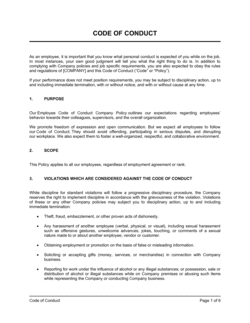
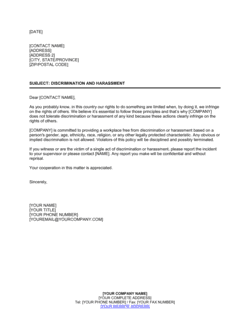
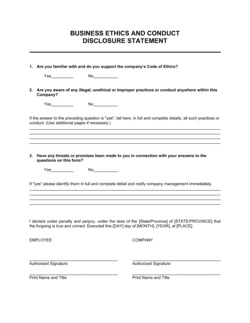
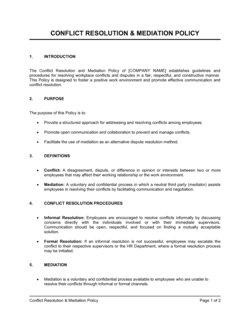
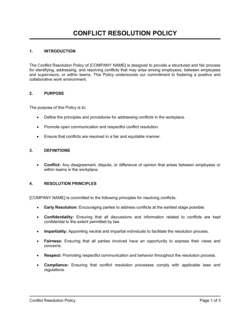
Codes of conduct and ethics
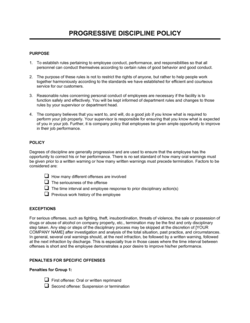
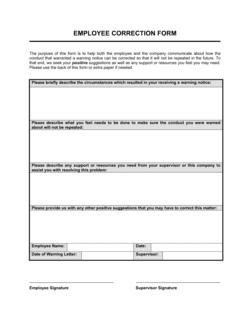
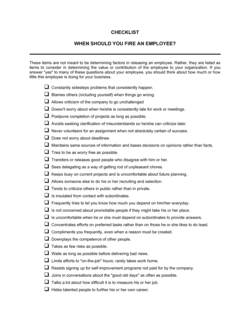
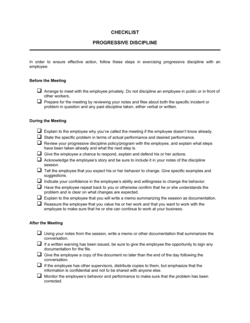
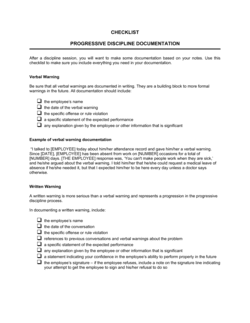
Progressive discipline and incident records
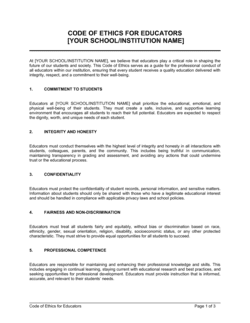
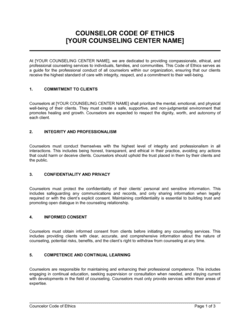
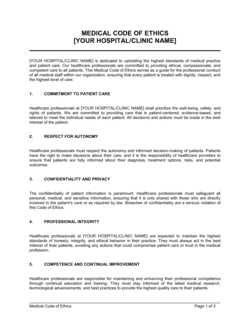
Profession-specific codes of ethics
Workplace policy documents
More conduct and discipline templates
250K+Clients
20M+Free users
20+Years
190+Countries
10,000+Law firms
50M+Downloads
Trusted across review platforms
- Capterra★★★★☆4.649 reviews
- G2★★★★☆4.713 reviews
- GetApp★★★★☆4.649 reviews
- Google Play★★★★☆4.6179 ratings
- Google Reviews★★★★☆4.567 reviews
Frequently asked questions
Is a code of conduct legally required?
A formal written code of conduct is not legally mandated in most jurisdictions, but it is strongly recommended and in some industries — publicly traded companies, federally contracted organizations, non-profits — it is effectively required by regulation or governance standards. Beyond legal compulsion, a written code is your primary defense when disciplinary decisions are challenged. Courts and arbitrators routinely ask whether the employee was given clear written notice of the rule they broke.
What's the difference between a code of conduct and an employee handbook?
An employee handbook is the umbrella document that compiles all workplace policies — compensation, benefits, leave, conduct, safety, and more. A code of conduct is one section or exhibit within that handbook, focused specifically on behavioral expectations and ethical standards. Some organizations publish the code of conduct as a standalone document for signing purposes, then incorporate it by reference into the handbook.
Can I use a template code of conduct without customizing it?
A template provides the correct structure and standard provisions, but it should always be customized to your industry, size, jurisdiction, and culture before distribution. At minimum, insert your company name, review the list of prohibited behaviors for relevance, and have legal counsel confirm compliance with local employment law before employees sign.
How many steps should a progressive discipline policy have?
Most progressive discipline frameworks use three to five steps: verbal warning, written warning, final written warning or suspension, and termination. The exact number depends on your organization's size and the nature of the misconduct. Serious violations — harassment, theft, violence — typically bypass the early steps and proceed directly to suspension or termination pending investigation.
Do employees have to sign a code of conduct?
Yes, in practice. A signed acknowledgment is what transforms a policy document into an enforceable obligation. Without a signature, an employee can credibly claim they never received or agreed to the policy. Obtain acknowledgment signatures when employees are hired and each time the code is materially updated.
What should be in a supplier code of conduct?
A supplier code of conduct typically covers labor standards, anti-corruption and anti-bribery requirements, environmental practices, data security obligations, conflict minerals, and audit rights. It should align with your company's own code of conduct and reference any applicable regulatory requirements — such as the UK Modern Slavery Act or the US Foreign Corrupt Practices Act — that apply to your supply chain.
How do I document a disciplinary action to protect the company?
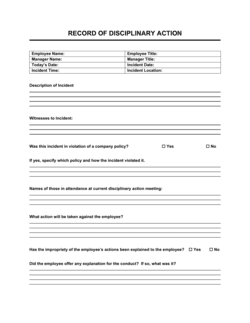
Use a dated, written form that describes the specific behavior, the policy provision violated, the prior warnings given, the corrective action required, and the consequence if behavior does not improve. Have both the manager and the employee sign the document. Store it securely in the personnel file. Consistency matters: discipline applied unevenly across employees of different demographics is a primary driver of wrongful termination claims.
When should I use a reprimand vs. a correction form?
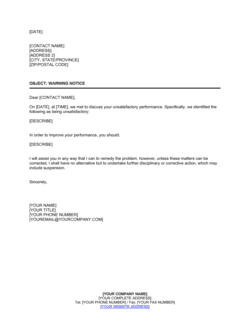
Use a correction form early in the disciplinary process when the goal is to document the issue and agree on a corrective path forward — it implies a collaborative response. Use a formal reprimand when the violation is serious, when prior steps have not resolved the issue, or when a formal warning must be placed in the personnel file. The reprimand signals a more serious escalation.
Conduct and Discipline vs. related documents
A code of conduct sets specific, enforceable rules about behavior — what employees may and may not do in defined situations. A code of ethics articulates the underlying values and principles that guide decision-making. Many organizations maintain both: the code of ethics answers "what do we believe?" while the code of conduct answers "what does that mean in practice?" Both belong in an employee handbook.
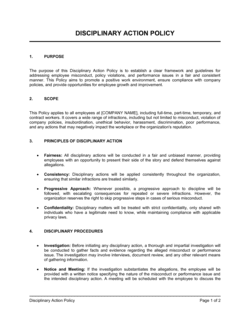
A progressive discipline policy is the company-wide procedure that defines the sequence of escalating responses to misconduct — verbal warning, written warning, suspension, termination. A disciplinary action form is the individual record used each time a step in that sequence is applied to a specific employee. The policy sets the rules; the form documents the application.
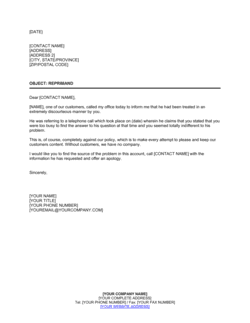
An employee correction form is a collaborative document that records the incident, the employee's acknowledgment, and the agreed corrective steps going forward. A reprimand is a formal, one-directional written warning issued by management and placed in the personnel file. Use the correction form for early-stage performance issues; use the reprimand when a formal warning is needed for the record.
A code of conduct sets behavioral expectations across the workforce and is typically a standalone policy document or handbook exhibit. An employment agreement is a binding contract between employer and employee that covers compensation, role, duration, and — sometimes — behavioral obligations by reference to the code of conduct. The code informs what's expected; the employment agreement makes it contractually binding.
Key clauses every Conduct and Discipline contains
Across the conduct and discipline category, most documents share a common set of provisions — whether the document is a company-wide policy or a single-incident form.
- Scope and applicability. Identifies who is covered — all employees, contractors, suppliers, board members — and in what contexts.
- Standards of behavior. Lists the specific conduct expected or prohibited, such as conflicts of interest, harassment, data handling, or dress.
- Reporting and escalation. Explains how employees report violations and to whom, including options for anonymous reporting.
- Investigation procedure. Outlines the steps the company takes when a potential violation is reported, to ensure consistent and fair handling.
- Disciplinary consequences. Maps specific misconduct categories to the corresponding disciplinary response, from coaching to termination.
- Employee acknowledgment. A signed statement confirming the employee received, read, and understands the policy — essential for enforceability.
- Non-retaliation provision. Protects employees who report violations in good faith from adverse employment action.
- Review and amendment clause. States how often the policy is reviewed and how employees are notified of changes.
How to write a code of conduct or discipline policy
Whether you're drafting a company-wide code of conduct or a disciplinary procedure, the same building blocks apply.
1
Define who it covers
State whether the policy applies to all full-time employees, part-timers, contractors, board members, or suppliers.
2
Identify the behaviors to address
List the specific conduct categories the document governs — conflicts of interest, harassment, safety, social media, dress, data handling.
3
Set the standard clearly
Describe the expected behavior in plain language, then describe what constitutes a violation — ambiguity is the most common enforcement problem.
4
Map out the disciplinary ladder
For discipline policies, document each escalation step — verbal warning, written warning, suspension, termination — and what triggers the move to the next level.
5
Establish the reporting and investigation process
Explain who receives complaints, how they are investigated, and what timeline employees can expect for a response.
6
Add a non-retaliation statement
Explicitly protect employees who report violations in good faith — this is required in many jurisdictions and reduces under-reporting.
7
Require a signed acknowledgment
Have every covered person sign an acknowledgment confirming they received and understood the document before it can be enforced.
8
Schedule regular reviews
Set a review cadence — at least annually — and a process for communicating updates, since outdated policies create legal exposure.
At a glance
- What it is
- Conduct and discipline documents are the written policies, forms, and procedures an organization uses to define acceptable behavior and respond when that behavior falls short. They range from broad codes of conduct that apply to every employee, to specific disciplinary forms that record individual incidents and corrective action.
- When you need one
- Any time you hire staff, engage suppliers, or need a defensible record of how a behavioral issue was handled — from the first verbal warning to formal termination proceedings.
Which Conduct and Discipline do I need?
The right template depends on whether you're setting policy upfront or responding to a specific incident. Use the scenarios below to find your fit.
Your situation
Recommended template
A growing company needs a formal written standard of employee behavior
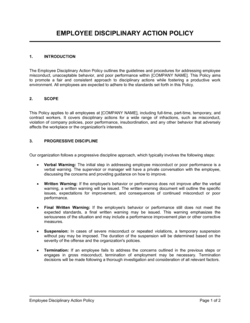
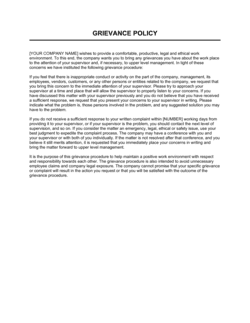
Covers the core behavioral expectations every employee handbook needs.HR needs a step-by-step process for escalating disciplinary action
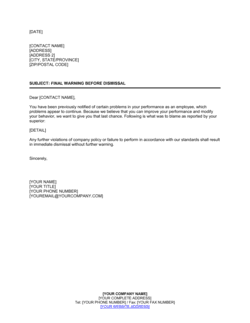
Documents the verbal warning, written warning, suspension, and termination ladder.A manager needs to formally document an employee's behavioral issue
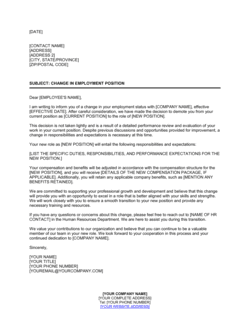
Creates a signed record of the infraction and the agreed corrective steps.An employee needs a formal written warning on file
Produces a timestamped formal reprimand letter suitable for personnel files.A company wants to address employee social media use and online behavior
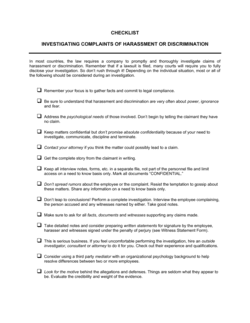
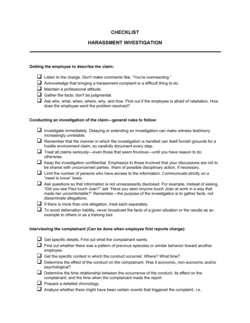
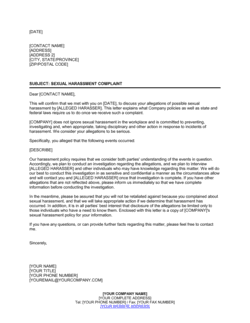
Sets explicit rules for online conduct tied to company reputation.HR needs to investigate a harassment complaint consistently
Ensures every step of a harassment investigation is documented and defensible.Procurement needs a conduct standard for external vendors
Extends conduct expectations beyond employees to the supply chain.A non-profit needs a conduct policy tailored to its governance structure
Addresses board accountability, volunteer conduct, and donor trust.Glossary
- Code of conduct
- A written policy that sets specific behavioral rules and expectations for everyone in an organization.
- Code of ethics
- A statement of the values and principles that guide an organization's decisions, distinct from specific behavioral rules.
- Progressive discipline
- A structured approach to misconduct that applies escalating consequences — from verbal warning to termination — giving employees the opportunity to correct behavior at each stage.
- Disciplinary action
- Any formal response by an employer to employee misconduct, ranging from a verbal warning to dismissal.
- Employee acknowledgment
- A signed statement from an employee confirming they have received, read, and understood a policy document.
- Non-retaliation policy
- A policy protecting employees from adverse employment action when they report a suspected violation in good faith.
- Corrective action
- The specific steps an employee is required to take to bring their behavior into compliance following a disciplinary incident.
- Reprimand
- A formal written warning placed in an employee's personnel file, typically issued after earlier informal steps have failed.
- Conflict of interest
- A situation where an employee's personal interests could improperly influence their professional decisions on behalf of the company.
- Gross misconduct
- Severe employee behavior — such as theft, violence, or harassment — that typically justifies immediate termination without prior warnings.
- Personnel file
- The employer's official record of an employee's employment history, including any disciplinary documents, signed acknowledgments, and performance records.
What is a conduct and discipline document?
A conduct and discipline document is a written policy, form, or procedure that an organization uses to define acceptable workplace behavior and to record how deviations from that standard are handled. The category spans a wide range of documents — from a company-wide code of conduct that every employee signs on their first day, to a progressive discipline policy that HR follows when behavior needs to be addressed, to individual incident records like correction forms and formal reprimands.
These documents serve two distinct but connected functions. Preventive documents — codes of conduct, codes of ethics, social media policies, dress code policies — communicate expectations before any issue arises. Responsive documents — disciplinary checklists, correction forms, reprimands, records of disciplinary action — create the written record needed to manage an incident fairly and defend the company's decisions if they are challenged. Most organizations need both types to operate effectively.
Codes of conduct also vary by audience and profession. General business codes cover all employees; supplier codes extend expectations into the supply chain; profession-specific codes of ethics — for nurses, engineers, educators, social workers, and others — address the particular obligations of a licensed or credentialed field. The right starting template depends on who the document is written for and what behavior it needs to govern.
When you need a conduct and discipline document
Conduct and discipline documents are needed at almost every stage of the employment lifecycle, not just when something goes wrong. The moment you hire a first employee or engage an external supplier, you need a written standard they can be held to.
Common triggers:
- Onboarding a new employee who needs to acknowledge workplace behavioral standards
- Updating an employee handbook to reflect current laws on harassment, social media, or remote work
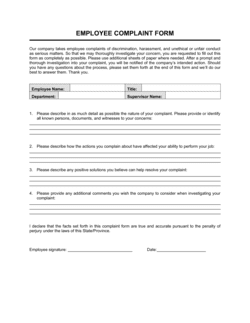
- Responding to a behavioral complaint and needing a consistent, documented investigation process
- Issuing a formal warning or reprimand and needing it on file before a future termination
- Building a supplier relationship and needing external parties to meet your ethical standards
- Preparing a board resolution that formally adopts a code of conduct as company policy
- Launching a professional practice that requires a field-specific code of ethics
- Defending an employment decision in an HR dispute, audit, or tribunal
Without written conduct and discipline documents, even a fair disciplinary decision can be difficult to defend. Courts and employment tribunals routinely ask whether the employee received clear written notice of the rules, whether the process was consistent, and whether the consequences were documented. With the right documents in place before an issue arises, the answer to all three questions is yes.
Award-winning platform
- Great Place to Work 2025
- BIG Award — Product of the Year 2025
- Smartest Companies 2025
- Global 100 Excellence 2026
- Best of the Best 2025