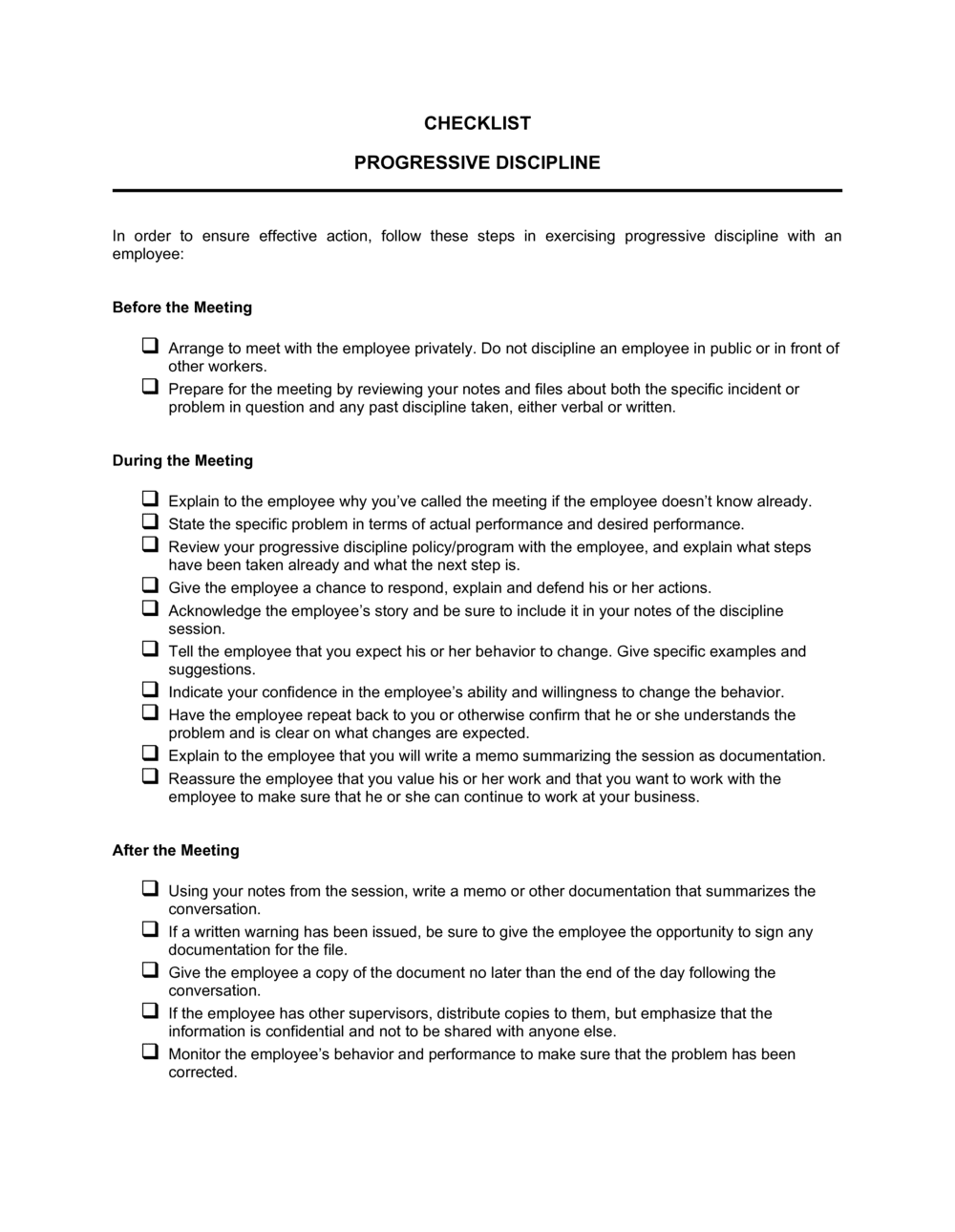
Checklist Progressive Discipline

Free download β€’ Use as a template β€’ Print or share

1 pageβ€’15–25 min to useβ€’Difficulty: Standard
Learn more ↓
FreeChecklist Progressive Discipline Template

At a glance

What it is
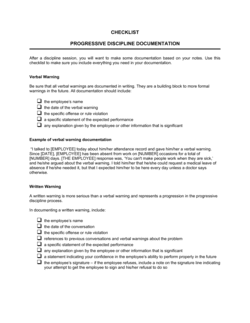
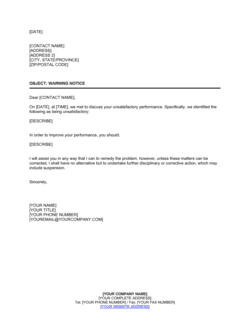
A Progressive Discipline Checklist is a structured form managers use to document each step of a corrective-action process β€” verbal warning, written warning, final warning, and termination β€” in a consistent, auditable record. This free Word download lets you complete it online and export as PDF for each disciplinary incident.
When you need it
Use it any time an employee's conduct or performance falls below acceptable standards and you need a documented trail showing that corrective steps were applied consistently before escalation. It is especially important before issuing a written warning, placing an employee on a performance improvement plan, or initiating termination proceedings.
What's inside
Employee and manager identification, incident description and date, the discipline level applied, a summary of prior steps taken, the expected corrective action and improvement timeline, and signature acknowledgment fields for both parties.

What is a Progressive Discipline Checklist?

A Progressive Discipline Checklist is a structured form that guides managers through each formal step of a corrective-action process β€” from verbal warning through written warning, final warning, and potential termination β€” while capturing the incident details, policy references, improvement requirements, and employee acknowledgment in a single auditable record. It functions as both a process guide and a legal documentation tool, ensuring that every disciplinary action is applied consistently, tied to a specific policy violation, and supported by a clear improvement expectation.

Why You Need This Document

Without a documented disciplinary process, terminations become difficult to defend and warnings lose their corrective power. Employees who receive vague or inconsistently applied discipline are more likely to contest terminations through unemployment claims, labor boards, or wrongful-termination suits β€” and a file with no written record is your weakest possible position in those proceedings. A completed progressive discipline checklist shows that the employee was informed of the problem, given a fair opportunity to correct it, and that the same process was applied as it would be for any other employee in the same situation. This template gives you a consistent, fillable form you can complete in under 15 minutes per incident and store in the employee's HR file β€” building the documented trail that protects your business at every stage of the process.

Which variant fits your situation?

If your situation is…Use this template
First-time minor conduct issue requiring a verbal warningVerbal Warning Record
Repeated offense requiring a formal written warningEmployee Written Warning Form
Performance falling short of role requirements over timePerformance Improvement Plan (PIP)
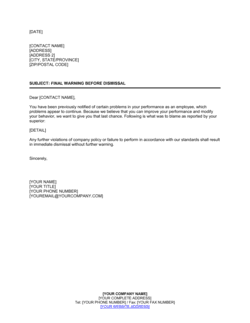
Final warning before potential terminationFinal Written Warning Letter
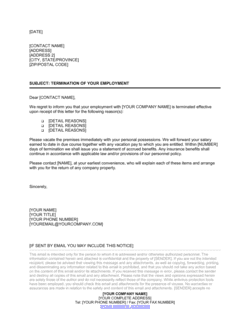
Ending employment after exhausting corrective stepsEmployee Termination Letter
Documenting an entire disciplinary conversation in writingEmployee Counseling Form

Common mistakes to avoid

❌ Using subjective language instead of observable behavior

Why it matters: Phrases like 'poor attitude' or 'difficult to work with' cannot be objectively verified and are routinely challenged in unemployment hearings and wrongful-termination claims.

Fix: Describe only what was observed or documented β€” specific actions, times, dates, and outcomes β€” and tie each description to the policy it violated.

❌ Skipping discipline levels without documentation

Why it matters: Moving from a verbal warning directly to termination without explanation exposes the employer to claims of inconsistent or discriminatory treatment, even if the underlying offense was serious.

Fix: If the severity of the offense justifies skipping a level, document that justification explicitly in the checklist at the time of the action.

❌ Failing to follow up on the improvement timeline

Why it matters: Issuing a warning with a 90-day review date and never conducting the review signals that the discipline was not taken seriously β€” and weakens any subsequent escalation.

Fix: Schedule the follow-up meeting at the same time you complete the checklist, and document the outcome of that meeting in a new entry on the employee's disciplinary record.

❌ Not providing the employee with a copy after signing

Why it matters: Employees who never receive a copy of their warning often claim they were unaware of the issue, complicating termination proceedings and unemployment claims.

Fix: Hand the signed copy to the employee before they leave the meeting and note on the manager's file copy that a copy was provided on that date.

The 9 key fields, explained

Employee information

Manager and witness information

Incident date and description

Policy or rule violated

Discipline level applied

Prior discipline history

Required corrective action and timeline

Consequences of non-compliance

Employee acknowledgment and response

How to fill it out

  1. 1

    Enter the employee and manager details

    Fill in the employee's legal name, job title, department, and employee ID. Add the issuing manager's name and title, and note any witness present.

    πŸ’‘ Confirm the employee's legal name matches your HRIS records exactly before completing any other field.

  2. 2

    Record the incident date and write a factual description

    Enter the exact date the incident occurred and describe the behavior in specific, observable terms β€” what happened, where, and how it was identified. Avoid adjectives and stick to documented facts.

    πŸ’‘ Write the description as if it will be read by someone who has never met the employee β€” clarity and specificity are your best protection.

  3. 3

    Cite the specific policy violated

    Reference the policy by name and section number from your employee handbook or HR policy manual. Quote the relevant rule briefly.

    πŸ’‘ If the policy was recently updated, attach the relevant page of the current handbook to the completed checklist as a supporting document.

  4. 4

    Check the appropriate discipline level

    Select the current step in the progressive process. If you are skipping a level due to the severity of the offense, document the reason in the prior-history or notes field.

    πŸ’‘ Consistency across employees in similar situations is the most important factor in defending a discipline decision against a discrimination or retaliation claim.

  5. 5

    Summarize prior discipline history

    List all previous warnings for this employee with dates, reasons, and outcomes. If this is a first offense, state that explicitly.

    πŸ’‘ Pull the employee's full disciplinary file before the meeting β€” presenting an incomplete history in the meeting is harder to correct after the fact.

  6. 6

    Define the corrective action and timeline

    State exactly what behavior is expected, how it will be measured, and the specific date by which improvement will be assessed. Tie the requirement to a measurable, observable standard.

    πŸ’‘ Set a calendar reminder for the review date the moment you complete this field β€” a missed follow-up undermines the entire corrective process.

  7. 7

    Obtain the employee's acknowledgment

    Review the completed checklist with the employee in a private setting. Give them time to read it, ask questions, and sign. Provide them with a copy immediately after signing.

    πŸ’‘ If the employee refuses to sign, note the refusal in writing, have the witness sign, and provide the copy anyway β€” refusal to sign does not invalidate the document.

Frequently asked questions

What is a progressive discipline checklist?

A progressive discipline checklist is a structured form that guides managers through each step of a corrective-action process β€” verbal warning, written warning, final warning, and termination β€” while capturing the incident details, policy violations, improvement expectations, and employee acknowledgment in a single auditable document. It ensures every disciplinary action is applied consistently and is supported by a documented record.

When should I use a progressive discipline checklist?

Use it any time an employee's conduct or performance falls below acceptable standards and you are initiating or documenting a formal corrective step. It is especially important before issuing a written warning, escalating to a final warning, or terminating an employee β€” situations where a documented trail is your primary protection against wrongful-termination or discrimination claims.

Does the employee have to sign the checklist?

The employee's signature acknowledges receipt of the document, not agreement with its content. If an employee refuses to sign, note the refusal in writing, have a witness sign to confirm the meeting occurred, and provide the employee with a copy regardless. Refusal to sign does not invalidate the document or the disciplinary action.

Can I skip a step in the progressive discipline process?

Yes, in cases of serious misconduct β€” theft, harassment, safety violations, or other gross misconduct β€” skipping directly to a final warning or termination is appropriate. When you skip a level, document the specific reason on the checklist at the time of the action so the rationale is part of the record.

How long should I keep completed progressive discipline checklists?

Retain disciplinary records for at least the duration of employment plus 3–7 years, depending on your jurisdiction's employment records retention requirements. Records for employees who were terminated should be kept longer β€” at least 4–5 years β€” since wrongful-termination claims can be filed well after the separation date.

What is the difference between a progressive discipline checklist and a performance improvement plan?

A progressive discipline checklist documents a specific incident and the corrective step applied β€” it is a record of an action taken. A performance improvement plan (PIP) is a forward-looking document that sets measurable performance goals, a timeline, and support resources over a defined period, typically 30–90 days. The two are often used together: the checklist documents the formal warning; the PIP defines the path to improvement.

Does using a progressive discipline process prevent at-will employers from terminating employees?

Not necessarily, but it changes the risk profile. At-will employment allows termination for any lawful reason, but an employer who follows a published progressive discipline policy is generally expected to apply it consistently. Deviating from a documented process β€” or applying it selectively β€” can support claims of discrimination or retaliation even in at-will states. Consistent use of the checklist is your best defense.

Should a witness be present during a disciplinary meeting?

Having a second manager or HR representative present is recommended for written warnings, final warnings, and terminations. A witness can corroborate what was said, sign the checklist if the employee refuses, and reduce the risk of he-said/she-said disputes. The witness's name and title should always be recorded on the form.

How this compares to alternatives

vs Employee written warning form

A written warning form is a single-incident document focused on communicating one specific violation and its consequences. The progressive discipline checklist is a broader tracking tool that spans the entire corrective process, records prior history, and confirms which step in the escalation sequence is being applied. Use the checklist to manage the process; use the warning form as the formal notice for each step.

vs Performance improvement plan

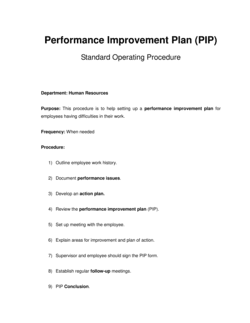
A PIP is forward-looking β€” it defines goals, resources, and a timeline for improvement. The progressive discipline checklist is retrospective β€” it documents what happened, what rule was violated, and what corrective step was taken. For performance issues, the two work together: the checklist records the formal warning; the PIP defines the path forward.

vs Employee termination letter

A termination letter communicates the end of employment and its effective date. The progressive discipline checklist is the documentation trail that supports the termination decision and shows it followed a consistent process. The checklist should be completed and on file before the termination letter is issued.

vs Employee counseling form

An employee counseling form is typically used for informal, early-stage conversations before a formal warning is warranted. The progressive discipline checklist begins when the process becomes formal. Use the counseling form for coaching discussions; switch to the discipline checklist once you are issuing a documented warning at any level.

Industry-specific considerations

Retail and hospitality

High-turnover environments with attendance, conduct, and customer-service standards that require consistent, well-documented discipline across multiple shift supervisors.

Manufacturing and logistics

Safety rule violations and attendance issues are the most common triggers; documented progressive discipline is critical for union-environment compliance and OSHA recordkeeping.

Healthcare

Patient safety and HIPAA compliance incidents require precise behavioral documentation and often trigger mandatory reporting alongside the internal disciplinary process.

Professional services

Performance-based discipline tied to billable hours, client feedback scores, or deliverable quality requires measurable improvement standards on each checklist.

Template vs pro β€” what fits your needs?

PathBest forCostTime
Use the templateManagers and HR teams handling routine conduct or attendance issues in a single jurisdictionFree10–15 minutes per incident
Template + professional reviewBusinesses updating their disciplinary policy to align the checklist with a new employee handbook or multi-state operations$150–$400 (HR consultant or employment attorney review)1–3 days
Custom draftedUnionized workplaces, heavily regulated industries, or employers with a history of employment litigation requiring a bespoke process$500–$2,000+1–2 weeks

Glossary

Progressive Discipline
A formal corrective process that applies escalating consequences β€” verbal warning, written warning, final warning, termination β€” for repeated or serious policy violations.
Verbal Warning
The first formal step in most progressive discipline processes, where a manager communicates the issue directly and documents the conversation.
Written Warning
A formal documented notice to an employee stating the specific policy violation, required corrective behavior, and consequences of non-compliance.
Final Warning
A written notice issued after a prior warning has not produced the required change, indicating that the next violation will result in termination.
Performance Improvement Plan (PIP)
A structured document outlining specific performance gaps, measurable goals, a timeline for improvement, and the consequences of failing to meet those goals.
At-Will Employment
Employment that either party may end at any time for any lawful reason β€” but even at-will employers benefit from documented progressive discipline to defend against wrongful-termination claims.
Corrective Action
Any formal step taken by an employer to address and correct an employee's performance or conduct problem.
Employee Acknowledgment
A signature or written statement from the employee confirming they received and reviewed the disciplinary document β€” it does not necessarily mean they agree with it.
Disciplinary Record
The cumulative file of documented warnings and corrective actions for an individual employee, used to support escalation decisions and defend terminations.

Part of your Business Operating System

This document is one of 3,000+ business & legal templates included in Business in a Box.

  • Fill-in-the-blanks β€” ready in minutes
  • 100% customizable Word document
  • Compatible with all office suites
  • Export to PDF and share electronically

Create your document in 3 simple steps.

From template to signed document β€” all inside one Business Operating System.
1
Download or open template

Access over 3,000+ business and legal templates for any business task, project or initiative.

2
Edit and fill in the blanks with AI

Customize your ready-made business document template and save it in the cloud.

3
Save, Share, Send, Sign

Share your files and folders with your team. Create a space of seamless collaboration.

Save time, save money, and create top-quality documents.

β˜…β˜…β˜…β˜…β˜…

"Fantastic value! I'm not sure how I'd do without it. It's worth its weight in gold and paid back for itself many times."

Managing Director Β· Mall Farm
Robert Whalley
Managing Director, Mall Farm Proprietary Limited
β˜…β˜…β˜…β˜…β˜…

"I have been using Business in a Box for years. It has been the most useful source of templates I have encountered. I recommend it to anyone."

Business Owner Β· 4+ years
Dr Michael John Freestone
Business Owner
β˜…β˜…β˜…β˜…β˜…

"It has been a life saver so many times I have lost count. Business in a Box has saved me so much time and as you know, time is money."

Owner Β· Upstate Web
David G. Moore Jr.
Owner, Upstate Web

Run your business with a system β€” not scattered tools

Stop downloading documents. Start operating with clarity. Business in a Box gives you the Business Operating System used by over 250,000 companies worldwide to structure, run, and grow their business.

Start freeΒ Β·Β No credit card required