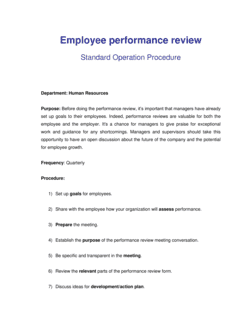
Employee Complaint Form Template

Free Word download β€’ Edit online β€’ Save & share with Drive β€’ Export to PDF

1 pageβ€’20–25 min to fillβ€’Difficulty: Standard
Learn more ↓
FreeEmployee Complaint Form Template

At a glance

What it is
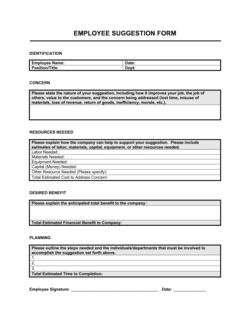
An Employee Complaint Form is a structured HR document used to formally record a workplace grievance, concern, or incident raised by an employee. This free Word download gives HR teams and managers a consistent, fillable form that captures every detail needed for investigation and resolution β€” editable online and exportable as PDF.
When you need it
Use it any time an employee reports a workplace issue β€” harassment, discrimination, policy violations, interpersonal conflicts, or unsafe conditions β€” and you need a documented record that supports a fair, consistent investigation process.
What's inside
Complainant details, description of the incident or concern, parties involved, dates and locations, prior reporting history, desired resolution, witness information, and HR acknowledgment with tracking fields for follow-up and outcome.

What is an Employee Complaint Form?

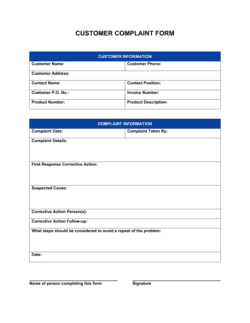
An Employee Complaint Form is a structured HR document used to formally record a workplace grievance, concern, or reported incident raised by an employee against a colleague, supervisor, or organizational practice. It captures the complainant's identity, a detailed account of the incident, the parties involved, witness information, supporting evidence, and the employee's desired resolution β€” creating an official record that HR can use to open, track, and close an investigation with consistency and accountability. Unlike an informal verbal report, a completed complaint form establishes a timestamped, documented chain of events that protects both the employee and the organization.

Why You Need This Document

Without a standardized complaint form, workplace grievances get handled inconsistently β€” some documented in email threads, others addressed verbally with no record at all. When a complaint later reaches an external body such as the EEOC, a labor board, or a court, an organization with no documented intake process faces a credibility problem it cannot easily fix after the fact. A consistent form also signals to employees that their concerns will be taken seriously and processed fairly, which reduces the likelihood that unresolved issues become regulatory complaints or litigation. This template gives HR teams and small business owners a ready-to-use, professionally structured form that covers every field an investigation requires β€” deployable in under 30 minutes.

Which variant fits your situation?

If your situation is…Use this template
Reporting harassment or discrimination by a supervisor or colleagueEmployee Complaint Form
Formally grieving a disciplinary action or termination decisionEmployee Grievance Form
Documenting a workplace safety hazard or injury incidentWorkplace Incident Report
Reporting misconduct or policy violations anonymouslyAnonymous Tip / Ethics Hotline Form
Recording progressive disciplinary actions taken by managementEmployee Disciplinary Action Form
Capturing the outcome of an HR investigation into a complaintHR Investigation Report

Common mistakes to avoid

❌ Accepting vague incident descriptions without prompting for specifics

Why it matters: A complaint that says 'my manager is hostile' cannot be investigated β€” HR needs dates, specific words or actions, and locations to interview witnesses and reach a finding.

Fix: Use a structured description prompt on the form itself and follow up with a 15-minute intake call if the written account lacks specifics before opening an investigation.
❌ Not assigning a case number at intake

Why it matters: Without a reference number, complaints get buried in email threads, duplicate submissions go undetected, and employees have no way to follow up β€” damaging trust in the process.

Fix: Assign a sequential case number the moment the form is received and include it in every communication with the complainant from that point forward.

❌ Failing to record the respondent's relationship to the complainant

Why it matters: A supervisor-subordinate complaint requires a different investigation lead than a peer-to-peer complaint β€” assigning the wrong person creates a conflict of interest that can invalidate the findings.

Fix: Add a required dropdown field β€” supervisor, peer, subordinate, or external party β€” so the routing decision is made at intake, not after reading the narrative.

❌ Not documenting prior informal reports of the same issue

Why it matters: If an employee previously raised the issue with a manager who failed to act, that inaction is itself a finding β€” missing it obscures organizational liability and repeats failures.

Fix: Include a mandatory prior-reporting field and treat a 'yes' answer as a trigger for a secondary review of how the earlier report was handled.

The 10 key fields, explained

Complainant information

Date and time of complaint submission

Description of the incident or concern

Date(s) and location(s) of the incident

Respondent information

Witness information

Prior reporting history

Supporting evidence

Desired resolution

HR acknowledgment and case number

How to fill it out

  1. 1

    Customize the header with your company name and HR contact

    Replace the placeholder company name and logo, and add the HR department's email address and phone number so employees know where to submit completed forms.

    πŸ’‘ Include a confidentiality notice in the header reminding employees that complaint details will only be shared with those directly involved in the investigation.

  2. 2

    Have the employee complete their personal details

    Collect the complainant's full legal name, job title, department, and preferred contact information. Confirm the details match HR records before logging the complaint.

    πŸ’‘ If your organization permits anonymous complaints, add a checkbox here that removes name fields and routes the form through a neutral third party.

  3. 3

    Record the incident description in specific terms

    Guide the employee to describe exactly what was said or done, by whom, when, and where β€” using first-person language. If the employee submits a vague account verbally, transcribe it with their approval.

    πŸ’‘ Provide a prompted structure: 'On [date], at [time], in [location], [person] said/did [specific action].' Structured prompts produce more actionable accounts than open text boxes.

  4. 4

    Document all dates, locations, and the respondent's details

    Enter every date the behavior occurred, not just the most recent incident, along with the respondent's name, title, and relationship to the complainant.

    πŸ’‘ For ongoing patterns, list each date on a separate line β€” courts and investigators treat repeated incidents as materially different from a single isolated event.

  5. 5

    Collect witness names and attach supporting evidence

    List any witnesses and ask the employee to attach emails, messages, photos, or documents at submission. Note the number of attachments in the evidence field.

    πŸ’‘ Tell employees to forward digital evidence to a dedicated HR inbox immediately β€” delay risks deletion, especially on shared platforms.

  6. 6

    Assign a case number and set a response deadline

    HR should stamp the form with the receipt date, assign a sequential case number (e.g., CASE-2026-0047), and record a target resolution date β€” typically 5–10 business days for an initial response.

    πŸ’‘ Send the employee an automated or manual acknowledgment with the case number within 24 hours of receipt β€” this alone significantly reduces escalations.

Frequently asked questions

What is an employee complaint form?

An employee complaint form is a structured HR document that formally records a workplace grievance or concern raised by an employee. It captures the complainant's details, a description of the incident, the parties involved, any witnesses, supporting evidence, and the desired resolution. It creates an official record that supports a fair, consistent, and documented investigation process.

When should an employee complaint form be used?

Use it any time an employee raises a formal workplace concern β€” harassment, discrimination, bullying, policy violations, unsafe working conditions, or interpersonal conflicts that cannot be resolved informally. It should be used from the first formal complaint, not only when a situation escalates. Early documentation protects both the employee and the organization.

Is a complaint form required by law?

No specific federal law mandates a particular complaint form format, but anti-discrimination laws such as Title VII, the ADA, and the ADEA require employers to have a process for receiving and investigating complaints. Many states have additional requirements. A standardized form helps demonstrate that the organization has a consistent, non-discriminatory process β€” which matters significantly if a complaint reaches a regulatory body or court.

Who should receive a completed employee complaint form?

Typically the HR department or a designated HR business partner. If the complaint involves an HR staff member, it should go to a senior HR leader, the legal team, or an external ombudsman. Small businesses without HR departments should route complaints to the owner or an independent third party to preserve impartiality.

How long should employee complaint records be kept?

The EEOC recommends retaining employment records β€” including complaint files β€” for at least one year from the date of the complaint. If a charge of discrimination is filed, records must be kept until the matter is fully resolved. Many HR professionals retain complaint files for three to five years as a best practice to cover applicable statutes of limitations.

Can an employee be fired for filing a complaint?

No. Terminating or otherwise retaliating against an employee for filing a good-faith complaint is illegal under federal law and most state laws. The complaint form itself β€” with its timestamp and documented receipt β€” serves as evidence that the employee engaged in protected activity, which is precisely why maintaining a complete, dated record is critical for the organization's legal protection as well as the employee's.

Should complaint forms be anonymous?

Anonymous forms lower the barrier for reporting but limit the ability to investigate β€” HR cannot interview the complainant, clarify facts, or provide feedback on the outcome. Named forms with strong confidentiality commitments and anti-retaliation policies typically produce more actionable complaints. Offering both options β€” a named form and an anonymous tip channel β€” is a practical middle ground for most organizations.

What happens after an employee complaint form is submitted?

HR should acknowledge receipt within 24 hours with the assigned case number. The next step is an intake review to assess whether the complaint requires a formal investigation, mediation, or a policy clarification. The complainant should receive an initial response β€” not necessarily a final resolution β€” within five to ten business days. All steps, decisions, and communications should be documented in the case file.

How this compares to alternatives

vs Employee Disciplinary Action Form

A disciplinary action form is completed by management to document a corrective action taken against an employee. An employee complaint form is completed by the employee to report a grievance. The two are distinct documents that may reference each other β€” a complaint can trigger disciplinary action, and disciplinary action can itself become the subject of a complaint.

vs Workplace Incident Report

A workplace incident report documents a safety event β€” an injury, near-miss, or property damage β€” for regulatory and insurance purposes. An employee complaint form documents interpersonal or policy grievances. Safety incidents that also involve misconduct, such as a supervisor ignoring a reported hazard, may require both forms to be filed simultaneously.

vs Employee Warning Letter

An employee warning letter is a formal written notice from management to an employee about unacceptable behavior. An employee complaint form is initiated by the employee, not management. A warning letter may be issued as a resolution action after an HR investigation triggered by a complaint form.

vs Exit Interview Form

An exit interview form captures a departing employee's feedback about their overall experience and reasons for leaving. An employee complaint form is used during active employment to formally report a specific concern. Exit interviews sometimes surface unresolved complaints that were never formally filed β€” a gap that a well-promoted complaint process helps close.

Industry-specific considerations

Healthcare

Complaint forms in healthcare must align with Joint Commission standards and often trigger mandatory reporting obligations for patient safety or regulatory compliance violations.

Retail / Hospitality

High employee turnover and shift-based scheduling make consistent complaint intake critical β€” forms are often submitted digitally to a central HR contact rather than an on-site manager.

Manufacturing

Complaint forms frequently involve safety hazard reports alongside interpersonal grievances, requiring coordination between HR and EHS (Environmental Health and Safety) teams.

Professional Services

Client-facing roles add complexity when complaints involve conduct during client engagements, requiring careful handling to preserve both employee rights and client relationships.

Template vs pro β€” what fits your needs?

PathBest forCostTime
Use the templateSmall and mid-sized businesses that need a consistent, professionally structured complaint intake form immediatelyFree15–30 minutes to customize and deploy
Template + professional reviewOrganizations in regulated industries or those updating their complaint process after an EEOC charge or audit finding$300–$800 for an HR consultant or employment attorney review2–5 business days
Custom draftedLarge employers, government contractors, or organizations with union agreements requiring negotiated grievance procedures$1,000–$3,500+ for a custom HR policy and form package2–4 weeks

Glossary

Grievance
A formal complaint raised by an employee about a workplace condition, policy, or the behavior of a manager or colleague.
Complainant
The employee who files the complaint and whose concerns are the subject of the form.
Respondent
The individual or party against whom the complaint is made.
Corroborating Witness
A person who observed the incident or has direct knowledge of the events described in the complaint.
Investigation
The formal process HR or management undertakes to gather facts, interview parties, and determine whether a complaint is substantiated.
Substantiated Complaint
A complaint for which HR's investigation finds sufficient evidence to support the employee's account of events.
Retaliation
Adverse action taken against an employee β€” such as demotion, termination, or hostile treatment β€” because they filed a complaint.
Confidentiality Clause
A notice on the complaint form reminding all parties that complaint details are restricted to those with a legitimate need to know.
Chain of Custody
The documented sequence of who received, reviewed, and acted on a complaint form, used to demonstrate a fair and unbroken process.
Resolution Outcome
The documented conclusion of the complaint process, including any corrective action taken, communicated to the complainant in writing.

Part of your Business Operating System

This document is one of 3,000+ business & legal templates included in Business in a Box.

  • Fill-in-the-blanks β€” ready in minutes
  • 100% customizable Word document
  • Compatible with all office suites
  • Export to PDF and share electronically

Create your document in 3 simple steps.

From template to signed document β€” all inside one Business Operating System.
1
Download or open template

Access over 3,000+ business and legal templates for any business task, project or initiative.

2
Edit and fill in the blanks with AI

Customize your ready-made business document template and save it in the cloud.

3
Save, Share, Send, Sign

Share your files and folders with your team. Create a space of seamless collaboration.

Save time, save money, and create top-quality documents.

β˜…β˜…β˜…β˜…β˜…

"Fantastic value! I'm not sure how I'd do without it. It's worth its weight in gold and paid back for itself many times."

Managing Director Β· Mall Farm
Robert Whalley
Managing Director, Mall Farm Proprietary Limited
β˜…β˜…β˜…β˜…β˜…

"I have been using Business in a Box for years. It has been the most useful source of templates I have encountered. I recommend it to anyone."

Business Owner Β· 4+ years
Dr Michael John Freestone
Business Owner
β˜…β˜…β˜…β˜…β˜…

"It has been a life saver so many times I have lost count. Business in a Box has saved me so much time and as you know, time is money."

Owner Β· Upstate Web
David G. Moore Jr.
Owner, Upstate Web

Run your business with a system β€” not scattered tools

Stop downloading documents. Start operating with clarity. Business in a Box gives you the Business Operating System used by over 250,000 companies worldwide to structure, run, and grow their business.

Start freeΒ Β·Β No credit card required