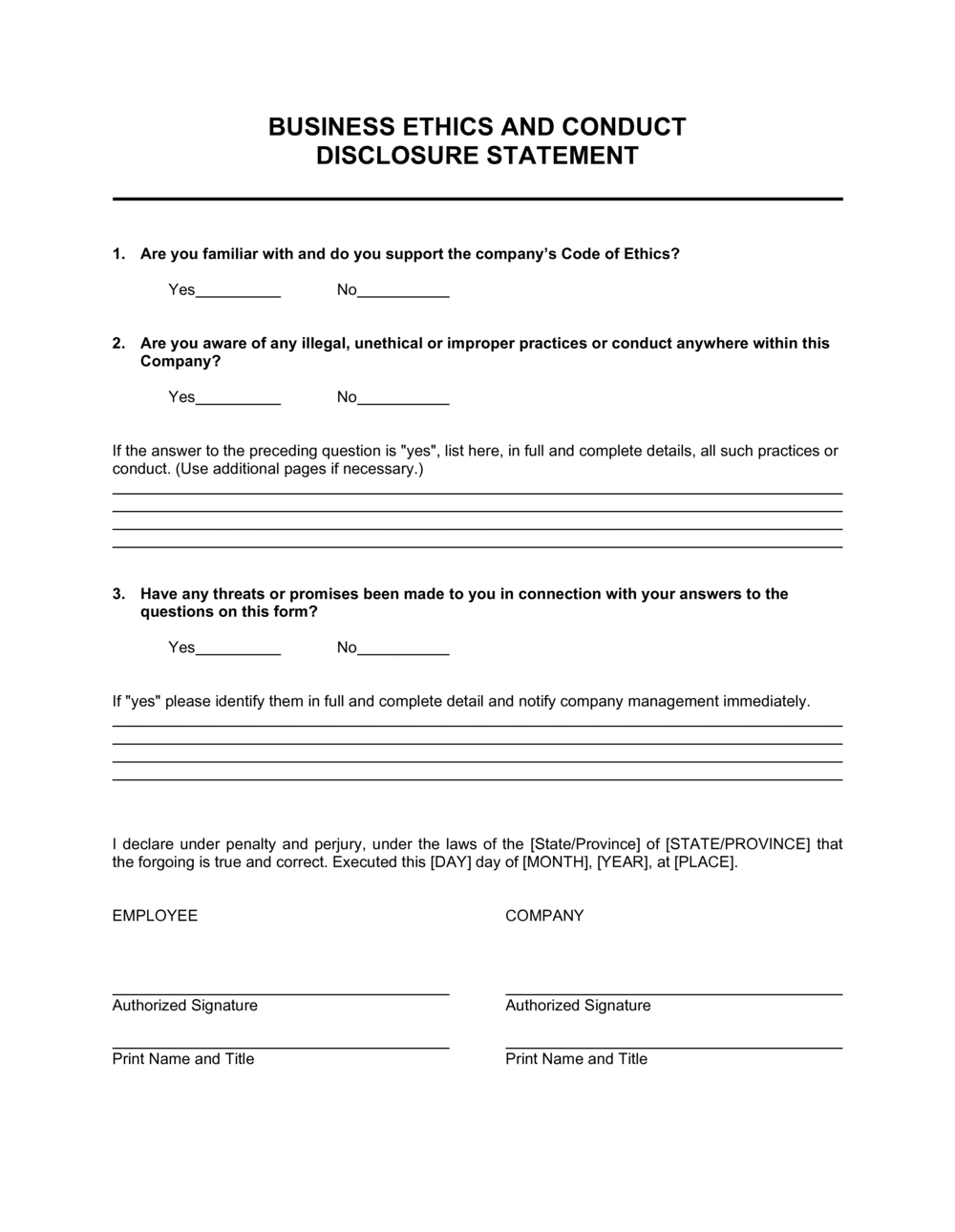
- Disclosure Statement
- A signed document in which a party acknowledges and agrees to specific obligations, confirming they have read, understood, and accepted the stated terms.
- Conflict of Interest
- A situation in which an employee's personal, financial, or professional interests could improperly influence their decisions or actions on behalf of the company.
- Confidential Information
- Non-public data, trade secrets, client lists, financial records, or strategic plans that an employee is prohibited from disclosing or using outside their authorized role.
- Anti-Bribery Obligation
- A commitment not to offer, give, request, or accept anything of value to improperly influence a business decision or a public official's action.
- Whistleblower Protection
- A clause guaranteeing that employees who report suspected ethics violations in good faith will not face retaliation, demotion, or termination.
- Fair Dealing
- An obligation to act honestly and in good faith with customers, suppliers, competitors, and colleagues — avoiding deception, manipulation, or unfair advantage.
- Acknowledgment Block
- The signature section at the end of the statement where the signatory confirms they have read, understood, and agreed to the document's terms.
- Material Interest
- A financial or personal stake significant enough that a reasonable person would consider it capable of influencing professional judgment or conduct.
- Disciplinary Procedure
- The formal process an employer follows when investigating and responding to alleged violations of ethics or conduct standards, ranging from a written warning to termination.
- FCPA (Foreign Corrupt Practices Act)
- A US federal law prohibiting companies and individuals from bribing foreign government officials to obtain or retain business.
- UK Bribery Act
- UK legislation that criminalizes bribery of both public officials and private individuals, with strict liability for organizations that fail to prevent bribery by associated persons.