Employee Correction Form Template

Free Word download β€’ Edit online β€’ Save & share with Drive β€’ Export to PDF

1 pageβ€’20–25 min to fillβ€’Difficulty: Standard
Learn more ↓
FreeEmployee Correction Form Template

At a glance

What it is
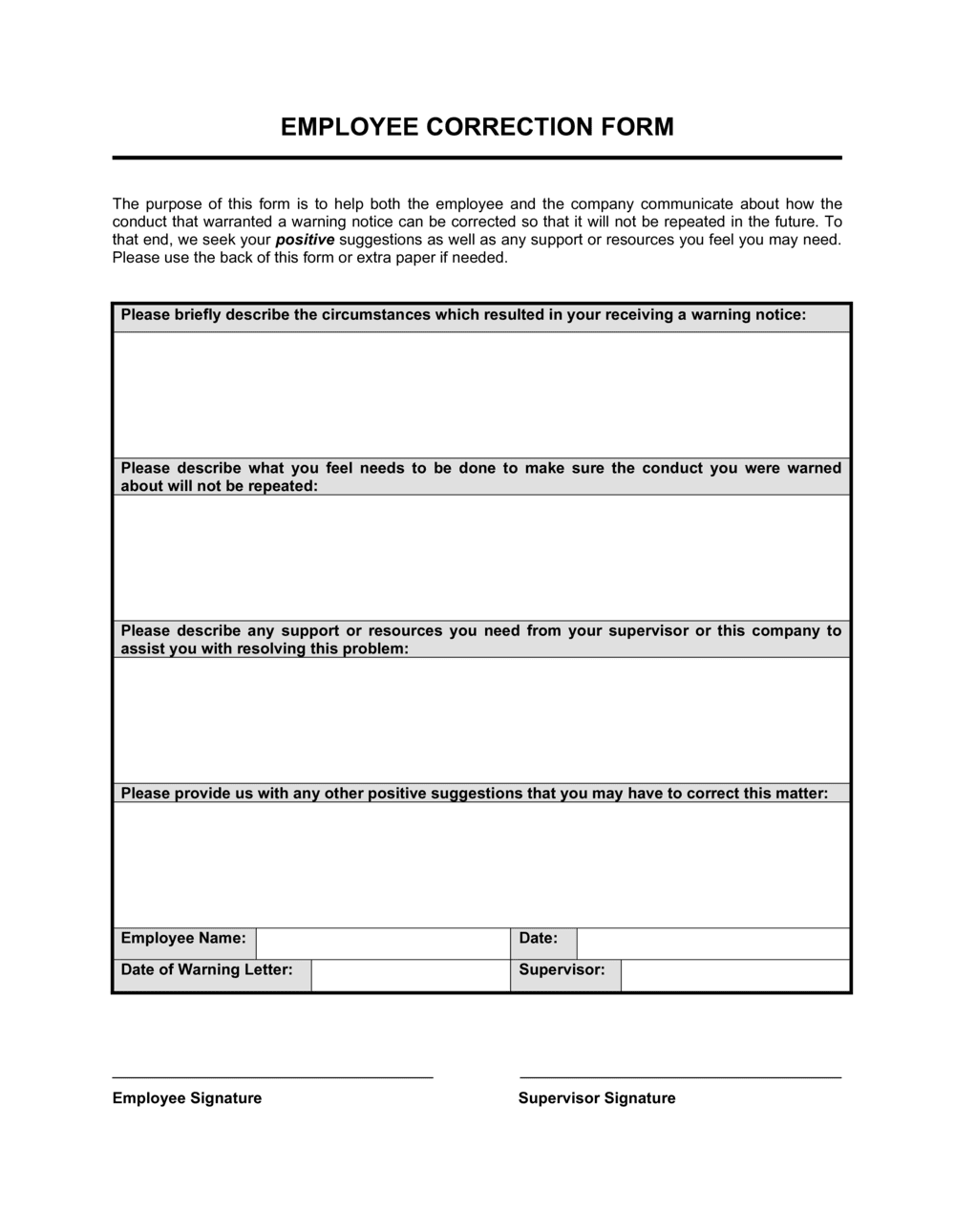
An Employee Correction Form is a structured HR document used to formally record a performance or conduct issue, outline the corrective action required, and track the employee's progress toward improvement. This free Word download gives managers a consistent, professionally formatted form they can complete in minutes, edit online, and store in a personnel file.
When you need it
Use it whenever an employee's performance, attendance, or workplace behavior falls below the standard required and a documented corrective conversation is needed. It creates a written record before escalating to formal discipline or termination proceedings.
What's inside
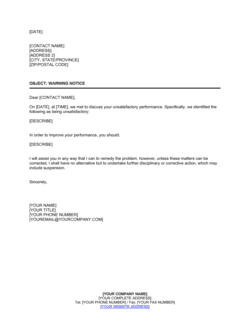
Employee and supervisor identification fields, incident date and description, policy or standard violated, corrective action plan with deadlines, consequences of non-improvement, and acknowledgment signatures from both parties.

What is an Employee Correction Form?

An Employee Correction Form is a structured HR document that managers use to formally record a performance or conduct issue, identify the workplace policy or standard that was not met, and document the specific corrective actions the employee must take to resolve the problem. It creates a clear, signed written record that goes into the employee's personnel file and serves as the foundation for progressive discipline if the issue continues. Unlike informal verbal feedback, a completed correction form gives both parties an objective, date-stamped reference for what was discussed, what improvement is required, and what the consequences of non-improvement will be.

Why You Need This Document

Without a written correction form, disciplinary conversations leave no verifiable record β€” and if an employee later claims they were unaware of a performance issue or disputes a termination, the employer has nothing concrete to point to. Consistent use of correction forms protects the organization by demonstrating that employees were treated fairly, given clear expectations, and afforded a genuine opportunity to improve before any escalation. It also creates the documentation trail that employment attorneys and HR professionals rely on when defending against wrongful termination or discrimination claims. This template gives supervisors a consistent, professionally formatted starting point that takes under 15 minutes to complete and ensures every required field β€” incident description, corrective actions, deadlines, consequences, and acknowledgment signatures β€” is captured every time.

Which variant fits your situation?

If your situation is…Use this template
First documented verbal or written warning for a minor infractionEmployee Correction Form
Formal written warning as part of a progressive discipline policyEmployee Written Warning Form
Structured 30/60/90-day improvement plan for ongoing performance issuesPerformance Improvement Plan (PIP)
Final written warning before potential terminationEmployee Final Warning Letter
Formal record of termination following failed correctionEmployee Termination Letter
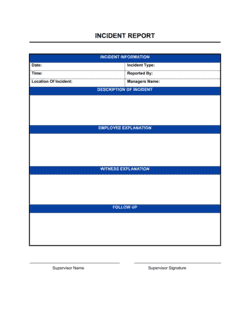
Documenting a specific incident or workplace accidentIncident Report Form

Common mistakes to avoid

❌ Using vague or subjective language in the issue description

Why it matters: Phrases like 'bad attitude' or 'not a team player' are impossible to measure or defend in a dispute. They also signal bias rather than objective assessment.

Fix: Replace subjective language with specific, observable behaviors: 'On [DATE], employee raised their voice at a colleague during a team meeting in front of five witnesses.'
❌ Setting corrective actions without measurable targets or deadlines

Why it matters: An action like 'improve punctuality' gives the employee no clear target and gives the supervisor no basis for assessing compliance at the follow-up review.

Fix: Attach a number and a date to every corrective action: 'Arrive at or before the scheduled shift start time for all shifts through [DATE].'

❌ Skipping the follow-up review meeting

Why it matters: If the employee improves but receives no acknowledgment, or fails to improve with no documented consequence, the correction process loses credibility and legal defensibility.

Fix: Calendar the follow-up date at the time the form is issued and record the outcome in writing β€” either a closure notice or an escalation to the next disciplinary step.

❌ Omitting the employee acknowledgment disclaimer

Why it matters: Employees frequently refuse to sign a correction form because they believe the signature implies agreement. An unsigned form is harder to rely on as a record.

Fix: Add a one-sentence disclaimer next to the employee signature line stating that the signature confirms receipt only, not agreement with the contents.

The 10 key fields, explained

Employee Information

Supervisor and HR Contact

Date of Incident and Date of Meeting

Type of Infraction

Description of the Issue

Policy or Standard Violated

Corrective Action Required

Consequences of Non-Improvement

Follow-Up Review Date

Acknowledgment Signatures

How to fill it out

  1. 1

    Complete the employee and supervisor identification fields

    Enter the employee's legal name, job title, department, and ID number. Add your name and title as the issuing supervisor, and include the HR contact if your organization requires one.

    πŸ’‘ Use the exact name and title as they appear in your HRIS system β€” discrepancies create problems if the record is subpoenaed or reviewed during an audit.

  2. 2

    Record both the incident date and the meeting date

    Enter the date the incident or performance gap occurred, and separately record the date you are meeting with the employee to discuss the form.

    πŸ’‘ If multiple incidents contributed to this correction, list each date in the description field rather than using only the most recent one.

  3. 3

    Select the infraction type and describe the issue factually

    Check the applicable infraction category, then write a factual, behavior-specific description of what occurred and how it deviates from the required standard. Reference the policy or handbook section violated.

    πŸ’‘ Read the description aloud before saving β€” if it contains adjectives like 'lazy' or 'rude,' replace them with specific observable behaviors.

  4. 4

    Define specific, measurable corrective actions with deadlines

    List each required corrective step as a numbered action item with a specific completion date. Avoid open-ended actions β€” every item should be objectively verifiable.

    πŸ’‘ Aim for two to four concrete action items. More than four can feel unachievable and undermine the employee's motivation to improve.

  5. 5

    State the consequences of non-improvement clearly

    Fill in the consequences field with the next disciplinary step β€” further written warning, suspension, or termination β€” and the review date by which improvement must be demonstrated.

    πŸ’‘ Be consistent with your progressive discipline policy. If your policy calls for a final warning before termination, do not skip that step β€” inconsistency is the most common basis for wrongful termination claims.

  6. 6

    Conduct the correction meeting, then obtain signatures

    Meet privately with the employee to review every field on the form. Allow the employee to respond and note any rebuttal in writing. Then collect signatures from the employee, yourself, and HR.

    πŸ’‘ If the employee refuses to sign, write 'Employee declined to sign on [DATE]' in the signature field and have a witness present β€” the refusal itself does not invalidate the form.

Frequently asked questions

What is an employee correction form?

An employee correction form is a structured HR document used to formally record a performance or conduct issue, specify the corrective action the employee must take, and create a documented record for the personnel file. It is typically the first formal step in a progressive discipline process and gives both the supervisor and the employee a clear, written reference for the improvement expected.

What is the difference between an employee correction form and a write-up?

The terms are often used interchangeably. In most workplaces, a write-up refers to any written disciplinary record, while a correction form specifically emphasizes the corrective action plan β€” what the employee must do to improve. A correction form is generally less adversarial in tone than a formal written warning and is often used for first-time or minor infractions before escalating to a warning letter.

Does an employee have to sign a correction form?

No β€” an employee cannot be legally compelled to sign. However, the form should include a disclaimer that the signature confirms receipt, not agreement, which reduces most refusals. If the employee still declines, note the refusal in writing with a witness present. The refusal does not void the form or the disciplinary process.

How long should a correction form be kept on file?

Most HR professionals retain correction forms for the duration of employment plus 3–7 years, depending on jurisdiction and company policy. If the form is related to a harassment, safety, or discrimination incident, retain it for the full applicable statute of limitations, which can run longer. Always follow your organization's document retention policy.

Can a correction form be used as evidence if an employee is later terminated?

Yes β€” a properly completed correction form is one of the most important pieces of documentation in a wrongful termination defense. It demonstrates that the employee was made aware of the issue, was given a fair opportunity to improve, and was informed of the consequences of non-improvement. Incomplete or vague forms, however, can actually weaken a termination defense.

How is a correction form different from a Performance Improvement Plan?

A correction form documents a specific incident or pattern and sets short-term corrective actions, typically with a review period of 1–4 weeks. A Performance Improvement Plan (PIP) is a longer, more structured document used for sustained performance deficiencies, usually spanning 30, 60, or 90 days with detailed goals and weekly check-ins. A correction form often precedes a PIP if the issue is not resolved quickly.

Should HR be involved every time a correction form is issued?

In larger organizations, HR is typically copied on all correction forms to ensure consistency and policy compliance. In small businesses without a dedicated HR function, the owner or a senior manager should review the form before it is issued. HR involvement is especially important for issues related to harassment, safety violations, or any situation with potential legal exposure.

Can the same employee receive multiple correction forms?

Yes β€” issuing successive correction forms is a standard component of progressive discipline. Each form should reference prior forms by date to establish the documented pattern. After two or three correction forms for the same issue, most organizations escalate to a formal written warning or a PIP before considering termination.

How this compares to alternatives

vs Employee Warning Notice

An employee warning notice is a formal disciplinary document β€” typically the second or third step in a progressive discipline process β€” that carries more weight than a correction form. A correction form is used earlier, focuses on coaching and improvement, and is less adversarial in tone. Use a correction form for first-time or minor issues; escalate to a warning notice for repeated or serious infractions.

vs Performance Improvement Plan

A Performance Improvement Plan is a detailed, multi-week structured program for employees with sustained performance deficiencies. A correction form is shorter, documents a specific incident, and sets immediate corrective actions over days or weeks. A PIP typically follows if a correction form does not produce the needed improvement.

vs Incident Report Form

An incident report form documents the facts of a specific workplace event β€” an accident, safety breach, or altercation β€” for record-keeping and insurance purposes. A correction form uses that incident as the basis for a disciplinary or improvement response directed at the involved employee. The two forms are often used together following a workplace incident.

vs Employee Dismissal Letter

An employee dismissal letter formally terminates the employment relationship. A correction form is an earlier intervention designed to prevent termination by giving the employee a documented opportunity to improve. A well-completed correction form (or series of forms) supports the dismissal letter as evidence that due process was followed.

Industry-specific considerations

Retail and Hospitality

High-turnover environments rely on correction forms to document attendance violations, cash-handling errors, and customer service incidents consistently across large front-line teams.

Healthcare

Correction forms address protocol deviations, documentation errors, and patient interaction issues where regulatory compliance and patient safety make written records essential.

Manufacturing

Safety violations, PPE non-compliance, and production standard failures are documented on correction forms to satisfy OSHA recordkeeping requirements and reduce workplace liability.

Professional Services

Used to address client communication failures, billing errors, and deadline misses in a structured way that supports performance reviews and promotion decisions.

Template vs pro β€” what fits your needs?

PathBest forCostTime
Use the templateManagers and small business owners documenting standard performance or conduct issuesFree10–15 minutes per form
Template + professional reviewHR teams standardizing the form across departments or adding company-specific policy references$0–$200 (HR advisor review)1–2 hours
Custom draftedOrganizations in regulated industries or those integrating the form into a formal progressive discipline policy with legal review$300–$800 (employment lawyer or HR consultant)1–3 days

Glossary

Corrective Action
A defined set of steps an employee must take to bring their performance or conduct back to the required standard.
Progressive Discipline
A step-by-step disciplinary process that escalates from verbal warning to written warning, suspension, and ultimately termination if the issue is not resolved.
Performance Improvement Plan (PIP)
A formal document outlining specific, measurable goals an underperforming employee must meet within a defined timeframe.
At-Cause Termination
Ending employment because of documented misconduct or sustained failure to meet performance standards after corrective action.
Acknowledgment Signature
A signature from the employee confirming they received and reviewed the correction form β€” not necessarily that they agree with its contents.
Follow-Up Review Date
A scheduled date set on the correction form by which the supervisor will assess whether the employee has met the improvement targets.
Personnel File
The official HR record kept for each employee containing employment documents, performance reviews, disciplinary records, and correction forms.
Policy Violation
A specific breach of a written workplace rule, code of conduct, or procedure that triggers a formal correction or disciplinary response.

Part of your Business Operating System

This document is one of 3,000+ business & legal templates included in Business in a Box.

  • Fill-in-the-blanks β€” ready in minutes
  • 100% customizable Word document
  • Compatible with all office suites
  • Export to PDF and share electronically

Create your document in 3 simple steps.

From template to signed document β€” all inside one Business Operating System.
1
Download or open template

Access over 3,000+ business and legal templates for any business task, project or initiative.

2
Edit and fill in the blanks with AI

Customize your ready-made business document template and save it in the cloud.

3
Save, Share, Send, Sign

Share your files and folders with your team. Create a space of seamless collaboration.

Save time, save money, and create top-quality documents.

β˜…β˜…β˜…β˜…β˜…

"Fantastic value! I'm not sure how I'd do without it. It's worth its weight in gold and paid back for itself many times."

Managing Director Β· Mall Farm
Robert Whalley
Managing Director, Mall Farm Proprietary Limited
β˜…β˜…β˜…β˜…β˜…

"I have been using Business in a Box for years. It has been the most useful source of templates I have encountered. I recommend it to anyone."

Business Owner Β· 4+ years
Dr Michael John Freestone
Business Owner
β˜…β˜…β˜…β˜…β˜…

"It has been a life saver so many times I have lost count. Business in a Box has saved me so much time and as you know, time is money."

Owner Β· Upstate Web
David G. Moore Jr.
Owner, Upstate Web

Run your business with a system β€” not scattered tools

Stop downloading documents. Start operating with clarity. Business in a Box gives you the Business Operating System used by over 250,000 companies worldwide to structure, run, and grow their business.

Free Forever PlanΒ Β·Β No credit card required