- Progressive Discipline
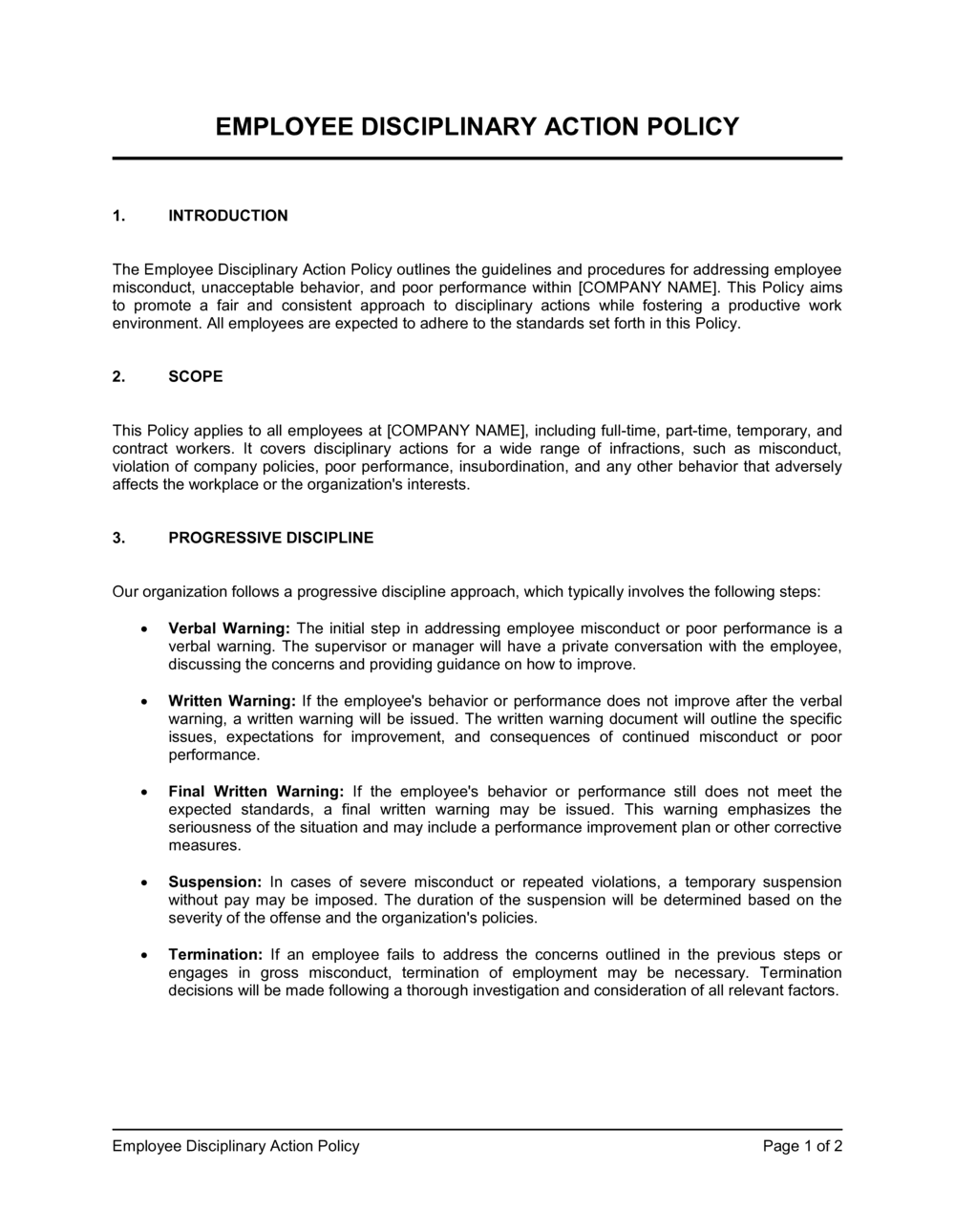
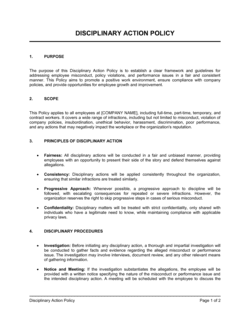
- A structured approach to corrective action that escalates consequences through defined steps — verbal warning, written warning, suspension, and termination — giving the employee an opportunity to correct behavior at each stage.
- Verbal Warning
- The first formal step in a progressive discipline process, delivered in a private meeting and documented in the employee's file even though it is delivered orally.
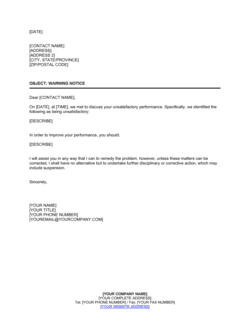
- Written Warning
- A formal documented notice that identifies the specific policy violation, the expected correction, and the consequence if behavior does not improve within a stated timeframe.
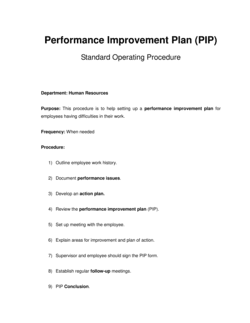
- Performance Improvement Plan (PIP)
- A structured document setting measurable performance goals, a timeline for improvement, and the consequences of failure to meet those goals — typically used before termination for performance-related issues.
- Gross Misconduct
- Severe employee behavior — such as theft, harassment, violence, or fraud — that justifies immediate termination without progressing through earlier disciplinary steps.
- At-Will Employment
- An employment relationship in which either party may end the relationship at any time for any lawful reason — but even at-will employers benefit from documented discipline to defend against wrongful termination claims.
- Just Cause
- A standard requiring that discipline or termination be supported by a legitimate, documented business reason — required in many union environments and some jurisdictions.
- Suspension
- A disciplinary step in which the employee is temporarily removed from the workplace, with or without pay, typically after verbal and written warnings have failed to correct the behavior.
- Appeals Process
- A defined procedure allowing an employee to formally challenge a disciplinary decision by requesting review by a more senior manager or HR representative.
- Documentation Trail
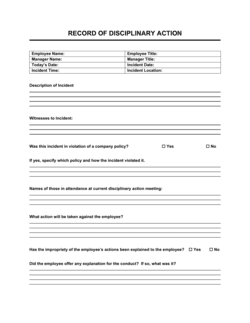
- The complete written record of each disciplinary step — meeting notes, signed warnings, performance data, and manager observations — that supports the employer's position if a dispute arises.