No Call No Show Policy Template

Free Word download β€’ Edit online β€’ Save & share with Drive β€’ Export to PDF

2 pagesβ€’20–25 min to fillβ€’Difficulty: Standard
Learn more ↓
FreeNo Call No Show Policy Template

At a glance

What it is
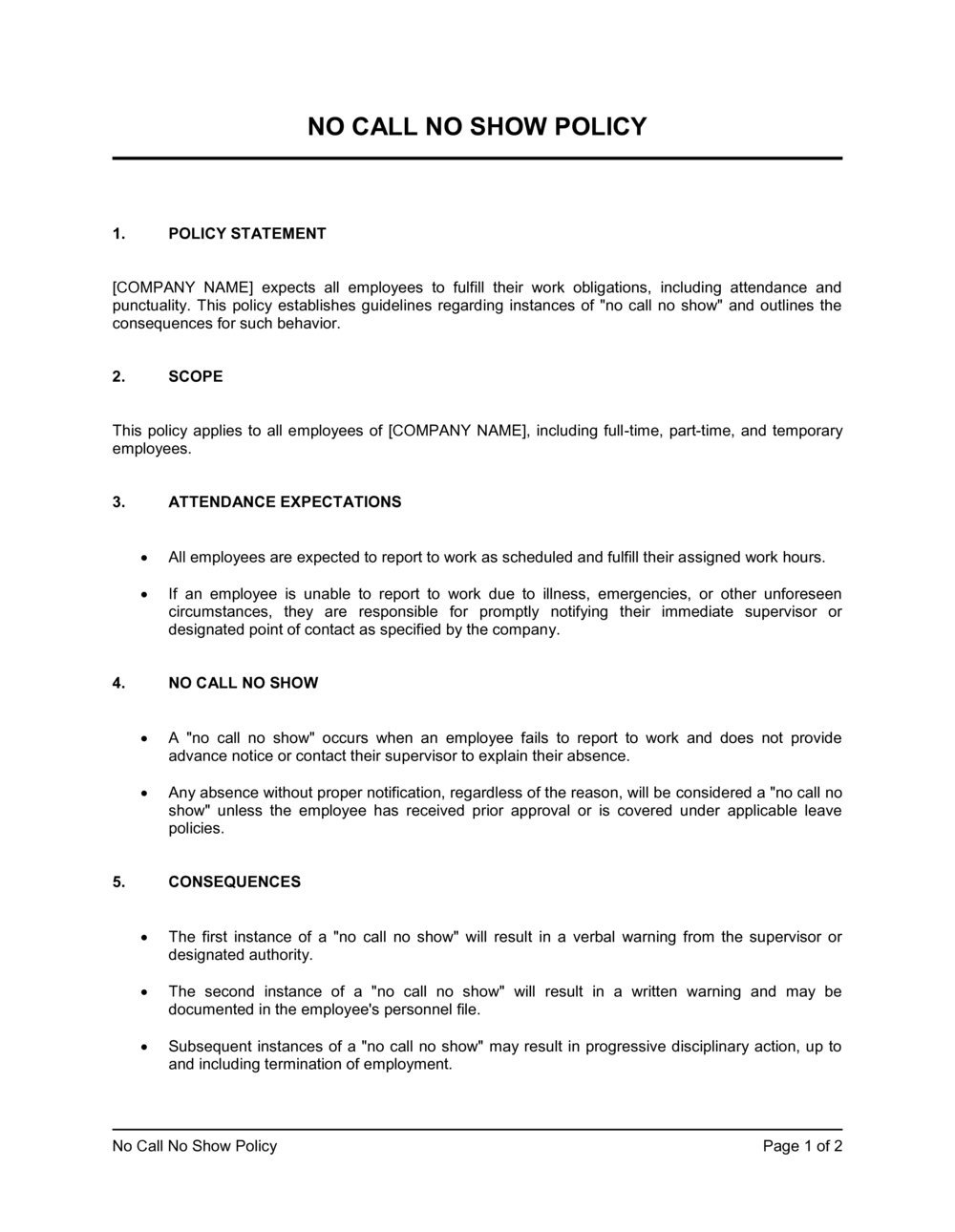
A No Call No Show Policy is a written workplace document that defines what constitutes a no call no show absence, how employees must report unplanned absences, and what progressive disciplinary consequences apply when they fail to do so. This free Word download gives managers and HR teams a clear, consistently enforced framework they can edit online and export as PDF for distribution or inclusion in an employee handbook.
When you need it
Use it when onboarding new employees, updating an existing attendance policy, or responding to recurring unnotified absences that are disrupting operations or team coverage. Any business with shift-based, customer-facing, or time-sensitive roles benefits from having this policy in writing before a problem occurs.
What's inside
The policy covers the definition of a no call no show, the required notification procedure and reporting window, a step-by-step progressive discipline ladder, exceptions for qualifying leaves such as FMLA and ADA situations, re-hire eligibility rules, and the employee acknowledgment block used to confirm receipt and understanding.

What is a No Call No Show Policy?

A No Call No Show Policy is a written workplace document that defines what constitutes an unnotified absence, how employees must report unplanned absences before missing a shift, and what progressive disciplinary consequences apply when they fail to do so. The policy establishes a consistent, documented framework that managers can enforce uniformly across all staff β€” removing ambiguity about what is expected, what qualifies as a violation, and when discipline escalates to termination or job abandonment. It is typically distributed at onboarding and incorporated into the employee handbook, with a signed acknowledgment filed in each employee's personnel record.

Why You Need This Document

Without a written no call no show policy, managers make attendance enforcement decisions inconsistently β€” one supervisor issues a verbal warning while another ignores the same conduct entirely, creating disparate-treatment exposure and employee relations problems. When terminations for unnotified absences are challenged in unemployment hearings, a company without a documented policy and signed employee acknowledgment is in a weak position to prove the employee knew the rules. Operationally, in shift-based environments like retail, food service, healthcare, and manufacturing, a single unnotified absence can leave a critical role unstaffed with no time to arrange coverage β€” the cost compounds across customer experience, team morale, and overtime for replacement workers. This template gives businesses a clearly structured, legally informed starting point that takes under an hour to customize, covers FMLA and ADA exceptions that generate the most common legal exposure, and produces a document employees and managers can both follow without ambiguity.

Which variant fits your situation?

If your situation is…Use this template
Defining no-show rules as part of a broader attendance frameworkEmployee Attendance Policy
Outlining general conduct and disciplinary expectations for all employeesEmployee Code of Conduct
Documenting a specific disciplinary incident triggered by a no-showEmployee Warning Letter
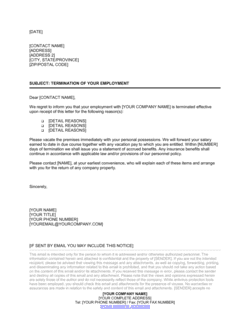
Terminating an employee after repeated no call no show violationsEmployee Termination Letter
Covering absence policies for remote or hybrid employeesRemote Work Policy
Incorporating no-show rules into new hire onboarding documentationEmployee Handbook
Tracking recurring absences to support progressive discipline decisionsEmployee Performance Improvement Plan

Common mistakes to avoid

❌ No specific notification time threshold

Why it matters: Without a defined window β€” such as 'at least 2 hours before shift start' β€” employees and supervisors dispute in real time whether a call came in 'on time,' making consistent enforcement impossible.

Fix: Set a specific numeric threshold in hours and insert it into the definition section so it appears in the first paragraph every employee reads.

❌ Omitting FMLA and ADA exceptions

Why it matters: Counting a qualifying FMLA or ADA-protected absence as a no call no show violation and disciplining the employee for it exposes the company to interference and retaliation claims under federal law.

Fix: Add a dedicated exceptions section naming FMLA, ADA, and applicable state leave laws explicitly, and train supervisors to flag potential protected leave before issuing any discipline.

❌ Failing to document each occurrence in writing

Why it matters: Verbal warnings that go unrecorded cannot be cited to support subsequent discipline β€” a termination for a 'fourth offense' that has only two written occurrences on file is nearly impossible to defend.

Fix: Require supervisors to complete an incident form within 24 hours of every no call no show and route it to HR for filing in the personnel record.

❌ No job abandonment clause

Why it matters: Without it, an employee who disappears for a week without contact creates an unresolved employment status β€” payroll keeps running, benefits accrue, and terminating them lacks a documented procedural basis.

Fix: Add a job abandonment provision stating that absence for 3 or more consecutive days without contact constitutes voluntary resignation, and require at least one documented outreach attempt before applying it.

❌ Inconsistent enforcement across departments

Why it matters: Applying the progressive discipline ladder strictly in one department but informally in another creates disparate-treatment exposure β€” employees in the stricter department can claim the policy was applied selectively.

Fix: Train all supervisors on the policy at the same time, require HR review before any suspension or termination, and audit discipline records quarterly for consistency.

❌ Never updating the policy after changes to leave law

Why it matters: State and local paid sick leave, bereavement leave, and predictive scheduling laws regularly add new protected absences β€” an outdated policy that doesn't reflect them may result in disciplining employees for legally protected conduct.

Fix: Schedule an annual HR review of the policy against current federal, state, and local leave law requirements and update the exceptions section accordingly.

The 9 key sections, explained

Policy purpose and scope

Definition of a no call no show

Absence notification procedure

Progressive discipline schedule

Job abandonment clause

Exceptions and protected leave

Documentation and recordkeeping requirements

Re-hire eligibility

Employee acknowledgment

How to fill it out

  1. 1

    Set the scope and effective date

    Identify which employee groups the policy covers β€” full-time, part-time, temporary, seasonal β€” and enter the exact effective date. If you are replacing an older policy, note the superseded document.

    πŸ’‘ Explicitly list remote employees in the scope if they have scheduled availability windows or on-call obligations β€” remote does not mean attendance-exempt.

  2. 2

    Define the reporting window with a specific time threshold

    Enter the minimum advance notice period in hours β€” typically 1 to 2 hours before the scheduled shift start. Choose a threshold that is operationally realistic given your scheduling lead time.

    πŸ’‘ For roles requiring advance shift coverage (healthcare, manufacturing), a 2-hour minimum is more protective than 1 hour β€” it gives supervisors time to arrange a replacement.

  3. 3

    Specify the notification method hierarchy

    State who the employee must contact (direct supervisor first, then HR), by what method (phone call preferred over text), and what happens if the supervisor is unreachable.

    πŸ’‘ Require a live voice conversation as the default and treat text or email as a fallback only when phone contact is genuinely impossible β€” documented call logs resolve most disputes.

  4. 4

    Set the progressive discipline ladder and lookback window

    Fill in the number of occurrences that trigger each disciplinary step and the rolling period (typically 12 months) within which occurrences accumulate. Align these with your existing disciplinary policy if one exists.

    πŸ’‘ Use a 12-month rolling window rather than a calendar year β€” a calendar year resets on January 1, which creates a perverse incentive for employees to push absences into a new year.

  5. 5

    Define the job abandonment threshold

    Enter the number of consecutive no-contact days that trigger job abandonment β€” 3 consecutive days is the most common threshold. Specify that the company will make at least one documented attempt to reach the employee before the abandonment designation is applied.

    πŸ’‘ Send the abandonment notice by both email and certified mail so you have a delivery record in case the employee later disputes receiving it.

  6. 6

    List all protected leave exceptions

    Identify every leave type that will not count as a no call no show occurrence: FMLA, ADA accommodations, state-specific protected leaves, jury duty, military leave, and documented emergencies. Review state and local leave laws before finalizing.

    πŸ’‘ Include a catch-all line β€” 'or any other leave protected by applicable federal, state, or local law' β€” so the policy doesn't need to be amended each time a new leave law takes effect.

  7. 7

    Add the employee acknowledgment block

    Place a signature line, printed name field, and date at the bottom. Distribute the policy to all current employees and collect signed acknowledgments. Attach the signed form to each employee's personnel file.

    πŸ’‘ If you use an HRIS or onboarding platform, configure the policy as an e-signature document so acknowledgment is timestamped and stored automatically.

  8. 8

    Review with department managers before rollout

    Walk supervisors through the notification procedure, documentation requirements, and their specific responsibilities under the policy before distributing it to employees.

    πŸ’‘ Inconsistent supervisor enforcement is the single most common reason disciplinary decisions get overturned in unemployment hearings β€” managers need to understand the policy as well as employees do.

Frequently asked questions

What is a no call no show policy?

A no call no show policy is a written workplace rule that defines what happens when an employee misses a scheduled shift without notifying their employer within a required time window. It specifies the notification procedure employees must follow, the progressive disciplinary consequences for violations, and the threshold at which repeated no-shows trigger termination or constitute job abandonment. Having the policy in writing protects the employer and ensures employees understand the rules before a violation occurs.

How many no call no shows before termination?

Most employers apply a progressive discipline model that reaches termination on the third or fourth offense within a rolling 12-month period. The exact threshold should be set based on operational impact β€” businesses in healthcare, manufacturing, or food service where shift coverage is critical often terminate on the third occurrence, while office-based employers may allow a fourth. Whatever threshold you choose, it must be consistently enforced and documented in writing.

What counts as job abandonment?

Job abandonment is typically defined as three or more consecutive scheduled workdays where the employee neither appears nor contacts the employer. Most employers treat abandonment as a voluntary resignation, which affects unemployment eligibility. Before designating an absence as abandonment, employers should make at least one documented attempt to contact the employee β€” in case there is a genuine emergency or a qualifying FMLA or ADA event.

Can I terminate an employee for a single no call no show?

Yes, in most US states, a single no call no show can justify termination for at-will employees β€” particularly if the role is critical to operations or the employee was in a probationary period. However, consistently applying a progressive discipline ladder before reaching termination reduces unemployment claim liability and discrimination risk. The policy should state clearly when a single occurrence is grounds for immediate termination, such as in safety- sensitive roles.

Does FMLA affect how a no call no show is handled?

Yes. If an employee's absence may qualify under the Family and Medical Leave Act β€” even if they did not use the words 'FMLA' β€” the employer is obligated to investigate before counting the absence as a violation and issuing discipline. Disciplining an employee for an absence that retroactively qualifies as FMLA leave constitutes interference with their FMLA rights. The policy should explicitly exclude FMLA-qualifying absences from the no call no show count.

Should a no call no show policy be part of the employee handbook?

Yes β€” incorporating the policy into the employee handbook ensures it is distributed to every new hire and acknowledged at onboarding. A standalone policy document is also useful for posting in breakrooms or attaching to scheduling systems. Either way, collecting a signed acknowledgment from each employee is critical so the employer can demonstrate the employee knew about the policy before any disciplinary action was taken.

What notification method should the policy require?

Most policies require a direct phone call to the employee's immediate supervisor as the primary notification method. Text messages and emails are unreliable as sole methods because they may go unread until after the shift starts. A best practice is to require a live voice conversation as the default and allow text or messaging apps only as a documented fallback when phone contact is genuinely impossible. The policy should state clearly which methods are and are not acceptable.

How do I enforce a no call no show policy fairly?

Consistent documentation is the foundation of fair enforcement. Every occurrence β€” including the first β€” should be recorded in writing by the supervisor within 24 hours and filed in the employee's personnel record. HR should review any suspension or termination decision before it is communicated. Regular audits of discipline records across departments help catch inconsistent application before it becomes a discrimination claim.

Does a no call no show policy need to be reviewed by a lawyer?

For most small and mid-size businesses, a well-drafted template is sufficient for standard attendance enforcement. Legal review is worth considering when your workforce spans multiple states with differing paid sick leave or protected leave laws, when your industry is heavily regulated (healthcare, transportation), or when you have had prior employment claims related to attendance discipline. An employment attorney review typically takes 1–2 hours and costs $150–$400.

How this compares to alternatives

vs Employee Attendance Policy

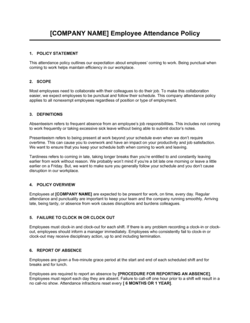
An employee attendance policy covers all aspects of workplace attendance β€” tardiness, early departures, scheduled absences, and accrual of attendance points. A no call no show policy is a focused subset that addresses only unnotified absences and their specific consequences. Many employers use both: the attendance policy sets the broader framework while the no call no show policy provides a dedicated escalation path for the most disruptive absence type.

vs Employee Warning Letter

An employee warning letter is a single-incident disciplinary document issued after a policy violation has already occurred. A no call no show policy is the governing document that defines the rules and makes the warning letter possible and defensible. Without the policy in place first, a warning letter lacks the procedural foundation it needs to survive an unemployment or wrongful termination challenge.

vs Employee Handbook

An employee handbook is a comprehensive reference document covering all workplace policies, benefits, and expectations. A no call no show policy is a single focused document that can either stand alone or be incorporated as a section within the handbook. For businesses that update attendance rules more frequently than their full handbook, maintaining the no call no show policy as a separate document makes versioning easier.

vs Performance Improvement Plan

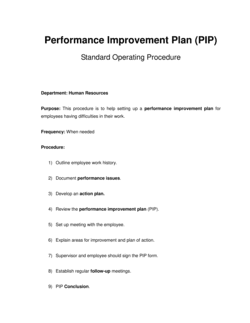
A performance improvement plan (PIP) addresses ongoing performance deficiencies through coaching, measurable goals, and a defined review timeline. A no call no show policy governs a specific conduct violation β€” unnotified absence β€” with a fixed progressive discipline sequence. PIPs are used when the issue is capability or quality of work; no call no show policies are used when the issue is reliability and attendance conduct.

Industry-specific considerations

Retail

High volumes of part-time and hourly staff make unnotified absences a daily scheduling risk β€” the policy anchors consistent enforcement across store managers who may otherwise apply informal standards.

Food & Beverage / Restaurant

Shift-based service operations have zero tolerance for last-minute no-shows β€” a missing line cook or server during a peak service window directly impacts revenue and customer experience.

Healthcare

Staffing ratios are regulated in clinical settings, making unnotified absences a patient safety issue β€” policies in this sector typically require a 2-hour notification window and include mandatory escalation to a charge nurse or supervisor.

Manufacturing

Production lines and machine operations cannot run understaffed without safety risk β€” no call no show policies here often include same-day replacement protocols and tighter job abandonment thresholds of 2 consecutive days.

Template vs pro β€” what fits your needs?

PathBest forCostTime
Use the templateSmall to mid-size businesses establishing or updating an attendance policy for a single-state workforceFree30–60 minutes
Template + professional reviewBusinesses operating in multiple states with differing protected leave laws or with prior attendance-related employment claims$150–$400 for a 1–2 hour employment attorney review1–3 days
Custom draftedRegulated industries (healthcare, transportation) or large employers with complex multi-site attendance management systems$500–$1,5001–2 weeks

Glossary

No Call No Show
An unexcused absence where an employee fails to appear for a scheduled shift and does not notify the employer within the required reporting window.
Reporting Window
The minimum advance notice period β€” typically 1 to 2 hours before a shift β€” by which an employee must contact a supervisor to report an unplanned absence.
Progressive Discipline
A structured sequence of corrective actions β€” verbal warning, written warning, suspension, and termination β€” applied in response to repeated policy violations.
Job Abandonment
A situation where an employee is absent for a defined consecutive number of days without contact, which the employer treats as a voluntary resignation.
FMLA (Family and Medical Leave Act)
A US federal law entitling eligible employees to up to 12 weeks of unpaid, job-protected leave per year for qualifying medical or family reasons.
ADA (Americans with Disabilities Act)
A US federal law requiring employers to provide reasonable accommodations to qualified employees with disabilities, which may affect how certain absences are classified.
Unexcused Absence
Any absence that does not meet the employer's criteria for an approved or protected leave β€” including no call no show incidents.
Shift Supervisor
The designated manager or lead responsible for receiving and documenting absence notifications during a given work period.
Employee Acknowledgment
A signed statement confirming the employee received, read, and understood the policy β€” used as evidence in disciplinary proceedings.
Corrective Action
A formal documented response to a policy violation, ranging from a verbal counseling session to termination, depending on frequency and severity.

Part of your Business Operating System

This document is one of 3,000+ business & legal templates included in Business in a Box.

  • Fill-in-the-blanks β€” ready in minutes
  • 100% customizable Word document
  • Compatible with all office suites
  • Export to PDF and share electronically

Create your document in 3 simple steps.

From template to signed document β€” all inside one Business Operating System.
1
Download or open template

Access over 3,000+ business and legal templates for any business task, project or initiative.

2
Edit and fill in the blanks with AI

Customize your ready-made business document template and save it in the cloud.

3
Save, Share, Send, Sign

Share your files and folders with your team. Create a space of seamless collaboration.

Save time, save money, and create top-quality documents.

β˜…β˜…β˜…β˜…β˜…

"Fantastic value! I'm not sure how I'd do without it. It's worth its weight in gold and paid back for itself many times."

Managing Director Β· Mall Farm
Robert Whalley
Managing Director, Mall Farm Proprietary Limited
β˜…β˜…β˜…β˜…β˜…

"I have been using Business in a Box for years. It has been the most useful source of templates I have encountered. I recommend it to anyone."

Business Owner Β· 4+ years
Dr Michael John Freestone
Business Owner
β˜…β˜…β˜…β˜…β˜…

"It has been a life saver so many times I have lost count. Business in a Box has saved me so much time and as you know, time is money."

Owner Β· Upstate Web
David G. Moore Jr.
Owner, Upstate Web

Run your business with a system β€” not scattered tools

Stop downloading documents. Start operating with clarity. Business in a Box gives you the Business Operating System used by over 250,000 companies worldwide to structure, run, and grow their business.

Start freeΒ Β·Β No credit card required