What should be included in an employee onboarding checklist?
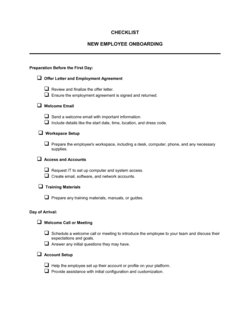
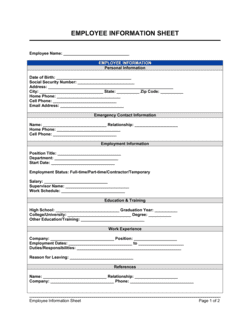
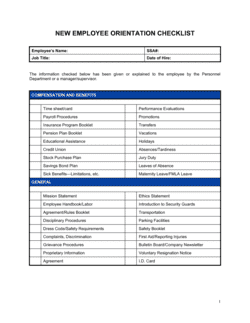
An employee onboarding checklist should cover pre-arrival tasks (offer letter, system accounts, workspace setup), day-one activities (ID verification, policy acknowledgments, introductions), first-week training, and a 30-day check-in. The goal is to track every step so nothing is missed and the new hire reaches productivity faster.
Why does customer onboarding need a formal document?
Without a documented process, customer onboarding relies on individual memory, which leads to inconsistent experiences and missed steps. A formal checklist or process guide ensures every customer receives the same quality of setup, reduces churn from poor first experiences, and gives the team a clear handoff point between sales and delivery.
What is the difference between an onboarding checklist and an onboarding policy?
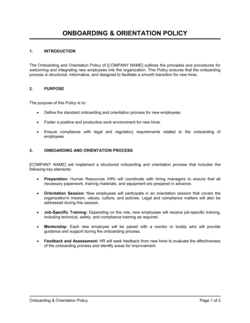
An onboarding checklist tracks the specific tasks for one onboarding instance. An onboarding policy sets the organizational rules — who is responsible, what the timeline must be, what documentation is required — that apply to every instance. Most organizations need both: the policy sets the standard, and the checklist executes it.
How long should an employee onboarding process take?
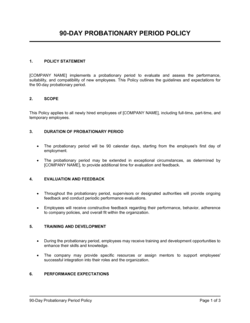
Most onboarding programs run 30 to 90 days, though administrative tasks are typically completed in the first week. Research suggests that employees who go through a structured 90-day onboarding process reach full productivity significantly faster than those with informal introductions. The right length depends on role complexity and required training.
Can the same onboarding checklist be used for clients and vendors?
No. Client and vendor onboarding serve different purposes and require different documentation, approvals, and steps. Client onboarding focuses on scoping work, setting expectations, and delivering early value. Vendor onboarding focuses on compliance checks, contract execution, and procurement system setup. Using a purpose-built checklist for each avoids confusion and missed requirements.
What happens if onboarding is skipped or done informally?
Skipping formal onboarding typically leads to slower ramp-up times for employees, higher early churn for customers, and compliance gaps for vendors. For employees, poor onboarding is one of the leading predictors of early attrition. For customers and vendors, it creates misaligned expectations that are costly to correct after the relationship is established.
Do onboarding templates need to be customized for each industry?
Core onboarding steps are consistent across industries, but regulated sectors — healthcare, finance, government contracting — typically require additional compliance documentation, background checks, or certification verification. Start with a standard template and add industry-specific requirements as a separate section rather than rebuilding from scratch.
A checklist tracks individual tasks for a specific onboarding instance — who does what and by when. A policy sets the organization-wide rules that govern how all onboarding is conducted. You typically need both: the policy defines the standard, and the checklist enforces it task by task.
Employee onboarding focuses on integrating a new hire into your internal systems, culture, and role requirements. Client onboarding focuses on setting up a paying customer for success — scoping work, establishing communication, and delivering early value. The goals differ enough that separate documents are warranted.
Key clauses every Onboarding contains
Effective onboarding documents — whether checklists, policies, or process guides — share the same structural components regardless of who is being onboarded.
Scope and applicability. Defines which roles, departments, or relationship types the document applies to.
Responsible parties. Names who owns each step — HR, IT, account manager, procurement — so nothing is left unassigned.
Required documentation. Lists the forms, agreements, ID verification, or credentials that must be collected before onboarding is complete.
System and access setup. Covers account creation, tool provisioning, and permission levels needed to begin work or engagement.
Timeline and milestones. Sets deadlines for each stage — day one tasks, first-week goals, 30-day check-ins.
Training and orientation requirements. Specifies mandatory training, policy acknowledgments, or product walkthroughs the new party must complete.
Sign-off and completion criteria. Defines what 'fully onboarded' means and who confirms it — usually a manager, account lead, or procurement officer.
How to write an onboarding document
A well-structured onboarding document turns a chaotic first experience into a consistent, repeatable process. These steps apply whether you're onboarding employees, customers, or vendors.
1
Define the scope
Clarify who this document covers — new hires, specific client tiers, supplier categories — so the right team uses the right version.
2
Map every required step
List all tasks from initial contact through full activation, including paperwork, system setup, training, and introductions.
3
Assign ownership for each task
Name the person or role responsible for completing each step — ambiguity is the most common reason onboarding stalls.
4
Set a timeline
Attach a deadline or target day to each task so nothing drifts — day one, week one, and 30-day markers work well.
5
List required documentation
Specify every form, agreement, credential, or compliance document that must be collected or signed before onboarding closes.
6
Include a sign-off mechanism
Add a final confirmation step — a manager signature, a completion checklist, or a system status update — that marks onboarding as done.
7
Review and update regularly
Audit the document at least once a year or when your tools, policies, or regulatory requirements change.
At a glance
What it is
An onboarding template is a structured document — checklist, policy, or process guide — that ensures every new employee, customer, or vendor goes through the same consistent intake process. It reduces errors, saves time, and sets clear expectations from day one.
When you need one
Any time you bring someone new into your organization or business relationship — a hire, a client, or a supplier — a documented onboarding process prevents missed steps and creates a repeatable experience.
The right onboarding document depends on who you're onboarding and what outcome you need — a policy that governs the process, a checklist that tracks the steps, or a how-to guide that walks a team through execution.
Your situation
Recommended template
Setting company-wide rules for how all onboarding is conducted
Defines standards, responsibilities, and timelines for onboarding across the organization.
Bringing on a new customer and ensuring a smooth first experience
Tracks every touchpoint from contract signing through first successful delivery.
Checklist Customer Onboarding
Onboarding a new vendor or supplier to your procurement process
Covers documentation, compliance checks, and system setup for incoming vendors.
Checklist Vendor Onboarding
Building a repeatable step-by-step process for onboarding clients
Process guide format for teams who need to replicate client onboarding consistently.
How to Steps for Client Onboarding Process
Glossary
Onboarding
The structured process of integrating a new employee, customer, or vendor into an organization or business relationship.
Orientation
The initial phase of employee onboarding that introduces a new hire to company culture, policies, and team members.
Onboarding checklist
A task-by-task list used to track the completion of every required step in an onboarding process.
Onboarding policy
A formal document that sets organization-wide rules and standards for how onboarding must be conducted.
Time to productivity
The elapsed time from a hire or engagement start date until the new party is fully functional and contributing independently.
Pre-boarding
Tasks completed before a new hire's first day — sending equipment, granting system access, sharing required reading.
Responsible party
The named person or role accountable for completing a specific onboarding task.
Sign-off
The formal confirmation that all onboarding tasks have been completed to the required standard.
Vendor credentialing
The process of verifying a supplier's licenses, insurance, compliance status, and business registration before activating them in your systems.
Client activation
The point in a client onboarding process where the customer is fully set up and begins receiving the contracted service or product.
What is an onboarding template?
An onboarding template is a pre-structured document — a checklist, policy, or process guide — that defines and tracks every step required to integrate a new person or organization into an existing business relationship. Onboarding templates exist because consistent intake processes produce better outcomes: employees reach productivity faster, customers experience less friction, and vendors are activated without compliance gaps.
Onboarding documents fall into two functional types. Process documents — policies and how-to guides — establish the rules, sequence, and responsibilities that govern onboarding across the organization. Execution documents — checklists — track individual tasks for a specific onboarding instance, confirming that each step is completed, by whom, and by when. Most organizations need both: one to set the standard and one to enforce it.
The scope of onboarding extends well beyond new hires. Any time a business forms a new ongoing relationship — with a customer, a vendor, a contractor, or a partner — a structured onboarding process prevents the misaligned expectations and missed steps that cause early attrition and relationship breakdowns.
When you need an onboarding template
Any time you bring someone new into your business — whether as an employee, a paying customer, or a supplier — you need a documented process before the relationship begins. Relying on informal walkthroughs or individual memory leads to inconsistent experiences and accountability gaps that are expensive to fix after the fact.
Common triggers:
Hiring a new employee who needs system access, policy acknowledgments, and role training before their first productive day
Signing a new customer who needs to be scoped, configured, and introduced to their account team before delivery begins
Adding a new vendor or supplier who must be credentialed, contracted, and registered in your procurement system
Scaling a team or client base where a consistent process becomes critical because informal onboarding no longer holds
Experiencing early attrition — from employees or customers — where the root cause is a poor first experience
Preparing for an audit or compliance review that requires documented intake procedures for staff or third parties
Onboarding in a regulated industry where specific documentation, certifications, or background checks must be verified and recorded
Skipping a formal onboarding process doesn't eliminate the work — it just makes it ad hoc and untrackable. A well-maintained set of onboarding templates turns a high-risk transition moment into a repeatable, auditable process that protects the relationship from the start.
Award-winning platform
Great Place to Work 2025
BIG Award — Product of the Year 2025
Smartest Companies 2025
Global 100 Excellence 2026
Best of the Best 2025
Create your document in 3 simple steps.
From template to signed document — all inside one Business Operating System.
1
Download or open template
Access over 3,000+ business and legal templates for any business task, project or initiative.
2
Edit and fill in the blanks with AI
Customize your ready-made business document template and save it in the cloud.
3
Share with your team
Share your files and folders with your team. Create a space of seamless collaboration.
Save time, save money, and create top-quality documents.
★★★★★
"Fantastic value! I'm not sure how I'd do without it. It's worth its weight in gold and paid back for itself many times."
Managing Director · Mall Farm
RW
Robert Whalley
Managing Director, Mall Farm Proprietary Limited
★★★★★
"I have been using Business in a Box for years. It has been the most useful source of templates I have encountered. I recommend it to anyone."
Business Owner · 4+ years
MF
Dr Michael John Freestone
Business Owner
★★★★★
"It has been a life saver so many times I have lost count. Business in a Box has saved me so much time and as you know, time is money."
Owner · Upstate Web
DM
David G. Moore Jr.
Owner, Upstate Web
Run your business with a system — not scattered tools
Stop downloading documents. Start operating with clarity. Business in a Box gives you the Business Operating System used by over 250,000 companies worldwide to structure, run, and grow their business.