Cybersecurity Implementation Plan Template

Free Word download β€’ Edit online β€’ Save & share with Drive β€’ Export to PDF

17 pagesβ€’30–40 min to fillβ€’Difficulty: Complex
Learn more ↓
FreeCybersecurity Implementation Plan Template

At a glance

What it is
A Cybersecurity Implementation Plan is a structured operational document that defines how an organization will identify, prioritize, and deploy security controls to protect its information systems and data. This free Word download provides a ready-to-edit framework covering risk assessment, control selection, implementation milestones, and ongoing monitoring β€” exportable as PDF for sharing with leadership, IT teams, or auditors.
When you need it
Use it when building or formalizing a security program from scratch, responding to a compliance requirement (SOC 2, ISO 27001, NIST CSF, or HIPAA), following a security incident, or presenting a security roadmap to a board or executive team.
What's inside
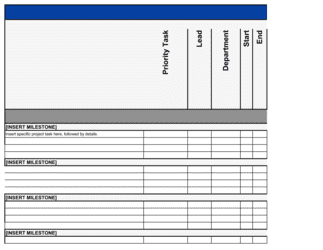
An executive summary, risk assessment findings, security control inventory, phased implementation timeline with owners and milestones, incident response procedures, employee training requirements, compliance mapping, and a performance monitoring framework with defined KPIs.

What is a Cybersecurity Implementation Plan?

A Cybersecurity Implementation Plan is a structured operational document that maps out exactly how an organization will identify its security risks, select and deploy the controls needed to address them, and monitor progress over time. It translates a high-level security strategy into a concrete, phased roadmap β€” with named owners, measurable milestones, and links to compliance frameworks such as NIST CSF, CIS Controls, SOC 2, ISO 27001, or HIPAA. Unlike a cybersecurity policy, which defines the rules, an implementation plan defines the execution: what gets built, in what order, by whom, and by when.

Why You Need This Document

Organizations that lack a written cybersecurity implementation plan typically find themselves in one of two positions: reacting to incidents with no defined procedures, or spending security budget on tools that address the wrong risks. Without a prioritized roadmap, critical controls like MFA and patch management get indefinitely deprioritized behind less urgent projects. When an audit or a cyber insurance application arrives, there is no documented evidence of a security program β€” only a collection of disconnected tools and good intentions. A completed cybersecurity implementation plan gives your IT team a clear execution guide, gives your leadership team a governance document they can review and approve, and gives auditors and insurers the evidence they need to confirm that your security posture is active and improving rather than theoretical.

Which variant fits your situation?

If your situation is…Use this template
Documenting standing security rules and employee obligationsCybersecurity Policy
Detailing how to respond when a breach or incident occursIncident Response Plan
Assessing and scoring specific security risks before control selectionIT Risk Assessment
Meeting SOC 2 Type II documentation requirementsSOC 2 Security Policy Template
Presenting a high-level security strategy to a board or executive teamCybersecurity Strategic Plan
Establishing acceptable-use rules for company devices and networksAcceptable Use Policy
Ensuring continuity of operations after a cyberattack or data loss eventBusiness Continuity Plan

Common mistakes to avoid

❌ Skipping the risk assessment and jumping to controls

Why it matters: Deploying controls without a risk assessment means spending budget on low-priority safeguards while high-probability threats remain unaddressed. Security tools purchased this way are frequently unused or misconfigured.

Fix: Complete a scored risk assessment first β€” even a lightweight one using NIST SP 800-30 β€” and use the risk register to drive control prioritization.

❌ No named owners for each control or phase

Why it matters: Plans without specific accountable individuals produce a diffusion-of-responsibility effect. When everyone is responsible, no one follows through, and implementation stalls within the first 60 days.

Fix: Assign a single named owner to every control, implementation phase, and KPI. Include a backup contact for critical items.

❌ Treating the plan as a one-time deliverable

Why it matters: A cybersecurity plan written once and filed away becomes inaccurate within months as systems change, new vulnerabilities emerge, and the regulatory landscape shifts.

Fix: Schedule a quarterly progress review against the roadmap and a full annual plan refresh. Set a calendar reminder when the plan is published.

❌ Mapping to a compliance framework without closing identified gaps

Why it matters: Documenting that a control maps to a requirement does not mean the control is implemented. Auditors verify implementation evidence, not documentation claims β€” a mapped gap is still a finding.

Fix: For every compliance mapping entry, record both the target state and the current implementation status, and include the gap closure date in the roadmap.

❌ Writing incident response procedures that name roles instead of people

Why it matters: Roles change, people are out of office, and during an active incident there is no time to figure out who currently holds the 'security lead' title. Ambiguous escalation paths cause critical delays.

Fix: Name specific individuals with direct contact information in each escalation step, and review the contact list every 90 days.

❌ Selecting vanity metrics like total firewall events for the KPI dashboard

Why it matters: Metrics that track activity rather than outcomes give leadership a false sense of security and obscure whether risk is actually being reduced.

Fix: Choose outcome-oriented KPIs β€” patch compliance rate, mean time to detect, phishing simulation click rate β€” that directly reflect changes in the organization's risk exposure.

The 9 key sections, explained

Executive Summary

Scope and Objectives

Current State Risk Assessment

Security Control Framework

Phased Implementation Roadmap

Incident Response Procedures

Employee Security Awareness Training

Compliance and Regulatory Mapping

Performance Metrics and Monitoring

How to fill it out

  1. 1

    Define scope and select a control framework

    Identify which systems, business units, and data types the plan will cover. Choose a recognized framework β€” NIST CSF for general use, CIS Controls for practical implementation, or ISO 27001 if a certification is the goal.

    πŸ’‘ Start with your most critical or regulated environment β€” not your entire IT estate. A focused Phase 1 scope that gets implemented beats a comprehensive plan that stalls.

  2. 2

    Conduct or import a risk assessment

    Run a formal risk assessment using threat identification, vulnerability scanning, and impact-likelihood scoring. If an assessment was recently completed, import the findings directly into the risk register section.

    πŸ’‘ Score risks on a consistent 5Γ—5 likelihood-impact matrix so you can rank them objectively rather than arguing about which is 'more important.'

  3. 3

    Inventory existing controls and identify gaps

    For each control in your chosen framework, record whether it is fully implemented, partially implemented, or absent. Assign a control owner and a current status date for each entry.

    πŸ’‘ A spreadsheet gap analysis run against CIS Controls v8 IG1 (56 safeguards) takes 2–4 hours and immediately identifies your highest-priority gaps.

  4. 4

    Build the phased implementation roadmap

    Group gap controls into phases ordered by risk priority and implementation effort. Assign each phase a time window, a specific owner, and measurable completion criteria β€” not just 'deploy MFA' but '100% of admin accounts enrolled in MFA by [DATE].'

    πŸ’‘ Quick wins (MFA, patching cadence, email filtering) should land in Phase 1 regardless of effort β€” they reduce the most common attack vectors fastest.

  5. 5

    Document the incident response procedures

    Write step-by-step detection, containment, eradication, and recovery procedures. Name specific individuals β€” not just roles β€” for each step, and include after-hours contact information.

    πŸ’‘ Test the incident response procedure with a tabletop exercise before finalizing it. Procedures that have never been walked through always contain at least one gap.

  6. 6

    Define the training plan and completion requirements

    List required modules, the delivery platform, completion deadlines, and the minimum pass rate. Include a phishing simulation schedule at least quarterly.

    πŸ’‘ Tie training completion to onboarding checklists so new hires complete security training before receiving full system access.

  7. 7

    Map controls to compliance requirements

    For each applicable regulation or framework, link each control to the specific requirement it satisfies. Note gaps where a requirement has no mapped control.

    πŸ’‘ If you are pursuing SOC 2, run the map by your auditor before implementation begins β€” catching a gap at design costs nothing; catching it during the audit costs weeks.

  8. 8

    Set KPIs and schedule review cycles

    Select 4–6 measurable KPIs, assign a reporting owner for each, and schedule monthly metric reviews and a full plan review at least annually.

    πŸ’‘ Include at least one lagging indicator (mean time to detect) and one leading indicator (patch compliance rate) to get both a current-state and predictive view of program health.

Frequently asked questions

What is a cybersecurity implementation plan?

A cybersecurity implementation plan is a structured operational document that defines how an organization will deploy security controls to protect its systems, data, and people. It covers risk assessment findings, control selection mapped to a recognized framework, a phased implementation roadmap with owners and deadlines, incident response procedures, training requirements, compliance mapping, and performance metrics. It is both an execution guide for the IT team and a governance document for leadership and auditors.

How is a cybersecurity implementation plan different from a cybersecurity policy?

A cybersecurity policy states the rules β€” what employees must and must not do, and what controls the organization requires. A cybersecurity implementation plan is the execution document β€” how, when, and by whom those controls will actually be deployed. The policy sets the standard; the implementation plan is the roadmap for meeting it. Most mature security programs maintain both.

What frameworks should a cybersecurity implementation plan follow?

The three most commonly used frameworks are the NIST Cybersecurity Framework (CSF), the CIS Controls, and ISO 27001. NIST CSF is widely adopted in the US and works well for general risk management. CIS Controls are highly practical and prescriptive, organized into implementation groups by organization size. ISO 27001 is the international standard and is required if a formal certification is the goal. Most small and mid-sized organizations start with CIS Controls IG1 or NIST CSF Core.

How long does it take to implement a cybersecurity plan?

A baseline security program covering high-priority controls typically takes 90–180 days to implement for a small to mid-sized organization. Full compliance with a framework like SOC 2 or ISO 27001 generally takes 9–18 months end-to-end, including evidence collection and the formal audit. The implementation timeline in this plan should be phased by risk priority rather than stretched evenly across the entire period.

Do small businesses need a formal cybersecurity implementation plan?

Yes. Small businesses are targeted in roughly 43% of cyberattacks precisely because their defenses are weaker than those of large enterprises. A formal plan is also required by many cyber insurance carriers, and it is typically a prerequisite for SOC 2 compliance if you sell to enterprise customers. The plan does not need to be complex β€” a focused document addressing the top 10–15 CIS Controls can dramatically reduce risk for most small businesses.

What is included in the risk assessment section of the plan?

The risk assessment section documents identified threats, known vulnerabilities, the likelihood and impact score for each risk, and the resulting risk register. It should reference the assessment method used (NIST SP 800-30, ISO 27005, or an internal methodology), the date of the assessment, and the tools or scans used. The risk register drives control prioritization throughout the rest of the plan.

How often should the cybersecurity implementation plan be updated?

The implementation roadmap should be reviewed quarterly to track progress against milestones. The risk assessment should be refreshed at least annually or after any significant change β€” a new system deployment, a security incident, a merger, or a new regulatory requirement. A plan that has not been updated in more than 12 months is unlikely to reflect the current threat environment accurately.

How does this plan support compliance with SOC 2, HIPAA, or ISO 27001?

The compliance mapping section of the plan links each deployed security control to the specific requirement or criterion it satisfies within the relevant framework β€” SOC 2 Common Criteria, HIPAA Security Rule safeguards, or ISO 27001 Annex A controls. Auditors use this mapping as a starting point for evidence requests. A well-maintained compliance map reduces audit preparation time significantly and makes control gaps visible before the audit begins.

Who should own the cybersecurity implementation plan?

Typically the CISO, IT director, or, in smaller organizations, the IT manager. The plan owner is responsible for driving implementation, tracking KPIs, and presenting progress to leadership. Individual control owners β€” named in the roadmap β€” are accountable for their specific workstreams. Executive sponsorship from the CEO or COO is important for securing budget and cross-departmental cooperation, particularly for training and policy enforcement.

How this compares to alternatives

vs Cybersecurity Policy

A cybersecurity policy defines the rules, standards, and employee obligations the organization enforces. A cybersecurity implementation plan is the execution roadmap for deploying the controls that make those rules technically enforceable. Both are needed β€” the policy without the plan produces undocumented rules; the plan without the policy produces controls with no governing standard.

vs Incident Response Plan

An incident response plan focuses exclusively on what to do when a breach or security event occurs β€” detection, containment, eradication, recovery, and post-incident review. A cybersecurity implementation plan is broader, covering the full security program build-out including proactive controls, training, and compliance mapping, with incident response as one section rather than the entire document.

vs Business Continuity Plan

A business continuity plan addresses how the organization maintains operations during any disruptive event β€” including cyberattacks, natural disasters, and outages β€” with a focus on recovery time objectives and operational workarounds. A cybersecurity implementation plan focuses specifically on deploying security controls to prevent and detect incidents. Cyberattacks are one of several threats a BCP covers; the cybersecurity plan is the proactive program designed to reduce their likelihood.

vs IT Risk Assessment

An IT risk assessment identifies and scores threats and vulnerabilities at a point in time β€” it is an input to the cybersecurity implementation plan, not a substitute for it. The risk assessment tells you what your risks are; the implementation plan tells you what you are going to do about them, in what order, and by when.

Industry-specific considerations

Healthcare

HIPAA Security Rule compliance requires documented administrative, physical, and technical safeguards β€” this plan provides the implementation framework and audit trail for all three categories.

Financial Services

SOC 2 and PCI DSS requirements, combined with strict regulatory oversight from the SEC and FINRA, make a formalized implementation plan with compliance mapping a baseline operational requirement.

SaaS / Technology

Enterprise customer security reviews and SOC 2 Type II audit requirements mean SaaS companies need a documented, auditable security program β€” often before closing their first enterprise contract.

Professional Services

Law firms, accounting firms, and consultancies handling sensitive client data face increasing contractual and regulatory pressure to demonstrate a formal security program to clients and professional regulators.

Retail / E-commerce

PCI DSS cardholder data protection requirements and the high volume of customer PII in retail systems make a phased security implementation plan essential for managing breach risk and audit readiness.

Manufacturing

Operational technology (OT) and industrial control system (ICS) environments create unique attack vectors; the plan must address IT/OT convergence and supply chain security alongside standard IT controls.

Template vs pro β€” what fits your needs?

PathBest forCostTime
Use the templateIT managers and small business owners building or formalizing a security program without an in-house CISOFree1–2 weeks to complete initial draft
Template + professional reviewOrganizations pursuing SOC 2, ISO 27001, or HIPAA compliance who need an expert gap analysis before an audit$1,500–$5,000 for a security consultant review or vCISO engagement2–4 weeks
Custom draftedEnterprises with complex multi-cloud environments, OT/ICS systems, or regulatory obligations spanning multiple frameworks simultaneously$10,000–$50,000+ for a full security assessment and program design engagement6–12 weeks

Glossary

Attack Surface
The total set of entry points β€” systems, applications, users, and networks β€” through which an attacker could gain unauthorized access.
Control
A safeguard or countermeasure β€” technical, administrative, or physical β€” designed to reduce a specific security risk.
NIST CSF
The National Institute of Standards and Technology Cybersecurity Framework, a widely adopted US voluntary standard organizing security activities into five functions: Identify, Protect, Detect, Respond, and Recover.
Risk Register
A documented inventory of identified risks, each scored by likelihood and impact, with the assigned owner and planned mitigation action.
Threat Vector
The specific path or method an attacker uses to reach a target system β€” for example, phishing email, unpatched software, or stolen credentials.
Vulnerability
A weakness in a system, process, or configuration that a threat actor could exploit to cause harm or gain unauthorized access.
MFA (Multi-Factor Authentication)
A login method requiring at least two forms of verification β€” typically a password plus a one-time code β€” before granting system access.
Patch Management
The process of regularly applying software updates that fix known security vulnerabilities in operating systems and applications.
Zero Trust
A security model that requires continuous verification of every user and device β€” internal or external β€” rather than trusting anything inside the network perimeter by default.
RTO / RPO
Recovery Time Objective (maximum acceptable downtime) and Recovery Point Objective (maximum acceptable data loss window) β€” the two key metrics that define recovery targets after a disruption.
Penetration Testing
A controlled simulated cyberattack performed by authorized security professionals to identify exploitable vulnerabilities before real attackers do.
Data Classification
The process of categorizing data by sensitivity level β€” typically Public, Internal, Confidential, and Restricted β€” so appropriate controls can be applied to each tier.

Part of your Business Operating System

This document is one of 3,000+ business & legal templates included in Business in a Box.

  • Fill-in-the-blanks β€” ready in minutes
  • 100% customizable Word document
  • Compatible with all office suites
  • Export to PDF and share electronically

Create your document in 3 simple steps.

From template to signed document β€” all inside one Business Operating System.
1
Download or open template

Access over 3,000+ business and legal templates for any business task, project or initiative.

2
Edit and fill in the blanks with AI

Customize your ready-made business document template and save it in the cloud.

3
Save, Share, Send, Sign

Share your files and folders with your team. Create a space of seamless collaboration.

Save time, save money, and create top-quality documents.

β˜…β˜…β˜…β˜…β˜…

"Fantastic value! I'm not sure how I'd do without it. It's worth its weight in gold and paid back for itself many times."

Managing Director Β· Mall Farm
Robert Whalley
Managing Director, Mall Farm Proprietary Limited
β˜…β˜…β˜…β˜…β˜…

"I have been using Business in a Box for years. It has been the most useful source of templates I have encountered. I recommend it to anyone."

Business Owner Β· 4+ years
Dr Michael John Freestone
Business Owner
β˜…β˜…β˜…β˜…β˜…

"It has been a life saver so many times I have lost count. Business in a Box has saved me so much time and as you know, time is money."

Owner Β· Upstate Web
David G. Moore Jr.
Owner, Upstate Web

Run your business with a system β€” not scattered tools

Stop downloading documents. Start operating with clarity. Business in a Box gives you the Business Operating System used by over 250,000 companies worldwide to structure, run, and grow their business.

Start freeΒ Β·Β No credit card required