- Commercial Electronic Message (CEM)
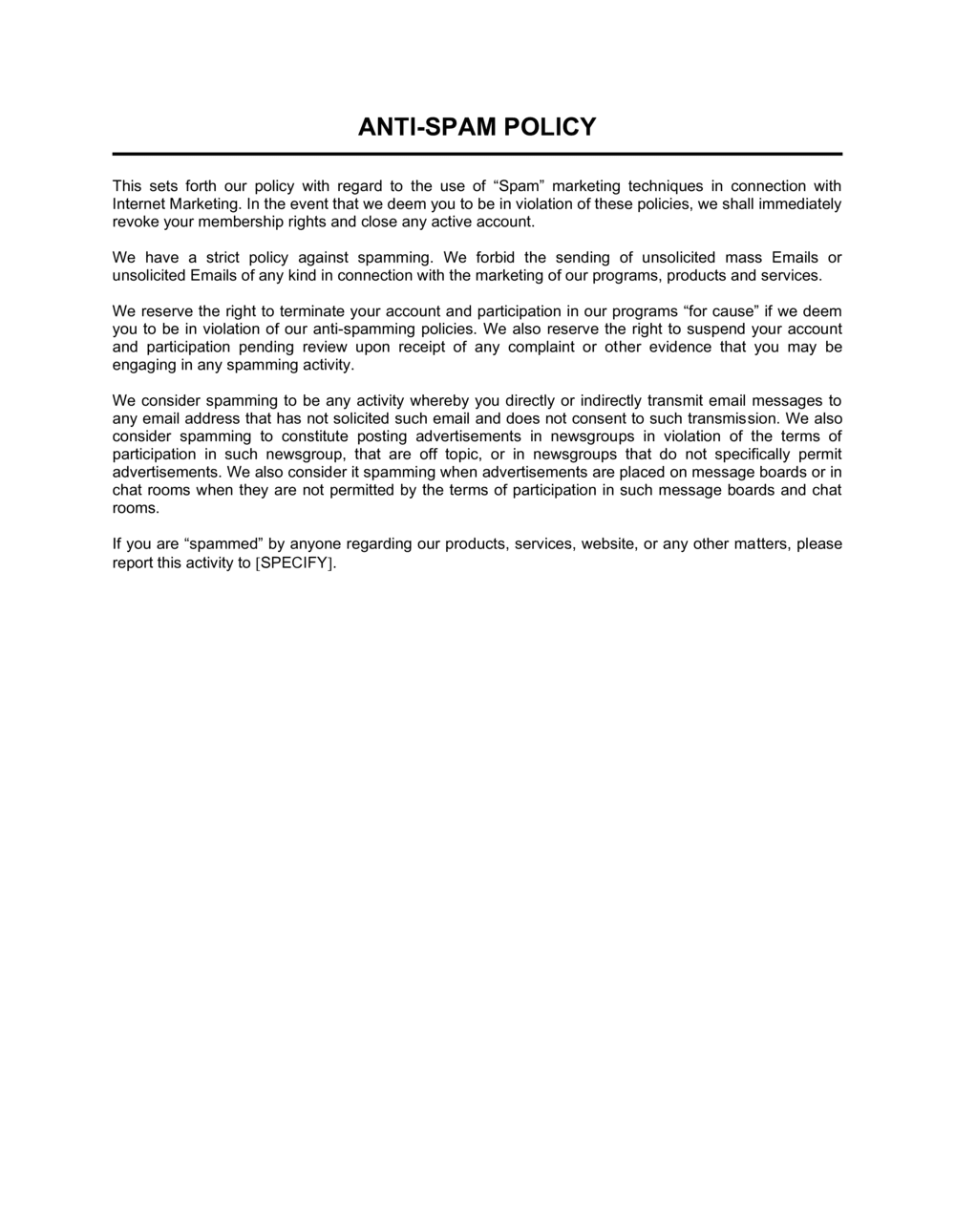
- Any email, SMS, or electronic message sent for the purpose of promoting a product, service, or business — the central category regulated by CAN-SPAM and CASL.
- Express Consent
- A clear, affirmative action by a recipient — such as ticking an unchecked opt-in box — that authorizes the sender to contact them with commercial messages.
- Implied Consent
- Permission inferred from an existing business relationship, such as a recent purchase or inquiry, without a formal opt-in — recognized under CASL but not CAN-SPAM.
- Opt-Out / Unsubscribe
- A mechanism allowing recipients to withdraw consent and stop receiving commercial messages, which must be honored within 10 business days under CAN-SPAM.
- CAN-SPAM Act
- The US federal law (Controlling the Assault of Non-Solicited Pornography And Marketing Act, 2003) setting rules for commercial email, including required sender identification, subject line accuracy, and opt-out compliance.
- CASL
- Canada's Anti-Spam Legislation (2014), which requires express or implied consent before sending CEMs to Canadian recipients and imposes fines of up to CAD $10 million per violation.
- Sender Policy Framework (SPF)
- An email authentication protocol that specifies which mail servers are authorized to send messages on behalf of a domain, reducing spoofing and improving deliverability.
- DKIM (DomainKeys Identified Mail)
- A digital signature standard that verifies an email's content has not been altered in transit and that the sending domain authorized the message.
- Suppression List
- A maintained database of email addresses that have opted out or bounced, used to prevent sending messages to recipients who have withdrawn consent.
- Transactional Email
- An automated, one-to-one message triggered by a user action — such as a purchase confirmation or password reset — that is generally exempt from commercial email consent rules.