Partnership & Joint Venture Agreement Templates

4.7from 280+ reviews Trusted by 20M+ businesses

Structure any business partnership or joint venture correctly from day one, before disputes arise.

WordEditable onlinePDF58+ partnership and joint venture templates

Other Legal Agreements categories

Active Real Estate Partnership Agreement Template
Adhesion To The Unanimous Shareholder Agreement
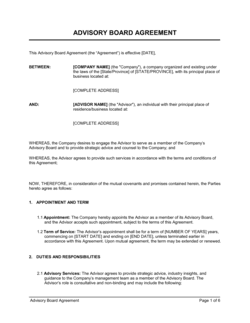
Advisory Board Agreement Template
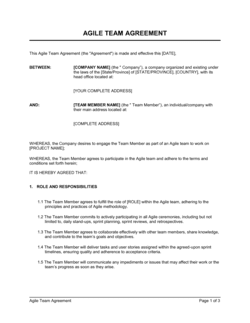
Agile Team Agreement Template
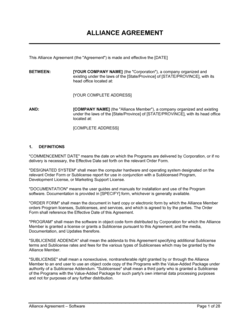
Alliance Agreement Software Template
Board Advisor Agreement Template
Business Interest Letter Template
Checklist Drafting Joint Promotion Agreements Template
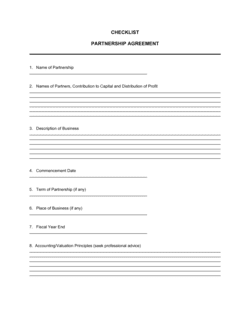
Checklist Partnership Agreement Template
Co-Branding Agreement Template
Co-Founder Agreement Template
Co-Ownership Agreement Template
Collaboration Agreement Template
Collaboration Leadership Agreement Template
Commission Split Agreement Template
Consortium Agreement Template
Cooperation Agreement Template
Cross Promotion Agreement Template
Custom Software Business Partnership Agreement
Dissociation Agreement Template
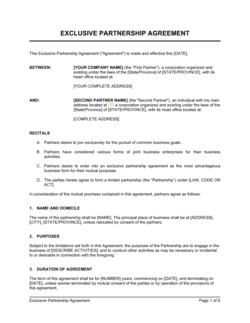
Exclusive Partnership Agreement Template
Fear of Failure Agreement Template
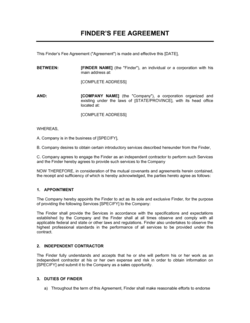
Finder's Fee Agreement Template
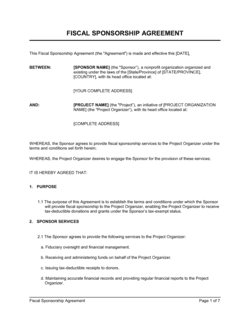
Fiscal Sponsorship Agreement Template
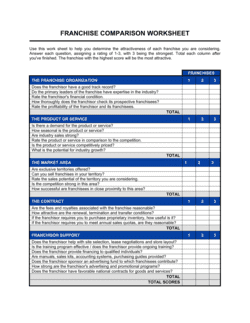
Franchise Comparison Worksheet Template
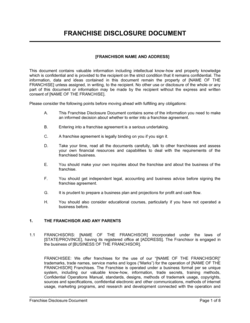
Franchise Disclosure Document Template
How To Create A Joint Venture Template
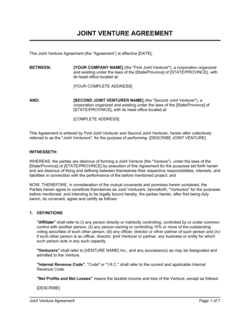
Joint Venture Agreement Template
Joint Venture Agreement Template (Variant)
Limited Partnership Agreement Long Form Template
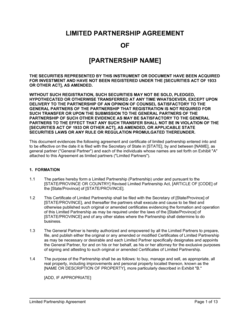
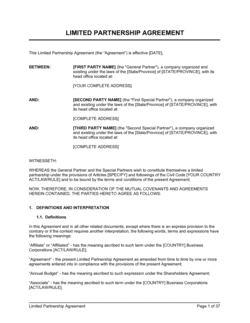
Limited Partnership Agreement Template
Limited Partnership Agreement Template #2
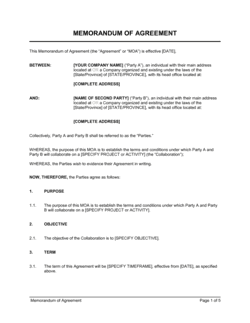
Memorandum of Agreement Template
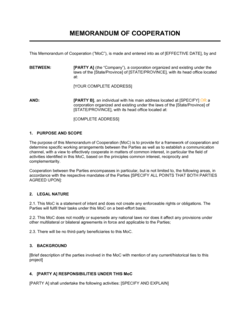
Memorandum of Cooperation Template
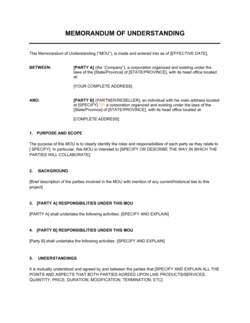
Memorandum of Understanding Template
MoU Strategic Partnership Agreement Template
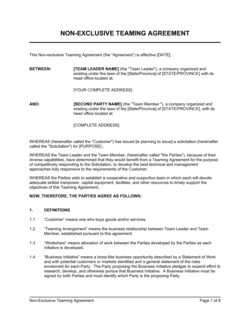
Non Exclusive Teaming Agreement Template
Non-Profit Memorandum of Understanding Template
Non-Profit Partnership Agreement Template
Notice of Withdrawal from Partnership Template
Option To Acquire Partnership Interests Template
Partnership Agreement Short Form Template
Partnership Buyout Agreement Template
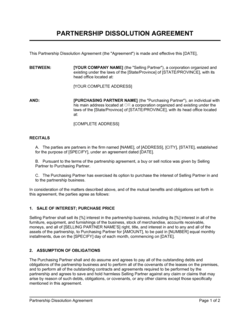
Partnership Dissolution Agreement Template
Passive Real Estate Partnership Agreement Template
Profit Share Agreement Template
Quick Networking Tips for Entrepreneurs Template
Real Estate Operating Agreement Template
Restaurant Partnership Agreement Template
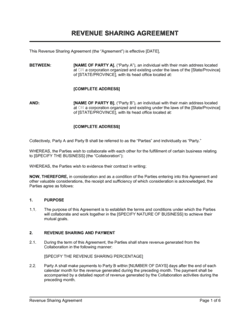
Revenue Sharing Agreement Template
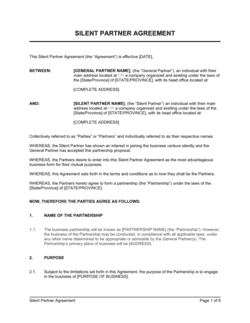
Silent Partner Agreement Template
Sponsorship Package Template
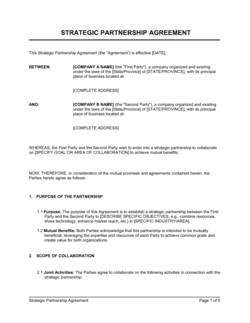
Strategic Partnership Agreement Template
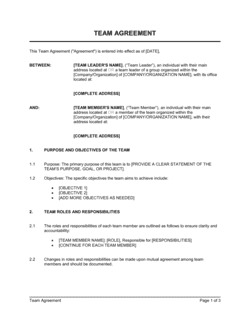
Team Agreement Template
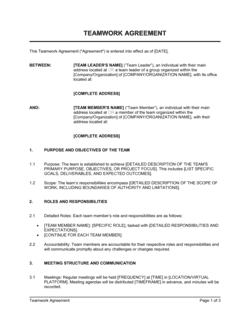
Team Work Agreement Template
Teaming Agreement Template
Vision & Goals Agreement Template
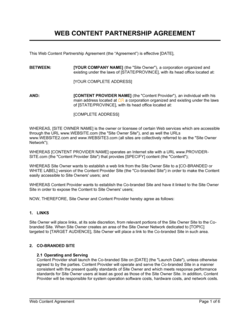
Web Content Partnership Agreement Template
250K+Clients
20M+Free users
20+Years
190+Countries
10,000+Law firms
50M+Downloads

Trusted across review platforms

  • Capterra★★★★☆4.649 reviews
  • G2★★★★☆4.713 reviews
  • GetApp★★★★☆4.649 reviews
  • Google Play★★★★☆4.6179 ratings
  • Google Reviews★★★★☆4.567 reviews

Related categories

Frequently asked questions

Do I need a written partnership agreement?
Technically no, but without one you are governed entirely by your jurisdiction's default partnership laws, which may not reflect what you actually agreed. Default rules typically split profits equally regardless of contribution, give each partner equal management rights, and can dissolve the partnership when one partner leaves. A written agreement overrides those defaults and protects everyone.
What's the difference between a general partnership and a limited partnership?
In a general partnership, all partners share management authority and have unlimited personal liability for the partnership's debts. In a limited partnership, there is at least one general partner with full control and unlimited liability, and one or more limited partners who contribute capital but have liability capped at their investment. Limited partnerships are common in real estate and private equity structures.
Can a partnership agreement be changed after it is signed?
Yes, through a written amendment signed by all parties. Most agreements include an amendment clause that specifies the required consent — typically unanimous for core terms like profit splits and management authority. Oral amendments are generally unenforceable, so changes should always be documented in writing.
What happens if a partner dies or becomes incapacitated?
Without a written agreement that addresses succession, a partner's death often triggers automatic dissolution under default law. A well-drafted partnership agreement includes a buy-sell or succession clause that allows the remaining partners to purchase the deceased partner's interest from their estate at an agreed or formula-based price, keeping the business running.
Who owns intellectual property created during a joint venture?
Ownership depends entirely on what the agreement says. Without a specific IP clause, jointly developed IP may be owned equally by all parties in most jurisdictions — which can create problems if the JV ends and both parties want to use it independently. A clear IP ownership clause should specify who owns newly created IP, what license each party has to pre-existing IP, and what happens to shared IP on dissolution.
Is a joint venture the same as a partnership?
Not exactly. A joint venture is typically created for a specific project or purpose and has a defined end date. A partnership is an ongoing business relationship without a predetermined end. Both involve shared resources and profit, but a JV is project-scoped while a partnership implies an indefinite business enterprise. The distinction matters for tax treatment and liability in many jurisdictions.
Do partnership agreements need to be notarized?
In most jurisdictions, notarization is not required for a general or limited partnership agreement to be enforceable — authorized signatures are sufficient. However, some jurisdictions require limited partnerships to file a certificate with a state or provincial registry, and real-estate partnerships may require notarization for property-related clauses. Check local requirements before signing.
What should a partnership dissolution agreement include?
A dissolution agreement should cover: the effective dissolution date, how remaining assets and liabilities are divided, how outstanding contracts and debts are handled, which partner is responsible for winding-down tasks, whether any confidentiality or non-compete obligations survive, and how any jointly held intellectual property is transferred or licensed going forward.

Partnership & Joint Venture Agreement vs. related documents

Partnership & Joint Venture Agreement vs. Joint venture agreement

A partnership agreement governs an ongoing business relationship between parties who share profits, losses, and management indefinitely. A joint venture agreement governs a specific project or purpose, after which the JV typically dissolves. Use a partnership for a continuing enterprise; use a joint venture for a defined, time-limited collaboration.

Partnership & Joint Venture Agreement vs. Shareholders agreement

A shareholders agreement governs the relationship between equity owners inside an incorporated company, covering share transfers, voting rights, and dividends. A partnership agreement governs unincorporated business relationships. If your collaboration involves forming a corporation, you need a shareholders agreement; if it's a partnership or JV without incorporation, you need a partnership or joint venture agreement.

Partnership & Joint Venture Agreement vs. Memorandum of Understanding (MOU)

An MOU records mutual intent and outlines the broad terms of a proposed collaboration, but is typically non-binding or only partially binding. A partnership or joint venture agreement is a fully binding contract with enforceable obligations. Start with an MOU to test alignment; convert to a formal agreement before committing resources.

Partnership & Joint Venture Agreement vs. Collaboration agreement

A collaboration agreement is a lighter-weight contract used when two parties work together on a project without forming a new entity or sharing ongoing profits. A partnership agreement implies a deeper, ongoing financial relationship with shared liability. Use a collaboration agreement for one-off creative or professional projects; use a partnership agreement when profits and liabilities are shared over time.

Key clauses every Partnership & Joint Venture Agreement contains

Every partnership and joint venture agreement — regardless of structure — is built from the same core clauses; the details vary by situation.

  • Parties and purpose. Identifies the legal names of all parties and defines the specific business purpose or project the agreement governs.
  • Capital contributions. States what each party contributes — cash, assets, IP, or labor — and when those contributions are due.
  • Profit and loss allocation. Specifies how profits and losses are divided among the parties, either equally or in proportion to contributions.
  • Management and decision-making. Defines who manages day-to-day operations, which decisions require unanimous consent, and how disputes are resolved.
  • Intellectual property ownership. Clarifies who owns IP created during the collaboration and what happens to existing IP each party brings in.
  • Confidentiality obligations. Requires parties to keep proprietary information, strategies, and financials shared during the venture confidential.
  • Term and termination. Sets the start and end date of the agreement and the conditions under which any party may exit early.
  • Exit and buyout mechanics. Governs how a departing partner's interest is valued and transferred, including rights of first refusal.
  • Governing law and dispute resolution. Names the jurisdiction and mechanism — litigation, mediation, or arbitration — for resolving disagreements.

How to write a partnership or joint venture agreement

A solid partnership agreement answers seven questions before the relationship begins; skip any one of them and it becomes the source of the first dispute.

  1. 1

    Identify all parties and define the purpose

    Use the full legal names of every party and write a precise statement of what the partnership or JV is created to accomplish.

  2. 2

    Document each party's contributions

    List exactly what each partner contributes — cash amount, asset descriptions, IP, or specific services — and the dates those contributions are due.

  3. 3

    Set profit and loss splits

    Decide whether profits and losses are shared equally or proportionally to contributions, and write the percentages into the agreement.

  4. 4

    Define management authority

    Specify who manages day-to-day operations, which decisions require all partners to agree, and how deadlocks are broken.

  5. 5

    Address intellectual property

    State who owns IP developed during the collaboration, what license each party has to pre-existing IP they bring in, and what happens to jointly created IP on exit.

  6. 6

    Set exit and buyout rules

    Explain how a partner can exit, how their interest is valued at exit, and whether remaining partners have a right of first refusal.

  7. 7

    Include dissolution and governing law

    Describe the process for winding down the partnership — asset distribution, liability settlement — and name the jurisdiction whose laws govern the agreement.

At a glance

What it is
A partnership or joint venture agreement is a legal contract that defines how two or more parties will collaborate on a business, project, or venture — including how decisions are made, profits are split, and the relationship ends.
When you need one
Any time two or more people or companies combine resources, share risk, or work toward a common commercial goal, a written agreement prevents costly misunderstandings later.

Which Partnership & Joint Venture Agreement do I need?

The right template depends on who's involved, how liability is shared, and whether the collaboration is an ongoing business or a defined project.

Your situation
Recommended template

Two companies forming a new shared business or project entity

Covers capital contributions, profit sharing, governance, and exit for a distinct JV entity.

Two or more people starting a general business together

Establishes roles, profit splits, decision-making, and exit terms for an ongoing partnership.

A passive investor backing an active managing partner

Separates general partner control from limited partner liability and return rights.

Two parties co-developing a new product or technology

Addresses IP ownership, development milestones, and cost sharing for a joint build.

Two companies agreeing to promote each other exclusively

Creates binding exclusivity obligations and defines the scope of joint promotion.

One partner buying out the other's share of the business

Sets out valuation, payment terms, and the transfer of ownership interest.

Two partners dissolving a business and dividing assets

Governs wind-down process, liability allocation, and final asset distribution.

Two organizations forming a strategic alliance without a new entity

Documents mutual commitments and strategic intent without full joint-entity obligations.

Glossary

General partnership
A business structure where all partners share management authority and bear unlimited personal liability for partnership debts.
Limited partnership
A structure with at least one general partner (unlimited liability, full control) and one or more limited partners (liability capped at their investment).
Joint venture (JV)
A time-limited collaboration between two or more parties for a specific project or purpose, after which the arrangement typically dissolves.
Capital contribution
The cash, property, intellectual property, or services a partner commits to contribute to the partnership or venture.
Profit and loss allocation
The agreed percentage or formula by which profits earned and losses incurred are divided among the partners.
Buy-sell agreement
A clause or separate agreement that governs how a departing partner's interest is valued and purchased by the remaining partners.
Right of first refusal
A contractual right giving existing partners the opportunity to purchase a departing partner's interest before it is offered to a third party.
Dissolution
The formal process of winding down a partnership or joint venture, settling liabilities, and distributing remaining assets.
Managing partner
The partner designated to handle day-to-day operational decisions on behalf of the partnership.
Deadlock
A situation where partners cannot reach the required majority or unanimous decision, often resolved by a pre-agreed mechanism such as mediation or a casting vote.
Sweat equity
A partner's contribution in the form of labor, expertise, or time rather than cash or assets, which is assigned a monetary value in the agreement.

What is a partnership or joint venture agreement?

A partnership agreement is a legally binding contract between two or more parties who agree to carry on a business together, sharing contributions, profits, losses, and management responsibilities. It converts informal understandings into enforceable obligations and overrides the default rules that most jurisdictions impose on partnerships in the absence of a written contract — rules that rarely match what the partners actually intended.

A joint venture agreement is a related but distinct instrument: it governs a collaboration between two or more parties for a specific project or purpose, rather than an ongoing enterprise. When the project concludes, the joint venture typically dissolves and each party goes its own way. Both documents address the same core questions — who contributes what, who controls decisions, how money is shared, and what happens when the relationship ends — but the scope and duration differ. The right choice depends on whether you are building something permanent together or combining forces for a defined goal.

Beyond those two core documents, this category includes the full lifecycle of a business partnership: checklists for drafting, MOU-style strategic alliance agreements, collaboration and cooperation agreements, real estate partnership structures, buyout agreements, and formal dissolution instruments.

When you need a partnership or joint venture agreement

The moment two parties agree to share resources, risk, or revenue toward a common business goal, a written agreement should follow. Without one, disputes over profits, decision authority, and exits get resolved by courts applying default rules that may split everything equally regardless of who contributed more.

Common triggers:

  • Two founders launching a business together without incorporating
  • A company and a supplier structuring a co-marketing or co-distribution arrangement
  • Two real estate investors buying and managing a property together
  • A business and a technology firm co-developing a product or platform
  • An investor providing capital to an operating partner in a real estate deal
  • Two companies teaming up to bid on a government or enterprise contract
  • A partner retiring, selling their share, or exiting due to a dispute
  • Two parties winding down a business and needing a structured dissolution process

The cost of starting without a written agreement is almost never visible on day one — it shows up the first time partners disagree about money, control, or exit. A clear partnership or joint venture agreement, drafted before the relationship begins, is the least expensive insurance a business relationship can carry.

Award-winning platform

  • Great Place to Work 2025
  • BIG Award — Product of the Year 2025
  • Smartest Companies 2025
  • Global 100 Excellence 2026
  • Best of the Best 2025

Create your document in 3 simple steps.

From template to signed document — all inside one Business Operating System.
1
Download or open template

Access over 3,000+ business and legal templates for any business task, project or initiative.

2
Edit and fill in the blanks with AI

Customize your ready-made business document template and save it in the cloud.

3
Save, Share, Send, Sign

Share your files and folders with your team. Create a space of seamless collaboration.

Save time, save money, and create top-quality documents.

★★★★★

"Fantastic value! I'm not sure how I'd do without it. It's worth its weight in gold and paid back for itself many times."

Managing Director · Mall Farm
Robert Whalley
Managing Director, Mall Farm Proprietary Limited
★★★★★

"I have been using Business in a Box for years. It has been the most useful source of templates I have encountered. I recommend it to anyone."

Business Owner · 4+ years
Dr Michael John Freestone
Business Owner
★★★★★

"It has been a life saver so many times I have lost count. Business in a Box has saved me so much time and as you know, time is money."

Owner · Upstate Web
David G. Moore Jr.
Owner, Upstate Web

Run your business with a system — not scattered tools

Stop downloading documents. Start operating with clarity. Business in a Box gives you the Business Operating System used by over 250,000 companies worldwide to structure, run, and grow their business.
Free Forever Plan · No credit card required