This partnership dissolution agreement template has 2 pages and is a MS Word file type listed under our legal agreements documents.
Partnership dissolution agreement template
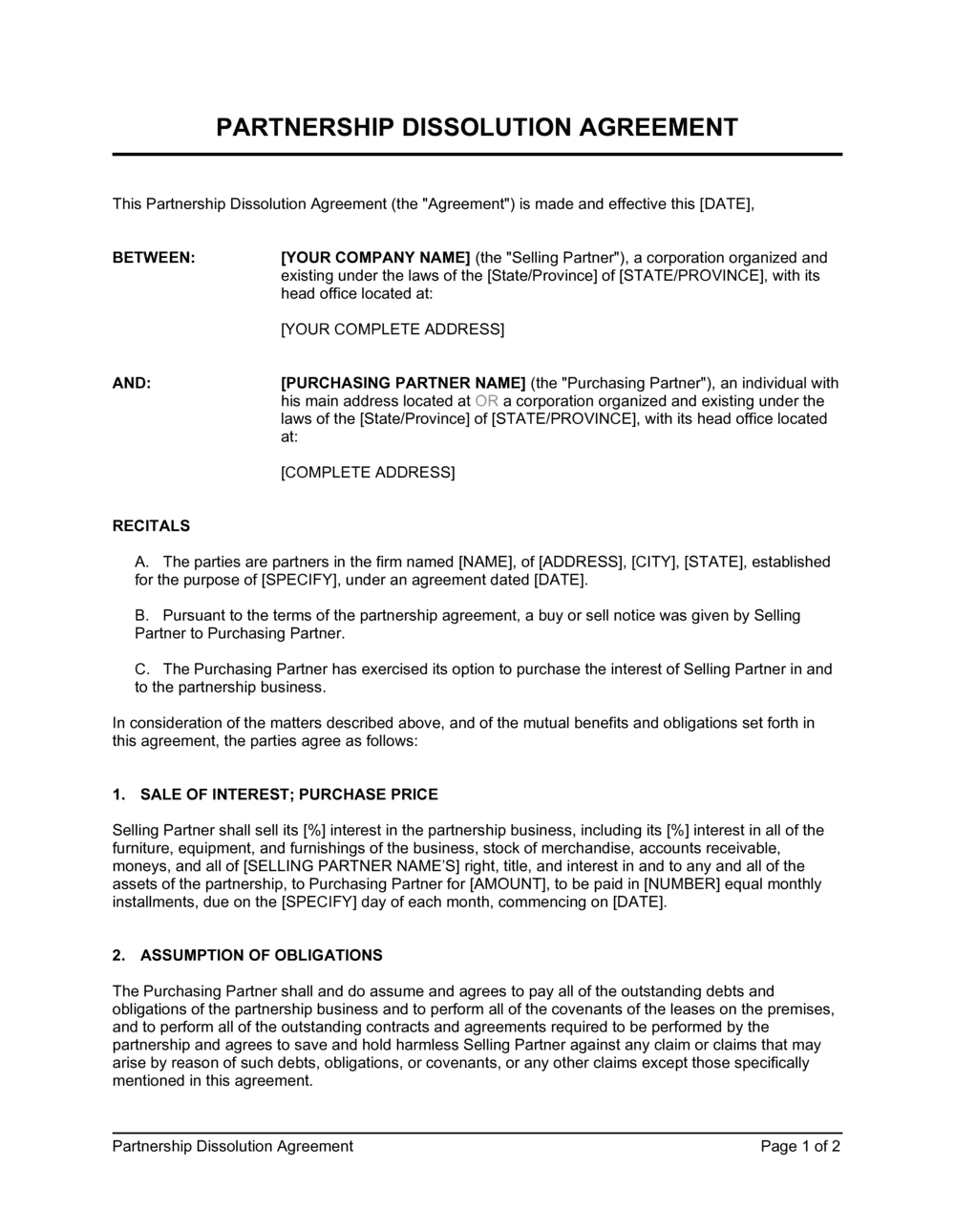
PARTNERSHIP DISSOLUTION AGREEMENT This Partnership Dissolution Agreement (the "Agreement") is made and effective this [Date], BETWEEN: [YOUR COMPANY NAME] (the "Selling Partner"), a corporation organized and existing under the laws of the [State/Province] of [STATE/PROVINCE], with its head office located at: [YOUR COMPLETE ADDRESS] AND: [PURCHASING PARTNER NAME] (the "Purchasing Partner"), an individual with his main address located at OR a corporation organized and existing under the laws of the [State/Province] of [STATE/PROVINCE], with its head office located at: [COMPLETE ADDRESS] RECITALS The parties are partners in the firm named [name], of [address], [city], [state], established for the purpose of [specify], under an agreement dated [date]. Pursuant to the terms of the partnership agreement, a buy or sell notice was given by Selling Partner to Purchasing Partner. The Purchasing Partner has exercised its option to purchase the interest of Selling Partner in and to the partnership business. In consideration of the matters described above, and of the mutual benefits and obligations set forth in this agreement, the parties agree as follows: SALE OF INTEREST; PURCHASE PRICE Selling Partner shall sell its [%] interest in the partnership business, including its [%] interest in all of the furniture, equipment, and furnishings of the business, stock of merchandise, accounts receivable, moneys, and all of [Selling Partner name's] right, title, and interest in and to any and all of the assets of the partnership, to Purchasing Partner for [amount], to be paid in [number] equal monthly installments, due on the [specify] day of each month, commencing on [date]. ASSUMPTION OF OBLIGATIONS The Purchasing Partner shall and do assume and agrees to pay all of the outstanding debts and obligations of the partnership business and to perform all of the covenants of the leases on the premises, and to perform all of the outstanding contracts and agreements required to be performed by the partnership and agrees to save and hold harmless Selling Partner against any claim or claims that may arise by reason of such debts, obligations, or covenants, or any other claims except those specifically mentioned in this agreement. INDEMNIFICATION
 Dashboard
 HR Management
 Links
Links Chat
Chat Connect
 Contacts
 Inbox
Inbox Business Al
 Project Management
 Notes
Notes Business Templates
 Cloud Drive
 Docs
Docs Sheets