Partnership Buyout Agreement Template

Free Word download • Edit online • Save & share with Drive • Export to PDF

6 pages25–35 min to fillDifficulty: ComplexSignature requiredLegal review recommended
Learn more ↓
FreePartnership Buyout Agreement Template

At a glance

What it is
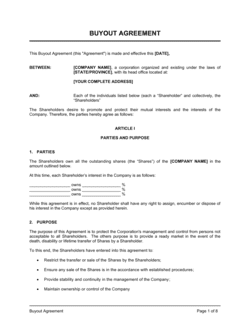
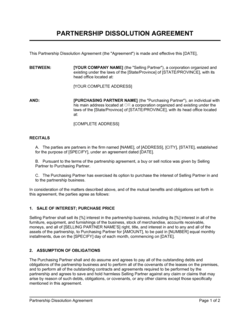
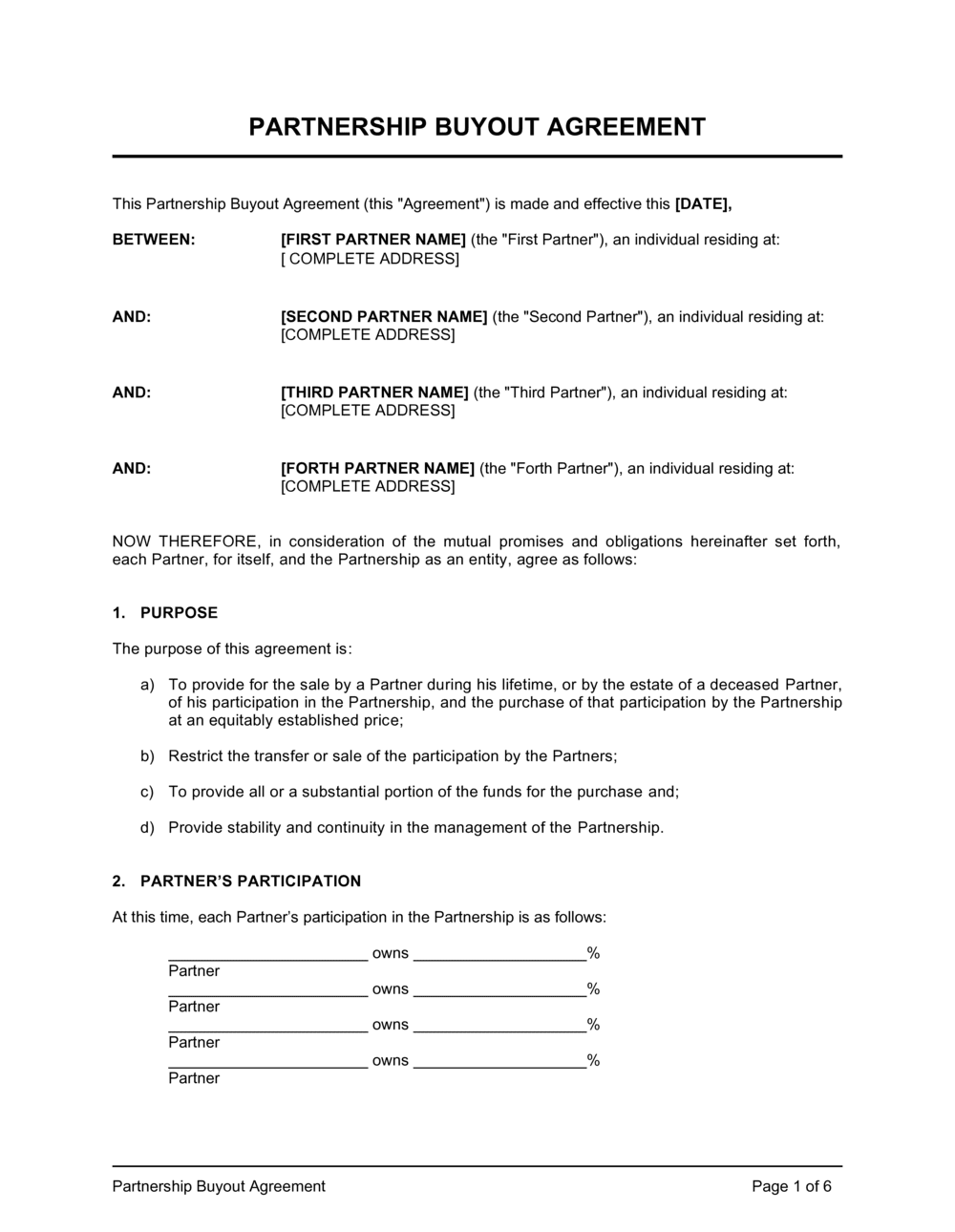
A Partnership Buyout Agreement is a legally binding contract under which one or more continuing partners purchase the ownership interest of a departing partner. This free Word download covers valuation methodology, purchase price, payment schedule, release of claims, restrictive covenants, and the mechanics of transferring the interest — consolidating the full exit into a single enforceable document you can edit online and export as PDF.
When you need it
Use it whenever a partner is exiting the business — whether due to retirement, voluntary withdrawal, dispute resolution, death, disability, or a forced buyout triggered under the existing partnership agreement. It documents the agreed terms before money changes hands and relationships deteriorate.
What's inside
Identification of the parties and the interest being transferred, valuation and purchase price, payment terms and security, representations and warranties, mutual releases, non-compete and non-solicitation restrictions, confidentiality obligations, and governing law with dispute resolution provisions.

What is a Partnership Buyout Agreement?

A Partnership Buyout Agreement is a legally binding contract under which one or more continuing partners purchase the full ownership interest of a departing partner, transferring that interest and documenting every material term of the exit in a single enforceable document. It covers the agreed valuation methodology and purchase price, payment schedule and any promissory note security, representations and warranties from both sides, a mutual release of partnership-related claims, post-exit non-compete and non-solicitation restrictions, ongoing confidentiality obligations, and the governing law. Unlike an informal side arrangement or a generic bill of sale, a properly drafted buyout agreement creates clear, enforceable obligations that protect both the departing partner and those who remain.

Why You Need This Document

Without a written partnership buyout agreement, both sides of the transaction are exposed to significant legal and financial risk. A departing partner who relies on a verbal understanding has no enforceable right to the agreed price, no protection against continuing liability for partnership debts, and no documented release from future claims by the remaining partners. Conversely, continuing partners without a signed agreement cannot prevent a departing partner from immediately competing for their clients, disclosing confidential business information, or later contesting the valuation. In jurisdictions with joint-and-several partnership liability, a departing partner can remain personally liable for pre-exit business debts for years unless a written indemnification clause shifts that exposure contractually. This template gives you the structure to document valuation, close the transfer cleanly, allocate liability, and enforce post-exit restrictions — eliminating the ambiguity that turns business separations into prolonged disputes.

Which variant fits your situation?

If your situation is…Use this template
One continuing partner buying out the only other partner entirelyPartnership Buyout Agreement
Multiple continuing partners each acquiring a pro-rata share of the departing partner's interestPartnership Interest Purchase Agreement
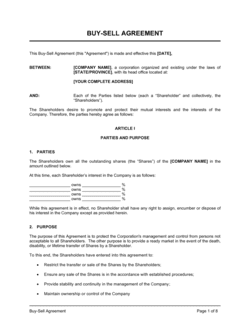
Partner exit triggered by death or disability under a pre-existing buy-sell clauseBuy-Sell Agreement
Dissolving the partnership entirely rather than continuing without one partnerPartnership Dissolution Agreement
Transferring a membership interest in an LLC rather than a partnership interestLLC Membership Interest Purchase Agreement
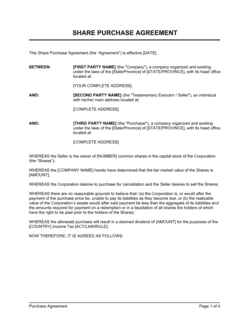
Buying out a shareholder in a corporation rather than a partnerShare Purchase Agreement
Amending the partnership agreement after the buyout closes to reflect new ownershipPartnership Agreement Amendment

Common mistakes to avoid

❌ No documented valuation methodology

Why it matters: Without a written record of how the buyout price was calculated, a departing partner — or their estate — can later claim the price was unfair and pursue litigation for the difference, especially if goodwill was excluded without agreement.

Fix: Attach the valuation report, appraisal, or calculation worksheet as a numbered exhibit to the agreement and reference it in the purchase price clause.

❌ One-sided or no mutual release

Why it matters: A release only from the departing partner leaves the continuing partners exposed to claims for unpaid distributions, mismanagement, or breach of fiduciary duty that the departing partner asserts years after the exit.

Fix: Include a bilateral mutual release covering all partnership-related claims through the closing date, with both parties acknowledged as releasors and releasees.

❌ Promissory note with no security and no acceleration clause

Why it matters: If the purchasing partners default on installment payments, the departing partner has no collateral to recover and may need to sue for each missed payment individually — a process that can take years.

Fix: Secure the promissory note with a first-priority lien on the transferred interest or business assets, and include an acceleration clause making the full balance due immediately on default after a short cure period.

❌ Overbroad or boilerplate non-compete geographic scope

Why it matters: Courts in most jurisdictions strike down non-compete clauses that are unreasonable in scope — and typically void the entire clause rather than narrowing it, leaving the continuing partners with no enforceable protection.

Fix: Define the competitive restriction by the actual territory where the partnership operates and the specific type of business activity, and limit the duration to 12–24 months proportionate to the departing partner's client relationships.

❌ No indemnification for pre-closing partnership liabilities

Why it matters: Under joint-and-several liability rules in general partnerships, creditors can pursue the departing partner for pre-closing debts for years after exit — and without an indemnification clause, the departing partner has no contractual recourse against the continuing partners.

Fix: Include a mutual indemnification clause: continuing partners indemnify the departing partner against pre-closing partnership debts; the departing partner indemnifies the partnership against liabilities from their personal conduct.

❌ Failing to update the partnership agreement and public filings after closing

Why it matters: If the partnership agreement and state filings still show the departing partner as a partner, third parties — including lenders and counterparties — may claim the departing partner still has authority to bind the partnership.

Fix: Amend the partnership agreement to remove the departing partner immediately after closing, and file an updated statement of authority or partnership registration amendment with the secretary of state within 30 days.

The 10 key clauses, explained

Parties and recitals

In plain language: Identifies the departing partner, the purchasing partners, and the partnership by full legal name, and sets out the background facts that led to the buyout.

Sample language
This Partnership Buyout Agreement ('Agreement') is entered into on [DATE] by and among [DEPARTING PARTNER FULL NAME] ('Selling Partner') and [PURCHASING PARTNER(S) FULL NAME(S)] (collectively, 'Purchasing Partners'), with respect to [PARTNERSHIP LEGAL NAME] (the 'Partnership').

Common mistake: Using trade names or informal nicknames instead of the exact legal names on file with the state or partnership registry. Mismatched names create title defects when updating partnership records.

Description and transfer of interest

In plain language: Specifies the exact percentage or fractional interest being sold and confirms that ownership transfers to the purchasing partners free and clear of all encumbrances on the closing date.

Sample language
Selling Partner hereby sells, assigns, and transfers to Purchasing Partners all of Selling Partner's right, title, and interest in and to [X]% of the Partnership (the 'Interest'), free and clear of all liens, claims, and encumbrances, effective as of [CLOSING DATE].

Common mistake: Failing to confirm the interest is free of encumbrances before closing. If the departing partner pledged the interest as collateral for a personal loan, the purchaser acquires a clouded title.

Purchase price and valuation

In plain language: States the total buyout price, the valuation method used to arrive at it, and whether it includes or excludes goodwill, loans owed to the departing partner, and capital account balances.

Sample language
The purchase price for the Interest is $[AMOUNT] ('Purchase Price'), calculated on the basis of [VALUATION METHOD — e.g., independent appraisal dated [DATE] / agreed book value as of [DATE] / discounted cash flow analysis]. The Purchase Price [includes / excludes] the Selling Partner's capital account balance of $[AMOUNT] and the outstanding loan balance of $[AMOUNT].

Common mistake: Agreeing on a number without documenting the valuation methodology. If the price is later disputed, there is no contractual basis to defend how it was calculated.

Payment terms and security

In plain language: Sets the payment schedule — whether the price is paid in full at closing, in installments under a promissory note, or a combination — and specifies any security interest given to the departing partner.

Sample language
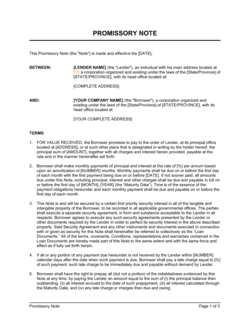
The Purchase Price shall be paid as follows: (a) $[DOWN PAYMENT] at closing by [wire transfer / certified check]; and (b) the balance of $[REMAINDER] by promissory note bearing interest at [X]% per annum, payable in [N] equal monthly installments of $[AMOUNT] commencing [DATE], secured by a first-priority lien on the Interest.

Common mistake: Issuing a promissory note with no security interest and no acceleration clause. If the purchasing partners default, the departing partner has no collateral to recover and no mechanism to accelerate the full balance.

Representations and warranties

In plain language: Each party makes factual promises about their authority to enter the agreement, the accuracy of the information they provided, and the absence of undisclosed liabilities or competing claims on the interest.

Sample language
Selling Partner represents and warrants that: (a) Selling Partner has full authority to sell the Interest; (b) the Interest is owned free and clear of all encumbrances; (c) Selling Partner has no knowledge of any undisclosed partnership liabilities as of the date hereof; and (d) Selling Partner is not a party to any agreement that would restrict this transfer.

Common mistake: Limiting representations to the selling partner only. Purchasing partners should also warrant their authority and financial capacity to complete the transaction, especially where payment is deferred.

Mutual release of claims

In plain language: Both the departing partner and the remaining partners release all claims against each other arising from the partnership relationship up to the closing date, providing a clean break.

Sample language
Effective upon receipt of the closing payment, each party hereby releases and forever discharges the other from any and all claims, demands, actions, and liabilities of any kind arising out of or relating to the Partnership or the parties' relationship as partners, whether known or unknown, through the Closing Date.

Common mistake: Including only a one-sided release from the departing partner. Without a mutual release, the remaining partners retain exposure to claims the departing partner may later assert for unpaid distributions or mismanagement.

Indemnification for pre-closing liabilities

In plain language: Allocates responsibility for partnership debts and obligations that existed before the closing date, typically requiring the continuing partners to indemnify the departing partner against pre-closing partnership liabilities.

Sample language
Purchasing Partners agree to indemnify, defend, and hold Selling Partner harmless from and against any and all liabilities, losses, and obligations of the Partnership arising from events occurring prior to the Closing Date, including but not limited to [list known liabilities]. Selling Partner shall indemnify Purchasing Partners against any liability arising from Selling Partner's personal conduct during the partnership.

Common mistake: No indemnification clause at all. Without it, creditors can pursue the departing partner for pre-closing partnership debts for years after the exit under joint-and-several partnership liability rules.

Non-compete and non-solicitation

In plain language: Restricts the departing partner from competing with the partnership's business or soliciting its clients and employees for a defined period and geography after the closing date.

Sample language
For a period of [X] months following the Closing Date, Selling Partner shall not, directly or indirectly: (a) engage in any Competing Business within [GEOGRAPHIC AREA]; or (b) solicit or attempt to solicit any client, customer, or employee of the Partnership. 'Competing Business' means [SPECIFIC DESCRIPTION OF BUSINESS ACTIVITY].

Common mistake: Using a boilerplate geographic scope — such as 'the entire United States' — for a local or regional business. Courts strike down disproportionate non-competes, voiding the clause entirely rather than narrowing it.

Confidentiality

In plain language: Requires the departing partner to keep partnership trade secrets, client lists, financial information, and proprietary processes confidential after departure.

Sample language
Selling Partner agrees not to disclose or use any Confidential Information of the Partnership following the Closing Date. 'Confidential Information' means any non-public information relating to the Partnership's clients, finances, operations, pricing, or business strategies, whether in written or electronic form.

Common mistake: Omitting a confidentiality clause on the assumption that the mutual release covers it. A release extinguishes past claims; it does not prohibit future disclosure of sensitive information the departing partner carries out the door.

Governing law and dispute resolution

In plain language: Specifies the jurisdiction whose law governs the agreement and the mechanism for resolving disputes — binding arbitration, mediation, or litigation in a named court.

Sample language
This Agreement shall be governed by and construed in accordance with the laws of [STATE / PROVINCE / COUNTRY], without regard to its conflict-of-law rules. Any dispute arising under this Agreement shall be resolved by [binding arbitration administered by [AAA / JAMS] in [CITY] / the courts of [JURISDICTION]], except that either party may seek injunctive relief in any court of competent jurisdiction.

Common mistake: Selecting a governing law with no connection to where the partnership operates or the partners reside. Courts in many jurisdictions will disregard a governing-law clause that has no reasonable relationship to the transaction.

How to fill it out

  1. 1

    Confirm the full legal names of all parties and the partnership

    Pull the exact legal name of the partnership from its registration filing, and use full legal names for both the departing partner and all purchasing partners. Attach a copy of the current partnership agreement as a reference exhibit.

    💡 Cross-check names against the most recent partnership tax return (Form 1065 in the US) — this is the authoritative record most tax authorities and courts use.

  2. 2

    Define the interest being transferred precisely

    State the exact percentage interest being sold, confirm it matches the departing partner's capital and profit-sharing percentages in the partnership agreement, and verify there are no pledges or liens against the interest.

    💡 Run a UCC search against the departing partner's name in the state of formation before signing — pledged interests show up here.

  3. 3

    Agree on and document the valuation methodology

    Choose and document the valuation approach — book value, independent appraisal, discounted cash flow, or a formula prescribed in the existing partnership agreement. Attach the valuation report or calculation as an exhibit to the agreement.

    💡 If partners cannot agree on value, a single agreed appraiser appointed jointly is faster and cheaper than dueling experts.

  4. 4

    Structure the payment terms and any security

    Decide whether the purchase price is paid in full at closing or via a promissory note with installments. If deferred, set the interest rate, payment dates, and the collateral securing the note — typically a lien on the transferred interest or partnership assets.

    💡 Set the promissory note interest rate at or above the applicable federal rate (AFR) for the month of closing to avoid IRS imputed-interest rules on installment sales.

  5. 5

    Draft mutual releases scoped to the closing date

    Ensure releases run in both directions — the departing partner releases the partnership and remaining partners, and vice versa. Specify that the release covers all claims through the closing date, including unpaid distributions, management disputes, and capital account disagreements.

    💡 Carve out known unresolved claims explicitly rather than leaving them to 'known or unknown' language — a broad unknown-claims waiver may not hold up in some jurisdictions.

  6. 6

    Tailor the non-compete to the business's actual market

    Set the geographic scope to the territory where the partnership actively competes — typically a city, county, state, or named list of clients — and the duration to a period proportionate to the departing partner's access to competitive information (typically 12–24 months).

    💡 Name the specific types of competing activity rather than using 'any competitive business' — courts are more likely to enforce a precisely scoped restriction.

  7. 7

    Address tax allocations and partnership return obligations

    Specify how income, gains, losses, and deductions are allocated between the departing partner and the continuing partners for the year of the buyout, and confirm who files the final partnership tax return if applicable.

    💡 A closing-of-books election under IRC §706(d) allocates items based on the actual closing date rather than a year-end pro-rata — this usually benefits the purchasing partners in a mid-year buyout.

  8. 8

    Execute before any consideration changes hands

    All parties should sign the agreement before any payment is made or the interest is transferred. Both the departing and purchasing partners must sign, and the signed agreement should be attached to an amended partnership agreement or statement of authority filed with the relevant authority.

    💡 Use Business in a Box eSign to timestamp execution and store the fully-executed copy. File an updated partnership statement of authority with the secretary of state within 30 days of closing.

Frequently asked questions

What is a partnership buyout agreement?

A partnership buyout agreement is a legally binding contract under which one or more continuing partners purchase the ownership interest of a departing partner. It documents the agreed purchase price and valuation method, payment terms, mutual release of claims, restrictive covenants, and the mechanics of transferring the interest — replacing informal handshake arrangements with enforceable written obligations that protect both sides of the transaction.

When do I need a partnership buyout agreement?

You need one whenever a partner is exiting the business, whether voluntarily through retirement or withdrawal, due to death or disability, as the result of a dispute, or following a forced buyout triggered by the existing partnership agreement. Executing the agreement before any money changes hands or the interest is transferred protects both parties and establishes a clear legal record of the transaction terms.

How is a departing partner's interest valued in a buyout?

Valuation methods vary depending on what the partners agree to and what the existing partnership agreement requires. Common approaches include book value (net assets on the balance sheet), an independent appraisal by a certified business valuator, a discounted cash flow analysis based on projected earnings, or a formula defined in the original partnership agreement. The chosen method — and the resulting calculation — should be documented in writing and attached to the buyout agreement as an exhibit to prevent future disputes.

Does a partnership buyout agreement need to be notarized?

In most jurisdictions, notarization is not required for a partnership buyout agreement to be enforceable. However, if the partnership holds real estate that will be transferred as part of the buyout, the deed conveying that property will typically require notarization. Some states and provinces also require notarization for UCC filings securing any promissory note. Consider consulting a local attorney to confirm the execution requirements in your jurisdiction.

What is the difference between a partnership buyout agreement and a buy-sell agreement?

A buy-sell agreement is a prospective arrangement — typically built into or attached to the original partnership agreement — that pre-establishes the valuation method, triggering events, and purchase obligations before any exit occurs. A partnership buyout agreement is the instrument that executes the actual transaction when a specific partner exits. The buy-sell agreement governs whether and how a buyout happens; the buyout agreement documents the specific terms when it does.

Are non-compete clauses in a partnership buyout agreement enforceable?

Enforceability depends on the jurisdiction and the scope of the restriction. Courts will typically enforce a non-compete that is reasonable in duration (12–24 months is common), geographically limited to the territory where the partnership actually competes, and specific about the type of business activity restricted. Overly broad restrictions — nationwide geography, vague activity definitions, or durations exceeding three years — are routinely struck down. In California and a few other states, post-sale non-competes in business transactions are treated more favorably than employment non-competes, but the restriction must be tied to a genuine business sale to qualify.

What taxes apply to a partnership buyout?

Partnership buyouts typically involve several tax considerations. The departing partner may recognize capital gain or ordinary income depending on how the purchase price is allocated between the partnership's tangible assets, goodwill, and the capital account balance — an IRC §751 analysis applies to US transactions. Installment sales treatment may be available if the price is paid over time. The purchasing partners may benefit from a step-up in the basis of the acquired interest. Both parties should obtain advice from a tax professional before finalizing the payment structure, as elections made at closing can significantly affect each party's tax outcome.

What happens to the departing partner's liability for existing partnership debts?

Under general partnership law in most jurisdictions, a departing partner remains jointly and severally liable for partnership debts incurred before their departure — meaning creditors can pursue them directly even after the buyout closes. An indemnification clause in the buyout agreement shifts that risk contractually to the continuing partners, but it does not eliminate the departing partner's exposure to third-party creditors. To fully protect the departing partner, the continuing partners should also notify known creditors of the change in partnership composition and, where possible, obtain creditor consent to release the departing partner from existing obligations.

Do I need a lawyer to complete a partnership buyout agreement?

For straightforward buyouts between partners who are in agreement on price, payment terms, and restrictions, a high-quality template is a solid starting point that covers all material provisions. Legal review is strongly recommended when the buyout involves deferred payments secured by a promissory note, significant goodwill or intellectual property, real estate, complex tax allocations, or when the departing partner contests the valuation or has unresolved claims against the partnership. A 2–4 hour attorney review typically costs $600–$1,500 and is worthwhile for any buyout above $50,000.

How this compares to alternatives

vs Partnership Dissolution Agreement

A partnership dissolution agreement winds up and terminates the partnership entirely — settling debts, liquidating assets, and distributing proceeds to all partners. A buyout agreement keeps the partnership alive by transferring one partner's interest to the remaining partners. Use a buyout when the business continues; use dissolution when all partners are exiting and the business closes.

vs Buy-Sell Agreement

A buy-sell agreement is a prospective planning document — typically executed when the partnership is formed — that pre-establishes valuation methods, triggering events, and purchase obligations before any exit occurs. A buyout agreement executes a specific transaction when an exit actually happens. Ideally, both documents exist: the buy-sell governs the process, and the buyout agreement closes the deal.

vs Share Purchase Agreement

A share purchase agreement is used when a shareholder in a corporation sells their shares to another party. Partnership interests and corporate shares are legally distinct instruments governed by different bodies of law — partnership acts versus corporate statutes. The tax treatment, liability framework, and transfer mechanics differ materially, so the correct document depends entirely on the entity type.

vs Partnership Agreement

A partnership agreement governs the ongoing relationship among all partners — profit sharing, decision-making, capital contributions, and exit procedures. A buyout agreement executes one specific exit transaction defined by or consistent with those ongoing terms. After a buyout closes, the partnership agreement should be amended to reflect the new ownership structure.

Industry-specific considerations

Professional Services

Goodwill and client relationship value are typically the dominant components of the buyout price; non-solicitation covenants protecting the client base are critical and routinely litigated.

Construction and Trades

Buyouts often involve equipment, vehicles, and bonding capacity as material assets; departing partners may carry personal guarantees on equipment financing that must be addressed at closing.

Healthcare and Medical Practices

Patient list valuation, licensing and credentialing continuity, and HIPAA data handling for departing practitioners add regulatory complexity not present in general commercial partnerships.

Retail and Hospitality

Lease assignment consent from the landlord is typically required as a closing condition; inventory valuation and seasonal timing of the closing can significantly affect the purchase price.

Jurisdictional notes

United States

Partnership buyouts in the US are governed by a combination of the Uniform Partnership Act (or Revised UPA) as adopted by each state and the terms of the partnership agreement. Federal tax law under IRC §736 and §751 determines how the buyout price is allocated between capital and ordinary income for the departing partner. Non-compete enforceability varies by state — California treats post-sale business non-competes more favorably than employment non-competes, but restrictions must be directly tied to a genuine interest transfer.

Canada

Each province has its own Partnerships Act governing the rights and obligations of partners on exit. Ontario, British Columbia, and Alberta have codified the right of a departing partner to receive the value of their interest as of the exit date, minus any losses attributable to them. Quebec partnerships are governed by the Civil Code of Quebec, which treats general and limited partnerships differently from common-law provinces. Non-compete clauses are enforceable if reasonable in scope but are interpreted strictly by Canadian courts, particularly in Quebec.

United Kingdom

UK general partnerships are governed by the Partnership Act 1890, which gives a departing partner the right to an account of their share unless the partnership agreement provides otherwise. Limited liability partnerships (LLPs) are governed by the Limited Liability Partnerships Act 2000, which provides greater contractual flexibility on exit terms. Post-exit restrictive covenants are enforceable in the UK if reasonable but must go no further than necessary to protect a legitimate business interest — courts apply a reasonableness test at the time of execution.

European Union

EU member states regulate partnerships under national law, with significant variation in how departing partner rights are codified. Germany's HGB and France's Code de commerce both impose statutory protections for departing partners that contractual terms cannot displace. Non-compete restrictions in business sale contexts typically require financial compensation to be enforceable in several member states, including France and Germany. GDPR implications arise where the buyout involves the transfer of client or employee personal data as part of the partnership's assets.

Template vs lawyer — what fits your deal?

PathBest forCostTime
Use the templatePartners in agreement on price and terms for a straightforward buyout of a small business without deferred payments or contested claimsFree1–2 hours
Template + legal reviewBuyouts involving a promissory note, significant goodwill, real property, or complex tax allocation between parties$600–$1,5003–7 days
Custom draftedLarge partnerships, professional practices with regulatory licensing requirements, disputed valuations, or multi-jurisdiction operations$2,500–$10,000+2–6 weeks

Glossary

Buyout Price
The total consideration paid by the purchasing partners to acquire the departing partner's interest, determined by the agreed valuation method.
Partnership Interest
A partner's proportional ownership share in the partnership, including rights to profits, losses, distributions, and voting.
Valuation Methodology
The agreed approach used to calculate the fair value of the departing partner's interest — common methods include book value, discounted cash flow, and agreed appraised value.
Goodwill
The intangible value of a business above its net tangible assets — customer relationships, brand, and reputation — which is often the largest component of a partnership buyout price.
Promissory Note
A written promise by the purchasing partners to pay the buyout price in installments over a defined period, typically secured by the transferred interest or business assets.
Mutual Release
A clause in which both the departing partner and the remaining partners waive all known and unknown claims against each other arising from the partnership relationship.
Non-Compete Covenant
A post-exit restriction preventing the departing partner from operating or working for a competing business within a defined geographic area and time period.
Non-Solicitation Covenant
A post-exit restriction preventing the departing partner from soliciting the partnership's clients, customers, or employees after departure.
Indemnification
An obligation by one party to compensate the other for losses or liabilities arising from a specified event — typically used here to protect the departing partner from pre-exit partnership debts and vice versa.
Step-Up in Basis
A tax adjustment that resets the cost basis of an acquired partnership interest to its fair market value at the time of purchase, potentially reducing future capital gains for the buyer.
Book Value
The net asset value of the partnership as recorded on its balance sheet — total assets minus total liabilities — sometimes used as a floor or reference point in buyout valuations.
Earnout
A deferred component of the buyout price tied to the partnership's post-closing financial performance, used when parties cannot agree on current value.

Part of your Business Operating System

This document is one of 3,000+ business & legal templates included in Business in a Box.

  • Fill-in-the-blanks — ready in minutes
  • 100% customizable Word document
  • Compatible with all office suites
  • Export to PDF and share electronically

Create your document in 3 simple steps.

From template to signed document — all inside one Business Operating System.
1
Download or open template

Access over 3,000+ business and legal templates for any business task, project or initiative.

2
Edit and fill in the blanks with AI

Customize your ready-made business document template and save it in the cloud.

3
Save, Share, Send, Sign

Share your files and folders with your team. Create a space of seamless collaboration.

Save time, save money, and create top-quality documents.

★★★★★

"Fantastic value! I'm not sure how I'd do without it. It's worth its weight in gold and paid back for itself many times."

Managing Director · Mall Farm
Robert Whalley
Managing Director, Mall Farm Proprietary Limited
★★★★★

"I have been using Business in a Box for years. It has been the most useful source of templates I have encountered. I recommend it to anyone."

Business Owner · 4+ years
Dr Michael John Freestone
Business Owner
★★★★★

"It has been a life saver so many times I have lost count. Business in a Box has saved me so much time and as you know, time is money."

Owner · Upstate Web
David G. Moore Jr.
Owner, Upstate Web

Run your business with a system — not scattered tools

Stop downloading documents. Start operating with clarity. Business in a Box gives you the Business Operating System used by over 250,000 companies worldwide to structure, run, and grow their business.

Start free · No credit card required