1
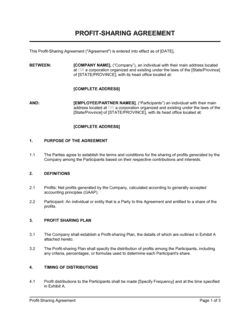
Identify all parties with full legal names
Enter each party's complete registered legal name, entity type (LLC, corporation, individual), and jurisdiction of formation or residence. Include the role each party plays — Company, Participant, or Joint Venturer.
💡 Cross-reference each party's name against its current corporate registry filing before signing. A one-word mismatch can complicate enforcement.
2
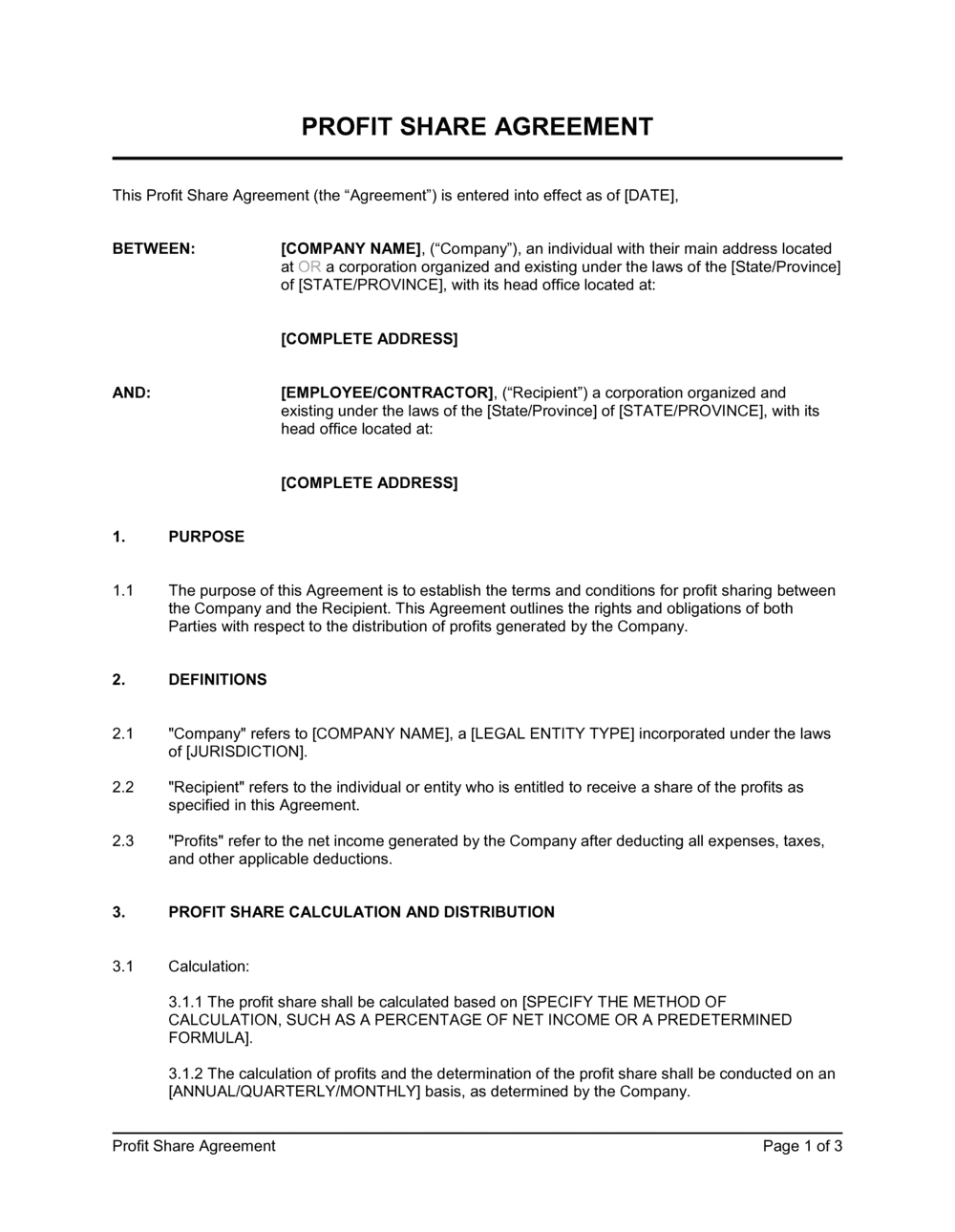
Define 'profit' precisely
Select gross or net profit as the base, list every expense category that will be deducted before the share is calculated, and specify the accounting standard (GAAP, IFRS, or cash basis) and the period it covers.
💡 Attach a sample profit calculation as Schedule A so both parties agree on the methodology before disputes arise — not after.
3
Set allocation percentages and confirm they total 100%
Enter each party's profit share percentage and verify the total. If a holdback reserve applies, calculate it separately so it does not reduce the participant's stated percentage without disclosure.
💡 State explicitly whether the holdback is deducted before or after the participant's percentage is applied — these produce materially different payout amounts.
4
Establish the payment schedule and distribution trigger
Choose monthly, quarterly, or annual distribution cycles. Set the specific deadline — in calendar days after period close — by which the company must pay. Add an annual reconciliation step to true up any underpayments.
💡 Quarterly with a 45-day payment window is the most common and balanced cycle for small businesses — frequent enough to maintain trust, wide enough to close the books properly.
5
Set the holdback reserve cap
Enter the maximum percentage of distributable profit the company may retain each period as a reserve. Define what qualifies as a permissible holdback purpose — taxes, capital expenditures, working capital — and require written notice to the participant when a reserve is invoked.
💡 Cap the reserve at 15–20% of distributable profit. Anything higher gives the paying party enough discretion to defer distributions indefinitely.
6
Draft the audit rights clause with practical limits
Specify the notice period required before an audit (typically 20–30 days), how frequently the participant may audit (once per year is standard), who pays (participant pays unless the audit reveals a discrepancy above a defined threshold), and where the audit must take place.
💡 Include a 'shortfall trigger' — if the audit reveals an underpayment of more than 5%, the company reimburses the audit cost. This deters under-reporting without making audits punitive.
7
Complete the termination and post-exit payment clause
Enter the initial term, auto-renewal period, notice requirement for non-renewal, and the deadline for paying accrued but unpaid profit after termination. Specify whether termination for cause forfeits accrued profit.
💡 Never allow accrued profit to be forfeited on termination without cause — courts in most jurisdictions view earned compensation as a vested right and may void the forfeiture clause.
8
Sign before any work or contribution begins
Both parties should sign the agreement before the participant contributes labor, capital, or other value. Post-commencement signatures raise consideration problems in common-law jurisdictions and may void key clauses.
💡 Use a timestamped e-signature platform to record execution date and store the fully executed copy in a shared document repository both parties can access.