1
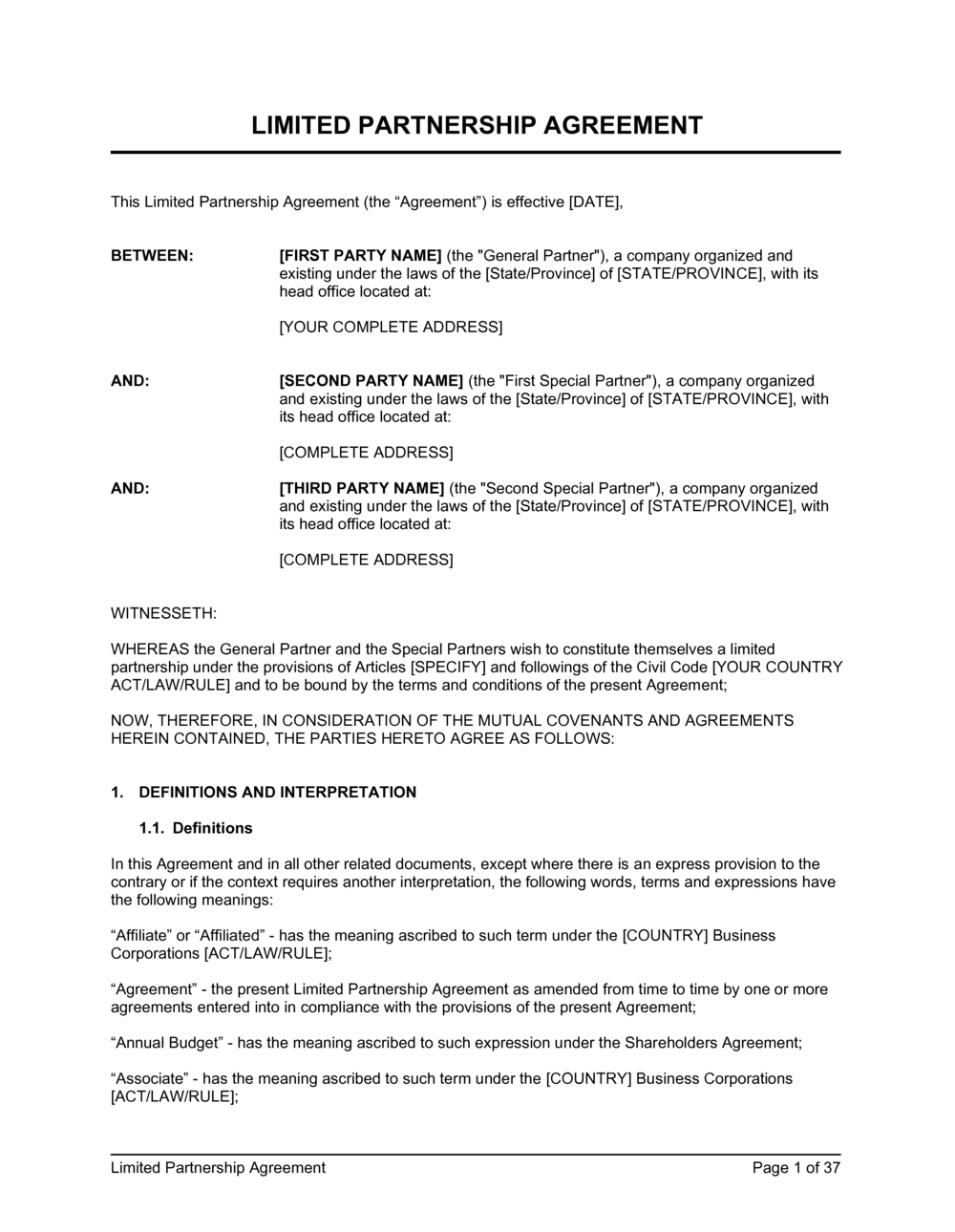
Enter the partnership name and formation details
Input the registered legal name of the limited partnership, the state of formation, and the effective date. Confirm the name matches your Certificate of Limited Partnership filing.
💡 Check name availability in your state's business registry before finalizing — an unavailable name means refiling the Certificate.
2
Identify all general and limited partners
List each partner's full legal name, address, and entity type (individual, LLC, corporation, or trust). Attach a Schedule of Partners if there are more than three limited partners.
💡 For entity partners, confirm the signatory has authority to bind the entity — a board resolution or operating agreement excerpt may be required.
3
Complete the capital contribution schedule
Enter each partner's initial cash or property contribution, any scheduled future calls, and the due dates. For non-cash contributions, document the agreed fair market value.
💡 Non-cash contributions should be supported by an independent appraisal — undocumented valuations are a common audit trigger.
4
Set ownership percentages and confirm they total 100%
Enter each partner's percentage interest and verify the sum equals exactly 100%. These figures drive all downstream allocations and distributions.
💡 Use a spreadsheet to cross-check GP plus all LP percentages before entering them in the agreement.
5
Define the profit, loss, and distribution waterfall
Enter the allocation ratios for income and losses, the preferred return rate for limited partners, and the carried interest percentage for the general partner. Sequence the distribution waterfall clearly.
💡 State the preferred return as an annual percentage on unreturned capital (e.g., 8% per annum, cumulative) to avoid ambiguity.
6
Specify management authority and reserved matters
Confirm the GP has exclusive management rights and list the specific actions (e.g., sale of all assets, amendment of the agreement, admission of new partners) that require LP approval.
💡 Keep the reserved-matters list short and specific — overly broad LP consent rights can slow operations and may inadvertently create management-control issues for limited partners.
7
Add transfer restrictions and the partner admission process
Specify whether LP consent, GP consent, or both are required for transfers. Describe the joinder process and any minimum capital requirement for new limited partners.
💡 Include a right-of-first-refusal clause giving existing partners the option to purchase a transferring partner's interest before it goes to an outside buyer.
8
Review dissolution triggers and sign
Confirm the partnership term, list events that trigger early dissolution, and verify the winding-up waterfall matches the distribution waterfall. Have all partners sign and retain executed copies.
💡 Date the agreement and every signature on the same day — inconsistent signature dates can complicate enforcement of pre-signature obligations.