- Memorandum of Agreement (MOA)
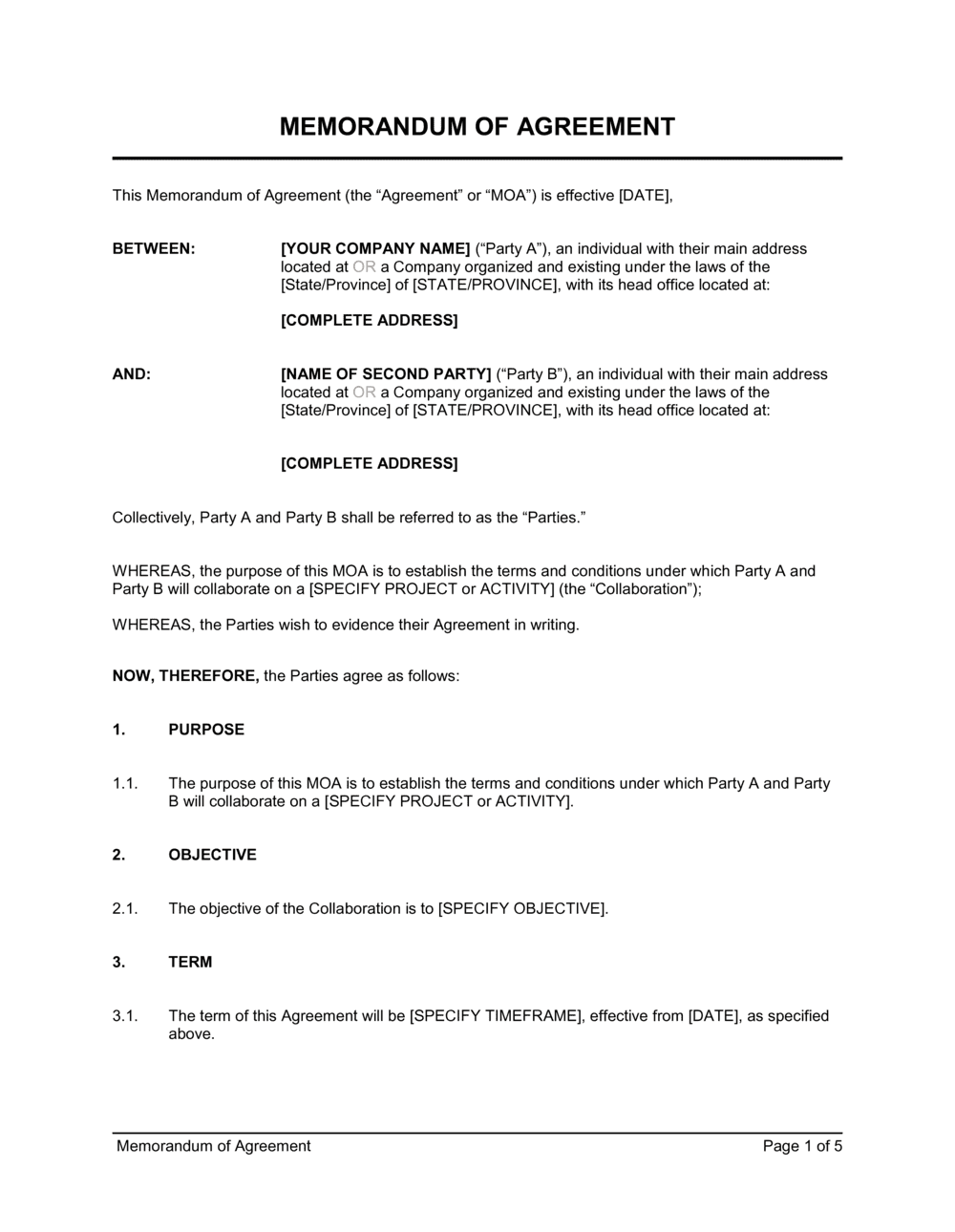
- A binding written document that records the agreed terms of a cooperative arrangement between two or more parties, creating enforceable legal obligations.
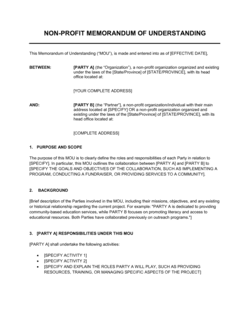
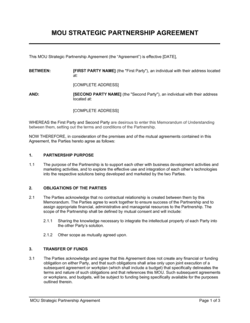
- Memorandum of Understanding (MOU)
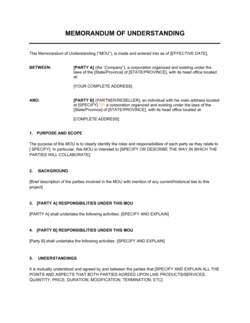
- A non-binding document that expresses intent to cooperate without creating enforceable obligations — a preliminary step before a formal contract or MOA.
- Recitals
- Background statements at the opening of a contract that explain the context and purpose of the agreement without creating binding obligations.
- Obligations
- Specific duties each party is legally required to perform under the terms of the agreement, including deliverables, timelines, and payment.
- Indemnification
- A clause requiring one party to compensate the other for specific losses, damages, or liabilities that arise from their actions under the agreement.
- Force Majeure
- A provision that excuses a party from performing its obligations when prevented by an extraordinary event outside its reasonable control — such as a natural disaster or government action.
- Termination for Cause
- The right to end the agreement immediately, without notice or further payment, when the other party commits a specified material breach.
- Governing Law
- The jurisdiction whose legal rules apply to interpreting and enforcing the agreement — particularly important when the parties are in different states or countries.
- Entire Agreement Clause
- A provision stating that the written document is the complete record of the parties' agreement, superseding all prior emails, negotiations, and verbal promises.
- Severability
- A clause providing that if one part of the agreement is found unenforceable, the remainder of the document continues in full effect.
- Material Breach
- A failure to perform a core obligation significant enough to undermine the purpose of the agreement and trigger the non-breaching party's right to terminate or seek damages.