1
Identify and research the recipient
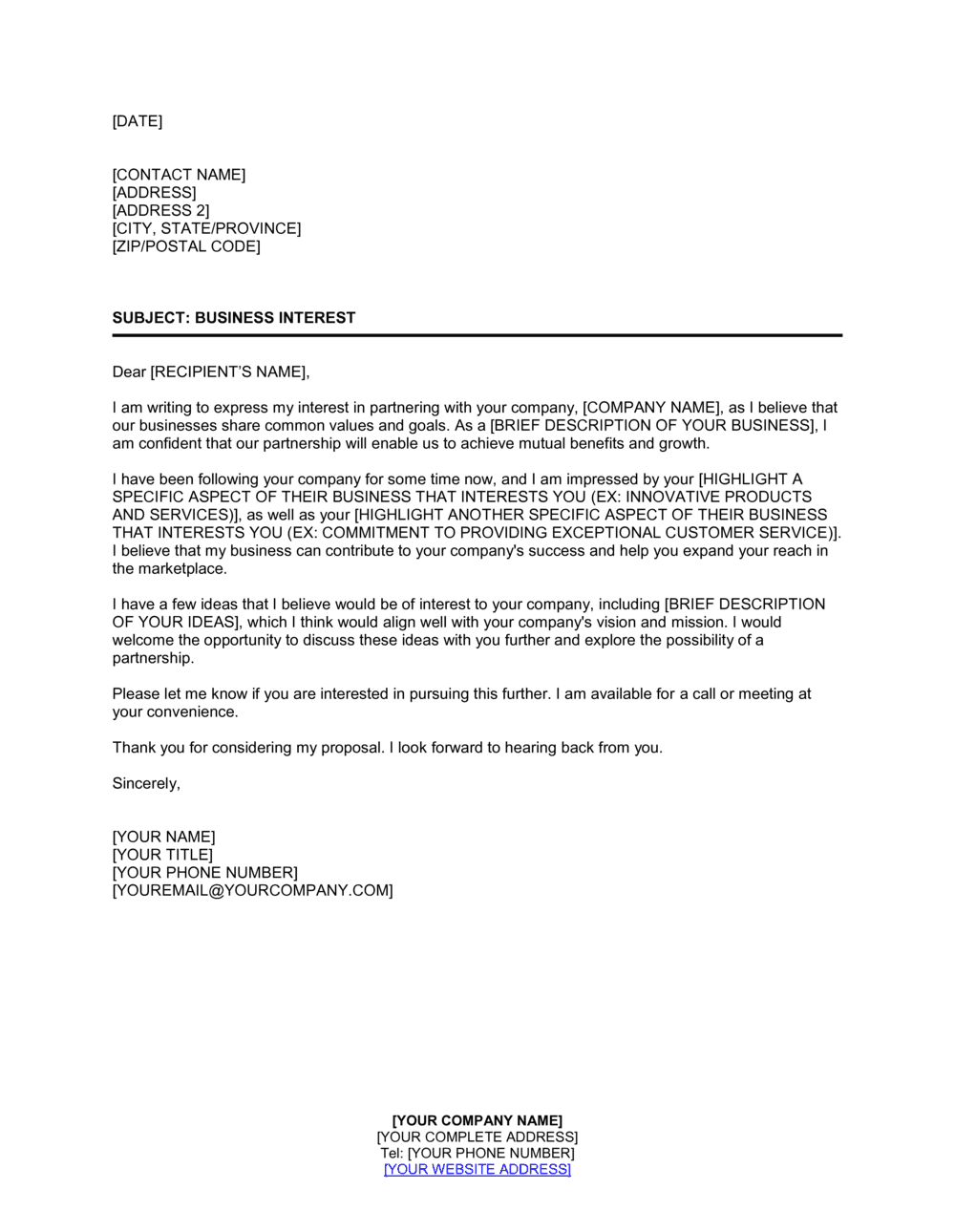
Before editing the template, confirm the correct contact name, title, and mailing or email address. Look up the recipient's company on LinkedIn and their website to reference something specific about their business in the body.
💡 A single tailored reference — mentioning a recent product launch or market expansion — signals that you did your homework and separates your letter from generic outreach.
2
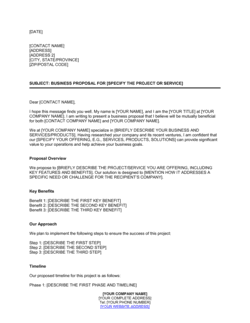
Complete the letterhead and recipient block
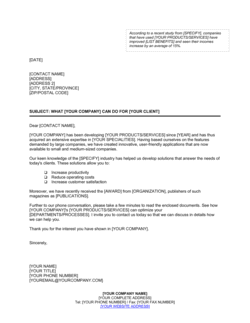
Enter your company name, full address, phone, email, and the current date. Then fill in the recipient's full name, title, company, and address.
💡 Use your official company letterhead if you have one — it adds visual credibility and makes the letter look less like a cold email.
3
Write a direct opening that names the opportunity
State in the first sentence who you are and what type of opportunity you are proposing. Do not build up to it — name it immediately so the reader can decide whether to continue.
💡 If you were referred by a mutual contact, name that contact in the first sentence. A warm introduction doubles open and response rates.
4
Add a focused company introduction
Describe your company in two to three sentences: what you do, who you serve, and one credential that establishes relevance — years in business, annual revenue range, or a notable client or milestone.
💡 Match the credential to what matters to this recipient. A supply contact wants to know your production capacity; an acquisition target wants to know your track record of completed deals.
5
Describe the opportunity and your value proposition
Write one paragraph on the specific arrangement you are proposing and one on what you uniquely bring to it. Keep both concrete — avoid vague language about 'synergies' or 'mutual benefit.'
💡 If you can quantify the opportunity — estimated revenue potential, market size, or deal size range — include it. Numbers make the letter easier to justify internally when the recipient forwards it for approval.
6
Add the confidentiality note if appropriate
If the opportunity involves any sensitive information, include the optional confidentiality line and indicate that a mutual NDA will be proposed before detailed discussions begin.
💡 Do not share financial projections, pricing data, or proprietary process details in this letter — save them for after an NDA is signed.
7
State a specific next step with a follow-up date
Close with a low-friction ask — a 20 to 30-minute introductory call — and give a specific date by which you will follow up if you have not heard back. Include your direct phone and email.
💡 Naming a follow-up date ('I will follow up on [DATE] if I have not heard from you') increases response rates because it signals you are organized and will persist professionally.