Guaranties and Collateral Templates

4.7from 280+ reviews Trusted by 20M+ businesses

Protect lenders and creditors with the right guaranty or collateral document for every lending and security situation.

WordEditable onlinePDF54+ guaranty and collateral templates

Other Legal Agreements categories

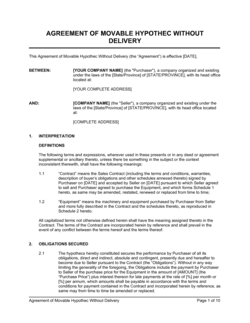
Agreement of Movable Hypothec Without Delivery
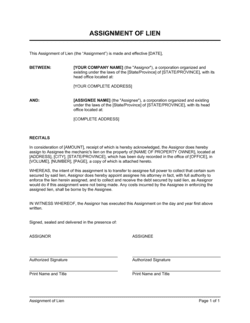
Assignment of Lien Template
Cession of Priority of Rank Agreement Template
Collateral Agreement Template
Collateral Debenture Template
Collateral Decision Request For Loan Documents
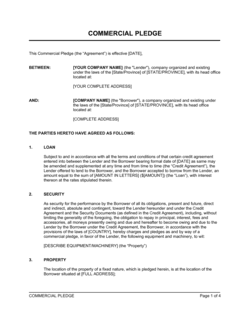
Commercial Pledge Equipment and Machinery Template
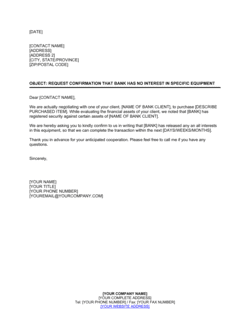
Confirmation Bank Has No Interest Template
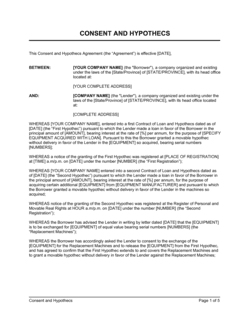
Consent and Hypothecs Replacement of Goods Template
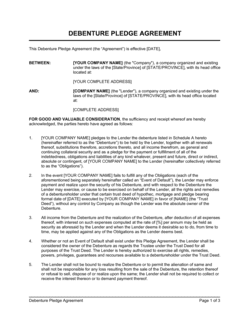
Debenture Pledge Agreement Template
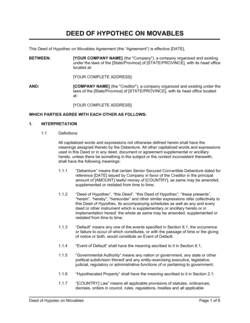
Deed of Hypothec on Movables Template
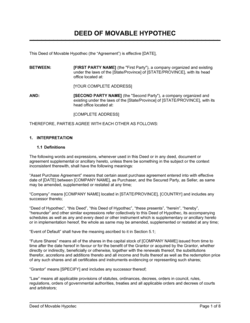
Deed of Movable Hypothec Template
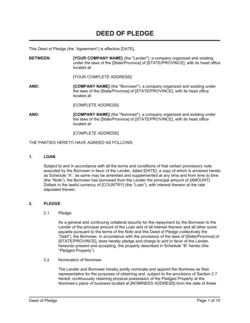
Deed of Pledge Loan Template
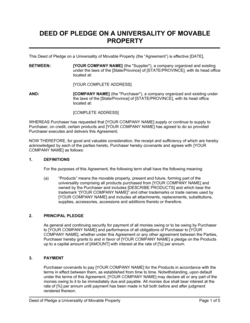
Deed of Pledge Universality of Movable Property
Demand By Secured Party For Possession Of Collateral
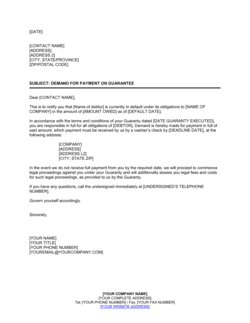
Demand for Payment on Guarantees Template
Demand On Guarantor Template
Financial Support Agreement Regarding Guaranty Of
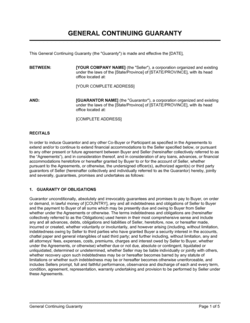
General Continuing Guaranty Template
Guarantee Agreement Template
Guarantee And Postponement Of Claims Template
Guarantee Assignment & Postponement of Claim Template
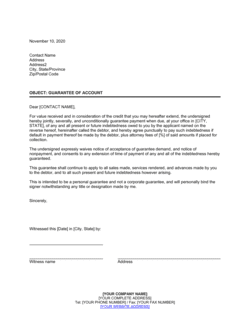
Guarantee Of Account Template
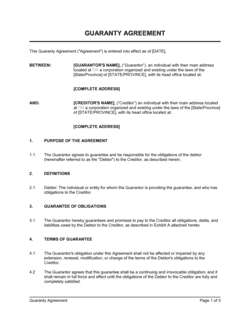
Guaranty Agreement Template
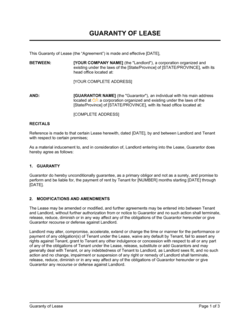
Guaranty of a Lease Template
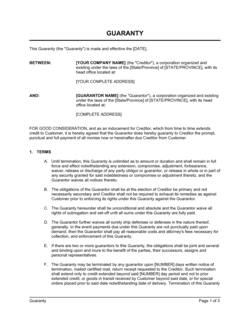
Guaranty Template
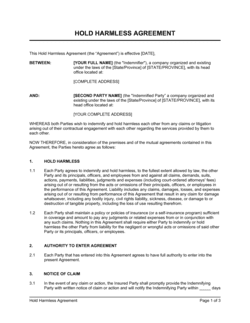
Hold Harmless Agreement Template
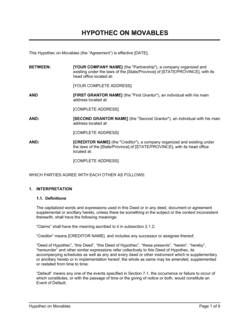
Hypothec On Movables Template
Indemnification Agreement for Directors Template
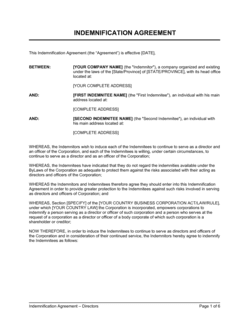
Indemnification Agreement Template
Indemnity Agreement Template
Indemnity for Directors Short Form Template
Movable Hypothec Long Form Template
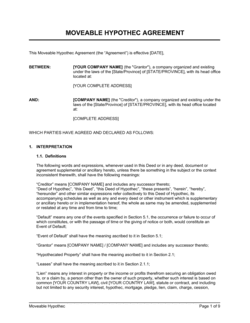
Moveable Hypothec Agreement Template
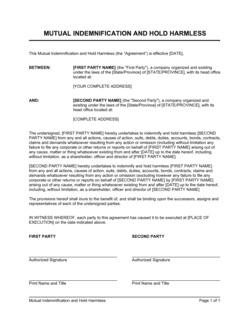
Mutual Indemnification and Hold Harmless Agreement
Notice of Private Sale of Collateral Template
Notice of Public Sale of Collateral Template
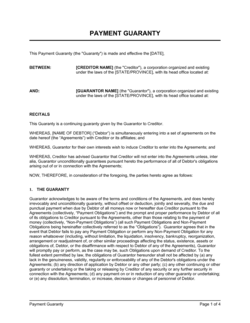
Payment Guaranty Template
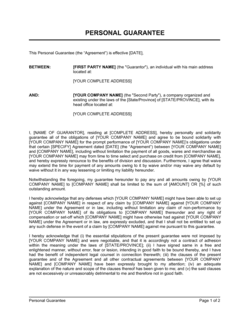
Personal Guarantee Template
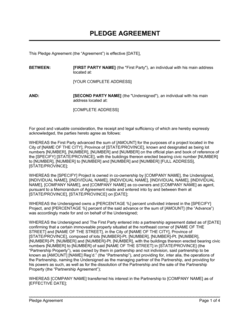
Pledge Agreement Advance Template
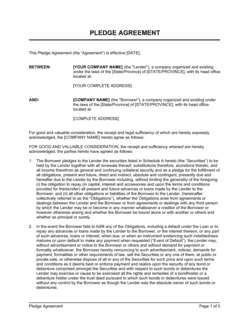
Pledge Agreement Debenture Template
Pledge of Personal Property Template
Pledge of Shares of Stock Template
Release of Lien Template
Request Release of Personal Guaranty Template
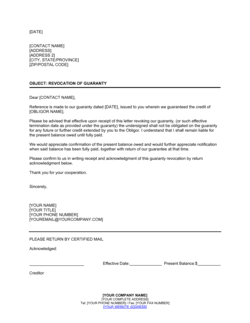
Revocation Of Guaranty Template
Security Agreement Covering Consumer Goods Template
Security Agreement Template
Security Agreement With Copyright As Collateral
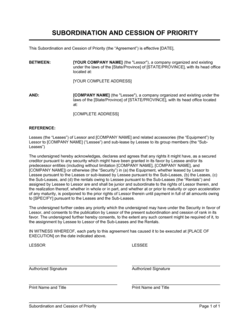
Subordination and Cession of Priority Leased Equipment
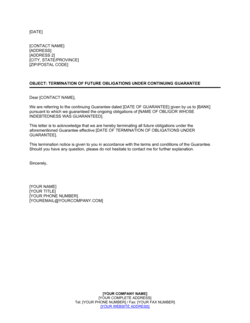
Termination of Future Guaranty Template
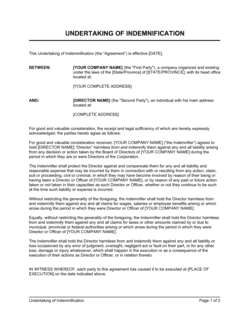
Undertaking of Indemnification Director Template
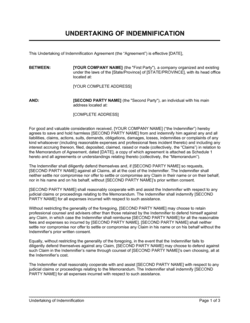
Undertaking of Indemnification Template
Unlimited Guaranty Template
250K+Clients
20M+Free users
20+Years
190+Countries
10,000+Law firms
50M+Downloads

Trusted across review platforms

  • Capterra★★★★☆4.649 reviews
  • G2★★★★☆4.713 reviews
  • GetApp★★★★☆4.649 reviews
  • Google Play★★★★☆4.6179 ratings
  • Google Reviews★★★★☆4.567 reviews

Related categories

Frequently asked questions

What is the difference between a guaranty and a guarantee?
In legal usage, "guaranty" typically refers to the formal written instrument that binds a third party to a debt, while "guarantee" is the broader everyday term covering both the document and the promise. In practice, the two spellings are used interchangeably in business documents. Either form is legally valid provided the intent and obligations are clearly stated.
Is a personal guarantee legally enforceable?
Yes, a personal guarantee is generally enforceable when it is in writing, clearly identifies the obligation, and is signed by the guarantor with capacity to contract. Courts in most jurisdictions will hold an individual to the terms. However, overly broad or unconscionable terms — or guarantees signed under duress — may be challenged. Consider consulting a lawyer before signing or requiring a personal guarantee on a large obligation.
Can a guarantor revoke their guarantee?
A guarantor can revoke a continuing guaranty as to future obligations by providing written notice to the creditor, using a Revocation of Guaranty. Revocation does not release the guarantor from obligations that already existed at the time of revocation. Guaranties tied to a specific, defined obligation generally cannot be revoked once the creditor has relied on them.
What notice is required before selling collateral?
In most jurisdictions, a secured party must give the debtor reasonable advance written notice before conducting a public or private sale of collateral. The required notice period varies — commonly 10 to 14 days — but the exact requirement depends on the applicable commercial code or statute. Failing to provide proper notice can expose the creditor to damages and limit their ability to collect any deficiency.
What is a continuing guaranty?
A continuing guaranty covers not just a single transaction but all present and future obligations the debtor owes to the creditor, up to any stated limit or until revoked. Lenders commonly require a continuing guaranty when extending a revolving line of credit or an ongoing supply agreement, because the total debt fluctuates over time.
How does pledging shares of stock as collateral work?
The borrower (pledgor) executes a Pledge of Shares of Stock identifying the share certificates, the issuing company, and the number of shares. The lender (pledgee) typically takes physical or book-entry possession of the certificates. If the borrower defaults, the lender can enforce the pledge and sell or transfer the shares. The agreement should address voting rights and dividend entitlements during the pledge period.
What is an unlimited guaranty?
An unlimited guaranty holds the guarantor responsible for the full amount of the debtor's obligations to the creditor — past, present, and future — without any dollar cap. It is the broadest form of guaranty and is common in small business lending where the lender wants the owner's full personal exposure as security.
When should a creditor file a financing statement alongside a security agreement?
A written security agreement creates the security interest between the parties, but in most jurisdictions a creditor must also file a public financing statement (UCC-1 in the United States, or an equivalent in other countries) to "perfect" the interest and establish priority over other creditors. Consult local commercial law or a lawyer to confirm the filing requirements for your jurisdiction and type of collateral.

Guaranties and Collateral vs. related documents

Guaranty vs. surety bond

A guaranty is a private contract between the guarantor, the creditor, and typically the borrower. A surety bond is a three-party instrument issued by a licensed insurance company and is often required by law on construction or government contracts. Use a guaranty for commercial lending, leases, and supplier credit; use a surety bond when a regulated project or public contract demands it.

Personal guarantee vs. corporate guarantee

A personal guarantee makes an individual — often a founder or director — personally liable for a business debt using their own assets. A corporate guarantee makes a parent or affiliated company the backstop. Personal guarantees are common for small business loans and commercial leases; corporate guarantees are more common in intra-group financing or subsidiary transactions.

Payment guaranty vs. performance guaranty

A payment guaranty obligates the guarantor to pay a specific debt if the primary obligor does not. A performance guaranty obligates the guarantor to ensure a party completes a contractual obligation — such as finishing a construction project. Most lending situations call for a payment guaranty; construction and supply contracts more often call for performance guarantees.

Collateral agreement vs. security agreement

These terms are often used interchangeably, but a security agreement is the broad instrument that grants a creditor a security interest in named assets, while a collateral agreement may refer more specifically to the supporting or ancillary arrangement that describes the pledged property. Both serve to attach and perfect a security interest; check your jurisdiction's commercial law for the exact requirements.

Key clauses every Guaranties and Collateral contains

Guaranty and collateral documents share a consistent set of core clauses regardless of which asset or relationship is involved.

  • Identification of parties. Names the creditor, debtor, and guarantor or pledgor using their full legal names and roles.
  • Description of the obligation. States precisely what debt, liability, or obligation is being guaranteed or secured.
  • Description of collateral. Identifies the specific property, shares, copyright, or other asset pledged as security.
  • Conditions of default. Defines what constitutes a default that triggers the creditor's enforcement rights.
  • Enforcement and remedies. Specifies what steps the secured party or creditor may take — including possession, sale, or demand — upon default.
  • Notice requirements. Sets out the form and timing of notices required before enforcement actions such as a collateral sale.
  • Waiver of defenses. Guarantor waives certain defenses — such as requiring the creditor to pursue the debtor first — that would otherwise delay enforcement.
  • Governing law and jurisdiction. Names the jurisdiction whose commercial and lending laws govern the agreement.
  • Continuing vs. limited obligation. States whether the guaranty covers only a specific transaction or all present and future obligations of the debtor.

How to write a guaranty or collateral agreement

Every effective guaranty or collateral document follows the same logical structure — regardless of whether you're pledging stock, real property, or a copyright.

  1. 1

    Identify all parties precisely

    Use full registered legal names for the creditor, the primary debtor, and the guarantor or pledgor — not trade names or abbreviations.

  2. 2

    Describe the underlying obligation

    Specify the loan amount, credit facility, lease, or other obligation being secured, including the original agreement date and amount.

  3. 3

    Define the collateral or guaranty scope

    Describe the pledged asset in enough detail to identify it uniquely — share certificate numbers, copyright registration numbers, or account details.

  4. 4

    Set the conditions of default

    List the events — missed payments, insolvency, breach of covenant — that entitle the creditor to enforce the guaranty or seize collateral.

  5. 5

    Specify enforcement rights and notice procedures

    State how the secured party may take possession or sell collateral, and the advance notice required before a public or private sale.

  6. 6

    Address priority and competing claims

    If other creditors have existing security interests in the same assets, use a Prior Secured Party Notice or Cession of Priority to resolve ranking.

  7. 7

    Include governing law and signature blocks

    Name the jurisdiction, have authorized representatives sign, and retain executed copies with the underlying loan or credit file.

At a glance

What it is
A guaranty or collateral agreement is a legal document that gives a creditor additional security beyond the borrower's own promise to repay. Guaranties bind a third party to cover the debt if the primary obligor defaults; collateral agreements pledge specific assets that the secured party can claim if the debt goes unpaid.
When you need one
Any time a lender, landlord, or supplier extends credit and wants security beyond the borrower's word — or any time a borrower must pledge assets or a guarantor to close a deal.

Which Guaranties and Collateral do I need?

The right document depends on whether you need a person to back the debt, an asset to secure it, or a formal notice to enforce your rights.

Your situation
Recommended template

An individual is personally backing a business loan or lease

Holds an individual liable with their own assets if the borrowing entity defaults.

Creditor requires a guaranty covering all amounts owed without a cap

Covers all present and future obligations of the debtor without a dollar limit.

Guarantor wants to cancel their ongoing guarantee obligation

Formally terminates a continuing guaranty and establishes the revocation date.

Secured party needs to demand repossession of pledged collateral

Formally invokes the secured party's right to take possession upon default.

Lender is selling pledged collateral privately after a default

Provides the legally required advance notice before a private collateral sale.

Borrower is pledging shares of stock as loan security

Records the pledge, specifies share details, and sets enforcement rights.

Copyright is being used as collateral to secure a loan

Attaches a security interest specifically to registered copyright assets.

Creditor needs to notify a prior secured party of a competing claim

Establishes priority or coordination between competing creditors in writing.

Glossary

Guarantor
A person or entity that promises to pay a debt or fulfill an obligation if the primary debtor fails to do so.
Secured party
The creditor who holds a security interest in specific collateral as protection against the debtor's default.
Collateral
An asset pledged by a borrower to a lender as security for a loan, which the lender can claim if the loan is not repaid.
Security interest
A legal right granted by a debtor to a creditor over the debtor's property, giving the creditor a priority claim if the debtor defaults.
Perfection
The process — usually public filing or possession — by which a secured party makes its security interest enforceable against third parties and other creditors.
Default
A borrower's failure to meet one or more conditions of a loan or credit agreement, triggering the creditor's enforcement rights.
Deficiency
The amount still owed by a debtor after the proceeds from selling collateral fall short of the full debt balance.
Pledge
A form of security interest where the pledgor delivers possession of an asset — such as share certificates — to the pledgee as loan security.
Continuing guaranty
A guaranty that covers not only an existing debt but all future obligations the debtor incurs with the creditor until revoked or the credit relationship ends.
Cession of priority
An agreement by which a senior secured creditor steps aside to allow a junior creditor a higher-priority claim against the same collateral.
Debenture
A type of debt instrument, often unsecured or collateral-backed, used by companies to borrow money at a fixed interest rate.
Pledgor
The party who delivers an asset as collateral to a lender or creditor to secure an obligation.

What is a guaranty or collateral agreement?

A guaranty is a legally binding promise by a third party — the guarantor — to pay a debt or fulfill an obligation if the primary debtor fails to do so. A collateral agreement is a contract in which a borrower pledges specific assets to a creditor as security for a loan or obligation, giving the creditor the right to seize and sell those assets on default. Together, these instruments form the backbone of secured lending: guaranties provide a human or corporate backstop, while collateral agreements give creditors a direct claim against identifiable property.

Guaranties range from narrow, transaction-specific promises — such as a Payment Guaranty covering a single loan — to broad, open-ended instruments such as an Unlimited Guaranty or General Continuing Guaranty that covers all current and future obligations a debtor owes a creditor. Collateral can take almost any form: cash deposits, shares of stock, tangible personal property, or intellectual property such as a registered copyright. The precise form of document determines how the creditor's rights attach, how they are enforced, and what notices are required before any enforcement action.

When you need a guaranty or collateral agreement

Any time a creditor extends credit, approves a lease, or enters a supplier relationship and needs security beyond the borrower's own promise to pay, a guaranty or collateral agreement is required. These documents are equally important when a borrower must demonstrate creditworthiness or when a lender is resolving a default.

Common triggers:

  • A bank or lender requires a founder or director to personally guarantee a business loan
  • A commercial landlord requires a personal or corporate guarantee before signing a lease
  • A supplier extends trade credit and wants a guarantee of account from a related party
  • A borrower pledges shares, personal property, or a bank deposit as loan collateral
  • A lender needs to demand possession of pledged collateral after a default
  • A secured party must give formal notice before conducting a public or private sale of collateral
  • A guarantor wishes to formally revoke their ongoing guarantee of future obligations
  • Two secured creditors need to resolve priority over the same collateral

Skipping a guaranty or collateral agreement leaves a creditor with only an unsecured claim — meaning they line up with all other general creditors if the debtor becomes insolvent, with little practical ability to recover. A properly executed and, where required, publicly filed security document gives the creditor a priority claim that survives insolvency and provides a clear, documented path to enforcement.

Award-winning platform

  • Great Place to Work 2025
  • BIG Award — Product of the Year 2025
  • Smartest Companies 2025
  • Global 100 Excellence 2026
  • Best of the Best 2025

Create your document in 3 simple steps.

From template to signed document — all inside one Business Operating System.
1
Download or open template

Access over 3,000+ business and legal templates for any business task, project or initiative.

2
Edit and fill in the blanks with AI

Customize your ready-made business document template and save it in the cloud.

3
Save, Share, Send, Sign

Share your files and folders with your team. Create a space of seamless collaboration.
Save time, save money, and create top-quality documents.
★★★★★

"Fantastic value! I'm not sure how I'd do without it. It's worth its weight in gold and paid back for itself many times."

Managing Director · Mall Farm
Robert Whalley
Managing Director, Mall Farm Proprietary Limited
★★★★★

"I have been using Business in a Box for years. It has been the most useful source of templates I have encountered. I recommend it to anyone."

Business Owner · 4+ years
Dr Michael John Freestone
Business Owner
★★★★★

"It has been a life saver so many times I have lost count. Business in a Box has saved me so much time and as you know, time is money."

Owner · Upstate Web
David G. Moore Jr.
Owner, Upstate Web

Run your business with a system — not scattered tools

Stop downloading documents. Start operating with clarity. Business in a Box gives you the Business Operating System used by over 250,000 companies worldwide to structure, run, and grow their business.

Free Forever Plan · No credit card required