Debenture Pledge Agreement Template

Free Word download β€’ Edit online β€’ Save & share with Drive β€’ Export to PDF

3 pagesβ€’25–30 min to fillβ€’Difficulty: Complexβ€’Signature requiredβ€’Legal review recommended
Learn more ↓
FreeDebenture  Pledge Agreement Template

At a glance

What it is
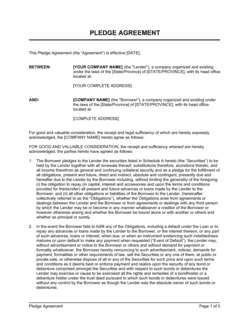
A Debenture Pledge Agreement is a legally binding contract in which a pledgor (typically a corporate borrower) assigns specific assets β€” most commonly shares, bonds, or other securities β€” as collateral to secure a debt obligation owed to a lender or creditor. This free Word download gives you a professionally structured starting point covering all material terms, which you can edit online and export as PDF for execution.
When you need it
Use it when a lender requires security over a borrower's assets before advancing funds, refinancing existing debt, or extending a credit facility. It is also used when an investor or parent company pledges securities in a subsidiary to support a financing arrangement.
What's inside
Parties and recitals, description of pledged assets, representations and warranties, pledge obligations and covenants, events of default, enforcement and remedies, release conditions, and governing law with dispute resolution.

What is a Debenture Pledge Agreement?

A Debenture Pledge Agreement is a legally binding contract under which a pledgor β€” typically a corporate borrower or asset holder β€” grants a security interest in specified debentures or debt instruments to a pledgee (usually a lender or creditor) as collateral for an outstanding or anticipated financial obligation. Unlike an unsecured promise to repay, a debenture pledge gives the creditor an enforceable priority claim over identified assets, allowing the pledgee to take possession, sell, or otherwise realize on those instruments if the pledgor fails to meet its obligations. The agreement sits alongside β€” and must be cross-referenced to β€” the underlying loan agreement or credit facility that creates the debt it secures.

Why You Need This Document

Without a formal, executed debenture pledge agreement, a lender has no documented security interest in the pledged assets β€” meaning any claim on those instruments in an insolvency ranks alongside unsecured creditors, not ahead of them. For borrowers, an undocumented pledge creates uncertainty about what has actually been offered as security, inviting disputes over scope and priority. A properly drafted and registered pledge agreement eliminates both risks: it establishes the pledgee's priority claim, creates enforceable covenants preventing the pledgor from double-pledging the same assets, and provides a clear enforcement roadmap that avoids expensive litigation at exactly the moment it would be most damaging. This template gives you a professionally structured starting point that covers every material term β€” from precise asset identification to enforcement waterfall β€” so you can close your financing arrangement with confidence rather than gaps.

Which variant fits your situation?

If your situation is…Use this template
Pledging shares in a subsidiary company as loan securityShare Pledge Agreement
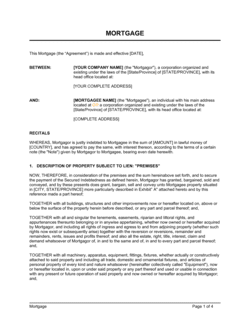
Securing a loan with real property rather than securitiesMortgage Agreement
Granting security over all present and future company assetsGeneral Security Agreement
Securing a short-term loan with movable personal propertyCollateral Agreement
Issuing unsecured debt to multiple investorsDebenture Agreement
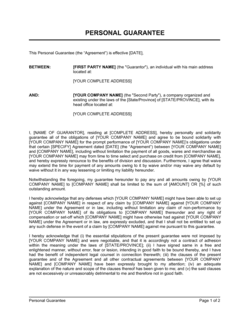
Providing a personal guarantee alongside a corporate pledgePersonal Guarantee Agreement
Establishing a floating charge over business assetsFloating Charge Agreement

Common mistakes to avoid

❌ Imprecise identification of pledged assets

Why it matters: A pledge over 'certain debentures' or 'securities held by the pledgor' cannot be registered against specific instruments and may be void against third-party creditors or in insolvency.

Fix: List every pledged instrument by certificate number, ISIN, face value, issuer, and quantity. Use a numbered schedule if the pool is large.

❌ Failing to perfect the security interest by registration

Why it matters: An unregistered pledge is typically enforceable only between the parties β€” a liquidator or competing creditor can defeat it in insolvency proceedings.

Fix: File with the relevant registry (UCC in the US, PPSR in Canada/Australia, Companies House in the UK) within the statutory window after execution.

❌ No negative pledge covenant

Why it matters: Without a prohibition on further encumbrances, the pledgor can grant a second charge over the same assets to another lender, diluting or subordinating the first pledgee's position.

Fix: Include an express negative pledge: 'Pledgor shall not create, permit, or suffer to exist any lien or encumbrance over the Pledged Debentures without Pledgee's prior written consent.'

❌ Omitting a release and discharge obligation on the pledgee

Why it matters: Without a contractual obligation to file for discharge, satisfied pledges can remain on public registers for years, blocking the pledgor from using those assets as collateral again.

Fix: Include a clause requiring the pledgee to execute and file a release instrument within a specified number of days after full repayment β€” typically 5–10 business days.

❌ Choosing governing law disconnected from the asset location

Why it matters: Courts and insolvency practitioners in the jurisdiction where assets are located will generally apply local security law, regardless of the contractual choice β€” leaving the pledgee with unexpected procedural requirements.

Fix: Select governing law that corresponds to the jurisdiction where the pledged assets are registered or held, or take separate legal advice on multi-jurisdiction pledges.

❌ No cross-default provision linking to the underlying loan

Why it matters: A default under the main loan agreement that does not automatically trigger the pledge leaves a gap β€” the pledgee may be unable to enforce the pledge while the debt default continues.

Fix: Include a cross-default clause: 'An event of default under the [LOAN AGREEMENT dated DATE] shall constitute an Event of Default under this Agreement.'

The 10 key clauses, explained

Parties, Recitals, and Definitions

In plain language: Identifies the pledgor and pledgee by full legal name, describes the underlying debt obligation being secured, and defines key terms used throughout the agreement.

Sample language
This Debenture Pledge Agreement (the 'Agreement') is entered into as of [DATE] between [PLEDGOR LEGAL NAME], a [ENTITY TYPE] incorporated in [JURISDICTION] ('Pledgor'), and [PLEDGEE LEGAL NAME], a [ENTITY TYPE] ('Pledgee'). The Pledgor has agreed to pledge the Collateral as security for the Secured Obligations described herein.

Common mistake: Using a trade name instead of the registered legal entity name for either party β€” this creates enforceability problems if the pledgee needs to register or enforce the security interest against the correct legal person.

Description and Identification of Pledged Assets

In plain language: Precisely identifies the collateral being pledged β€” including certificate numbers, ISIN codes, face value, issuer name, and quantity of debentures or securities.

Sample language
[X] debentures of [ISSUER NAME], certificate number(s) [NUMBERS], with a face value of [CURRENCY][AMOUNT] each, registered in the name of [PLEDGOR NAME] (the 'Pledged Debentures').

Common mistake: Describing the collateral in vague or generic terms such as 'certain securities.' Imprecise identification can prevent registration of the security interest and render enforcement unenforceable against third parties.

Grant of Security Interest and Pledge

In plain language: States that the pledgor grants to the pledgee a first-priority security interest in the pledged assets as security for full repayment and performance of the secured obligations.

Sample language
As security for the due and punctual payment and performance of all Secured Obligations, Pledgor hereby pledges, hypothecates, and grants to Pledgee a first-priority security interest in and to the Pledged Debentures and all proceeds thereof.

Common mistake: Failing to specify the priority of the security interest. Without an express 'first-priority' or 'second-priority' designation and confirmation that no prior encumbrances exist, the pledgee may unknowingly rank behind an earlier registered creditor.

Representations and Warranties

In plain language: The pledgor confirms that it has clear title to the collateral, that no other encumbrances exist, that it has authority to enter the agreement, and that the pledged assets are valid and subsisting.

Sample language
Pledgor represents and warrants that: (a) it is the legal and beneficial owner of the Pledged Debentures, free and clear of all liens, charges, and encumbrances; (b) it has full power and authority to execute this Agreement; and (c) the Pledged Debentures are validly issued and outstanding.

Common mistake: Omitting a warranty that no prior security interest has been registered over the same assets. If a prior undisclosed charge exists, the pledgee's security may rank below it β€” a material risk in leveraged transactions.

Pledgor's Covenants

In plain language: Ongoing obligations the pledgor agrees to during the life of the pledge β€” including maintaining the collateral, not creating further encumbrances, and cooperating with perfection steps.

Sample language
Pledgor covenants that it shall: (a) not sell, transfer, or further encumber the Pledged Debentures without Pledgee's prior written consent; (b) promptly notify Pledgee of any event that could materially affect the value of the Pledged Deventures; and (c) execute any further documents required to perfect the security interest.

Common mistake: Including no restriction on the pledgor creating a second charge over the same assets. Without a negative pledge covenant, the borrower can grant conflicting security to another creditor while the first pledge is outstanding.

Events of Default

In plain language: Lists the specific triggers that allow the pledgee to exercise enforcement rights β€” including non-payment, insolvency, breach of covenant, cross-default, and material adverse change.

Sample language
Each of the following constitutes an Event of Default: (a) failure to pay any Secured Obligation when due, not cured within [X] business days; (b) the Pledgor commences insolvency, bankruptcy, or dissolution proceedings; (c) any representation made herein proves materially false; (d) a breach of any covenant that is not cured within [X] days of written notice.

Common mistake: Writing a cure period that is too short or too long for the context. A 2-day cure period for a payment default may be unworkable in practice; a 60-day period for a financial covenant breach gives the pledgor too long to impair the collateral.

Enforcement and Remedies

In plain language: Sets out what the pledgee may do upon an event of default β€” including selling or transferring the pledged assets, appointing a receiver, or appropriating the collateral to satisfy the debt.

Sample language
Upon the occurrence and continuance of an Event of Default, Pledgee may, without further notice to Pledgor: (a) sell, transfer, or otherwise dispose of the Pledged Debentures at public or private sale; (b) appoint a receiver over the Pledged Debentures; or (c) exercise any other remedy available at law or in equity.

Common mistake: Failing to include a notice requirement before enforcement where jurisdiction requires it. In several jurisdictions, enforcing without the required statutory notice period exposes the pledgee to a damages claim from the pledgor even if the default is valid.

Application of Enforcement Proceeds

In plain language: Specifies the priority order in which any proceeds from enforcement are applied β€” costs and expenses first, then accrued interest, then outstanding principal, then any surplus returned to the pledgor.

Sample language
Proceeds from any enforcement shall be applied in the following order: (i) enforcement costs and receiver's fees; (ii) accrued and unpaid interest; (iii) outstanding principal of the Secured Obligations; (iv) any remaining surplus to Pledgor.

Common mistake: No explicit application waterfall. Without it, a dispute over whether costs or interest rank first can stall enforcement proceedings and reduce the net recovery for the pledgee.

Release and Discharge

In plain language: States the conditions under which the pledge terminates β€” typically upon full repayment and performance of all secured obligations β€” and the pledgee's obligation to execute a release instrument.

Sample language
Upon full and final repayment of all Secured Obligations, Pledgee shall promptly execute and deliver to Pledgor a release and discharge of this Agreement and cooperate in the cancellation of any security registrations made in connection herewith.

Common mistake: No obligation on the pledgee to file for discharge of registered security after repayment. Without it, a satisfied security interest can remain on public registers for years, obstructing the pledgor's ability to pledge the same assets again.

Governing Law and Dispute Resolution

In plain language: Specifies which jurisdiction's law governs the agreement and the mechanism for resolving disputes β€” arbitration, mediation, or litigation in a named court.

Sample language
This Agreement shall be governed by and construed in accordance with the laws of [STATE/PROVINCE/COUNTRY]. Any dispute arising out of or in connection with this Agreement shall be referred to [arbitration before [ARBITRAL BODY] in [CITY] / the courts of [JURISDICTION]], and the parties irrevocably submit to that jurisdiction.

Common mistake: Choosing a governing law that has no real connection to where the pledged assets are located or registered. Courts in the asset's location may apply local security law regardless of the contractual choice, particularly for registered securities and real property.

How to fill it out

  1. 1

    Identify both parties using full legal entity names

    Enter the pledgor's and pledgee's registered legal names, jurisdiction of incorporation, and registered addresses. Confirm entity names against corporate registry records before execution.

    πŸ’‘ For international transactions, include the local law entity type for each party β€” e.g., 'a corporation incorporated under the laws of Delaware' or 'a private limited company registered in England and Wales.'

  2. 2

    Describe the pledged debentures with precision

    List each debenture or security being pledged with its certificate number, ISIN or CUSIP code, issuer name, face value, and quantity. Attach a schedule if the collateral pool is large.

    πŸ’‘ Cross-reference the physical certificates or registry records to ensure the identifying details are exact β€” a single digit error in a certificate number can void the pledge registration.

  3. 3

    Confirm the secured obligations being collateralized

    Reference the underlying loan agreement, credit facility, or debt instrument by full title, date, and parties. State the maximum secured amount or the formula for calculating it.

    πŸ’‘ If the pledge secures all present and future obligations under a facility, say so expressly β€” this prevents disputes about whether a new drawdown is covered.

  4. 4

    Set the pledgor's covenants and negative pledge

    Include an express prohibition on the pledgor creating further charges over the same assets without prior written consent, and require prompt notification of any event that could impair collateral value.

    πŸ’‘ Add a covenant requiring the pledgor to maintain insurance over any pledged asset that has insurable value β€” this protects the pledgee if the asset is destroyed or impaired before enforcement.

  5. 5

    Define events of default with specific cure periods

    List each trigger event and attach a cure period appropriate to its severity. Payment defaults typically warrant 3–5 business days; covenant breaches may allow 10–30 days.

    πŸ’‘ Include a cross-default provision linking this agreement to any other financing arrangements the pledgor has with the same lender β€” this prevents selective compliance.

  6. 6

    Draft the enforcement and remedies clause

    Specify the full range of enforcement options available to the pledgee on default β€” sale, transfer, receiver appointment, or appropriation β€” and confirm compliance with any applicable statutory notice requirements.

    πŸ’‘ Check whether the governing jurisdiction requires a court order or statutory notice period before enforcement of a pledge over quoted securities β€” some do.

  7. 7

    Specify the application waterfall for enforcement proceeds

    List the priority order for applying enforcement proceeds: costs first, then interest, then principal, then surplus to the pledgor. Ensure the order is consistent with the underlying loan agreement.

    πŸ’‘ If multiple secured creditors exist, align the waterfall with any intercreditor or priority agreement already in place.

  8. 8

    Confirm governing law, registration, and execution requirements

    Select the governing law with the closest connection to the pledged assets. Arrange registration with the relevant securities registry or commercial registry as required, and execute with authorized signatories on both sides.

    πŸ’‘ For pledges over registered securities, file with the applicable registry within the statutory window β€” in many jurisdictions this is 21 days from execution, after which the security becomes void against third parties.

Frequently asked questions

What is a debenture pledge agreement?

A debenture pledge agreement is a legally binding contract in which a pledgor assigns a security interest in debentures or other debt instruments to a pledgee (typically a lender) as collateral for a loan or other financial obligation. It gives the pledgee the right to enforce against the pledged assets β€” by sale or transfer β€” if the pledgor defaults on the secured debt. The agreement is distinct from the underlying loan document and must typically be registered to be effective against third parties.

What is the difference between a debenture and a debenture pledge agreement?

A debenture is the debt instrument itself β€” it evidences a company's obligation to repay borrowed money and may carry a fixed or floating charge over company assets. A debenture pledge agreement is a separate contract under which the holder of debentures (or other securities) pledges those instruments to a lender as collateral. The debenture creates the debt; the pledge agreement creates the security interest in those instruments.

When is a debenture pledge agreement used?

It is typically used when a borrower needs to provide collateral security to obtain a loan, credit facility, or refinancing and the most convenient available assets are debentures, bonds, or other debt instruments held by the borrower. It is also common in leveraged buyout structures, where a private equity firm pledges debentures in a holding company to secure acquisition financing, and in corporate group structures where a parent pledges instruments in a subsidiary.

Does a debenture pledge agreement need to be registered?

In most jurisdictions, yes β€” registration is required to make the security interest effective against third parties, including competing creditors and a liquidator in insolvency. In the US, a UCC-1 financing statement must be filed in the appropriate state. In Canada, registration under the applicable provincial PPSA is required. In the UK, charges created by a company must be registered at Companies House within 21 days of creation. Failure to register typically renders the pledge void in insolvency.

What happens if the pledgor defaults?

On an event of default, the pledgee is generally entitled to enforce the security interest β€” which may include selling the pledged debentures at public or private sale, appointing a receiver, or appropriating the assets to satisfy the outstanding debt. Enforcement proceeds are applied in the order specified in the agreement: costs first, then interest, then principal, with any surplus returned to the pledgor. The specific steps and notice requirements vary by jurisdiction.

Can an individual pledge debentures, or is this only for companies?

Both individuals and corporate entities can be parties to a debenture pledge agreement. However, the document is far more common in commercial and corporate contexts β€” where a company pledges instruments it holds as part of a financing arrangement. When an individual is the pledgor, consumer protection rules in some jurisdictions (particularly the EU and UK) may impose additional disclosure and fairness requirements on the pledgee.

What is the difference between a fixed charge and a floating charge in this context?

A fixed charge attaches to specific, identified assets at the time of creation β€” the pledged debentures listed in the schedule. The pledgor cannot deal with those assets without the pledgee's consent. A floating charge covers a class of assets that may change over time (such as inventory or receivables) and crystallizes into a fixed charge on default. A debenture pledge agreement typically creates a fixed charge over the specifically identified pledged instruments.

Does a debenture pledge agreement need to be notarized?

Notarization is generally not required for a debenture pledge agreement in common-law jurisdictions such as the US, Canada, and the UK. However, some civil-law jurisdictions in the EU β€” including France, Germany, and Spain β€” may require notarial execution or apostille certification for the pledge to be enforceable or registrable. Always check the formal requirements of the governing jurisdiction before execution.

Do I need a lawyer to prepare a debenture pledge agreement?

For routine commercial pledge arrangements between sophisticated parties in a single jurisdiction, a high-quality template with a focused legal review is typically sufficient. Engage a lawyer when the transaction is cross-border, when the pledged collateral is material in value, when the pledge is part of a complex financing structure, or when the governing jurisdiction has unusual registration or enforcement requirements. A 1–3 hour review by a finance lawyer typically costs $400–$1,000 and is worthwhile for any pledge securing more than $100,000.

How this compares to alternatives

vs Debenture Agreement

A debenture agreement creates the debt itself β€” it is the instrument under which a company borrows money and grants a charge over its assets to the lender. A debenture pledge agreement is a separate document under which the holder of existing debentures pledges those instruments as collateral for a different obligation. One creates the debt; the other uses that debt instrument as security.

vs Collateral Agreement

A collateral agreement is a broader security document covering various types of personal property as collateral β€” equipment, receivables, inventory, or intangibles. A debenture pledge agreement is specifically designed for pledging debt instruments (debentures, bonds, notes) as security. Use the collateral agreement when the security is tangible business assets; use the debenture pledge when the security is financial instruments.

vs Personal Guarantee Agreement

A personal guarantee is an unsecured promise by an individual (typically a director or owner) to repay a debt if the primary borrower defaults. A debenture pledge agreement creates a secured interest in specific assets β€” giving the lender a priority claim on identifiable collateral. Guarantees are cheaper to execute but provide weaker protection; pledges require registration but offer priority in insolvency.

vs Mortgage Agreement

A mortgage agreement creates a security interest over real property (land and buildings). A debenture pledge agreement creates a security interest over financial instruments β€” debentures, bonds, or other debt securities. Both are secured lending documents, but they apply to entirely different asset classes and are registered through different registries under different legal regimes.

Industry-specific considerations

Financial Services and Banking

Banks and specialist lenders require debenture pledge agreements as standard security documentation for corporate credit facilities, revolving loans, and syndicated debt arrangements.

Private Equity and Investment Funds

PE firms pledge debentures in portfolio holding companies to secure acquisition financing and subscription-line facilities, with cross-default provisions linking the pledge to the underlying LPA.

Real Estate and Property Development

Developers pledge project company debentures to mezzanine lenders as second-ranking security alongside a first mortgage, requiring careful intercreditor coordination.

Manufacturing and Industry

Capital-intensive manufacturers pledge debentures or bonds held in subsidiary entities to secure equipment financing, asset-backed lending, or working-capital facilities.

Jurisdictional notes

United States

Security interests in personal property β€” including debentures and other financial instruments β€” are governed by Article 9 of the Uniform Commercial Code (UCC). To perfect the security interest against third parties and in bankruptcy, the pledgee must file a UCC-1 financing statement in the appropriate state (typically the pledgor's state of organization). Control agreements may also be required for investment property. State law variations can affect enforcement rights and notice requirements.

Canada

Each province has its own Personal Property Security Act (PPSA) governing security interests in personal property, including financial instruments. Registration must be made in the province where the pledgor is located. Quebec follows civil law under the Civil Code and uses a hypothec rather than a pledge β€” requiring notarial execution and registration in the Register of Personal and Movable Real Rights (RPMRR). Federal corporations must also comply with the Canada Business Corporations Act for charges on corporate securities.

United Kingdom

Under the Companies Act 2006, a charge created by a UK company must be registered at Companies House within 21 days of creation β€” failure renders it void against a liquidator and unsecured creditors. The Financial Collateral Arrangements (No. 2) Regulations 2003 provide a simplified enforcement regime for pledges over financial collateral (including debentures and securities) between qualifying financial parties, without the need for a court order. Post-Brexit, Scottish law has distinct requirements for movable property security.

European Union

The EU Financial Collateral Directive (2002/47/EC, as amended) harmonizes the rules for taking security over financial instruments and cash across member states, allowing close-out netting and rapid enforcement without court process for qualifying parties. Individual member states implement the Directive differently — Germany requires book-entry transfer for perfection; France uses a gage espèces or nantissement de compte; Spain requires notarial form for pledges above certain thresholds. GDPR considerations apply when processing personal data of individual pledgors.

Template vs lawyer β€” what fits your deal?

PathBest forCostTime
Use the templateStandard single-jurisdiction pledges between two commercial parties where the collateral is clearly identified and the underlying debt is straightforwardFree30–60 minutes
Template + legal reviewPledges securing more than $100,000, transactions involving multiple parties or cross-default provisions, or jurisdictions with specific registration requirements$400–$1,000 for a finance lawyer review1–3 days
Custom draftedCross-border pledges, syndicated lending structures, PE acquisition financing, or transactions with complex intercreditor arrangements$2,500–$10,000+1–3 weeks

Glossary

Debenture
A debt instrument issued by a company acknowledging a loan and setting out repayment terms β€” may be secured or unsecured depending on the governing documentation.
Pledgor
The party (typically the borrower or a related company) that transfers a security interest in pledged assets to the lender as collateral.
Pledgee
The party (typically the lender or creditor) that receives the security interest and holds rights over the pledged assets until the debt is repaid.
Collateral
The specific assets β€” shares, bonds, securities, or instruments β€” identified in the agreement as security for repayment of the debt.
Security Interest
A legal right granted by the pledgor to the pledgee over specified assets, giving the pledgee priority claim on those assets in the event of default.
Event of Default
A defined trigger β€” such as missed payment, insolvency, or breach of covenant β€” that entitles the pledgee to exercise enforcement rights over the collateral.
Enforcement
The pledgee's exercise of rights upon default β€” including sale, transfer, or appropriation of the pledged assets to recover the outstanding debt.
Release of Pledge
The formal discharge of the security interest, returning full title and control of the collateral to the pledgor upon full repayment of the secured obligation.
Perfection
The process of making a security interest legally effective against third parties β€” typically by registration, filing, or delivery of the pledged instrument.
Floating Charge
A security interest over a class of changing assets (e.g., inventory, receivables) that 'floats' until crystallization upon default, at which point it attaches to specific assets.
Crystallization
The point at which a floating charge converts into a fixed charge over specific assets, typically triggered by an event of default or appointment of a receiver.

Part of your Business Operating System

This document is one of 3,000+ business & legal templates included in Business in a Box.

  • Fill-in-the-blanks β€” ready in minutes
  • 100% customizable Word document
  • Compatible with all office suites
  • Export to PDF and share electronically

Create your document in 3 simple steps.

From template to signed document β€” all inside one Business Operating System.
1
Download or open template

Access over 3,000+ business and legal templates for any business task, project or initiative.

2
Edit and fill in the blanks with AI

Customize your ready-made business document template and save it in the cloud.

3
Save, Share, Send, Sign

Share your files and folders with your team. Create a space of seamless collaboration.

Save time, save money, and create top-quality documents.

β˜…β˜…β˜…β˜…β˜…

"Fantastic value! I'm not sure how I'd do without it. It's worth its weight in gold and paid back for itself many times."

Managing Director Β· Mall Farm
Robert Whalley
Managing Director, Mall Farm Proprietary Limited
β˜…β˜…β˜…β˜…β˜…

"I have been using Business in a Box for years. It has been the most useful source of templates I have encountered. I recommend it to anyone."

Business Owner Β· 4+ years
Dr Michael John Freestone
Business Owner
β˜…β˜…β˜…β˜…β˜…

"It has been a life saver so many times I have lost count. Business in a Box has saved me so much time and as you know, time is money."

Owner Β· Upstate Web
David G. Moore Jr.
Owner, Upstate Web

Run your business with a system β€” not scattered tools

Stop downloading documents. Start operating with clarity. Business in a Box gives you the Business Operating System used by over 250,000 companies worldwide to structure, run, and grow their business.

Start freeΒ Β·Β No credit card required