1
Confirm the security interest is perfected
Before drafting the demand, pull your UCC-1 financing statement filing and verify it has not lapsed. A security interest that is unperfected or has expired cannot be enforced against third parties and may be challenged by the debtor's trustee in bankruptcy.
💡 UCC-1 filings are generally effective for five years from the filing date — if yours is within 6 months of lapsing, file a continuation statement before sending the demand.
2
Identify and document the default event
Review the security agreement and loan documents to confirm which default event has triggered your enforcement rights. Record the specific date of default, the amount past due, and any notice or cure periods that have already elapsed.
💡 If the security agreement requires you to provide a notice-and-cure period before demanding possession, send a Notice of Default first and wait for the cure period to expire before using this demand.
3
Enter the legal entity names for both parties
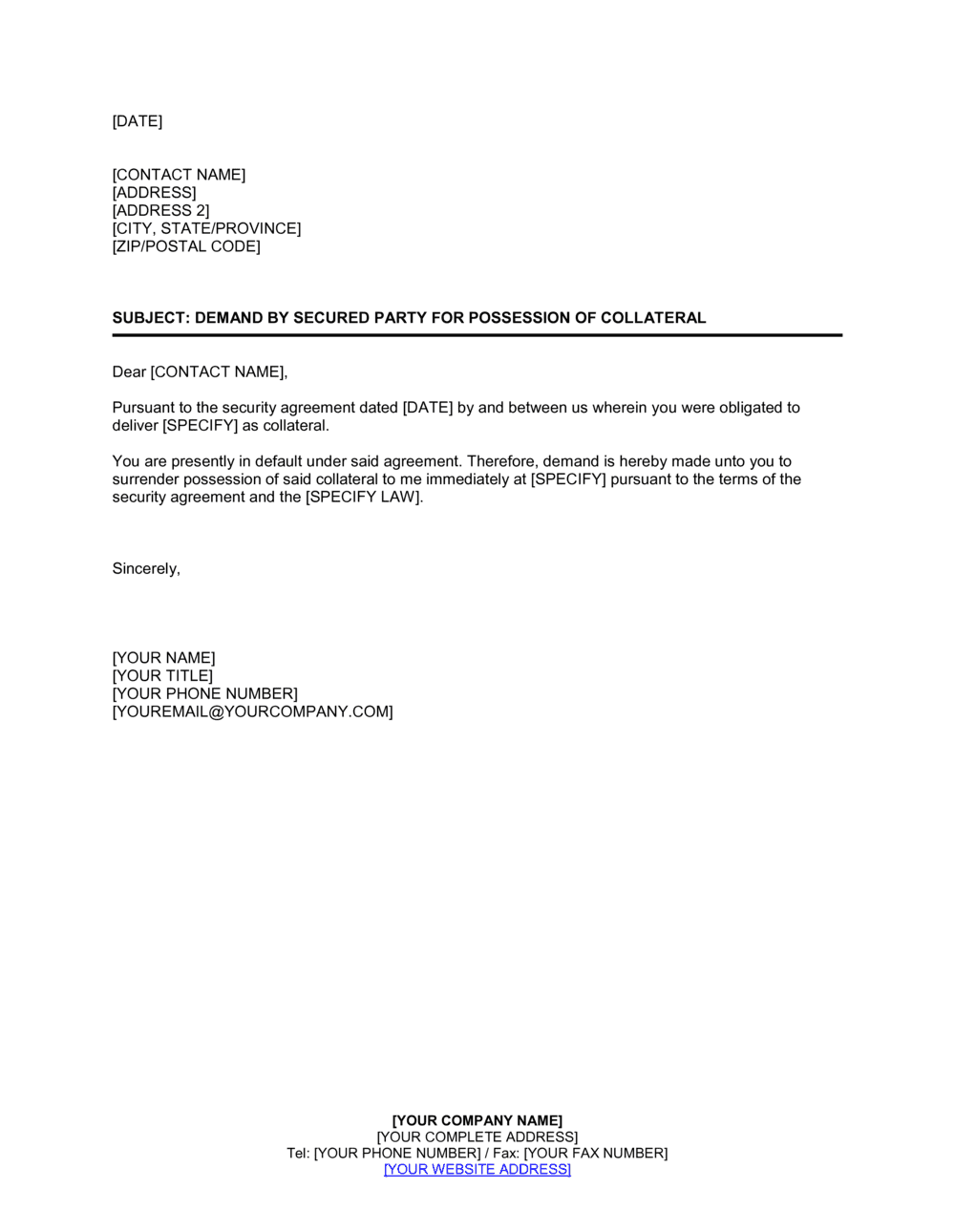
Use the exact registered legal name of the secured party as it appears on the UCC-1 and security agreement — not a DBA or brand name. Cross-reference the debtor's name against the security agreement and UCC filing to ensure consistency.
💡 A name mismatch between the demand, the UCC-1, and the security agreement is one of the most common grounds on which debtors challenge repossession proceedings.
4
Describe the collateral with precision
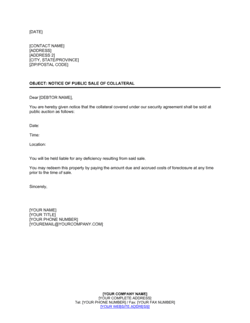
List each piece of collateral with enough identifying detail to distinguish it — serial numbers, VINs, account numbers, or specific invoice ranges for receivables. For multiple items, use a numbered schedule attached to the demand.
💡 Match the collateral description exactly to the language used in the security agreement and UCC-1 — departures from that language invite disputes about whether a specific asset is actually covered.
5
Calculate and state the outstanding obligation
Enter the total amount owed as of the demand date, broken down into principal, accrued interest, late fees, and any other contractually permitted charges. If you are exercising acceleration, state the full accelerated balance.
💡 Overstating the outstanding balance — even inadvertently — can expose the secured party to claims under the Fair Debt Collection Practices Act or state equivalents, and may undermine the demand's enforceability.
6
Set a specific surrender deadline, time, and location
Enter a concrete date no fewer than 24–72 hours from the delivery of the demand (check your security agreement and jurisdiction for minimum notice requirements), a specific time, and a precise address where the collateral should be surrendered.
💡 Give enough lead time for the debtor to physically move large or complex collateral — an unreasonably short deadline can be used to argue the demand was made in bad faith.
7
Sign and deliver by a documented method
Have an authorized officer or representative of the secured party sign the demand. Deliver by certified mail with return receipt and, for high-value collateral, by overnight courier simultaneously to create two independent delivery records.
💡 Take a photo of the demand envelope with the tracking label visible and retain the delivery confirmation receipt — both will be critical exhibits if the demand is contested in litigation.
8
Document everything and consult counsel before self-help repossession
Retain a copy of the signed demand, delivery confirmation, and all communications with the debtor. Before physically taking possession of collateral without a court order, consult an attorney — a breach of the peace during self-help repossession exposes the secured party to civil and criminal liability.
💡 If the debtor resists or is uncooperative, stop and pursue judicial replevin rather than risk a confrontation that voids your self-help rights and creates liability.