Collateral Decision_Request for Loan Documents Template

Free Word download • Edit online • Save & share with Drive • Export to PDF

1 page20–30 min to fillDifficulty: StandardSignature requiredLegal review recommended
Learn more ↓
FreeCollateral Decision_Request for Loan Documents Template

At a glance

What it is
A Collateral Decision Request for Loan Documents is a formal legal document submitted by a borrower to a lender requesting a binding decision on the acceptability of specific assets as collateral to secure a loan. This free Word download gives borrowers and lenders a structured, editable template to document the proposed collateral, its appraised value, lien position, and the terms under which the lender will accept or decline it — exportable as PDF for execution and filing.
When you need it
Use it when applying for a secured business loan, line of credit, or commercial mortgage and the lender requires formal documentation of the proposed collateral before issuing a credit decision. It is also used when refinancing an existing secured facility or substituting new collateral for previously pledged assets.
What's inside
Borrower and lender identification, a detailed description of the proposed collateral assets with valuation and lien status, the loan amount and purpose, collateral coverage ratio, conditions of acceptance, representations and warranties, default provisions, and the lender's formal decision block.

What is a Collateral Decision Request for Loan Documents?

A Collateral Decision Request for Loan Documents is a formal legal instrument submitted by a borrower to a lender requesting a binding determination on whether specific assets — real property, equipment, receivables, or other business assets — are acceptable as security for a proposed loan or credit facility. The document captures the full collateral picture in one place: asset descriptions with legally sufficient identifiers, current appraised values, existing lien status, the calculated loan-to-value ratio, borrower representations and warranties, lender-imposed conditions, and the lender's signed decision. It functions as the gateway document in the secured lending process — nothing in the collateral arrangement is official until this request is evaluated and the lender's decision block is executed.

Unlike a general loan application or term sheet, a collateral decision request creates a documented, enforceable record of precisely which assets were offered, on what terms they were accepted, and what conditions attach to that acceptance. That record protects both parties: the lender has a written basis for its credit decision that satisfies regulatory audit requirements, and the borrower has a clear statement of what collateral the lender holds and on what terms it can be released.

Why You Need This Document

Without a completed, signed collateral decision request, a secured lending transaction rests on an incomplete paper trail that creates serious risk for both sides. Lenders who fund loans without formal collateral documentation face regulatory findings in examinations, weakened lien priority against competing creditors, and limited recovery options in a borrower default. Borrowers who proceed without documented collateral terms have no written record of what was pledged, what conditions were imposed, or what triggers a release — leaving them exposed to lender overreach and unable to substitute or refinance assets without dispute.

The consequences of skipping or sloppily completing this document are concrete and often irreversible: an undisclosed prior lien discovered after funding can drop the lender to a junior position with no practical recovery; a vague asset description cannot be perfected through UCC filing, making the security interest void against a bankruptcy trustee; and an unsigned decision block means the entire collateral arrangement may be characterized as an oral agreement in litigation — almost always an inferior legal position. This template gives lenders and borrowers a structured, professionally drafted starting point that covers every material element the document needs to hold up in court, survive a regulatory audit, and protect the collateral arrangement for the full life of the loan.

Which variant fits your situation?

If your situation is…Use this template
Pledging real estate as primary collateral for a commercial mortgageCommercial Mortgage Agreement
Securing a loan against business equipment or machineryEquipment Financing Agreement
Pledging accounts receivable or inventory as collateralSecurity Agreement (UCC)
Personal guarantee supplementing business collateralPersonal Guarantee Agreement
Borrower substituting new collateral for previously pledged assetsCollateral Substitution Agreement
Lender releasing collateral after full loan repaymentCollateral Release Letter
Multi-lender syndicated facility requiring shared collateral priorityIntercreditor Agreement

Common mistakes to avoid

❌ Using a stale or borrower-prepared appraisal

Why it matters: An appraisal older than 12 months or prepared by a party with a financial interest in the transaction does not meet regulatory or GSE standards — most lenders will reject the collateral or require a new appraisal at the borrower's expense.

Fix: Engage a state-certified, independent appraiser and ensure the appraisal is dated within 6 months of submission. Confirm the lender's specific appraisal requirements before ordering.

❌ Failing to disclose existing liens on the collateral

Why it matters: An undisclosed lien can give a prior creditor priority over the new lender's security interest, reducing recovery in a default scenario and potentially constituting fraudulent misrepresentation.

Fix: Order a current UCC lien search and title report before submission and disclose every encumbrance in the lien status clause, regardless of balance.

❌ Calculating LTV against purchase price on depreciating assets

Why it matters: Machinery and equipment depreciate quickly — using purchase price instead of current appraised value overstates collateral coverage, triggering covenant violations when the lender re-appraises at renewal.

Fix: Always base LTV on the current appraised value, not acquisition cost. For equipment, use the appraiser's orderly liquidation value as the denominator.

❌ Proceeding to loan disbursement before the lender completes the decision block

Why it matters: Funding a loan before formal collateral approval is documented creates regulatory exposure for lenders and weakens the borrower's legal argument that the collateral terms were agreed before funds were advanced.

Fix: Treat the signed lender decision block as a condition precedent to funding. No loan proceeds should be released until the decision block is signed, dated, and filed.

❌ Omitting a board resolution for corporate borrowers

Why it matters: An officer of a corporation generally cannot pledge company assets without board authorization — executing the document without one exposes the pledge to avoidance by other creditors or the bankruptcy trustee.

Fix: Require a certified board resolution specifically authorizing the pledge of the listed collateral as part of the document package before execution.

❌ Choosing a governing law that conflicts with the collateral's location

Why it matters: For real property collateral, courts apply lex situs — the law of the location where the property sits — regardless of the governing-law clause. A mismatch can invalidate the mortgage or create perfection gaps.

Fix: Align the governing law with the state or province where the primary collateral is located. For multi-state collateral, include a choice-of-law analysis and consider separate state-specific security instruments.

The 10 key clauses, explained

Parties and Loan Identification

In plain language: Identifies the borrower and lender as legal entities, references the underlying loan or credit facility, and states the purpose of the collateral request.

Sample language
This Collateral Decision Request is submitted on [DATE] by [BORROWER LEGAL NAME], a [STATE/PROVINCE] [ENTITY TYPE] ('Borrower'), to [LENDER LEGAL NAME] ('Lender'), in connection with Loan No. [LOAN NUMBER] in the principal amount of $[AMOUNT], for the purpose of [LOAN PURPOSE].

Common mistake: Using a trade name instead of the registered legal entity name for either party — this creates a mismatch with the UCC filings and mortgage records needed to perfect the lender's interest.

Description of Proposed Collateral

In plain language: Provides a detailed, legally sufficient description of each asset offered as collateral — including type, location, identification numbers, and current condition.

Sample language
Borrower proposes to pledge the following collateral: [ASSET TYPE] located at [ADDRESS/LOCATION], identified as [SERIAL NUMBER / LEGAL DESCRIPTION / APN], in [CONDITION], currently owned free and clear except as noted in Section [X].

Common mistake: Using a generic description such as 'business assets' instead of specific asset identifiers. Vague descriptions cannot be perfected through UCC filing or title recording and may be unenforceable against third parties.

Appraised Value and Valuation Method

In plain language: States the current appraised or estimated market value of each collateral asset, the valuation method used, the date of the appraisal, and the name of the appraiser.

Sample language
The proposed collateral has an appraised value of $[AMOUNT] as of [DATE], as determined by [APPRAISER NAME AND CREDENTIALS] using the [INCOME / SALES COMPARISON / COST] approach. A copy of the appraisal report is attached as Exhibit [A].

Common mistake: Relying on a borrower's internal valuation or a stale appraisal more than 12 months old. Lenders in most jurisdictions require a current independent appraisal, and outdated values can result in rejection of the collateral or a lower approved loan amount.

Lien Status and Encumbrances

In plain language: Discloses any existing liens, mortgages, or encumbrances on the proposed collateral and confirms the lender's expected lien position.

Sample language
Borrower represents that the proposed collateral is subject to the following existing liens: [LIST OR 'NONE']. Lender's security interest, if approved, will be recorded as a [FIRST / SECOND] lien. Borrower shall provide a title report or lien search dated within [30] days of this request.

Common mistake: Failing to disclose a junior or subordinate existing lien. Undisclosed encumbrances expose the lender to a weaker lien position than expected and can constitute fraud in the inducement.

Collateral Coverage Ratio and Loan-to-Value

In plain language: Calculates the loan-to-value ratio and confirms the collateral coverage meets the lender's required threshold for the loan type.

Sample language
The proposed loan amount of $[AMOUNT] against the appraised collateral value of $[AMOUNT] produces a loan-to-value ratio of [X]%, which [meets / does not meet] Lender's maximum LTV threshold of [X]% for [ASSET TYPE / LOAN TYPE].

Common mistake: Calculating LTV against the purchase price rather than the appraised value. Lenders base coverage on appraised value; using purchase price on depreciating assets can overstate coverage and trigger covenant violations later.

Representations and Warranties of Borrower

In plain language: The borrower formally certifies that the collateral information is accurate, that they have clear title to the assets, and that there are no undisclosed claims or pending litigation affecting the collateral.

Sample language
Borrower represents and warrants that: (a) Borrower has full legal authority to pledge the collateral; (b) the collateral is free from undisclosed liens, claims, or encumbrances; (c) all information provided in this request is complete and accurate as of the date hereof; and (d) no litigation or governmental proceeding is pending that affects the collateral.

Common mistake: Omitting a warranty that the borrower has authority to pledge the collateral. For corporate borrowers, pledging assets requires board authorization — without this warranty, a lender may face a challenge from minority shareholders or other creditors.

Conditions of Acceptance

In plain language: Sets out the specific conditions the lender imposes before it will accept the collateral — such as insurance requirements, maintenance obligations, additional appraisals, or cross-collateralization terms.

Sample language
Lender's acceptance of the proposed collateral is conditioned upon: (a) maintenance of property and casualty insurance with limits no less than $[AMOUNT] naming Lender as loss payee; (b) no material change in the value or condition of the collateral without prior written notice to Lender; and (c) [ADDITIONAL CONDITIONS].

Common mistake: Accepting collateral without specifying insurance requirements. If the collateral is destroyed and the borrower carries insufficient insurance, the lender has an unsecured deficiency claim with no recovery path.

Default and Enforcement Provisions

In plain language: Defines what constitutes a default under the collateral arrangement — including non-payment, breach of warranty, and loss or destruction of collateral — and states the lender's remedies, including the right to foreclose or liquidate.

Sample language
Borrower shall be in default if: (a) any loan payment is not received within [X] days of its due date; (b) Borrower breaches any representation, warranty, or covenant herein; or (c) the collateral is materially damaged, destroyed, or transferred without Lender's consent. Upon default, Lender may exercise all remedies available under applicable law, including foreclosure, sale, or repossession of the collateral.

Common mistake: Omitting a cure period for non-material breaches. Without a cure window, lenders may face legal challenges to enforcement actions triggered by technical or administrative defaults — courts often look unfavorably on acceleration without notice.

Lender's Decision Block

In plain language: The formal section where the lender records its decision — accepted, conditionally accepted, or declined — along with any conditions, the approved LTV, and the authorized signatures required to proceed.

Sample language
LENDER DECISION: [ ] Accepted [ ] Conditionally Accepted (conditions attached) [ ] Declined. Approved LTV: [X]%. Decision Date: [DATE]. Authorized by: [LENDER AUTHORIZED OFFICER NAME], [TITLE], [LENDER LEGAL NAME]. Signature: ______________________

Common mistake: Executing loan documents before the lender's decision block is signed. Proceeding to funding without a dated, signed decision creates ambiguity about whether the collateral was formally approved and on what terms.

Governing Law and Jurisdiction

In plain language: Specifies which jurisdiction's law governs the collateral agreement and where any disputes will be resolved — critical for cross-state or cross-border lending.

Sample language
This Agreement and any security interest created hereunder shall be governed by the laws of the State of [STATE] without regard to conflict-of-laws principles. The parties consent to exclusive jurisdiction and venue in the courts of [COUNTY], [STATE].

Common mistake: Selecting a governing law that differs from the state where the collateral is located. For real property, the lex situs rule typically applies — the law of the property's location governs regardless of what the contract says, and a mismatch can invalidate perfection.

How to fill it out

  1. 1

    Identify the parties and reference the underlying loan

    Enter the borrower's full registered legal name, entity type, and jurisdiction of formation. Enter the lender's legal name and the loan number or facility name. State the purpose of the loan clearly — e.g., 'acquisition of commercial real property at [ADDRESS]' rather than 'general business purposes.'

    💡 Cross-check the borrower's name against its articles of incorporation or certificate of formation — any mismatch with the UCC filing will require a correction amendment.

  2. 2

    Describe each collateral asset with legally sufficient specificity

    For real property, include the full legal description and assessor's parcel number (APN). For equipment, include make, model, serial number, and location. For receivables or inventory, describe the category, book value, and aging schedule.

    💡 Copy the legal description directly from the current title report — transcription errors in property descriptions can invalidate a mortgage or deed of trust.

  3. 3

    Attach a current independent appraisal for each asset

    Obtain an appraisal from a qualified, state-certified appraiser dated within 6 months of the request (12 months maximum for most lenders). Identify the valuation method and attach the full report as an exhibit.

    💡 For equipment collateral, use an orderly liquidation value rather than fair market value — most lenders underwrite to liquidation value, and using fair market value will result in a lower approved loan amount.

  4. 4

    Conduct and disclose a full lien search

    Run a UCC lien search in the borrower's state of formation and a title search in the county where real property is located. Disclose all existing liens, their holders, and outstanding balances. Attach the search results as an exhibit.

    💡 Order the lien search no more than 10 business days before submission — older searches may miss recently filed liens that affect priority.

  5. 5

    Calculate and enter the loan-to-value ratio

    Divide the proposed loan amount by the appraised value of the collateral and express as a percentage. Confirm this figure is at or below the lender's maximum LTV threshold for the asset class.

    💡 If the LTV is above the lender's threshold, identify supplemental collateral or a partial prepayment that would bring coverage in line before submitting — incomplete submissions delay processing by 2–4 weeks.

  6. 6

    Complete the representations and warranties section

    Have the borrower's authorized officer review each warranty and confirm accuracy in writing. For corporate borrowers, attach a board resolution authorizing the pledge of the specific assets listed.

    💡 A board resolution authorizing the pledge should reference the specific assets by description — a blanket authorization to 'pledge company assets' has been challenged successfully in several jurisdictions.

  7. 7

    Review and agree on conditions of acceptance

    Negotiate and document any lender-imposed conditions — insurance minimums, maintenance covenants, cross-collateralization, or subordination requirements — in the conditions block before execution.

    💡 Confirm that the required insurance carrier and coverage limits are obtainable before signing. Some collateral types (older equipment, environmental-risk properties) are difficult to insure at the levels lenders require.

  8. 8

    Execute the lender decision block before disbursing funds

    The lender's authorized officer must sign and date the decision block — accepted, conditionally accepted, or declined — before any loan proceeds are released. File executed copies with the loan file and provide a copy to the borrower.

    💡 Scan and upload the signed decision block to your document management system immediately after execution — missing decision documentation is one of the most common findings in regulatory loan file audits.

Frequently asked questions

What is a collateral decision request for loan documents?

A collateral decision request for loan documents is a formal legal submission a borrower makes to a lender asking the lender to evaluate and render a binding decision on whether specific assets are acceptable as security for a proposed loan. It documents the asset description, appraised value, lien status, and loan-to-value ratio, and provides a structured block for the lender to record its acceptance, conditional acceptance, or denial. It becomes part of the permanent loan file and governs the collateral arrangement throughout the life of the loan.

What types of assets can be used as collateral for a business loan?

Common collateral types include commercial real estate, business equipment and machinery, vehicles, accounts receivable, inventory, intellectual property, and — in some structures — publicly traded securities or cash deposits. The acceptability of each asset class depends on the lender's policies, the asset's liquidity and marketability, and applicable regulatory requirements. Real property and equipment are the most widely accepted; receivables and inventory are common for working-capital lines but carry higher monitoring requirements.

What is a loan-to-value ratio and why does it matter for collateral?

The loan-to-value ratio (LTV) is the loan amount divided by the appraised value of the collateral, expressed as a percentage. Lenders use LTV to measure how much buffer they have if the collateral must be liquidated to recover the debt. A lower LTV means the lender is better protected — most commercial lenders require LTVs of 65–80% for real estate and 50–70% for equipment. Exceeding the maximum LTV threshold typically results in a reduced loan amount, requirement for additional collateral, or outright denial.

What is lien perfection and why does it matter?

Lien perfection is the legal process by which a lender makes its security interest enforceable against third parties, including other creditors and a bankruptcy trustee. For personal property, perfection typically requires filing a UCC-1 financing statement with the appropriate state agency. For real property, it requires recording a mortgage or deed of trust in the county land records. An unperfected security interest can be wiped out in the borrower's bankruptcy, leaving the lender with only an unsecured claim.

Does a collateral decision request need to be signed by both parties?

Yes. The borrower's authorized representative must sign the representations and warranties section to certify the accuracy of the collateral information, and the lender's authorized officer must complete and sign the decision block before loan proceeds are disbursed. For corporate borrowers, a board resolution authorizing the pledge should accompany the signed document. Both signatures should be dated, and wet-ink or authenticated electronic signatures are typically required for instruments that will be recorded against real property.

What is the difference between a collateral decision request and a security agreement?

A collateral decision request is the preliminary document by which a borrower proposes specific assets as collateral and the lender renders a formal decision on acceptability. A security agreement is the binding instrument that actually creates the lender's security interest in the accepted collateral — it is executed after the collateral decision is made. The request governs the evaluation and approval process; the security agreement governs the ongoing collateral relationship and is typically filed or recorded to perfect the lien.

Can a borrower substitute collateral after a loan has been approved?

Yes, but only with the lender's explicit written consent. Substituting collateral typically requires submitting a new collateral decision request for the proposed replacement asset, obtaining a new appraisal, conducting a fresh lien search, and executing a collateral release for the original asset simultaneously with perfection of the new security interest. Most loan agreements include a covenant prohibiting asset disposal or encumbrance without prior lender approval, making unauthorized substitution a default event.

What happens to the collateral if the borrower defaults?

Upon default, the lender may exercise its contractual and statutory remedies, which typically include demanding immediate repayment of the outstanding balance, initiating foreclosure proceedings on real property collateral, or — for personal property governed by UCC Article 9 — repossessing and selling the collateral through a commercially reasonable process with notice to the borrower. Any proceeds from the sale are applied first to the outstanding loan balance and enforcement costs; any surplus is returned to the borrower and any deficiency becomes an unsecured claim.

Do I need a lawyer to complete a collateral decision request?

For straightforward single-asset collateral arrangements — such as pledging a single piece of equipment or a commercial property with a clean title — a high-quality template completed by an experienced borrower or lender is often sufficient for the decision phase. However, legal review is strongly recommended for multi-asset packages, collateral with complex lien histories, cross-border transactions, or situations where perfection requires state-specific recording. Errors in lien perfection, asset description, or governing law can be extremely difficult and costly to correct after execution.

How this compares to alternatives

vs Security Agreement

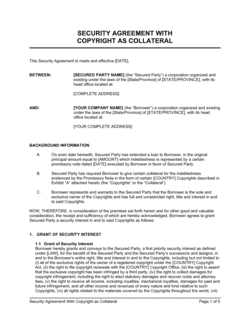
A collateral decision request documents the borrower's proposal and the lender's formal evaluation and approval decision before the loan closes. A security agreement is the binding instrument executed after approval that actually creates the lender's enforceable interest in the collateral. The request governs the process; the security agreement governs the ongoing relationship. Both are needed for a complete secured lending transaction.

vs Personal Guarantee Agreement

A personal guarantee is an unsecured promise by an individual — typically a business owner — to repay the loan if the borrower entity defaults. A collateral decision request concerns specific, identifiable assets pledged as security. Lenders often require both: asset-backed collateral reduces recovery risk on the loan itself, while a personal guarantee creates additional recourse against the guarantor's personal assets.

vs Loan Agreement

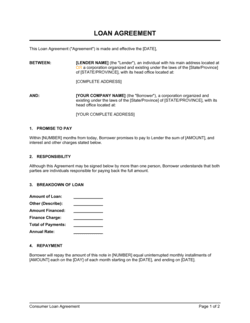
A loan agreement governs the full lending relationship — principal, interest rate, repayment schedule, covenants, and events of default. A collateral decision request is a narrower document focused solely on the evaluation and acceptance of specific assets as security. The collateral decision feeds into and is incorporated by reference in the broader loan agreement, but the two serve different functions and are executed at different stages.

vs Promissory Note

A promissory note is the borrower's unconditional written promise to repay a specified sum on defined terms — it creates the debt obligation. A collateral decision request creates the security interest that backs the note. The note governs what is owed; the collateral documentation governs what the lender can seize if the note is not honored. For a secured loan, both documents are required.

Industry-specific considerations

Commercial Real Estate

Pledging income-producing properties requires an MAI appraisal, Phase I environmental report, rent roll, and title insurance commitment — all referenced in the collateral request package.

Manufacturing

Equipment collateral in manufacturing requires orderly liquidation value appraisals, serial number-level asset schedules, and UCC-1 filings in the borrower's state of formation to perfect the security interest.

Healthcare

Medical equipment and accounts receivable from Medicare and Medicaid are common collateral types, but assignment of government receivables requires compliance with the Anti-Assignment Act and state-specific restrictions.

Retail and E-commerce

Inventory-secured lending requires a borrowing base certificate alongside the collateral decision request, with the lender typically discounting inventory value by 50–70% of cost to account for liquidation risk.

Jurisdictional notes

United States

Perfection of security interests in personal property is governed by UCC Article 9 and requires filing a UCC-1 financing statement in the borrower's state of organization. Real property collateral is perfected by recording a mortgage or deed of trust in the county where the property is located. State-specific rules vary significantly — California, New York, and Texas each have nuances affecting lien priority and foreclosure procedure. SBA loans have additional collateral documentation requirements under SBA SOP 50 10.

Canada

Personal property security is governed by the PPSA (Personal Property Security Act) in each province, with Ontario, British Columbia, and Alberta having the most active commercial lending markets. UCC equivalents require registration in the province where the collateral is located or the debtor is domiciled. Quebec follows civil law principles under the Civil Code of Quebec, where hypothecs replace mortgages and security agreements — Quebec transactions require a separate legal approach.

United Kingdom

UK lenders take fixed charges over specific identifiable assets and floating charges over a company's general asset pool — both must be registered at Companies House within 21 days of creation or they are void against a liquidator. The Law of Property Act 1925 governs real property mortgages. Scotland has a separate legal system under Scots law, where standard securities replace English law mortgages and registration at the Registers of Scotland is required.

European Union

Collateral law varies significantly by member state — France, Germany, and the Netherlands each have distinct security interest regimes. The EU Financial Collateral Directive provides a harmonized framework for financial collateral (cash and securities) but does not cover real property or most business equipment. Cross-border enforcement of collateral arrangements within the EU is supported by the Brussels I Regulation on jurisdiction and judgments, but domestic insolvency proceedings can affect lien priority. GDPR considerations apply where collateral review involves personal data of individuals.

Template vs lawyer — what fits your deal?

PathBest forCostTime
Use the templateSingle-asset collateral arrangements with clean title, no prior liens, and standard LTV ratios where the borrower and lender are both commercially experiencedFree1–2 hours
Template + legal reviewMulti-asset collateral packages, assets with existing liens, cross-state transactions, or loans exceeding $250,000$500–$1,500 for a legal review and perfection confirmation2–5 business days
Custom draftedComplex commercial real estate transactions, syndicated facilities, bankruptcy-remote structures, or international collateral arrangements$2,500–$10,000+1–3 weeks

Glossary

Collateral
An asset pledged by a borrower to secure repayment of a loan, which the lender may seize and liquidate if the borrower defaults.
Lien
A legal claim a lender holds against a specific asset, giving it the right to take possession if the debt is not repaid.
Lien Position
The priority rank of a lender's claim against a collateral asset relative to other creditors — first lien holders are paid before second lien holders in a liquidation.
Loan-to-Value Ratio (LTV)
The loan amount divided by the appraised value of the collateral, expressed as a percentage — used by lenders to assess collateral coverage adequacy.
UCC Financing Statement
A public notice filed by a lender with a state agency to perfect a security interest in personal property collateral, establishing lien priority under Article 9 of the Uniform Commercial Code.
Perfection
The legal process by which a lender makes its security interest enforceable against third parties — typically by filing a UCC-1 financing statement or recording a mortgage.
Appraised Value
The fair market value of a collateral asset as determined by a qualified, independent appraiser at a specific point in time.
Collateral Coverage Ratio
The ratio of a collateral asset's appraised value to the outstanding loan balance, used to assess whether the lender is adequately secured.
Security Agreement
A contract between borrower and lender granting the lender a security interest in specified personal property collateral as a condition of the loan.
Default
A borrower's failure to meet a material loan obligation — such as missing a payment or breaching a covenant — triggering the lender's right to enforce its collateral interest.
Substitution of Collateral
A lender-approved replacement of one pledged asset with another of equal or greater value, typically requiring a new collateral decision request.

Part of your Business Operating System

This document is one of 3,000+ business & legal templates included in Business in a Box.

  • Fill-in-the-blanks — ready in minutes
  • 100% customizable Word document
  • Compatible with all office suites
  • Export to PDF and share electronically

Create your document in 3 simple steps.

From template to signed document — all inside one Business Operating System.
1
Download or open template

Access over 3,000+ business and legal templates for any business task, project or initiative.

2
Edit and fill in the blanks with AI

Customize your ready-made business document template and save it in the cloud.

3
Save, Share, Send, Sign

Share your files and folders with your team. Create a space of seamless collaboration.

Save time, save money, and create top-quality documents.

★★★★★

"Fantastic value! I'm not sure how I'd do without it. It's worth its weight in gold and paid back for itself many times."

Managing Director · Mall Farm
Robert Whalley
Managing Director, Mall Farm Proprietary Limited
★★★★★

"I have been using Business in a Box for years. It has been the most useful source of templates I have encountered. I recommend it to anyone."

Business Owner · 4+ years
Dr Michael John Freestone
Business Owner
★★★★★

"It has been a life saver so many times I have lost count. Business in a Box has saved me so much time and as you know, time is money."

Owner · Upstate Web
David G. Moore Jr.
Owner, Upstate Web

Run your business with a system — not scattered tools

Stop downloading documents. Start operating with clarity. Business in a Box gives you the Business Operating System used by over 250,000 companies worldwide to structure, run, and grow their business.

Free Forever Plan · No credit card required