1
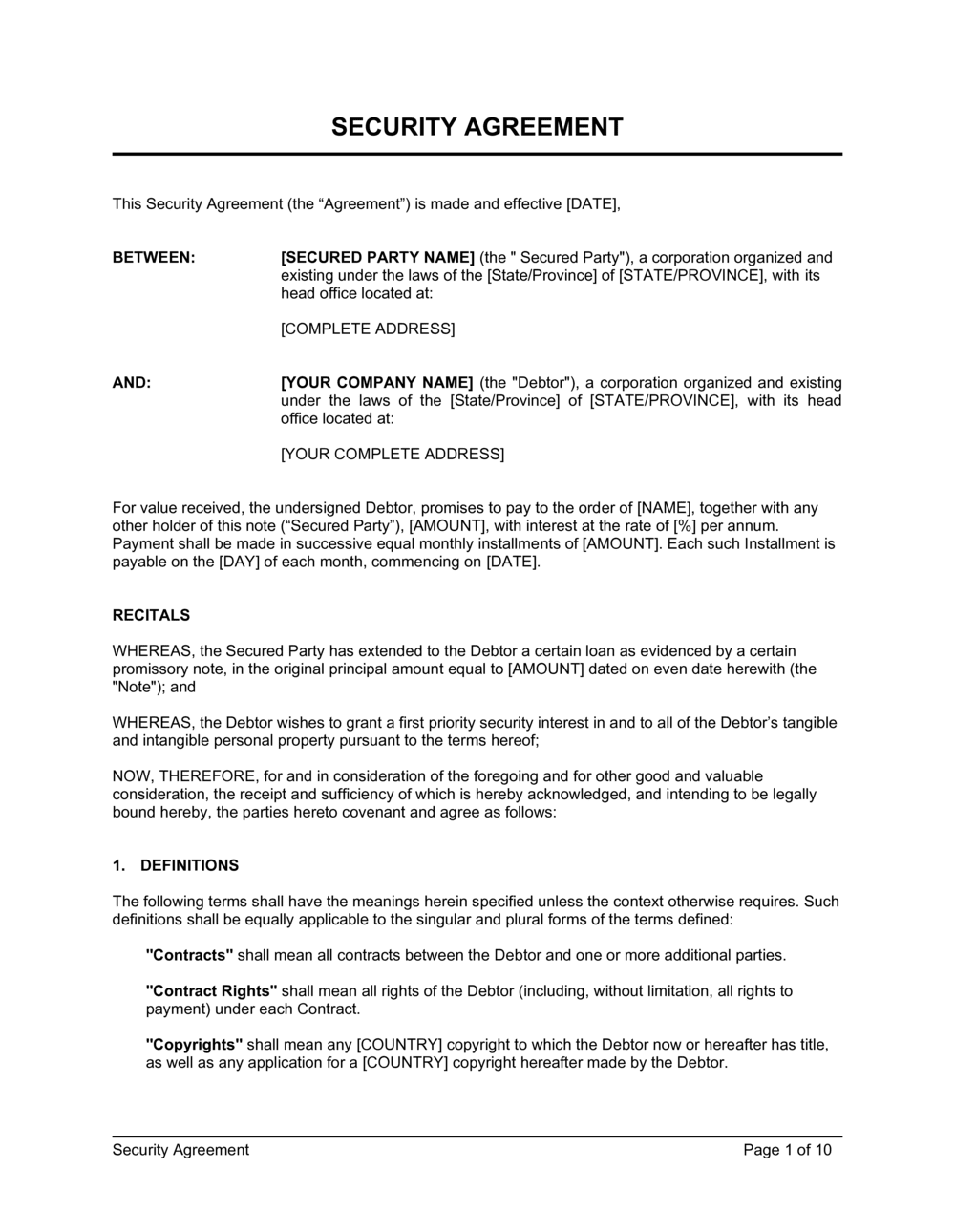
Identify the parties using their exact legal names
Enter the debtor's full registered legal name exactly as it appears on state formation documents, including entity type and state of formation. Do the same for the secured party. Confirm the debtor name against any existing UCC filings.
💡 The debtor name on the security agreement must be character-for-character identical to the name on the UCC-1 financing statement. A single-letter difference can render the filing seriously misleading and unperfected.
2
Describe the underlying obligation
In the recitals, reference the specific loan agreement, promissory note, or other obligation being secured by amount, date, and instrument name. The security agreement's validity depends on its connection to a real, existing, or forthcoming obligation.
💡 Attach or cross-reference the promissory note or loan agreement as an exhibit to avoid disputes about what debt is actually secured.
3
Draft a specific and complete collateral description
List collateral by category (equipment, inventory, receivables, instruments) and include serial numbers, account numbers, or other identifiers where available. Decide whether to include after-acquired property and proceeds, and state it explicitly.
💡 For equipment collateral, photograph the items and attach a schedule with serial numbers as Exhibit A. This eliminates disputes about whether a specific asset was included.
4
Complete the representations and warranties
Have the debtor confirm in writing that they own the collateral, that no prior liens exist beyond those disclosed, that they are authorized to enter the agreement, and that all collateral information is accurate.
💡 Run a UCC lien search in the debtor's jurisdiction before the debtor signs to verify the accuracy of the 'no prior liens' representation — surprises after signing are expensive.
5
Set the affirmative and negative covenants
Specify what the debtor must do (maintain insurance, keep records, notify of changes) and what requires prior consent (selling collateral, incurring additional liens, relocating collateral). Tailor restrictions to the specific collateral type.
💡 For receivables collateral, add a covenant requiring the debtor to deposit collections into a specified account that the secured party can monitor or control.
6
Define events of default precisely
List every event that should give you the right to accelerate and enforce — non-payment, insolvency, breach of covenant, material adverse change, and cross-default with other agreements. Include cure periods for curable defaults.
💡 A 5-day grace period for payment defaults and a 30-day cure period for non-monetary defaults is a common commercial standard that balances lender protection with borrower fairness.
7
Execute and file a UCC-1 financing statement
Both parties must sign the security agreement before or simultaneously with the loan funding. Immediately after execution, file a UCC-1 financing statement in the debtor's state of formation (for entities) or state of residence (for individuals) to perfect the security interest.
💡 Perfection is time-sensitive. A lien filed the day after a competing creditor files — or within 90 days before the debtor's bankruptcy — can be avoided by a bankruptcy trustee. File the same day as closing.
8
Calendar continuation filings
A UCC-1 financing statement lapses after 5 years unless a continuation statement is filed within the 6-month window before expiration. Set a calendar reminder at the 4.5-year mark to initiate the continuation filing.
💡 Lapsed perfection means you become an unsecured creditor in bankruptcy — the collateral description in the security agreement is irrelevant if the UCC filing has lapsed.