Personal and Estate Legal Templates
★★★★★4.7from 280+ reviews· Trusted by 20M+ businesses
Cover your personal legal needs — from estate planning to real estate transactions — with ready-to-use documents.
WordEditable onlinePDF23+ personal and estate legal templates
Other Legal Agreements categories
Most popular personal and estate legal templates
Real estate transactions and purchases
Real estate assignments and partnerships
Personal financial and legal commitments
Legal notices, compliance, and planning tools
250K+Clients
20M+Free users
20+Years
190+Countries
10,000+Law firms
50M+Downloads
Trusted across review platforms
- Capterra★★★★☆4.649 reviews
- G2★★★★☆4.713 reviews
- GetApp★★★★☆4.649 reviews
- Google Play★★★★☆4.6179 ratings
- Google Reviews★★★★☆4.567 reviews
Frequently asked questions
What documents are typically included in a personal estate plan?
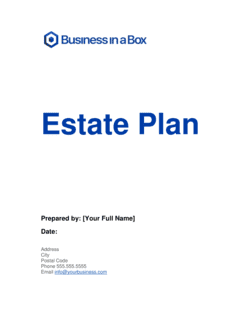
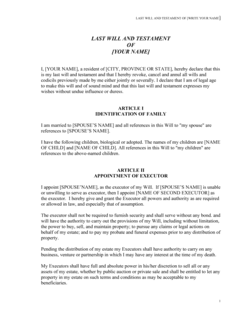
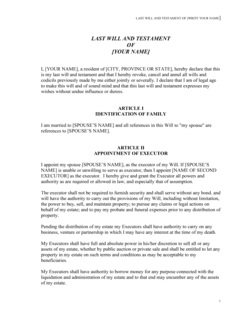
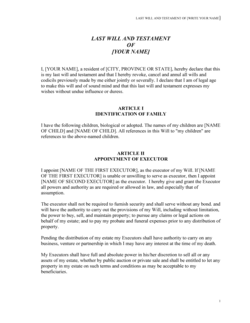
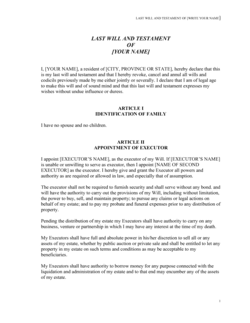
An estate plan typically includes a will or testament, beneficiary designations, a durable power of attorney, a healthcare directive, and a summary of asset locations and account details. The Estate Plan template in this folder provides a structured starting point for documenting these elements. For complex estates involving trusts or significant tax exposure, a licensed estate attorney should review the final documents.
Is a real estate purchase agreement the same as a deed of sale?
No. A purchase agreement is the contract that obligates both parties to complete a sale — it governs the period between offer acceptance and closing. A deed of sale is the instrument that actually transfers legal title from seller to buyer at closing. Both documents are needed in a typical property transaction; the purchase agreement comes first, the deed at closing.
When does a personal guarantee become enforceable?
A personal guarantee is generally enforceable once it is signed by the guarantor and delivered to the creditor, provided there is clear consideration (the creditor extending credit or forbearing on an existing obligation). Courts look for an unambiguous statement of liability, the identity of the guaranteed obligation, and an authorized signature. Broad or unlimited guarantees may face more scrutiny in some jurisdictions.
What is the difference between an active and a passive real estate partnership agreement?
In an active real estate partnership, both partners participate in managing the property or investment — sharing decisions, responsibilities, and liability. In a passive real estate partnership, one partner contributes capital but takes no role in management; the active partner handles operations. Passive partners typically have limited liability, while active partners are exposed to broader operational risk. Choose the structure that matches each party's intended level of involvement.
Can I assign a real estate contract without the seller's consent?
Whether you can assign without consent depends on the language of the original contract. Many purchase agreements include an anti-assignment clause requiring the seller to approve any transfer of the buyer's rights. If no such clause exists, assignment may be permitted by default in most jurisdictions. Always review the original contract before completing an assignment, and consider notifying the seller in writing regardless.
What is a pledge of personal property and when is it used?
A pledge of personal property is a security agreement in which a borrower grants a lender a security interest in a specific asset — vehicles, equipment, jewelry, or financial instruments — as collateral for a debt. Unlike a mortgage, the pledged asset is personal rather than real property. It is used when a lender wants collateral security beyond a general personal guarantee, or when the borrower prefers to limit their exposure to a named asset.
Do I need a lawyer to use these templates?
For straightforward transactions — a simple offer to purchase, a personal service agreement, or a legal notice — a well-drafted template is usually sufficient. For complex or high-value situations — estate plans with trusts, multi-party real estate partnerships, or guarantees on large credit facilities — having a licensed attorney review the completed document is advisable. Most legal review of a template-based document costs $200–$600 for a one-hour consultation.
What makes a legal notice valid?
A valid legal notice identifies the sender and recipient by full name and address, states the specific legal basis or obligation being asserted, sets out any required response or action, and is delivered in a manner that creates a verifiable record — certified mail, courier with signature, or email with read receipt depending on what the underlying contract or local law requires. Vague or undated notices are frequently challenged in disputes.
Personal And Estate Legal vs. related documents
A personal guarantee makes an individual personally liable for a debt or obligation if the primary party defaults — it is a promise to pay. A pledge of personal property grants a creditor a security interest in a specific asset as collateral but does not create personal liability beyond that asset. Use a personal guarantee when the creditor wants recourse against your general assets; use a pledge when you are securing an obligation with a specific item.
An offer to purchase is a preliminary document in which a buyer proposes terms for acquiring a property — it is typically conditional and not yet binding on the seller. A real estate purchase agreement is the fully negotiated, binding contract that supersedes the offer once both parties agree on price and terms. The offer starts the negotiation; the purchase agreement closes it.
An assignment of a real estate contract transfers an existing buyer's rights under a signed agreement to a new party — the original deal is already in place. An option to purchase gives someone the right, but not the obligation, to buy a property at a set price within a defined period — no deal exists yet. Use an assignment when you are wholesaling or flipping a contract; use an option when you want to lock in a price before committing.
A legal notice formally informs a party of a legal right, obligation, or claim — it covers a wide range of situations including default, breach, and demand. A final notice before legal action is a more specific escalation document warning a party that litigation or collection proceedings will begin unless they act within a stated deadline. Send a legal notice first; follow with the final notice if there is no response.
Key clauses every Personal And Estate Legal contains
Personal and estate legal documents span several sub-types, but the most consequential templates in this folder share a common set of operative clauses.
- Identification of parties. Names every individual or entity involved with enough specificity — full legal names, addresses, and roles — to avoid ambiguity in enforcement.
- Description of property or subject matter. Defines the asset, service, or obligation at the center of the agreement, including legal descriptions for real estate.
- Consideration. States the price, payment terms, or other exchange of value that makes the contract legally binding.
- Conditions and contingencies. Lists events that must occur — financing approval, inspection results, title clearance — before the parties are fully bound.
- Representations and warranties. Each party's factual statements about their authority, the asset's condition, or the absence of encumbrances.
- Default and remedies. Specifies what constitutes a default and what options the non-defaulting party has, including damages or specific performance.
- Governing law and jurisdiction. Names the state or country whose laws govern the document and where disputes will be resolved.
- Signature and execution. Identifies who must sign, in what capacity, and whether notarization or witnessing is required for the document to take effect.
How to write a personal or estate legal document
The steps below apply to the core transactional and planning documents in this folder — particularly purchase agreements, guarantees, and estate plans.
1
Identify every party by their full legal name
Use registered legal names — not trade names or nicknames — and include addresses and roles (buyer, seller, guarantor, beneficiary).
2
Describe the subject matter with precision
For real estate, include the full legal description and any parcel or lot numbers; for personal property, list make, model, serial number, and condition.
3
State the consideration clearly
Write out the purchase price, guarantee amount, or service fee in both numerals and words to prevent misreading.
4
Set out all conditions and timelines
List every contingency — financing, inspections, title searches — and assign a deadline to each so neither party is left waiting indefinitely.
5
Include representations and warranties
Have each party confirm their authority to sign, that there are no undisclosed encumbrances, and that the facts stated in the document are accurate.
6
Define what happens if something goes wrong
State the default triggers, cure periods, and remedies — including whether the non-defaulting party can seek specific performance or only monetary damages.
7
Choose governing law and dispute resolution
Name the jurisdiction and decide whether disputes go to litigation, mediation, or arbitration — and specify where proceedings will be held.
8
Execute with the correct formalities
Real estate deeds and some guarantees require notarization; most agreements need only authorized signatures — check local requirements before signing.
At a glance
- What it is
- Personal and estate legal documents are contracts, agreements, and formal notices that protect individual rights, manage personal assets, and govern real estate transactions. They range from estate plans and personal guarantees to purchase agreements and legal notices.
- When you need one
- Any time you are buying, selling, or investing in real estate, making personal financial commitments, planning your estate, or formalizing a personal service arrangement, you need the right legal document in place.
Which Personal And Estate Legal do I need?
The right template depends on what you are doing — planning your estate, buying or selling property, making a personal financial commitment, or formalizing a service. Match your situation below.
Your situation
Recommended template
Drafting a comprehensive plan for distributing personal assets
Consolidates asset distribution, beneficiary designations, and key instructions in one document.Buying or selling a residential or commercial property
Sets out price, contingencies, and closing terms for a binding property sale.Making a personal financial guarantee on a business or loan obligation
Establishes personal liability when a lender or counterparty requires individual backing.Submitting a formal offer to buy a property
Documents the buyer's terms before a full purchase agreement is executed.Sending a formal notice of a legal claim or obligation
Creates a written record that a party has been formally notified of a legal matter.Assigning your rights under an existing real estate contract to a third party
Transfers all contractual rights and obligations from the original buyer to a new party.Retaining a lawyer for ongoing or project-specific legal work
Formalizes the scope of work, fees, and responsibilities with outside legal counsel.Pledging personal property as collateral for a loan or obligation
Documents the security interest granted over personal assets without transferring title.Glossary
- Estate plan
- A set of documents that direct how a person's assets will be managed and distributed during incapacity or after death.
- Personal guarantee
- A written commitment by an individual to be personally responsible for a debt or obligation if the primary party fails to perform.
- Pledge of personal property
- A security agreement granting a creditor an interest in a specific personal asset as collateral, without transferring ownership.
- Deed of sale
- The legal instrument that transfers title to real property from seller to buyer at the closing of a transaction.
- Assignment of contract
- The transfer of one party's rights and obligations under an existing contract to a third party.
- Option to purchase
- A right, granted for consideration, to buy a property at a fixed price within a defined period, without an obligation to do so.
- Offer to purchase
- A buyer's formal written proposal to acquire a property at stated terms, which becomes binding once accepted by the seller.
- Contingency
- A condition that must be satisfied before a real estate contract becomes fully binding on both parties.
- Active partnership
- A business arrangement in which all partners participate in management decisions and share operational liability.
- Passive partnership
- A business arrangement in which one or more partners contribute capital but take no role in managing the investment.
- Legal notice
- A formal written communication that puts a recipient on record as having been informed of a legal right, claim, or obligation.
- Retainer agreement
- A contract between a client and legal counsel that defines the scope of representation, fee structure, and billing terms.
What is a personal and estate legal document?
A personal and estate legal document is any contract, agreement, plan, or
formal notice that governs an individual's legal rights, personal assets, financial
commitments, or real estate interests. These documents differ from purely commercial
agreements in that they directly affect personal wealth, property ownership, and
obligations that can follow an individual — or their estate — for years or decades.
They include estate plans that direct asset distribution after death, purchase
agreements that bind a buyer and seller to a property transaction, personal guarantees
that make an individual liable for a third party's debt, and legal notices that put
parties on formal record of a claim or obligation.
This folder covers two overlapping areas. The first is personal legal documents —
guarantees, pledges, service agreements, legal notices, and tools for retaining
counsel. The second is real estate legal documents — purchase agreements, offers,
deeds, assignments, options, and partnership agreements that govern property
transactions and investments. Both groups share a common need: precision in drafting,
because vague language in personal legal matters tends to be resolved against the party
who had the obligation to be clear.
When you need a personal or estate legal document
The need for personal and estate legal documents arises whenever you are committing
personal assets, entering a property transaction, making a financial guarantee, or
establishing legal rights that you may need to enforce later. The cost of acting
without the right document is not usually a fine — it is the inability to prove what
was agreed, what was disclosed, or who is responsible.
Common triggers:
- Buying, selling, or making an offer on a residential or commercial property
- Assigning your rights in a real estate contract to another buyer or investor
- Forming a real estate investment partnership with active or passive co-investors
- Signing a personal guarantee to support a business loan or lease obligation
- Pledging personal assets as collateral for a credit facility
- Planning the distribution of your estate and documenting key asset instructions
- Retaining outside legal counsel for a specific matter or ongoing representation
- Sending a formal notice or final demand before initiating legal proceedings
Skipping the right document in any of these situations leaves you exposed to disputes
over what was agreed, liability you did not intend to assume, and claims you cannot
enforce because nothing was put in writing. Each template in this folder is designed
to close that gap — clearly, quickly, and in a format courts and counterparties
recognize.
Award-winning platform
- Great Place to Work 2025
- BIG Award — Product of the Year 2025
- Smartest Companies 2025
- Global 100 Excellence 2026
- Best of the Best 2025