1
Identify the purpose and receiving body
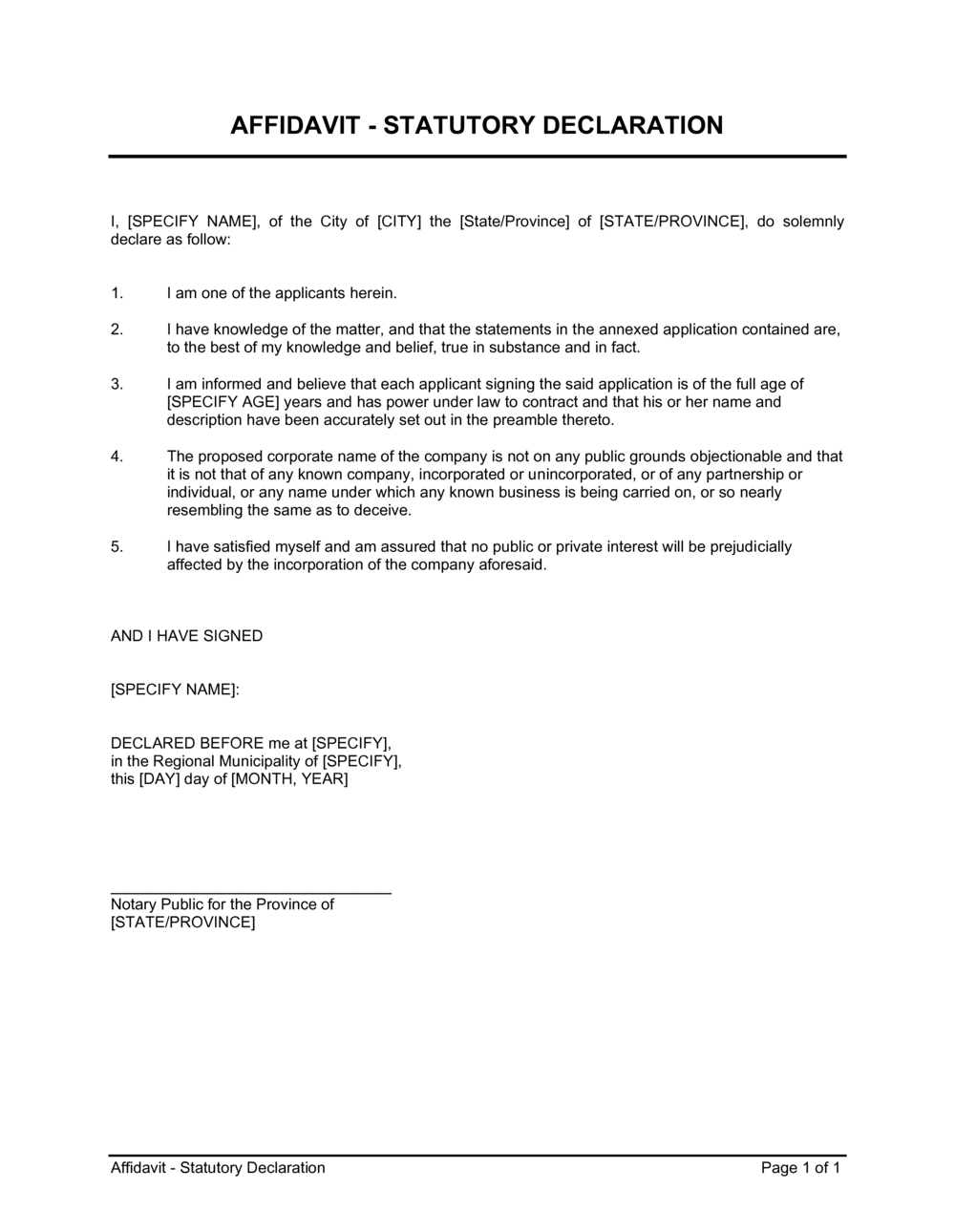
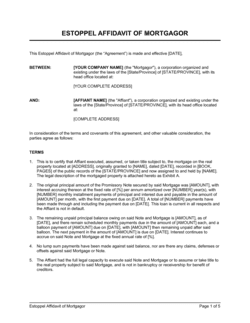
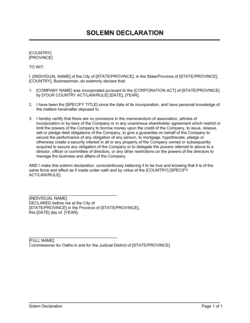
Before drafting, confirm whether the recipient requires an affidavit (sworn before a notary or court officer) or a statutory declaration (declared before a commissioner of oaths). Note the specific court file number, agency name, or transaction reference to include in the header.
💡 Call the receiving court or agency to confirm the precise form requirements — some jurisdictions have mandatory forms that supersede general templates.
2
Complete the deponent identification block
Enter your full legal name exactly as it appears on government-issued ID, your current residential or business address, and your occupation. Any variation from your ID can trigger rejection.
💡 If you have recently changed your name, include both your current legal name and former name with a brief explanatory note in paragraph 1.
3
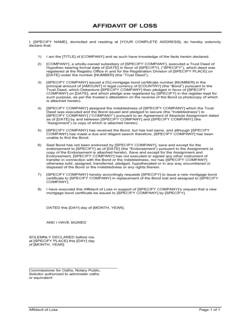
Draft the statement of facts in numbered paragraphs
Write one fact per numbered paragraph in plain, declarative sentences. Stick to what you personally witnessed, did, or know — distinguish anything based on information and belief with explicit language such as 'I am informed by [SOURCE] and believe.'
💡 Keep each paragraph to three sentences or fewer. Longer paragraphs invite objections on the grounds that they mix fact, inference, and argument.
4
Identify and attach exhibits
For each document you reference in the body, attach a copy and mark it with a sequential exhibit letter (Exhibit A, B, C). In the body, cite the exhibit number at first reference. Add a separate identification clause for each exhibit near the end of the statement of facts.
💡 Initial each exhibit page in the corner so the officer can confirm you identify the entire document — not just the cover page.
5
Cite the governing statute or court rules
Add the applicable statute or court rule reference in the title block and in the governing statute clause. For international use, confirm whether an apostille will be required and note it on the document.
💡 If the affidavit will be used in multiple jurisdictions, have a lawyer confirm whether a single document suffices or separate jurisdiction-specific versions are needed.
6
Arrange a swearing appointment with an authorized officer
Book an appointment with a notary public, commissioner of oaths, or justice of the peace before signing anything. Bring government-issued photo ID and all exhibit originals or certified copies.
💡 Do not sign the document before the appointment — a pre-signed affidavit cannot be sworn and will need to be reprinted and re-executed.
7
Execute in the officer's presence and confirm the jurat
Sign the deponent block in the officer's presence after they administer the oath or affirmation. Confirm the officer completes the jurat with the correct date, location, their name, commission number, and seal before you leave.
💡 Request a certified copy from the officer at the time of execution — many agencies require a certified copy and the original simultaneously.
8
File or deliver within any required timeframe
Note any filing deadline imposed by the court or agency and deliver the executed document before it expires. Some courts require the affidavit to be sworn within a specified window before the hearing date.
💡 Scan the executed document immediately after filing so you have a digital backup with the officer's seal and signature intact.