Estate Plan Template

Free Word download β€’ Edit online β€’ Save & share with Drive β€’ Export to PDF

18 pagesβ€’30–45 min to fillβ€’Difficulty: Complex
Learn more ↓
FreeEstate Plan Template

At a glance

What it is
An Estate Plan is a structured planning document that records how your assets should be managed, distributed, and protected during your lifetime and after your death. This free Word download gives you a complete, editable framework covering asset inventory, beneficiary designations, healthcare directives, executor instructions, and contingency provisions β€” ready to export as PDF and share with your attorney, financial advisor, or family members.
When you need it
Use it when you acquire significant assets, start a family, launch or inherit a business, or enter a life transition β€” marriage, divorce, or retirement β€” where clear instructions about your estate become critical for the people you leave in charge.
What's inside
Personal and family information, a complete asset and liability inventory, beneficiary and inheritance instructions, healthcare and financial power of attorney designations, guardian nominations, executor guidance, and a digital assets registry.

What is an Estate Plan?

An Estate Plan is a structured planning document that records how your assets, healthcare decisions, and family responsibilities should be managed β€” both while you are alive and after your death. It brings together an asset and liability inventory, beneficiary designations, guardian nominations, healthcare directives, power of attorney designations, executor instructions, and a digital assets registry into a single, organized reference. Unlike a will β€” which is a single legally operative instrument β€” an estate plan is the comprehensive operational framework that ensures everyone responsible for your affairs knows exactly what you own, what you want, and who is authorized to act on your behalf.

Why You Need This Document

Without a written estate plan, the people you trust most are left to piece together your wishes from memory, outdated account forms, and default legal rules that may not reflect your intentions. Assets go untransferred for months while executors search for account numbers. Retirement accounts pass to ex-spouses because beneficiary designations were never updated. Minor children are placed with court-appointed guardians because no one was named. Healthcare agents make life-altering decisions without any documented guidance. A complete estate plan eliminates all of these failure modes by giving your executor, agents, and family a single authoritative document they can act on immediately. This template provides the structure to build that document in a few focused hours β€” and to keep it current as your life changes.

Which variant fits your situation?

If your situation is…Use this template
Documenting a comprehensive personal estate with multiple asset typesEstate Plan
Recording a single individual's final wishes simply and quicklyLast Will and Testament
Planning the transition of a family business to the next generationBusiness Succession Plan
Outlining medical treatment preferences in case of incapacitationAdvance Healthcare Directive
Delegating financial and legal authority to a trusted individualPower of Attorney
Establishing a trust to manage and distribute assets over timeTrust Agreement
Recording asset values and account details for executor referencePersonal Financial Statement

Common mistakes to avoid

❌ Skipping beneficiary designation updates on individual accounts

Why it matters: Account-level beneficiary designations legally override what is written in the estate plan. An ex-spouse still named on a retirement account will receive those funds regardless of what your plan says.

Fix: After completing the plan, log in to every financial institution and insurance policy and confirm the designations match your current intentions.

❌ Never updating the plan after major life events

Why it matters: An estate plan written before a second marriage, a new child, or a business acquisition quickly becomes a source of confusion and family conflict rather than clarity.

Fix: Review and revise the plan within 90 days of any marriage, divorce, birth, adoption, death of a named party, or acquisition of a significant asset.

❌ Naming a guardian without asking them first

Why it matters: A guardian who declines or is unable to serve triggers a court appointment process that can take months and produce an outcome the family would not have chosen.

Fix: Have an explicit conversation with each named guardian and alternate before finalizing the plan and confirm their agreement in writing.

❌ Storing the estate plan where no one can find it

Why it matters: An estate plan locked in a safe whose combination only you know, or stored on a personal device without access instructions, is effectively unavailable to the executor when it is needed most.

Fix: Keep the original in a fireproof location at home or with your attorney, give a copy to your executor, and note the storage location within the executor instructions section.

❌ Leaving digital assets out of the inventory entirely

Why it matters: Cryptocurrency wallets, domain names, and income-generating online accounts can represent significant value. Without access instructions, they are permanently lost at death.

Fix: Complete the digital assets registry section for every account with financial value or personal significance, and store access credentials in a secure, accessible-to-executor format.

❌ Using vague language in healthcare directives

Why it matters: Phrases like 'no extraordinary measures' mean different things to different physicians and family members, leading to disagreements during a crisis and potential legal intervention.

Fix: State specific preferences β€” 'I do not wish to be placed on a mechanical ventilator if there is no reasonable expectation of recovery' β€” and review them with your healthcare proxy and physician.

The 9 key sections, explained

Personal and family information

Asset inventory

Liability summary

Beneficiary designations and inheritance instructions

Guardian nominations for dependents

Healthcare directive and medical proxy

Financial and legal power of attorney

Executor instructions and key contacts

Digital assets registry

How to fill it out

  1. 1

    Gather personal and family records

    Collect legal names, dates of birth, Social Security or tax ID numbers, and contact details for yourself, your spouse or partner, and all dependents. Confirm the exact spelling of all names against government-issued ID.

    πŸ’‘ Cross-check names against birth certificates and passports β€” a single-character mismatch in a beneficiary's name can delay account transfers by weeks.

  2. 2

    Build a complete asset inventory

    List every asset you own β€” real estate, bank and brokerage accounts, retirement accounts, life insurance policies, vehicles, business interests, and valuable personal property. Include the institution name, account number (last four digits), and an estimated current value for each.

    πŸ’‘ Pull your most recent account statements and tax return to make sure nothing is missed. Assets you forget to list are exactly the ones executors spend months tracking down.

  3. 3

    Document all liabilities

    Record outstanding mortgages, auto loans, credit card balances, personal loans, and any business debts. Include the lender, approximate balance, and monthly payment for each.

    πŸ’‘ Request a free credit report to catch any accounts you may have forgotten β€” old store cards and small personal loans are routinely overlooked.

  4. 4

    Name beneficiaries with contingency designations

    Assign a primary and at least one contingent beneficiary to each asset category. Specify the distribution method β€” lump sum, trust, or installments β€” and the timeline for each.

    πŸ’‘ After completing this section, log in to each financial institution and verify that the beneficiary designation on the account itself matches what you have written here.

  5. 5

    Select and document your executor and agents

    Name an executor for your estate, a financial power of attorney agent, and a healthcare proxy. For each, record their full legal name, relationship, phone number, and email address. Confirm with each person that they are willing to serve.

    πŸ’‘ Name an alternate for each role β€” primary designees sometimes predecease the planner or become unable to serve, and having a named backup prevents a court appointment.

  6. 6

    Write specific healthcare preferences

    State your preferences for life-sustaining treatment, resuscitation, organ donation, and end-of-life care in plain, specific language. Avoid vague language like 'do what you think is best.'

    πŸ’‘ Share a copy of the completed healthcare directive section with your doctor and your designated healthcare proxy so they each have a current version on file.

  7. 7

    Catalog digital assets separately

    List every significant online account, cryptocurrency holding, and digital subscription. Write access instructions and specify what should happen to each account β€” transfer, memorialize, or close.

    πŸ’‘ Store passwords and seed phrases in a password manager or sealed envelope in a secure physical location β€” never inside the estate plan document itself.

  8. 8

    Review and update annually

    Set a calendar reminder to review the plan every 12 months and after every major life event β€” marriage, divorce, birth, death, or acquisition of significant assets. Update beneficiary designations on individual accounts at the same time.

    πŸ’‘ Date each revision at the top of the document so your executor always knows which version is current.

Frequently asked questions

What is an estate plan?

An estate plan is a structured document that records how your assets should be managed, distributed, and protected both during your lifetime and after your death. It covers asset inventory, beneficiary designations, healthcare directives, power of attorney designations, guardian nominations, and executor instructions β€” giving the people responsible for your affairs a clear, organized reference rather than a fragmented set of guesses.

What is the difference between an estate plan and a will?

A will is a legally binding instrument that directs how your probate assets are distributed after death. An estate plan is a broader planning document that encompasses a will by reference but also covers healthcare directives, power of attorney, beneficiary designations, digital assets, and executor guidance. The estate plan is the operational roadmap; the will is one of the legal instruments that executes it.

Who should have an estate plan?

Anyone who owns property, has dependents, holds financial accounts, or runs a business should have an estate plan. Age and wealth are secondary factors β€” parents of young children, small business owners, and anyone with a meaningful digital footprint all have pressing reasons to document their wishes before a crisis forces the issue.

Does an estate plan need to be notarized or witnessed?

The estate plan template itself is a planning and organizational document and does not require notarization. However, the formal legal instruments it references β€” a will, power of attorney, and healthcare directive β€” typically require witnesses and notarization to be legally valid. Requirements vary by jurisdiction, so consult a local attorney before executing those companion documents.

How often should an estate plan be updated?

Review the plan at least once per year and update it within 90 days of any major life event β€” marriage, divorce, birth of a child, death of a named beneficiary or executor, acquisition of significant assets, or sale of a business. An outdated plan can be as harmful as no plan at all, directing assets to the wrong people or relying on agents who are no longer available.

What happens if I die without an estate plan?

Dying without a plan β€” legally termed dying intestate β€” means your state or province determines who receives your assets based on default succession rules. These rules follow a fixed hierarchy that may not reflect your actual wishes, and they cannot account for unmarried partners, close friends, or charitable causes. Your family also loses the clarity of executor instructions, often resulting in delays, disputes, and unnecessary probate costs.

Should I include digital assets in my estate plan?

Yes. Cryptocurrency wallets, online investment accounts, domain names, and income-generating platforms can hold significant financial value that is permanently lost if access credentials are not documented. Social media accounts and email archives also carry personal significance. The digital assets registry section of the template is designed specifically to capture this information in a form your executor can act on.

Can I write an estate plan myself, or do I need a lawyer?

A structured template handles the planning, organizational, and instructional work that makes up most of an estate plan. For straightforward situations β€” a married couple with modest assets and clear inheritance wishes β€” a completed template paired with a brief attorney review for the will and power of attorney documents is sufficient. Engage an estate attorney for complex situations involving trusts, business succession, blended families, high-value estates, or cross-border assets.

What is a letter of instruction and is it part of the estate plan?

A letter of instruction is a non-binding companion document that provides practical guidance to your executor and family β€” funeral preferences, the location of key documents, personal messages, and account details. It is not a legal instrument and does not require witnesses or notarization. It is typically completed alongside the estate plan and stored with it, and the executor instructions section of this template covers much of the same ground.

How this compares to alternatives

vs Last Will and Testament

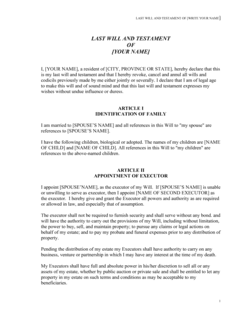
A will is a legally binding instrument executed with witnesses and notarization that governs the distribution of probate assets after death. An estate plan is a broader organizational document that encompasses the will by reference and adds healthcare directives, power of attorney, digital assets, and executor instructions. The will is one formal output of a complete estate plan β€” not a substitute for one.

vs Business Succession Plan

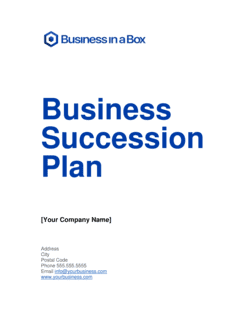
A business succession plan focuses specifically on who will take ownership and operational control of a business when an owner exits through retirement, death, or disability. An estate plan addresses the full scope of personal assets β€” including a business interest β€” alongside family, healthcare, and financial provisions. Business owners typically need both documents, with the succession plan referenced inside the estate plan.

vs Power of Attorney

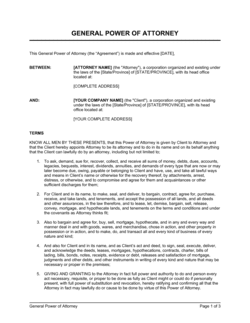
A power of attorney is a standalone legal instrument granting a specific agent authority to act on your behalf in financial or legal matters during your lifetime. An estate plan designates and documents the power of attorney agent but is not itself a legally operative POA. The estate plan tells the story; the executed POA document creates the legal authority.

vs Personal Financial Statement

A personal financial statement captures a snapshot of net worth β€” assets minus liabilities β€” for loan applications or financial planning. An estate plan uses similar asset and liability data but extends it with distribution instructions, beneficiary designations, and operational guidance for an executor. The personal financial statement feeds the asset inventory section of the estate plan.

Industry-specific considerations

Small business and entrepreneurship

Business succession planning, separation of personal and business assets, and buy-sell agreement coordination are all addressed within the business interests section of the plan.

Financial services and wealth management

Advisors use estate plan templates as a client onboarding and review tool to capture the full asset picture needed for portfolio alignment, trust recommendations, and tax-efficient distribution strategies.

Healthcare and elder care

Healthcare directives and proxy designations are critical deliverables for patients entering long-term care or facing serious illness, making the plan a standard intake document for care coordinators.

Legal and professional services

Estate attorneys use structured plan templates to gather client information before drafting formal instruments, reducing billable intake time and ensuring no asset class or designation is overlooked.

Template vs pro β€” what fits your needs?

PathBest forCostTime
Use the templateIndividuals with straightforward assets, a clear family structure, and no business interests or trust requirementsFree3–6 hours to complete
Template + professional reviewMarried couples with children, small business owners, or anyone with retirement accounts and life insurance policies$300–$800 for an attorney review of companion legal instruments1–2 weeks including attorney turnaround
Custom draftedHigh-net-worth individuals, blended families, business succession scenarios, cross-border assets, or trust structures$2,000–$10,000+ for full estate attorney engagement4–8 weeks

Glossary

Executor
The person named in an estate plan or will to carry out the deceased's instructions, settle debts, and distribute assets to beneficiaries.
Beneficiary
An individual or organization designated to receive assets, property, or account proceeds from an estate.
Power of Attorney (POA)
A legal authorization granting one person the authority to act on another's behalf in financial or legal matters during their lifetime.
Healthcare Directive
A document specifying a person's medical treatment preferences and naming a healthcare proxy to make decisions if they become incapacitated.
Probate
The court-supervised process of validating a will, settling debts, and distributing a deceased person's assets β€” a process that can be slow and costly without proper estate planning.
Trust
A legal arrangement where a trustee holds and manages assets on behalf of beneficiaries, often used to transfer assets outside of probate.
Guardian
A person legally appointed to care for a minor child or dependent adult if the primary caregiver becomes unable to do so.
Letter of Instruction
A non-binding companion document to a will or estate plan that provides practical guidance β€” funeral wishes, account locations, and personal messages β€” to the executor and family.
Intestate
Dying without a valid will or estate plan, leaving asset distribution to be determined by state or provincial default succession laws.
Digital Assets
Online accounts, cryptocurrency holdings, domain names, and intellectual property stored digitally that must be inventoried and access-enabled for an executor.

Part of your Business Operating System

This document is one of 3,000+ business & legal templates included in Business in a Box.

  • Fill-in-the-blanks β€” ready in minutes
  • 100% customizable Word document
  • Compatible with all office suites
  • Export to PDF and share electronically

Create your document in 3 simple steps.

From template to signed document β€” all inside one Business Operating System.
1
Download or open template

Access over 3,000+ business and legal templates for any business task, project or initiative.

2
Edit and fill in the blanks with AI

Customize your ready-made business document template and save it in the cloud.

3
Save, Share, Send, Sign

Share your files and folders with your team. Create a space of seamless collaboration.

Save time, save money, and create top-quality documents.

β˜…β˜…β˜…β˜…β˜…

"Fantastic value! I'm not sure how I'd do without it. It's worth its weight in gold and paid back for itself many times."

Managing Director Β· Mall Farm
Robert Whalley
Managing Director, Mall Farm Proprietary Limited
β˜…β˜…β˜…β˜…β˜…

"I have been using Business in a Box for years. It has been the most useful source of templates I have encountered. I recommend it to anyone."

Business Owner Β· 4+ years
Dr Michael John Freestone
Business Owner
β˜…β˜…β˜…β˜…β˜…

"It has been a life saver so many times I have lost count. Business in a Box has saved me so much time and as you know, time is money."

Owner Β· Upstate Web
David G. Moore Jr.
Owner, Upstate Web

Run your business with a system β€” not scattered tools

Stop downloading documents. Start operating with clarity. Business in a Box gives you the Business Operating System used by over 250,000 companies worldwide to structure, run, and grow their business.

Free Forever PlanΒ Β·Β No credit card required