Incorporation and Bylaws Templates
★★★★★4.7from 280+ reviews· Trusted by 20M+ businesses
Form your corporation, nonprofit, LLC, or partnership with the right governing documents from day one.
WordEditable onlinePDF41+ incorporation and bylaws templates
Other Legal Agreements categories
Corporation formation documents
Bylaws and internal governance
LLC and partnership documents
More incorporation and bylaws templates
250K+Clients
20M+Free users
20+Years
190+Countries
10,000+Law firms
50M+Downloads
Trusted across review platforms
- Capterra★★★★☆4.649 reviews
- G2★★★★☆4.713 reviews
- GetApp★★★★☆4.649 reviews
- Google Play★★★★☆4.6179 ratings
- Google Reviews★★★★☆4.567 reviews
Frequently asked questions
What is the difference between articles of incorporation and bylaws?
Articles of Incorporation are the public filing submitted to the government that legally creates the corporation. Bylaws are the private internal rules that govern how the corporation operates after it exists. You cannot have bylaws without first having articles on file, and the articles take legal precedence if the two ever conflict. Both documents are essential and serve entirely different functions.
Do I need bylaws if I form an LLC?
LLCs do not use bylaws. The equivalent governing document for an LLC is an Operating Agreement, which sets out member rights, profit-sharing, voting, and management structure. Even in states that do not legally require an operating agreement, having one protects members and preserves the LLC's liability shield.
Can I incorporate without a lawyer?
For a straightforward single-jurisdiction corporation with a simple capital structure, a high-quality template is often sufficient. Consider engaging a lawyer when the entity involves multiple share classes, foreign founders, regulated industries, or complex investor rights. A brief legal review typically costs less than correcting a defective filing later.
What happens if my bylaws conflict with state law?
State corporate statutes override conflicting bylaw provisions. Courts in most jurisdictions will enforce state law and treat the conflicting bylaw clause as void, which can create governance gaps the founders didn't intend. Always verify that your bylaws comply with the corporation laws of the state or province where you are incorporated.
How do I change a corporation's bylaws after adoption?
In most corporations, the board of directors can amend the bylaws by passing a board resolution — use a Board Resolution Approving Amendments of Bylaws for this purpose. Some amendments (such as changes to shareholder voting rights) may require a shareholder vote in addition to board approval, depending on your existing bylaws and applicable state law.
What is a pre-incorporation agreement and when do I need one?
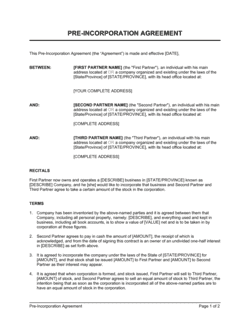
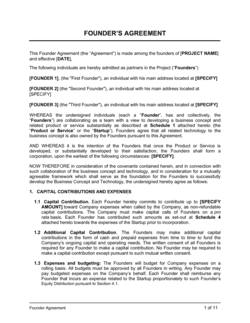
A pre-incorporation agreement records the commitments, contributions, and understandings among founders before the corporation legally exists. It is useful whenever two or more people are working together to form a company and need to document equity splits, initial capital contributions, and roles before the first filing is complete.
Are articles of incorporation public record?
Yes, in virtually every jurisdiction. Once filed and approved, articles of incorporation become part of the public record maintained by the state, provincial, or national business registry. Bylaws, by contrast, are internal documents and are not publicly filed in most jurisdictions.
What is the difference between a for-profit and nonprofit incorporation?
For-profit corporations are formed to generate profit for shareholders and may distribute earnings as dividends. Nonprofit corporations are formed for a public, charitable, religious, or educational purpose and typically cannot distribute profits to members. Nonprofits require specific language in their articles regarding purpose and asset distribution upon dissolution, which is necessary to qualify for tax-exempt status.
Incorporation and Bylaw vs. related documents
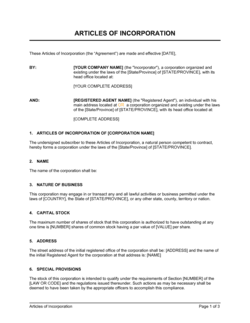
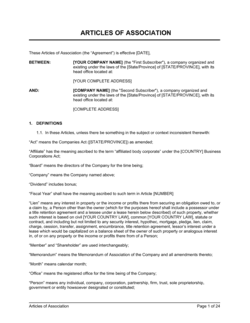
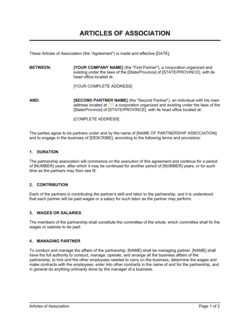
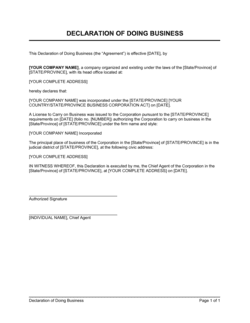
Articles of Incorporation and Articles of Association serve the same purpose — they are the founding documents filed to legally create a company — but the terminology differs by jurisdiction. "Articles of Incorporation" is standard in the United States and Canada; "Articles of Association" is the common term in the UK, Australia, and many other common-law countries. Both set out the entity's name, purpose, registered address, and share structure. Use whichever form applies to the jurisdiction in which you are incorporating.
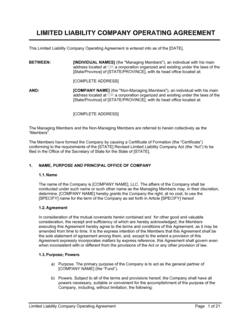
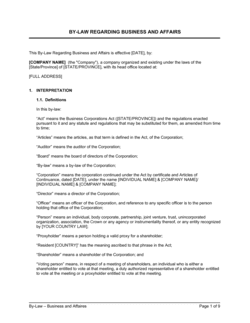
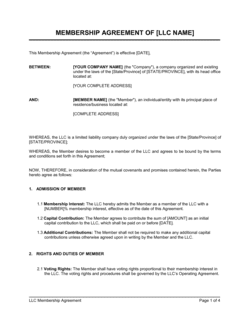
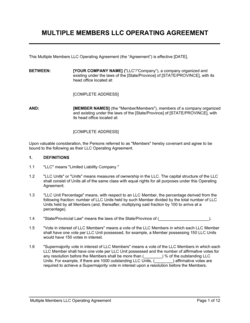
Bylaws govern corporations; an operating agreement serves the same governance function for LLCs. Both establish internal rules for management, voting, and profit-sharing, but operating agreements are specific to the LLC structure and typically give members more flexibility than the statutory defaults would allow. If you are forming an LLC, you need an operating agreement, not bylaws.
Bylaws are a public-facing corporate governance document that applies to the company as a whole; a shareholders agreement is a private contract between specific shareholders governing their rights and obligations among themselves. Bylaws set the rules of the company; a shareholders agreement protects individual investors. Growing companies typically maintain both documents.
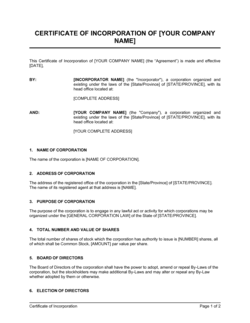
Articles of Incorporation is the document you submit to the state or provincial authority to request incorporation. A Certificate of Incorporation (or Certificate of Formation) is the receipt the government issues confirming the entity was approved and now legally exists. You draft the Articles; the government issues the Certificate. Both documents together form the legal birth record of the corporation.
Key clauses every Incorporation and Bylaw contains
Across all incorporation and bylaws documents, the same core provisions appear regardless of entity type — the language and requirements vary by jurisdiction, but the structure is consistent.
- Entity name and principal office. Identifies the legal name of the entity and the address of its registered office or agent.
- Purpose clause. Describes what the entity is formed to do; nonprofits require specific public-benefit language.
- Authorized shares or capital structure. States the number, class, and par value of shares the corporation is authorized to issue.
- Incorporators and initial directors. Names the person(s) filing the document and, in bylaws, the initial board members.
- Meeting and quorum rules. Establishes how often the board and shareholders meet and the minimum attendance required to act.
- Voting rights and thresholds. Defines who can vote, how many votes each share carries, and what majority is needed for different decisions.
- Officer roles and duties. Designates the required officer positions (President, Secretary, Treasurer) and their responsibilities.
- Amendment procedure. Sets out the process and approval threshold required to change the bylaws or articles in the future.
- Dissolution clause. Specifies what happens to assets and obligations if the entity is wound up or dissolved.
How to write incorporation and bylaws documents
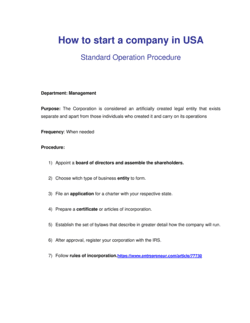
Incorporation documents follow a predictable sequence — choose your entity type, prepare the founding documents, file with the relevant authority, and adopt your internal governance rules.
1
Choose your entity type
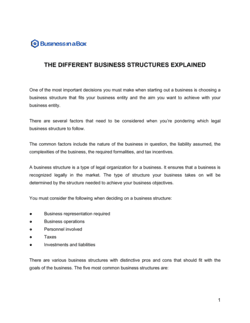
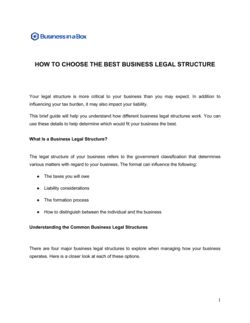
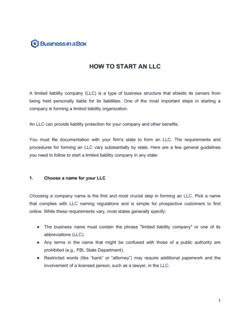
Decide between a for-profit corporation, nonprofit, LLC, or limited partnership — the choice determines which documents you need.
2
Draft the articles or certificate of incorporation
State the entity name, registered address, purpose, authorized shares, and incorporator details as required by the filing jurisdiction.
3
Identify and designate initial directors
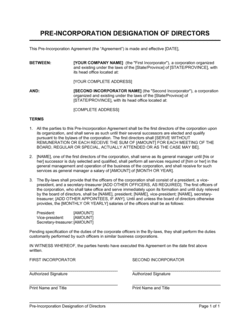
Use a Pre-Incorporation Designation of Directors to formally record who will serve on the first board before the entity is registered.
4
File with the appropriate government authority
Submit your articles to the state, provincial, or national business registry and pay the required filing fee.
5
Adopt bylaws or an operating agreement at the first meeting
Once incorporated, the initial board or members formally adopt the governing rules that will control day-to-day operations.
6
Issue shares and record ownership
Authorize and issue shares to founders and investors, documenting the capital structure and any preferred share terms.
7
Pass any required board resolutions
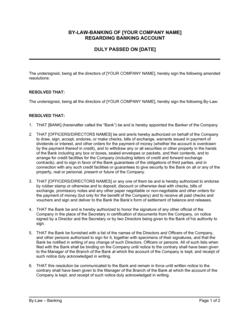
Use board resolutions to approve banking arrangements, authorize signatories, and confirm any amendments to bylaws going forward.
8
Store all founding documents securely
Keep executed originals of all incorporation documents, bylaws, share certificates, and board resolutions in a corporate minute book.
At a glance
- What it is
- Incorporation documents are the legal filings that bring a business entity into existence, while bylaws are the internal rules that govern how it operates. Together, they define the entity's structure, ownership, and decision-making authority.
- When you need one
- Any time you form a corporation, nonprofit, LLC, or limited partnership, or when an existing entity needs to amend its governing rules, update its name, or authorize a new financial arrangement.
Which Incorporation and Bylaw do I need?
The right document depends on your entity type and the stage of formation you're in. Match your situation below to find the template you need.
Your situation
Recommended template
Filing to create a new for-profit corporation with the state
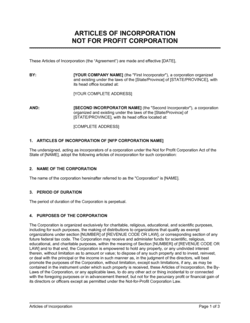
The foundational filing that legally creates a corporation under state law.Setting internal governance rules for a newly formed corporation
Establishes meeting procedures, officer roles, and voting rules for the board.Forming a nonprofit or charitable organization
Tailored for nonprofits with the required public-benefit and dissolution language.Writing internal rules for a nonprofit's board and operations
Covers nonprofit-specific governance including board composition and donor restrictions.Structuring and launching a new LLC with multiple members
Defines member roles, profit-sharing, voting rights, and management structure.Coordinating founder decisions before the corporation is legally formed
Records commitments made by founders before the entity formally exists.Raising capital from investors through a limited partnership structure
Discloses terms and risks to prospective limited partners in compliance with securities norms.Amending a corporation's bylaws after a board vote
Documents the board's formal approval of bylaw changes as required by corporate records.Glossary
- Articles of Incorporation
- The founding document filed with a government authority to legally create a corporation.
- Bylaws
- The internal rules adopted by a corporation governing its management, meetings, and officer roles.
- Certificate of Incorporation
- The government-issued document confirming that a corporation has been legally formed.
- Registered agent
- A person or entity designated to receive official legal and government correspondence on behalf of the corporation.
- Quorum
- The minimum number of directors or shareholders required to be present for a meeting to conduct official business.
- Authorized shares
- The maximum number of shares a corporation is permitted to issue, as specified in the articles of incorporation.
- Operating agreement
- The governance document for an LLC that defines member rights, profit-sharing, and management rules.
- Incorporator
- The person who signs and files the articles of incorporation on behalf of the new entity.
- Par value
- The nominal minimum price assigned to a share of stock in the articles of incorporation.
- Minute book
- A physical or digital record keeping all founding documents, meeting minutes, resolutions, and share certificates for a corporation.
- Board resolution
- A formal written record of a decision made by a corporation's board of directors.
- Dissolution clause
- A provision specifying how the entity's assets and liabilities are handled if the business is wound up and closed.
What is an incorporation and bylaws document?
Incorporation documents are the legal filings that bring a business entity into formal existence. The most common is the Articles of Incorporation — the document submitted to a state, provincial, or national authority that transforms a group of founders and their intentions into a recognized legal entity with its own rights and liabilities. Related filings include the Certificate of Incorporation (the government's confirmation that formation was approved), Articles of Association (the equivalent in many non-US jurisdictions), and pre-incorporation agreements that record founder commitments before the entity is registered.
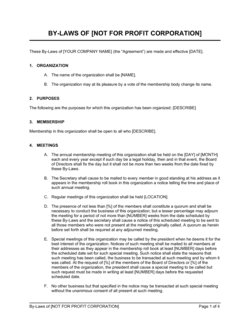
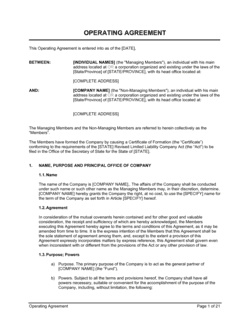
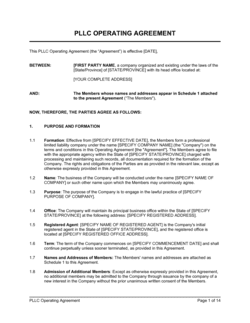
Bylaws are the internal rulebook adopted by the corporation once it legally exists. They govern how the board meets and votes, what roles officers hold, how shares are issued and transferred, and what procedures apply when the rules themselves need to change. For LLCs, an Operating Agreement serves the same function. For limited partnerships, a Limited Partnership Agreement governs the relationship between general and limited partners. Together, the founding filing and the governing document form the legal and operational backbone of any business entity.
When you need incorporation and bylaws documents
You need these documents at the moment of formation — and again whenever the entity's structure, name, or rules change materially. Waiting until a dispute arises or an investor requests records almost always means working backwards under pressure.
Common triggers:
- Launching a new for-profit corporation and filing with the state or provincial registry
- Forming a nonprofit or charitable organization that needs tax-exempt status
- Structuring a new LLC with multiple founding members and defined profit-sharing
- Creating a limited partnership to pool investor capital for a real estate or business venture
- Onboarding new investors who require clean corporate records before wiring funds
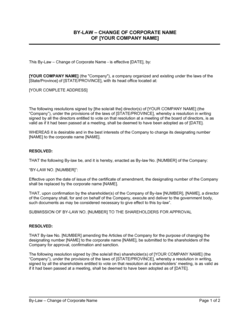
- Renaming a corporation and needing a bylaw to formally authorize the change
- Amending existing bylaws after a board vote to reflect updated governance practices
- Preparing a company for acquisition, where buyers will conduct full document due diligence
Deficient or missing formation documents are one of the most common reasons a corporate liability shield is challenged, an investor delays closing, or a bank refuses to open a business account. A complete, properly executed set of incorporation and bylaws documents is not administrative overhead — it is the legal foundation every other business agreement depends on.
Award-winning platform
- Great Place to Work 2025
- BIG Award — Product of the Year 2025
- Smartest Companies 2025
- Global 100 Excellence 2026
- Best of the Best 2025