Pre-Incorporation Designation of Directors Template

Free Word download • Edit online • Save & share with Drive • Export to PDF

1 page20–30 min to fillDifficulty: StandardSignature requiredLegal review recommended
Learn more ↓
FreePre-Incorporation Designation of Directors Template

At a glance

What it is
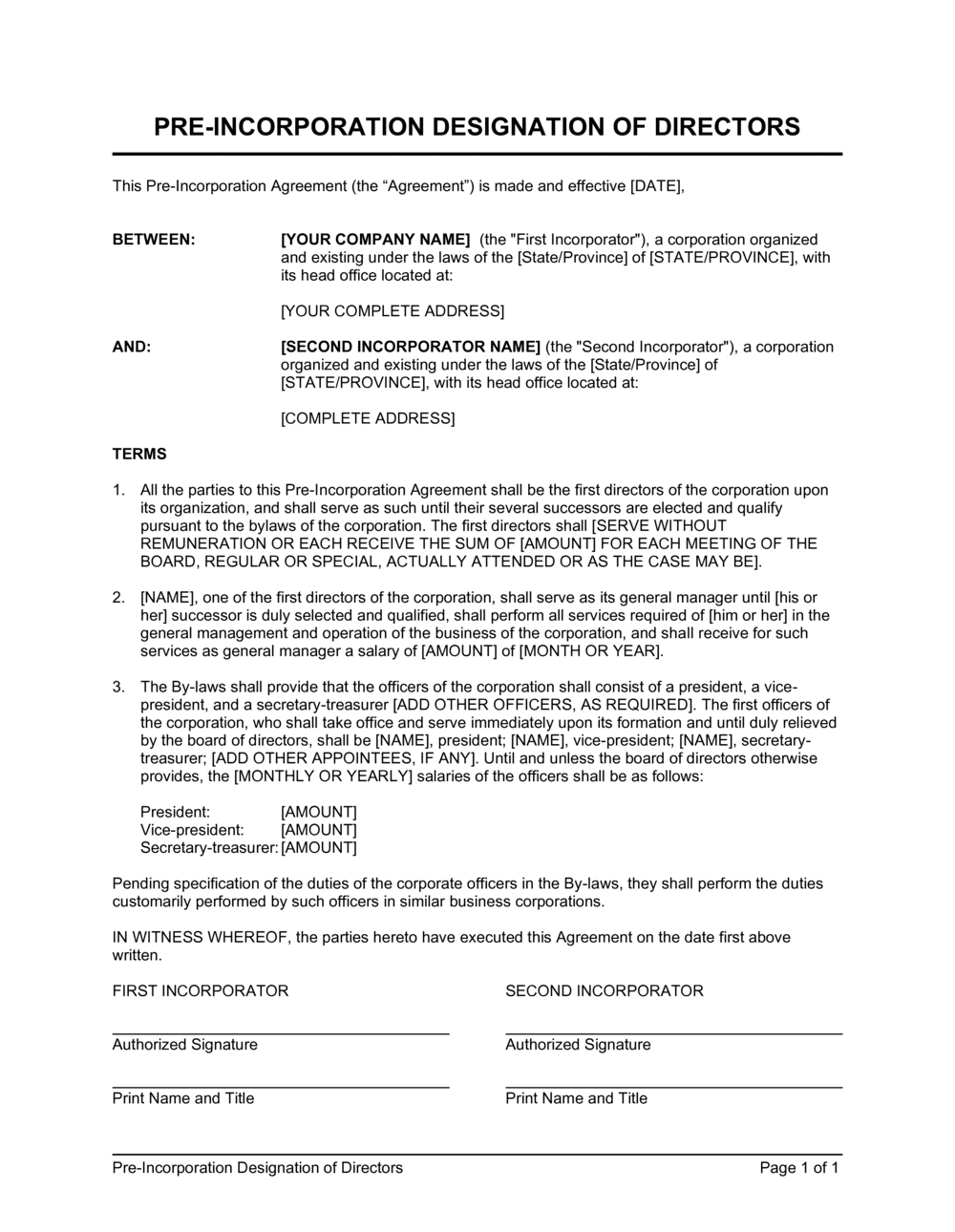
A Pre Incorporation Designation of Directors is a formal document signed by the incorporators or promoters of a company before the certificate of incorporation is issued, identifying the individuals who will serve as the company's initial board of directors. This free Word download gives you a structured, legally oriented starting point you can edit online and export as PDF to accompany your articles of incorporation filing.
When you need it
Use it when you are in the process of forming a corporation and need to officially record the founding directors' names, consent, and authority before the company legally exists. Many state and provincial incorporation statutes require or strongly recommend a written designation at this stage to ensure the directors are properly authorized to act on the company's behalf from the moment incorporation is complete.
What's inside
The document covers the proposed company name and jurisdiction of incorporation, the names and addresses of each designated director, their written consent to serve, the incorporators' authority and signatures, and any conditions or restrictions on the directors' authority pending full incorporation. It also records the effective date of designation and the anticipated incorporation date.

What is a Pre Incorporation Designation of Directors?

A Pre Incorporation Designation of Directors is a formal legal document signed by the incorporators of a company — before the certificate of incorporation is issued — that identifies the individuals who will serve as the initial board of directors from the moment the corporation comes into legal existence. It records each director's full legal name and address, captures their individual written consent to assume the role and its associated fiduciary duties, and establishes the scope of the board's authority to act during the organizational period immediately following incorporation. Rather than leaving the founding board's appointment implicit or scattered across multiple formation documents, this designation creates a single authoritative record that sits at the foundation of the corporation's governance history.

Why You Need This Document

Without a pre incorporation designation of directors, a newly formed corporation faces an immediate governance gap: the company legally exists but has no formally documented board with clear authority to open bank accounts, execute contracts, adopt bylaws, or call the first organizational meeting. That gap creates real operational delays and exposes the promoters to ongoing personal liability for any pre-incorporation contracts they signed on the company's behalf — contracts that remain the promoter's personal obligation until the board formally ratifies them. Investors conducting due diligence on early-stage companies routinely request the full incorporation package as part of their legal review; a missing or improperly executed director designation signals sloppy corporate hygiene and can slow or derail a funding round. Filing this document alongside the articles of incorporation ensures the board is properly appointed, each director's consent is on record, and the corporation has a clean, defensible governance trail from its very first day of existence.

Which variant fits your situation?

If your situation is…Use this template
Forming a for-profit corporation with multiple founding shareholdersPre Incorporation Designation of Directors
Appointing a sole director for a single-member corporationSole Director Designation Form
Establishing a nonprofit with a founding boardNonprofit Board of Directors Designation
Organizing a corporation and needing shareholders' agreement simultaneouslyShareholders Agreement
Recording all pre-incorporation actions including promoter obligationsPre Incorporation Agreement
Formally organizing the board after incorporation is completeFirst Board of Directors Meeting Minutes
Adopting bylaws and ratifying pre-incorporation acts at first meetingCorporate Bylaws

Common mistakes to avoid

❌ Executing the designation after articles are filed

Why it matters: A post-filing designation suggests it was created retroactively, which can undermine its legal standing and raises red flags during due diligence for investors or lenders.

Fix: Sign and date the designation on the same day as or before submitting the articles of incorporation, then place both documents in the corporate records book together.

❌ Omitting individual director consents

Why it matters: Without each director's written consent, there is no evidence they knowingly accepted fiduciary duties — a court or regulator may find the appointment invalid, leaving corporate decisions vulnerable to challenge.

Fix: Include a separate consent-to-serve signature block for each director and collect individual signatures before the document is filed.

❌ Ignoring director residency requirements

Why it matters: Several jurisdictions require a minimum percentage of directors to be local residents. Designating a board that fails this test can delay incorporation approval or require an immediate amendment.

Fix: Check the residency rules for the specific incorporation jurisdiction before finalizing the director list. Adjust the composition or use a different jurisdiction if the requirement cannot be met.

❌ Failing to ratify pre-incorporation contracts at the first board meeting

Why it matters: Without formal ratification, pre-incorporation contracts remain the personal liability of the promoters who signed them, not the corporation's — exposing founders to personal financial risk.

Fix: Prepare a schedule of all pre-incorporation obligations and include a ratification resolution as a standing agenda item for the first organizational board meeting.

❌ Using a trade name instead of the proposed legal entity name

Why it matters: If the name in the designation does not match the name in the articles exactly, the designation may not be recognized as belonging to the incorporated entity, creating a clean-up requirement.

Fix: Confirm the exact proposed legal name — including punctuation and abbreviations such as 'Inc.' or 'Corp.' — before inserting it in any pre-incorporation document.

❌ Leaving the director term clause undefined

Why it matters: Without a defined term, the initial directors' tenure is ambiguous after incorporation, potentially creating disputes about who has authority to call the first shareholder meeting or elect replacement directors.

Fix: Include an explicit term clause stating directors serve from incorporation until the first annual meeting of shareholders or until successors are elected and qualified.

The 10 key clauses, explained

Proposed Company Identification

In plain language: States the full proposed name of the corporation-to-be-formed, the jurisdiction of intended incorporation, and the anticipated incorporation date.

Sample language
The undersigned incorporators intend to form a corporation under the name '[PROPOSED COMPANY NAME]' pursuant to the laws of [STATE/PROVINCE], with an anticipated incorporation date on or about [DATE].

Common mistake: Using a trade name or doing-business-as name rather than the exact proposed legal name. If the name differs from what is filed, the designation may not match official corporate records, creating a clean-up problem.

Incorporator Authority

In plain language: Identifies who is acting as incorporator, confirms their authority to make the designation, and states that the designation is made in anticipation of and contingent on successful incorporation.

Sample language
The undersigned, acting as incorporator of [PROPOSED COMPANY NAME], hereby designates the following individuals to serve as directors of the Corporation upon the issuance of the certificate of incorporation.

Common mistake: Failing to confirm the designation is contingent on actual incorporation. If the company is never incorporated, an unconditional designation can create ambiguous authority claims.

Director Designations (Name and Address)

In plain language: Lists each designated director by full legal name and residential or business address, creating an unambiguous record of who is being appointed.

Sample language
Director 1: [FULL LEGAL NAME], residing at [ADDRESS], [CITY], [STATE/PROVINCE], [ZIP/POSTAL CODE]. Director 2: [FULL LEGAL NAME], residing at [ADDRESS], [CITY], [STATE/PROVINCE], [ZIP/POSTAL CODE].

Common mistake: Using nicknames or informal names instead of legal names. Corporate registries match against government-issued identification — a mismatch can delay director filings or void the designation.

Consent to Serve

In plain language: Each designated director signs to confirm they accept the appointment, understand their fiduciary obligations, and agree to act as a director from the moment the corporation is formed.

Sample language
I, [DIRECTOR NAME], hereby consent to serve as a director of [PROPOSED COMPANY NAME] upon its incorporation and agree to discharge the duties of a director in accordance with applicable law.

Common mistake: Collecting a single omnibus signature from the incorporator rather than individual consents from each director. Courts and regulators look for individualized acceptance as evidence each director knowingly assumed fiduciary duties.

Term and Initial Director Status

In plain language: Specifies that the designated directors serve as initial directors from the date of incorporation until the first annual meeting at which directors are elected, or until their successors are duly elected.

Sample language
Each Director designated herein shall hold office from the date of incorporation until the first annual meeting of shareholders or until their successor is duly elected and qualified, whichever occurs first.

Common mistake: Omitting the term clause entirely, leaving the initial directors' tenure undefined. Without it, the period of their authority before the first shareholder election is legally ambiguous.

Director Authority and Limitations

In plain language: Defines the scope of authority the initial directors hold — typically full board authority — and notes any restrictions that apply during the pre-organizational period or until bylaws are adopted.

Sample language
The Directors shall have authority to take all actions necessary to organize the Corporation, including adopting bylaws, opening bank accounts, and ratifying pre-incorporation contracts, subject to applicable law and any restrictions set forth in the articles of incorporation.

Common mistake: Granting unlimited authority without referencing the articles of incorporation or applicable statute. This can conflict with restrictions embedded in the articles, creating governance inconsistency from day one.

Ratification of Pre-Incorporation Acts

In plain language: Records that the directors, once the company is formed, authorize ratification of any contracts or obligations entered into by the promoters on the company's behalf before incorporation.

Sample language
Upon incorporation, the Board of Directors is authorized and directed to consider and ratify any contracts, commitments, or obligations entered into by the promoters on behalf of [PROPOSED COMPANY NAME] prior to the date of incorporation, to the extent permitted by applicable law.

Common mistake: Assuming ratification is automatic. Without an explicit clause or a subsequent board resolution, pre-incorporation contracts may remain the personal liability of the promoter rather than binding on the corporation.

Registered Office and Agent

In plain language: Identifies the corporation's registered office address and registered agent for service of process, as required by most incorporation statutes.

Sample language
The registered office of the Corporation shall be located at [REGISTERED OFFICE ADDRESS], [CITY], [STATE/PROVINCE]. The registered agent at such address shall be [REGISTERED AGENT NAME].

Common mistake: Using a personal home address as the registered office without confirming it is permissible in the jurisdiction. Many states require the registered address to be a physical street address and some impose additional requirements.

Governing Law

In plain language: States which jurisdiction's corporate statute governs the designation and the corporation's formation and governance.

Sample language
This Designation shall be governed by and construed in accordance with the laws of [STATE/PROVINCE/COUNTRY], including the [APPLICABLE CORPORATIONS ACT OR STATUTE].

Common mistake: Choosing a governing law that differs from the actual jurisdiction of incorporation. If the company is incorporated in Delaware but the designation references another state's statute, conflicts can arise over directors' duties and corporate procedures.

Incorporator Signatures and Date

In plain language: The execution block where all incorporators sign and date the document, confirming the designation is made voluntarily and with full authority.

Sample language
IN WITNESS WHEREOF, the undersigned incorporator(s) have executed this Pre Incorporation Designation of Directors as of [DATE]. Signature: _________________________ Name: [INCORPORATOR FULL NAME] Date: [DATE]

Common mistake: Dating the document after the articles of incorporation have already been filed. The designation should precede or accompany the filing — a later date suggests it was created retroactively, which can undermine its evidentiary value.

How to fill it out

  1. 1

    Enter the proposed company name and incorporation jurisdiction

    Use the exact name you intend to file in the articles of incorporation. Confirm the name is available by searching the target jurisdiction's corporate registry before completing this section.

    💡 Reserve the corporate name with the registry before drafting the designation — name availability can change within hours in active markets.

  2. 2

    Identify and list all designated directors

    Record each director's full legal name and current address. If a director is a resident of a different jurisdiction than the corporation, note this — some statutes impose residency requirements on a minimum number of directors.

    💡 Verify director residency requirements for your jurisdiction before finalizing the list. Canada's CBCA, for example, requires that at least 25% of directors be Canadian residents for most corporations.

  3. 3

    Collect individual consent signatures from each director

    Have each designated director sign and date their own consent-to-serve section. Do not allow a single person to sign on behalf of all directors unless a specific power of attorney is in place.

    💡 Use a digital signing tool to timestamp each director's consent independently — this creates an auditable record if the appointments are ever challenged.

  4. 4

    Define the initial directors' term and authority

    Confirm that initial directors serve from incorporation until the first annual meeting or until successors are elected. Specify any limits on their authority during the organizational phase, such as requiring unanimous board approval for commitments above a dollar threshold.

    💡 Cross-reference the authority clause with your draft articles of incorporation and bylaws to ensure they are consistent before signing.

  5. 5

    Address pre-incorporation contracts and promoter obligations

    List any known contracts or obligations already entered into by the promoters on the company's behalf. Include a ratification authorization so the board can formally adopt these at the first meeting.

    💡 Attach a schedule of known pre-incorporation contracts as an exhibit — this forces disclosure and creates a clean ratification record at the first board meeting.

  6. 6

    Complete the registered office and agent information

    Enter the registered office address and the name of the registered agent. Confirm the agent has agreed to serve and that the address is a valid physical location in the incorporation jurisdiction.

    💡 If you are using a registered agent service, obtain their written confirmation before inserting their details — agents sometimes change addresses without notifying clients.

  7. 7

    Execute incorporator signatures before filing

    All incorporators must sign and date the document before or simultaneously with filing the articles of incorporation. File a copy with your corporate records book alongside the articles.

    💡 Keep at least three executed originals: one for the corporate records book, one for each incorporator's personal records, and one to attach to the first board meeting minutes.

  8. 8

    Ratify at the first board meeting

    At the organizational meeting of the board of directors, pass a resolution confirming the designation, ratifying any pre-incorporation acts, and adopting the bylaws. Record this in the first meeting minutes.

    💡 The first board meeting should occur within 30 days of incorporation in most jurisdictions — delay beyond this window can create governance gaps.

Frequently asked questions

What is a pre incorporation designation of directors?

A pre incorporation designation of directors is a formal document signed by the incorporators of a company before it legally exists, identifying the individuals who will serve as the initial board of directors from the moment incorporation is complete. It records each director's name, address, and written consent to serve, and gives the board clear authority to act on the company's behalf immediately after the certificate of incorporation is issued. Most corporate statutes require or strongly recommend this designation to ensure the directors are properly authorized from day one.

Why is this document needed before incorporation?

Without a pre-incorporation designation, a newly formed corporation has no documented board in place at the moment it comes into existence. This creates a governance gap where no one has clear authority to open bank accounts, execute contracts, ratify promoter obligations, or call the first organizational meeting. The designation closes that gap and provides a clean paper trail from the first second of the company's legal life.

Who signs a pre incorporation designation of directors?

The document is signed by the incorporators — the individuals or entities who are filing the articles of incorporation — in their capacity as organizers of the corporation. Each designated director also signs individually to provide their written consent to serve. In a simple two-founder startup, the founders often act as both incorporators and designated directors, signing in both capacities.

Is a pre incorporation designation of directors legally required?

Requirements vary by jurisdiction. In the United States, many state corporation statutes — including Delaware's General Corporation Law — allow the incorporator to name initial directors in the articles of incorporation itself, making a separate designation optional but still useful as a standalone record. In Canada, the CBCA and most provincial acts require initial directors to be named at or before the time of filing. The UK and EU have their own formation procedures. Regardless of mandatory status, the document is considered best practice for maintaining clean corporate records.

How many directors must be designated before incorporation?

Minimum director requirements differ by jurisdiction and entity type. Most US states and Canadian provinces require at least one director for a private corporation. Public companies typically require a minimum of three. Some jurisdictions impose residency or independence requirements that affect how many and who can be designated. Confirm the minimum and any residency rules for your specific jurisdiction before completing the designation.

What happens to pre-incorporation contracts after the company is formed?

Pre-incorporation contracts are entered into by promoters on behalf of a company that does not yet exist. In most common-law jurisdictions, these contracts initially bind the promoter personally, not the company. Once incorporated, the company must formally ratify each pre-incorporation contract — typically through a board resolution at the first organizational meeting — to assume the obligation and release the promoter from personal liability. Without ratification, the promoter remains personally liable.

What is the difference between this document and the articles of incorporation?

The articles of incorporation are the primary formation document filed with a government authority to legally create the corporation — they cover the company's name, purpose, share structure, and registered agent. A pre incorporation designation of directors is a separate internal corporate document that specifically records who the founding directors are and secures their consent to serve. Some jurisdictions allow director names to appear in the articles, but a standalone designation provides a more detailed record and is typically placed in the corporate records book alongside the articles.

Does a pre incorporation designation of directors need to be notarized?

Notarization is generally not required for a pre incorporation designation of directors in most US states, Canadian provinces, or the UK. The document derives its authority from the signatures of the incorporators and the consenting directors, not from notarial certification. However, if the document will be used in a jurisdiction that requires authenticated corporate documents — or if a financial institution, investor, or regulatory authority requests notarization — obtaining a notarial seal adds an extra layer of evidentiary weight.

Can directors designated before incorporation be removed afterward?

Yes. Initial directors designated before incorporation typically serve only until the first annual meeting of shareholders, at which point shareholders elect the board going forward. Before that first meeting, initial directors can generally be removed by the incorporators or by a board resolution, depending on the jurisdiction and what the articles or bylaws provide. Any removal should be documented in a board or incorporator resolution and placed in the corporate records book to maintain a clean governance trail.

How this compares to alternatives

vs Pre Incorporation Agreement

A pre incorporation agreement governs the broader relationship and obligations among promoters and future shareholders before the company is formed — covering share allocations, capital contributions, and promoter duties. A pre incorporation designation of directors is narrower in scope, focused solely on identifying and securing the consent of the founding directors. Both documents are typically prepared together as part of a complete pre-incorporation package.

vs Articles of Incorporation

The articles of incorporation are the statutory filing that legally creates the corporation and are submitted to the government authority. The pre incorporation designation of directors is an internal corporate document that records the directors' identities and consents in greater detail than most articles require. The articles bring the company into existence; the designation ensures the board is properly documented from day one.

vs Minutes of the First Board of Directors Meeting

The first board meeting minutes record the actions taken by the initial directors after incorporation — adopting bylaws, ratifying pre-incorporation contracts, appointing officers, and authorizing banking. The pre incorporation designation of directors is the document that authorizes those directors to hold that first meeting at all. The designation must logically precede the first meeting minutes.

vs Shareholders Agreement

A shareholders agreement governs the ongoing relationship between shareholders — covering voting rights, share transfer restrictions, drag-along and tag-along rights, and dispute resolution. A pre incorporation designation of directors deals only with the appointment and consent of the founding board, not shareholder relationships. Both are needed for a fully documented incorporation, but they serve distinct governance functions.

Industry-specific considerations

Technology / SaaS

Investor-grade corporate hygiene from day one is essential for due diligence in seed and Series A rounds, making a clean pre-incorporation director designation a standard expectation.

Professional Services

Law firms, accounting practices, and consulting firms incorporating as professional corporations must designate licensed professionals as directors, with residency and licensing requirements adding complexity.

Healthcare / MedTech

Healthcare corporations in many jurisdictions require directors to meet professional licensing or residency criteria, making a carefully documented pre-incorporation designation critical to regulatory compliance from the outset.

Nonprofit / Social Enterprise

Founding board designations for nonprofits must often satisfy minimum board size requirements and may need to align with grant-maker governance standards before a charitable registration is approved.

Jurisdictional notes

United States

In most US states, including Delaware and Nevada, initial directors can be named directly in the articles of incorporation, making a standalone designation optional but recommended as a separate records document. Some states require each director to sign a written consent before acting. Delaware's General Corporation Law §108 specifically permits incorporators to name initial directors and to take organizational actions by written consent before the first meeting.

Canada

Under the Canada Business Corporations Act (CBCA) and most provincial equivalents, initial directors must be named in the articles of incorporation and each must file a signed consent to act as director (Form 3 under the CBCA). The CBCA also requires that at least 25% of directors be Canadian residents for most federally incorporated companies, a requirement that must be reflected in the designation. Quebec corporations follow similar rules under the Business Corporations Act (QCA).

United Kingdom

Under the UK Companies Act 2006, a private limited company must have at least one director who is a natural person, and initial directors are named in the IN01 incorporation application submitted to Companies House. A pre-incorporation designation serves as the supporting internal record. All directors must also complete a consent-to-act confirmation, and their details — including a correspondence address and service address — must be registered at Companies House.

European Union

EU member states have varying requirements for designating initial directors, governed by national company law rather than a single EU-wide statute. France, Germany, and Spain all require named directors or gérants at the point of registration, and in many member states a notarized deed of incorporation (acte authentique) is required. GDPR considerations apply to the personal data of directors recorded in pre-incorporation documents, particularly when those documents are filed with public registries.

Template vs lawyer — what fits your deal?

PathBest forCostTime
Use the templateSingle-jurisdiction incorporations with straightforward founding teams and no complex residency or licensing requirementsFree20–30 minutes
Template + legal reviewMulti-founder startups, companies incorporating in jurisdictions with director residency requirements, or any company expecting investor due diligence$200–$500 for a lawyer or incorporation service review1–3 days
Custom draftedMulti-jurisdiction formations, regulated industries such as healthcare or financial services, public companies, or any structure involving complex pre-incorporation promoter obligations$800–$2,500+3–7 days

Glossary

Incorporator
The individual or entity who signs and files the articles of incorporation to bring a corporation into legal existence.
Promoter
A person who organizes and takes actions on behalf of a company before it is legally incorporated, including entering contracts and raising initial capital.
Articles of Incorporation
The primary formation document filed with a government authority that legally creates a corporation, stating its name, purpose, share structure, and registered agent.
Designation
A formal written identification and appointment of named individuals to a role — in this context, to serve as directors upon and after incorporation.
Consent to Serve
A written acknowledgment by a named director confirming they agree to assume the duties and responsibilities of the directorship.
Board of Directors
The governing body of a corporation, responsible for overseeing management, approving major decisions, and acting in the best interests of shareholders.
Quorum
The minimum number of directors who must be present at a meeting for the board to conduct business and pass resolutions validly.
Registered Agent
A person or entity designated to receive official legal and government correspondence on behalf of the corporation in its state or province of incorporation.
Pre-Incorporation Contract
An agreement entered into on behalf of a company before it legally exists, which must typically be ratified by the company after incorporation to bind it.
Ratification
The post-incorporation act by which a corporation formally adopts and assumes responsibility for contracts or actions taken on its behalf before it existed.
Fiduciary Duty
The legal obligation of a director to act honestly, in good faith, and in the best interests of the corporation and its shareholders.

Part of your Business Operating System

This document is one of 3,000+ business & legal templates included in Business in a Box.

  • Fill-in-the-blanks — ready in minutes
  • 100% customizable Word document
  • Compatible with all office suites
  • Export to PDF and share electronically

Create your document in 3 simple steps.

From template to signed document — all inside one Business Operating System.
1
Download or open template

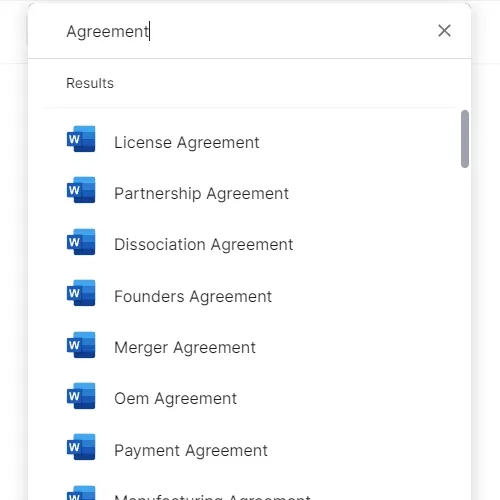
Access over 3,000+ business and legal templates for any business task, project or initiative.

2
Edit and fill in the blanks with AI

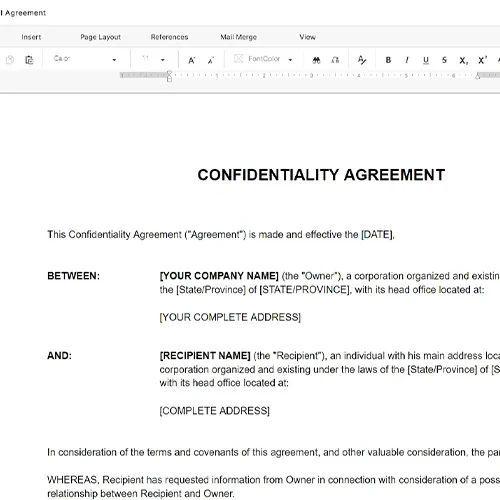
Customize your ready-made business document template and save it in the cloud.

3
Save, Share, Send, Sign

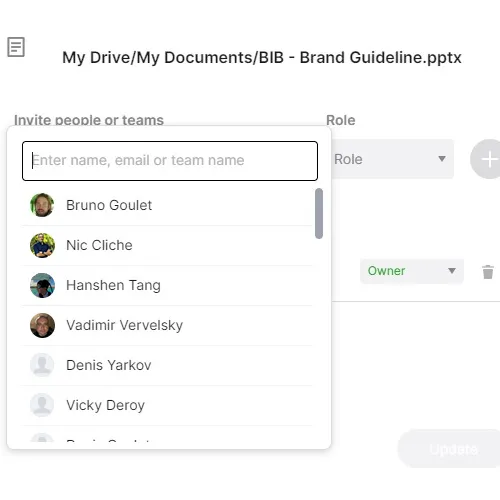
Share your files and folders with your team. Create a space of seamless collaboration.

Save time, save money, and create top-quality documents.

★★★★★

"Fantastic value! I'm not sure how I'd do without it. It's worth its weight in gold and paid back for itself many times."

Managing Director · Mall Farm
Robert Whalley
Managing Director, Mall Farm Proprietary Limited
★★★★★

"I have been using Business in a Box for years. It has been the most useful source of templates I have encountered. I recommend it to anyone."

Business Owner · 4+ years
Dr Michael John Freestone
Business Owner
★★★★★

"It has been a life saver so many times I have lost count. Business in a Box has saved me so much time and as you know, time is money."

Owner · Upstate Web
David G. Moore Jr.
Owner, Upstate Web

Run your business with a system — not scattered tools

Stop downloading documents. Start operating with clarity. Business in a Box gives you the Business Operating System used by over 250,000 companies worldwide to structure, run, and grow their business.

Free Forever Plan · No credit card required