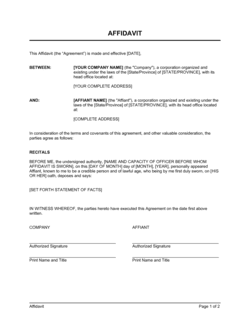
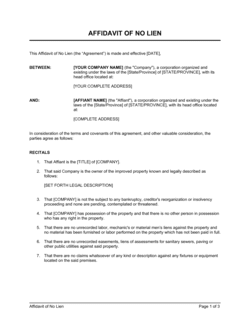
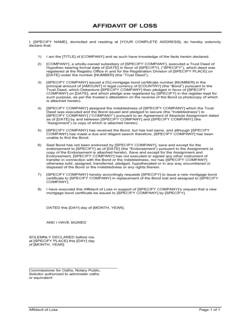
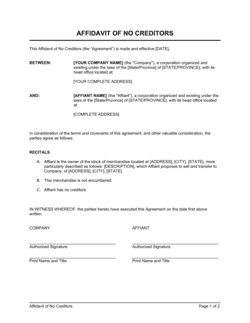
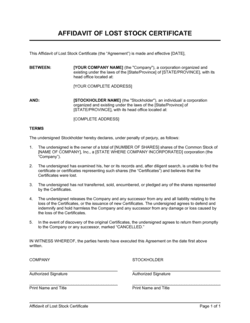
- Affidavit
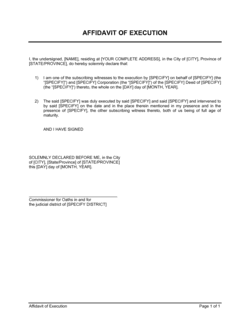
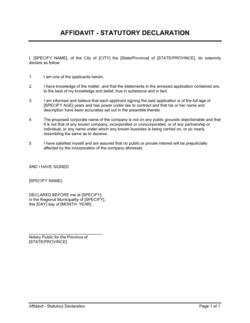
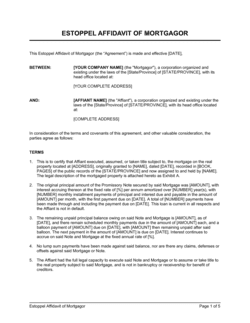
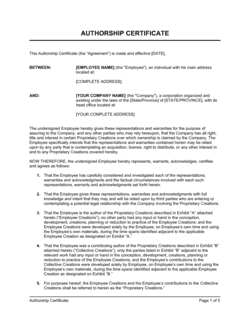
- A written statement of fact made under oath and signed before a notary public or other authorized officer, carrying legal weight equivalent to sworn testimony.
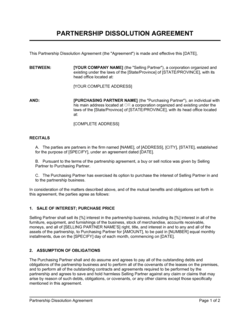
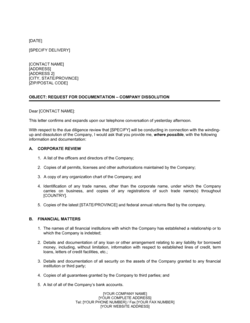
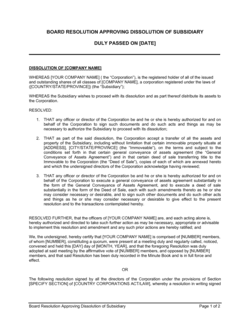
- Dissolution
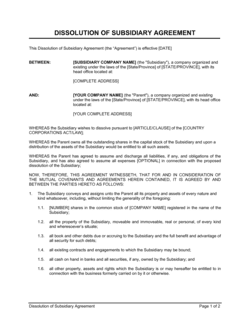
- The formal legal process of terminating a business entity's existence, including settling debts, distributing assets, and deregistering with the applicable government authority.
- Winding Up
- The operational phase of dissolution during which the entity collects receivables, pays creditors, liquidates assets, and distributes any remainder to owners before final deregistration.
- Petitioner
- The individual — typically an officer, director, managing member, or authorized partner — who signs and submits the dissolution petition on behalf of the entity.
- Articles of Dissolution
- The formal filing submitted to the state or provincial secretary of state that legally terminates the entity's registration; the affidavit petition typically precedes or accompanies this filing.
- Notarization
- Authentication of a signature by a commissioned notary public who verifies the signer's identity and witnesses the oath, required for affidavits submitted to courts or government agencies.
- Voluntary Dissolution
- Dissolution initiated by the owners or governing body of the entity through a formal vote, as opposed to dissolution compelled by a court order or regulatory authority.
- Statutory Minimum Notice
- The legally required period during which creditors and claimants must be notified of the dissolution before the entity can be fully deregistered — typically 30 to 120 days depending on jurisdiction.
- Residual Assets
- Property, cash, or other assets remaining after all debts and liabilities of the entity have been fully satisfied, available for distribution to equity holders.
- Certificate of Good Standing
- A document issued by the registrar confirming that an entity has met all filing and tax obligations — often required before a dissolution petition will be accepted.
- Registered Agent
- The designated individual or company authorized to receive legal and government correspondence on behalf of an entity, including dissolution-related notices.