1
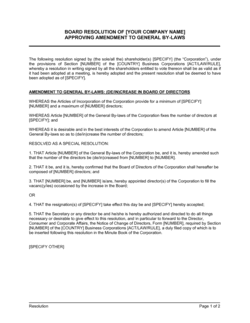
Enter the corporation's legal name and principal office
Use the exact legal name from your articles of incorporation — not a trade name or DBA. Enter the full registered address and the name of the registered agent in the state or province of incorporation.
💡 Cross-reference the name against your state or provincial corporate registry filing before signing to catch any discrepancy.
2
Set board size, terms, and election mechanics
Define a minimum and maximum board size, the term length for each director seat, and whether directors are elected by shareholders annually or classified into staggered terms.
💡 A classified board (e.g., three classes, each serving 3-year terms) makes hostile takeovers harder but slows board renewal — choose based on your ownership structure.
3
Define meeting frequency, notice periods, and quorum
Set the schedule for regular board meetings, the minimum advance notice for special meetings, and the quorum threshold. Specify whether meetings may be held by telephone or video conference.
💡 Add explicit language permitting electronic participation — courts have questioned quorum in jurisdictions where bylaws predate virtual meetings and are silent on the issue.
4
Draft the shareholder meeting and voting rights section
State the annual meeting date formula, the notice window for shareholders, the record date mechanism, and the vote threshold for routine versus fundamental resolutions.
💡 Use a majority-of-votes-cast standard (not majority of outstanding shares) for routine matters — it avoids quorum-like deadlocks when many shareholders are passive.
5
List officer titles and assign core duties
Name each required officer position, describe their primary responsibilities at a high level, and state who appoints and removes them. Keep descriptions brief — detail belongs in a separate board resolution or job description.
💡 Include a clause permitting one person to hold two officer roles (e.g., President and Secretary) to preserve flexibility for small or early-stage corporations.
6
Complete the conflict-of-interest and indemnification provisions
Fill in the disclosure and recusal procedure for interested transactions. In the indemnification clause, confirm the standard matches the maximum permitted under your jurisdiction's corporations statute.
💡 Check whether your jurisdiction requires advance advancement of legal expenses to be explicitly authorized in the bylaws — some do, and omitting it limits your ability to pay a director's defense costs before judgment.
7
Set the fiscal year and records-inspection rights
Enter the start and end dates of the fiscal year and the notice period shareholders must provide to request an inspection of financial records.
💡 If your corporation uses a non-calendar fiscal year, confirm the same year-end is reflected consistently in your tax filings, articles, and bank account agreements.
8
Execute and file in the corporate minute book
Have the incorporators or initial board members sign the bylaws at the organizational meeting. Record the adoption in the meeting minutes and file the signed bylaws in the corporate minute book.
💡 Some banks and investors require a certified copy of the bylaws — designate the Secretary as the authorized certifying officer in the bylaws themselves to streamline future requests.