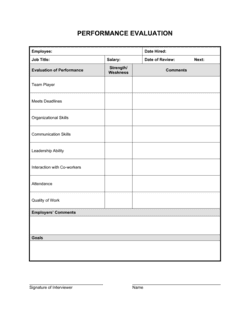
- Performance evaluation
- A structured, periodic assessment of how well an employee is meeting the requirements of their role.
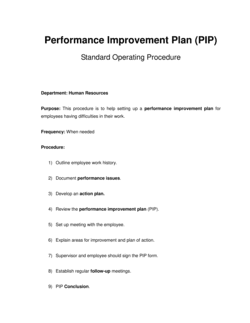
- Performance improvement plan (PIP)
- A formal corrective document that sets specific, time-bound targets for an employee whose performance falls below acceptable standards.
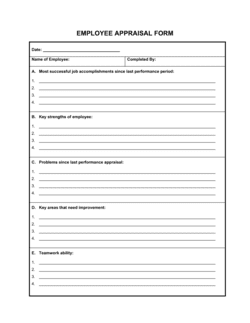
- Appraisal form
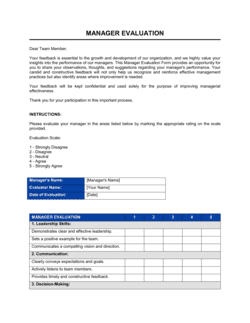
- The written document used to record ratings, comments, and goal-setting during a performance review.
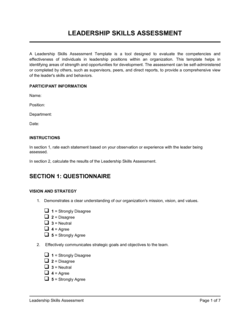
- Rating scale
- The scoring system applied to each performance criterion — for example, 1–5 numeric ratings or descriptors like 'meets expectations' and 'exceeds expectations.'
- Competency
- A specific skill, behavior, or attribute — such as communication, problem-solving, or leadership — used as a criterion in a performance review.
- SMART goals
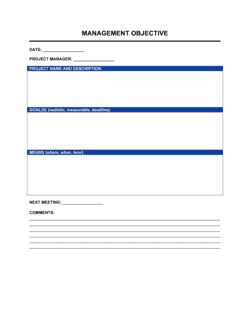
- Goals that are Specific, Measurable, Achievable, Relevant, and Time-bound, used to make performance targets unambiguous.
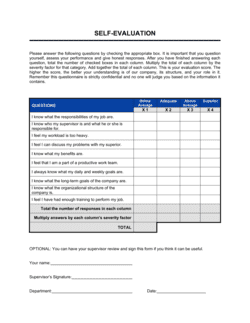
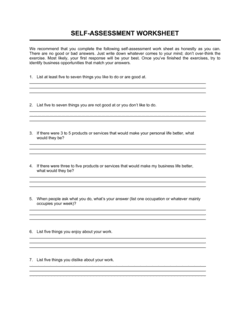
- Self-assessment
- The portion of an appraisal where the employee rates or comments on their own performance before or alongside the manager's evaluation.
- Development plan
- A documented commitment to training, coaching, or other support the organization will provide to help an employee grow or improve.
- 360-degree feedback
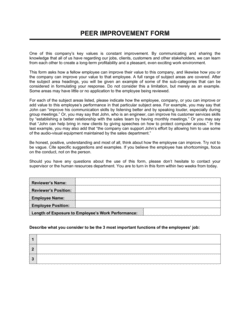
- A performance input method that gathers ratings from a manager, peers, direct reports, and sometimes customers, rather than the manager alone.
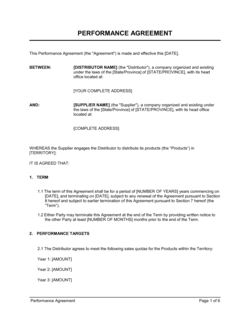
- Performance agreement
- A forward-looking contract between an employee and manager that documents agreed goals, responsibilities, and success criteria for a defined period.
- Review period
- The defined start and end dates of the performance cycle being assessed in a given appraisal.
- Acknowledgment signature
- A signature confirming that a performance review meeting took place and the employee received the feedback — not necessarily that they agree with the content.