- Competency Framework
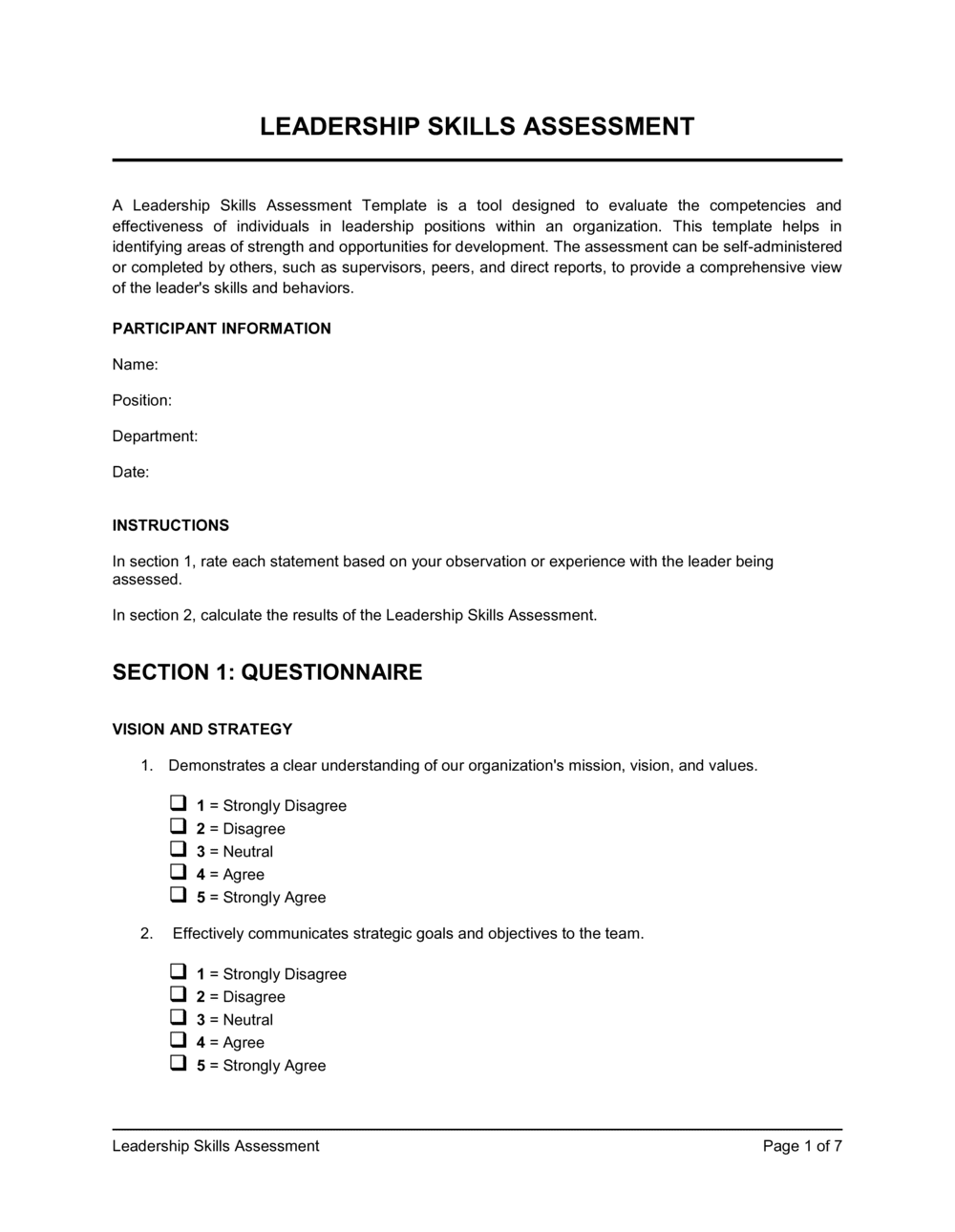
- A defined set of behaviors, skills, and knowledge attributes an organization uses to evaluate and develop its people consistently.
- Behavioral Anchor
- A specific, observable example of behavior that corresponds to a rating level on a competency scale, making evaluations more objective.
- Self-Assessment
- The section of the evaluation where the assessed leader rates their own competencies before the evaluator's scores are disclosed.
- 360-Degree Feedback
- A multi-source evaluation process that collects ratings from a leader's supervisor, peers, and direct reports simultaneously.
- Development Goal
- A specific, time-bound action the assessed leader commits to taking in order to strengthen an identified gap in their competency profile.
- Rating Scale
- A defined numerical or descriptive scale — typically 1–5 or 1–4 — used to score each competency with consistent meaning across assessors.
- Succession Planning
- The organizational process of identifying and developing internal candidates to fill key leadership roles when they become vacant.
- Calibration Session
- A meeting where multiple evaluators compare and align their ratings to reduce bias and ensure consistent standards across the organization.
- Individual Development Plan (IDP)
- A formal document outlining a leader's targeted learning objectives, action steps, timelines, and resources for professional growth.
- Acknowledgment Clause
- The signed section of the assessment form confirming that both the evaluator and the assessed leader have reviewed, discussed, and received a copy of the completed evaluation.
- Protected Characteristic
- An attribute — such as age, race, gender, religion, or disability — that employment law protects from being a basis for adverse employment decisions.