- Emotional Intelligence (EQ)
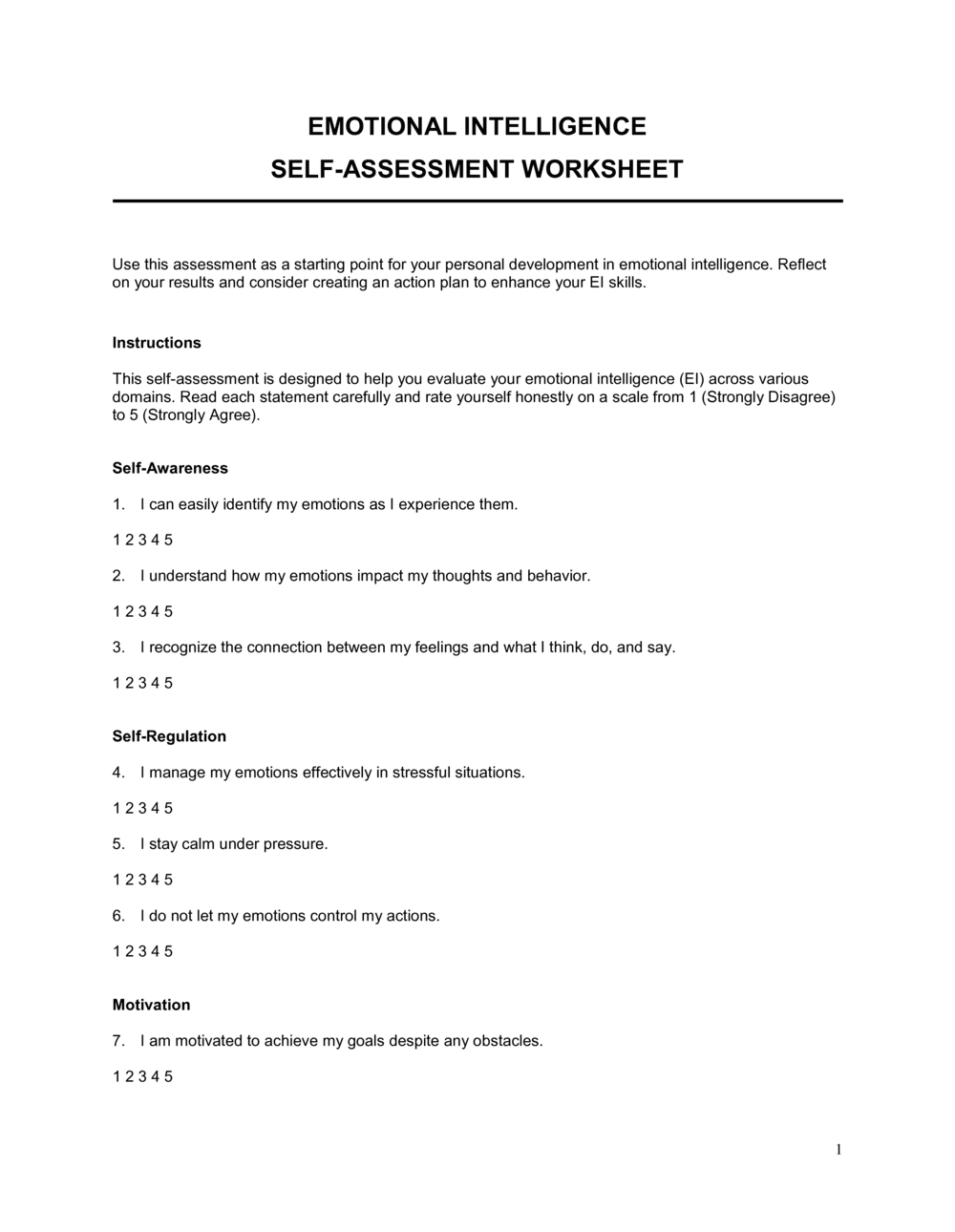
- The ability to recognize, understand, manage, and effectively use one's own emotions and the emotions of others in interpersonal interactions.
- Self-Awareness
- The capacity to accurately perceive your own emotions, strengths, weaknesses, and the effect your behavior has on other people.
- Self-Regulation
- The ability to control or redirect disruptive emotions and impulses and to adapt to changing circumstances without reactive behavior.
- Empathy
- The skill of sensing other people's emotions, understanding their perspective, and taking an active interest in their concerns.
- Social Skills
- Proficiency in managing relationships, building networks, finding common ground, and influencing others constructively.
- Intrinsic Motivation
- Drive to pursue goals for internal reasons — personal growth, mastery, or purpose — rather than for external rewards like salary or status.
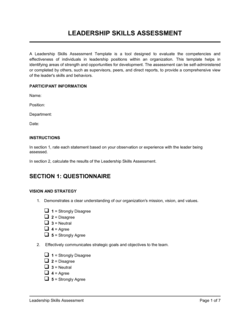
- Likert Scale
- A rating scale — typically 1 to 5 — used in self assessments to measure the degree to which a respondent agrees with a behavioral statement.
- Competency Domain
- A defined cluster of related skills or behaviors grouped together for assessment purposes — such as self-awareness or social skills in an EQ framework.
- Development Goal
- A specific, time-bound behavioral objective a respondent commits to in order to improve a identified EQ competency gap.
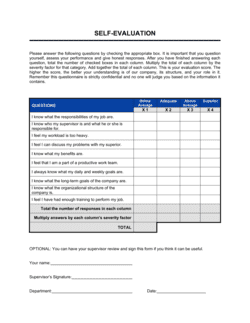
- Acknowledgment Signature
- A signature block confirming the respondent has completed the assessment honestly and that the results may be used for development planning purposes.