1
Identify the parties and confirm the review period
Enter the employee's full legal name, official job title, department, and the manager's name and title. Set the performance period start and end dates before drafting any goals.
💡 Match job titles exactly to the employment contract or HR system — inconsistencies between documents create confusion during formal performance proceedings.
2
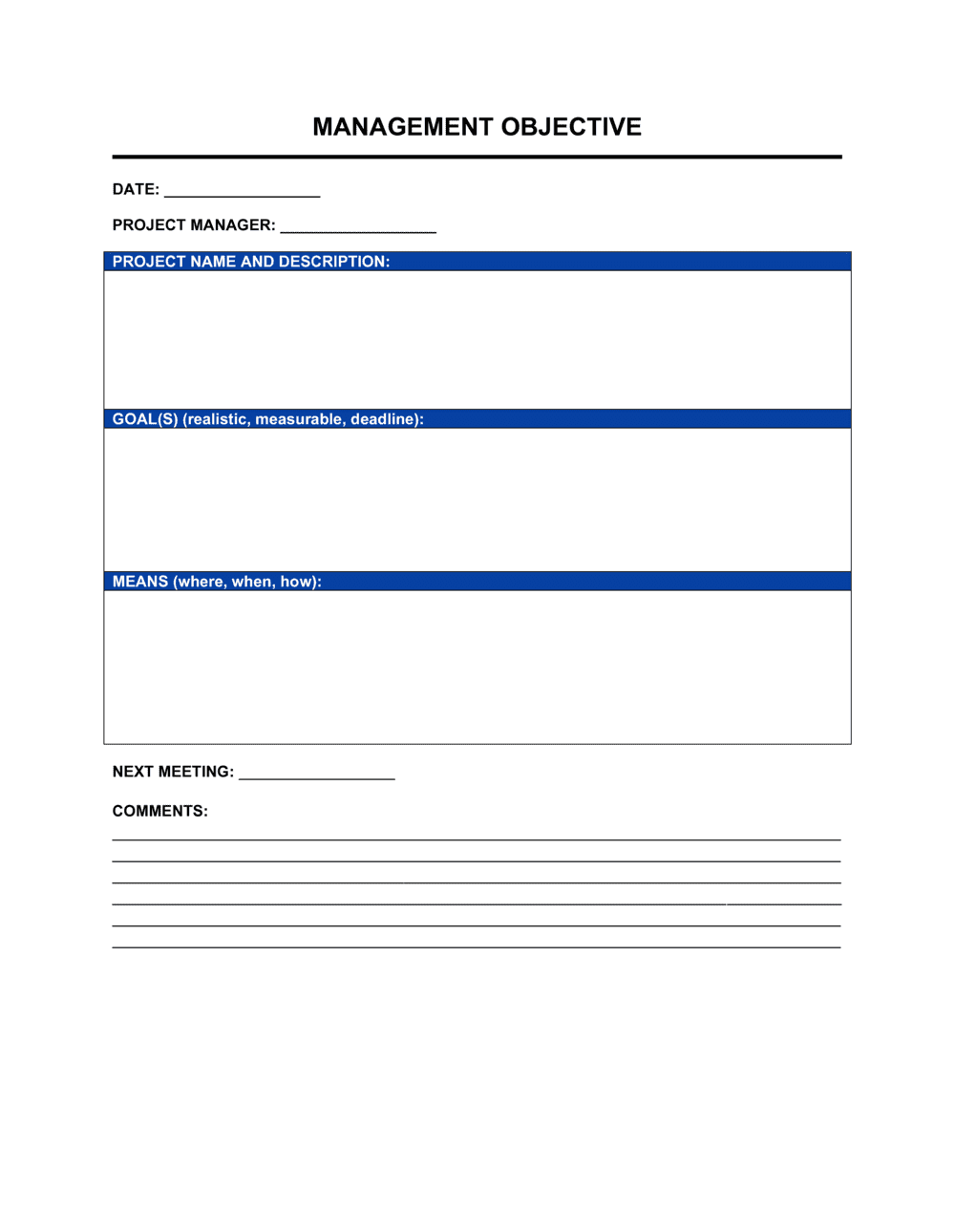
Draft no more than six goals using the SMART framework
Write each goal as a single, specific statement of what will be accomplished by when. Include a measurable outcome — a number, percentage, deliverable, or quality threshold — for each goal.
💡 If you find yourself writing more than six goals, the employee's role scope is likely too broad for a single agreement — consider a separate goal document for each major area of responsibility.
3
Define a clear performance standard for each goal
Below each goal statement, write the exact threshold that constitutes full achievement. Avoid ranges — pick a single, unambiguous number or completion criterion.
💡 Test each standard by asking: 'Could a third party who was not in this meeting determine whether this standard was met?' If the answer is no, rewrite it.
4
Set interim milestones and the checkpoint schedule
For each goal, add at least one interim milestone date so progress can be assessed before the final deadline. Then enter the dates for scheduled progress review meetings.
💡 Monthly checkpoints for quarterly goals, and quarterly checkpoints for annual goals, are the minimum needed to catch and correct underperformance before it becomes unrecoverable.
5
Document the resources and support the company commits to provide
List any budget, tools, training, or access the manager agrees to provide to enable goal achievement. Include a delivery date for each commitment.
💡 Be specific — 'access to the analytics platform by March 1' is enforceable; 'necessary resources' is not.
6
Fill in the accountability and consequences section
State the specific consequence for failing to meet goals — PIP, compensation impact, or documented warning — calibrated proportionately to the goal's importance and the severity of shortfall.
💡 Apply the same consequence language consistently across roles at the same level — inconsistent application is one of the leading causes of wrongful termination and discrimination claims.
7
Review the at-will disclaimer and employment terms reference
Confirm the at-will disclaimer is present and references the employee's existing employment agreement by date. Adjust the language if local law (Canada, UK, EU) does not recognize at-will employment.
💡 In Canadian provinces, replace at-will language with a reference to notice obligations under the applicable Employment Standards Act.
8
Obtain signatures from both parties before the performance period begins
Both the employee and manager must sign and date the agreement before the review cycle starts. Provide a copy to the employee and retain the original in the personnel file.
💡 Use a digital signing tool to timestamp execution and create an audit trail — a timestamped signature is significantly harder to challenge than a paper signature with only a handwritten date.