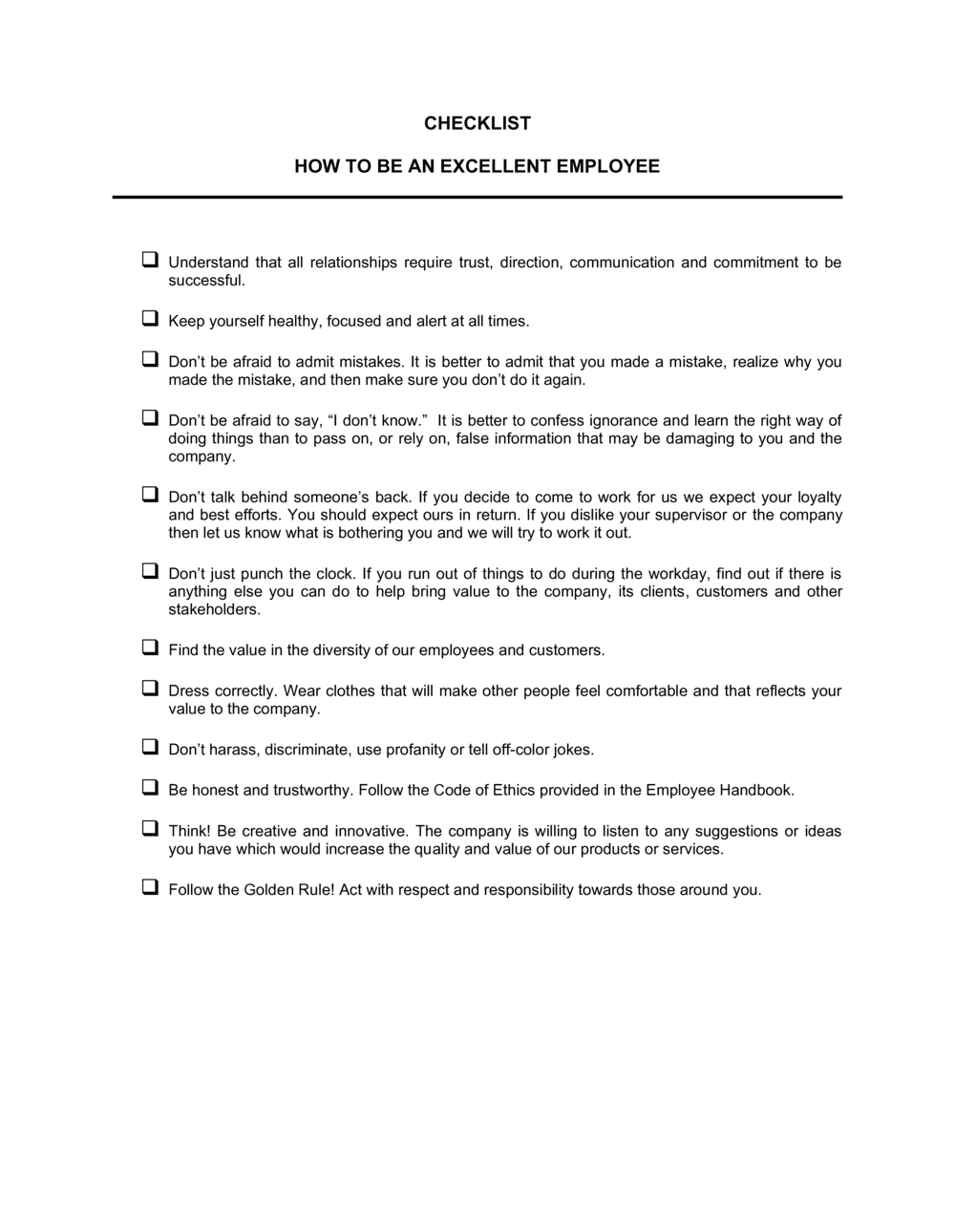
Checklist How to Be an Excellent Employee

Free download β€’ Use as a template β€’ Print or share

1 pageβ€’20–25 min to useβ€’Difficulty: Standard
Learn more ↓
FreeChecklist How to Be an Excellent Employee Template

At a glance

What it is
The Checklist How To Be An Excellent Employee is a structured Excel form that itemizes the key behaviors, habits, and professional standards that distinguish high-performing employees. This free Excel download gives managers and employees a shared, objective reference point for what excellent workplace performance looks like β€” edit it online and export as PDF for onboarding packets, performance reviews, or coaching sessions.
When you need it
Use it during new-hire onboarding to set expectations from day one, during performance reviews to give feedback a concrete behavioral foundation, or as a self-assessment tool for employees who want to identify specific improvement areas.
What's inside
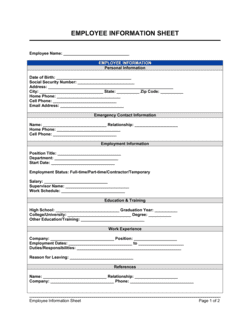
Categorized behavioral checkpoints covering reliability, communication, initiative, teamwork, and professionalism, along with a status column for rating current performance, a notes field for specific examples, and an action-items column for documenting next steps.

What is a Checklist How To Be An Excellent Employee?

A Checklist How To Be An Excellent Employee is a structured Excel form that itemizes the specific behaviors, habits, and professional standards that define high performance across any workplace role. It translates broad concepts like "good attitude" or "team player" into concrete, observable actions β€” arriving on time, communicating clearly, taking initiative, and delivering quality work consistently β€” that managers and employees can assess against the same objective reference point. Rather than relying on subjective impressions, this checklist gives both parties a shared vocabulary for what excellent performance looks like before, during, and after a review conversation.

Why You Need This Document

Without a defined standard for excellent employee behavior, performance conversations become subjective and inconsistent β€” two managers in the same organization will rate identical behavior differently, and employees receive conflicting signals about what is actually expected of them. New hires especially suffer without a behavioral reference: they may meet all their technical requirements while unknowingly falling short on communication, collaboration, or professionalism standards that experienced colleagues take for granted. Over time, undocumented expectations lead to avoidable disputes, higher turnover from employees who feel blindsided by negative reviews, and managers who cannot defend ratings when challenged. This checklist closes that gap by giving every review conversation a concrete, documented foundation β€” making feedback specific enough to act on and consistent enough to be fair.

Which variant fits your situation?

If your situation is…Use this template
Conducting a formal annual performance reviewEmployee Performance Review
Setting goals and KPIs at the start of a review periodEmployee Performance Improvement Plan
Onboarding a new hire with structured first-week tasksNew Employee Onboarding Checklist
Documenting a pattern of behavioral issues before disciplinary actionEmployee Warning Letter
Tracking daily or weekly attendance and punctualityEmployee Attendance Sheet
Recognizing and rewarding top performers formallyEmployee Recognition Letter
Evaluating a new hire at the end of a probationary periodProbationary Period Review Form

Common mistakes to avoid

❌ Completing the checklist without specific behavioral examples

Why it matters: Ratings without documented examples are subjective and undefendable. If an employee disputes a rating, a note saying 'missed three project deadlines in Q1 (Jan 14, Feb 3, Mar 22)' is actionable; 'sometimes late on deliverables' is not.

Fix: Require at least one dated, specific example for every item rated Needs Improvement before the checklist is considered complete.

❌ Using the same checklist for all roles without adjusting N/A items

Why it matters: A behavioral item relevant to a client-facing sales rep may be irrelevant for a back-office analyst. Forcing ratings on inapplicable behaviors skews the overall assessment.

Fix: Mark any item that genuinely does not apply to the role as N/A before scoring, and document why in the notes column.

❌ Skipping the action items section

Why it matters: A checklist that identifies gaps but records no follow-up actions becomes an observation log, not a development tool. Without documented next steps, the same gaps reappear at the next review.

Fix: Treat the action items section as mandatory β€” if no items need improvement, document one development goal that builds on a strength instead.

❌ Completing the checklist without the employee seeing it

Why it matters: An employee who only hears verbal feedback without reviewing the written ratings cannot prioritize improvement areas or track progress over time. It also reduces the manager's accountability for rating consistency.

Fix: Share the completed checklist with the employee at or before the review meeting, and retain a copy in both the manager's and employee's records.

The 10 key fields, explained

Employee Information

Reliability and Punctuality

Communication Skills

Initiative and Proactivity

Teamwork and Collaboration

Professionalism and Conduct

Quality of Work

Adaptability and Learning

Notes and Specific Examples

Action Items and Follow-Up Date

How to fill it out

  1. 1

    Complete the employee information header

    Enter the employee's full name, job title, department, direct manager, and today's date. If the checklist is being used for self-assessment, the employee fills this section themselves.

    πŸ’‘ Add the review period (e.g., Q2 2026 or Jan–Jun 2026) to the header so the checklist can be filed chronologically without confusion.

  2. 2

    Review each behavioral category against observable evidence

    For each checklist item, select a status β€” Met, Needs Improvement, or N/A β€” based on specific behaviors you have observed, not general impressions.

    πŸ’‘ Complete this section within 48 hours of a formal review conversation while examples are fresh β€” ratings filled in from memory weeks later are less accurate and harder to defend.

  3. 3

    Document specific examples in the notes field

    For any item rated Needs Improvement, write at least one concrete example with a date and context. For strong performers, note one example of exceptional behavior per category.

    πŸ’‘ Use the 'situation, behavior, impact' format: what was happening, what the employee did, and what the result was.

  4. 4

    Identify and record action items

    For each Needs Improvement rating, define one specific, measurable action β€” not a vague goal. Assign it to either the employee or the manager and set a realistic target date.

    πŸ’‘ Limit action items to three or fewer per review cycle. More than three dilutes focus and reduces completion rates.

  5. 5

    Share the completed checklist with the employee

    Send the completed checklist to the employee before or during the review conversation so they can review ratings and examples without being caught off guard.

    πŸ’‘ Asking the employee to complete a self-assessment using the same checklist before the meeting surfaces gaps in perception that are more useful to discuss than areas of agreement.

  6. 6

    Save and file the completed checklist

    Export the completed checklist as PDF and save it to the employee's HR file with the review date. Retain it for reference at the next review cycle.

    πŸ’‘ Store self-assessment and manager-assessment versions together so the next reviewer can see whether perception gaps closed since the last cycle.

Frequently asked questions

What is an excellent employee checklist?

An excellent employee checklist is a structured form that lists the specific behaviors, habits, and professional standards that define high performance in a workplace. It gives managers and employees a shared, objective reference for what good looks like β€” covering areas like reliability, communication, teamwork, initiative, and quality of work β€” and provides a framework for consistent performance feedback and development conversations.

Who should complete this checklist β€” the manager or the employee?

Both. The most effective use of this checklist is a dual completion process: the employee completes a self-assessment using the same form before the review, and the manager completes it independently. Comparing the two versions surfaces perception gaps β€” areas where the employee rates themselves higher or lower than the manager β€” which are the most productive topics to discuss in a review conversation.

How often should this checklist be used?

Quarterly is the most effective cadence for most organizations β€” frequent enough to catch issues early and track progress, infrequent enough that ratings reflect genuine patterns rather than short-term incidents. Annual use is common but limits the checklist's value as a development tool. For new hires, complete it at 30, 60, and 90 days to set expectations and identify early support needs.

Can this checklist be used for disciplinary documentation?

It can serve as supporting evidence in a performance management process, but it is not a substitute for a formal written warning or performance improvement plan. If the checklist consistently shows Needs Improvement ratings with documented examples over two or more cycles, use it as input when drafting a formal PIP or disciplinary letter. Always consult your HR policy or an employment advisor before using performance documentation in termination proceedings.

How is this checklist different from a performance review form?

A performance review form typically includes numerical ratings, goal achievement scores, and an overall performance rating tied to compensation decisions. This checklist focuses specifically on behavioral standards and habits β€” the inputs to performance rather than the outputs. It works best as a preparation tool or coaching aid alongside a formal review, not as a replacement for it.

Should I customize the checklist for different roles?

Yes. A baseline checklist covers universal behaviors applicable across most roles, but marking inapplicable items as N/A before scoring prevents irrelevant criteria from distorting results. For specialized roles β€” customer-facing positions, technical roles, or leadership positions β€” add role-specific behavioral items in the notes column or create a modified version of the template.

What should I do if an employee disagrees with their ratings?

Start by reviewing the specific examples documented in the notes column. If the employee provides a counter-example that changes the picture, update the rating. If the disagreement reflects different interpretations of the standard, document both perspectives in the notes and agree on what the expected behavior looks like going forward. Unresolved disagreements should be escalated to HR, not left undocumented.

How this compares to alternatives

vs Employee Performance Review

A performance review form rates goal achievement, output quality, and overall performance β€” often tied to compensation decisions. This checklist focuses on the specific day-to-day behaviors that drive performance outcomes. The checklist works best as a preparation and coaching tool; the performance review is the formal record. Use both together for a complete picture.

vs Employee Performance Improvement Plan

A PIP is a formal corrective document used when performance has already fallen below acceptable standards, with specific goals, timelines, and consequences. This checklist is a proactive development tool used before performance issues escalate to that level. If checklist ratings show persistent Needs Improvement trends across two or more cycles, a PIP is the logical next step.

vs Employee Warning Letter

A warning letter is a formal disciplinary document that records a specific policy violation or conduct issue. This checklist documents behavioral patterns over time, not single incidents. The checklist can provide supporting evidence for a warning letter but does not replace it β€” a single checklist rating is not grounds for formal discipline on its own.

vs Employee Attendance Sheet

An attendance sheet records presence, absence, and punctuality as objective time data. This checklist includes reliability as one behavioral category among many β€” it evaluates the pattern and impact of attendance on performance, not the raw data. Use the attendance sheet for payroll and compliance records; use this checklist to assess what the attendance pattern means for overall performance.

Industry-specific considerations

Professional Services

Client communication quality, deadline adherence on billable projects, and professional conduct with external stakeholders are the highest-weighted behavioral categories.

Retail / Hospitality

Customer-facing behavioral standards β€” tone, appearance, and conflict resolution β€” dominate the checklist, with punctuality and schedule adherence critical due to shift-based operations.

Healthcare

Protocol adherence, clear and accurate communication with colleagues and patients, and maintaining composure under pressure are essential behavioral standards with patient safety implications.

Technology / SaaS

Adaptability to changing product priorities, cross-functional collaboration across remote teams, and proactive communication on blockers are the most business-critical behavioral indicators.

Template vs pro β€” what fits your needs?

PathBest forCostTime
Use the templateManagers, HR teams, and employees at any size organization needing a structured performance behavior referenceFree10–15 minutes to complete per employee
Template + professional reviewOrganizations customizing the checklist for specific roles or integrating it into a formal performance management process$0–$200 (HR advisor or manager workshop)1–2 hours for customization
Custom draftedEnterprises building a competency framework tied to compensation bands and job-level expectations across all roles$1,000–$5,000+ (HR consultant or organizational development specialist)2–6 weeks

Glossary

Behavioral Indicator
A specific, observable action or pattern that demonstrates a competency β€” for example, 'responds to emails within one business day' as an indicator of reliability.
Performance Standard
The defined minimum or target level of quality, output, or conduct expected of an employee in a given role or across all roles.
Self-Assessment
A process in which an employee evaluates their own performance against established criteria before or alongside a manager's review.
Competency
A cluster of related skills, knowledge, and behaviors that contribute to effective job performance β€” such as communication, initiative, or collaboration.
Action Item
A specific, time-bound task assigned to address a gap identified during a performance assessment.
Onboarding
The structured process of integrating a new employee into an organization, covering orientation, role expectations, tools, and culture.
360-Degree Feedback
A performance input method that gathers assessments from an employee's manager, peers, direct reports, and sometimes the employee themselves.
Performance Improvement Plan (PIP)
A formal document outlining specific behavioral or output deficiencies, measurable improvement goals, and a timeline for achieving them.

Part of your Business Operating System

This document is one of 3,000+ business & legal templates included in Business in a Box.

  • Fill-in-the-blanks β€” ready in minutes
  • 100% customizable Word document
  • Compatible with all office suites
  • Export to PDF and share electronically

Create your document in 3 simple steps.

From template to signed document β€” all inside one Business Operating System.
1
Download or open template

Access over 3,000+ business and legal templates for any business task, project or initiative.

2
Edit and fill in the blanks with AI

Customize your ready-made business document template and save it in the cloud.

3
Save, Share, Send, Sign

Share your files and folders with your team. Create a space of seamless collaboration.

Save time, save money, and create top-quality documents.

β˜…β˜…β˜…β˜…β˜…

"Fantastic value! I'm not sure how I'd do without it. It's worth its weight in gold and paid back for itself many times."

Managing Director Β· Mall Farm
Robert Whalley
Managing Director, Mall Farm Proprietary Limited
β˜…β˜…β˜…β˜…β˜…

"I have been using Business in a Box for years. It has been the most useful source of templates I have encountered. I recommend it to anyone."

Business Owner Β· 4+ years
Dr Michael John Freestone
Business Owner
β˜…β˜…β˜…β˜…β˜…

"It has been a life saver so many times I have lost count. Business in a Box has saved me so much time and as you know, time is money."

Owner Β· Upstate Web
David G. Moore Jr.
Owner, Upstate Web

Run your business with a system β€” not scattered tools

Stop downloading documents. Start operating with clarity. Business in a Box gives you the Business Operating System used by over 250,000 companies worldwide to structure, run, and grow their business.

Start freeΒ Β·Β No credit card required