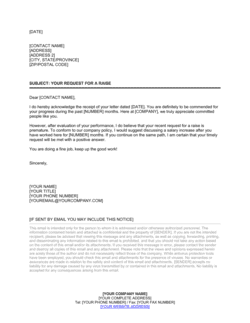
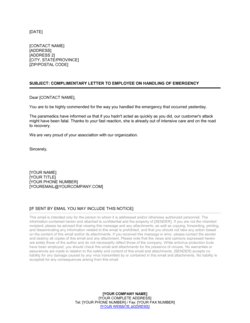
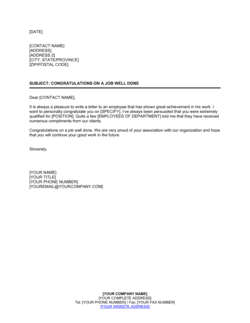
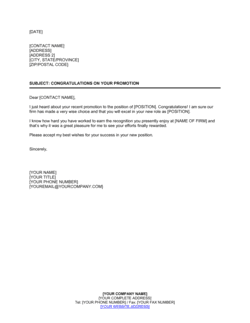
Performance Management Templates

4.7from 280+ reviews Trusted by 20M+ businesses

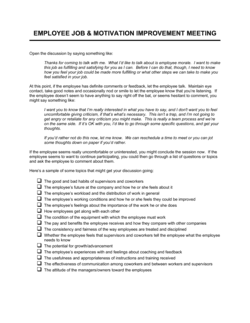
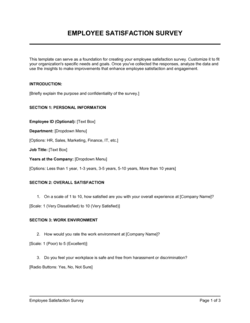
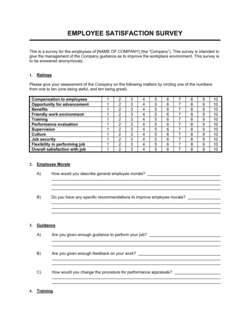
Run structured appraisals, set clear expectations, and address underperformance with the right document for every stage.

WordEditable onlinePDF35+ performance management templates

Other Human Resources categories

250K+Clients
20M+Free users
20+Years
190+Countries
10,000+Law firms
50M+Downloads

Trusted across review platforms

  • Capterra★★★★☆4.649 reviews
  • G2★★★★☆4.713 reviews
  • GetApp★★★★☆4.649 reviews
  • Google Play★★★★☆4.6179 ratings
  • Google Reviews★★★★☆4.567 reviews

Related categories

Frequently asked questions

What is a performance management document used for?
Performance management documents create a formal, dated record of how an employee is performing relative to their role requirements. They serve multiple purposes: informing compensation and promotion decisions, identifying development needs, supporting disciplinary processes if performance doesn't improve, and protecting the organization in the event of a wrongful termination claim. Without written records, managers rely on memory — which is inconsistent and legally indefensible.
How often should employee performance reviews be conducted?
Annual reviews are the minimum most organizations use, but research consistently shows that quarterly check-ins — supported by a brief written record — produce better outcomes. High-growth companies and remote teams often move to monthly one-on-one documentation. The frequency should match the pace of the role: sales roles with monthly targets benefit from monthly reviews; project-based roles may align reviews with project completions.
What should a performance improvement plan include?
A PIP should clearly describe the specific performance gap, set measurable targets with a defined timeline (typically 30, 60, or 90 days), outline the support the organization will provide, specify the consequences of not meeting the targets, and require signatures from the employee and manager. Vague PIPs are difficult to enforce and often don't hold up if challenged legally.
Can a performance review be used as evidence in an employment dispute?
Yes. Signed performance reviews are regularly introduced as evidence in wrongful dismissal, discrimination, and unfair labor practice proceedings. This cuts both ways: consistent, documented underperformance strengthens an employer's position; a positive review given shortly before termination seriously weakens it. Accuracy and consistency in every review cycle matters.
What's the difference between a performance evaluation and an appraisal form?
In practice, the terms are often used interchangeably. An evaluation typically implies a broader assessment of overall performance against role expectations, while an appraisal form is the structured document used to record that assessment. Some organizations use separate forms for manager ratings and employee self-assessment; others combine them into a single appraisal document.
How do I set performance goals that are actually measurable?
Use the SMART framework: Specific (what exactly will be achieved), Measurable (a number, percentage, or verifiable outcome), Achievable (realistic given the role and resources), Relevant (tied to business or department priorities), and Time-bound (with a clear deadline). Replace vague goals like "improve customer service" with "reduce customer complaint response time from 48 hours to 24 hours by the end of Q3."
Do employees have to sign their performance review?
In most jurisdictions, a signature on a performance review acknowledges receipt and that the conversation took place — it does not mean the employee agrees with the ratings. Employees can typically add written comments before signing. If an employee refuses to sign, note the refusal and have a witness present; the document is still valid. Check local employment law or consult HR counsel for jurisdiction-specific requirements.
What is a performance agreement and when should I use one?
A performance agreement is a forward-looking document in which an employee and manager formally agree on goals, responsibilities, and success criteria for a coming period. Use it at the start of a new role, after a promotion, at the beginning of each performance cycle, or when placing an employee on a structured improvement plan. It creates shared accountability and gives both parties a clear reference point when the next review arrives.

Performance Management vs. related documents

Performance Management vs. Performance improvement plan (PIP)

A performance evaluation measures current results against established criteria at a scheduled interval. A performance improvement plan (PIP) is a corrective tool triggered by a documented shortfall — it sets specific targets and a timeline for recovery. Use an evaluation to record performance history; use a PIP when that history shows a gap that must be formally addressed.

Performance Management vs. Performance agreement

A performance evaluation looks backward — it scores what an employee did over a review period. A performance agreement looks forward — it documents what the employee commits to achieving in the period ahead. The two are often used together: the evaluation closes a cycle, and the agreement opens the next one.

Performance Management vs. Job description

A job description defines the duties and qualifications attached to a role. A performance evaluation measures how well the person in that role is meeting those expectations. Job descriptions inform what gets evaluated; performance documents record how well it was done.

Performance Management vs. Disciplinary notice

A performance document focuses on development and improvement — it is typically not punitive. A disciplinary notice documents a specific policy violation or conduct issue and triggers formal HR or legal process. When performance gaps are severe or repeated, a PIP may escalate to a disciplinary notice, but they are distinct documents serving different purposes.

Key clauses every Performance Management contains

Most performance management documents share the same structural components, regardless of whether they're appraisal forms, agreements, or improvement plans.

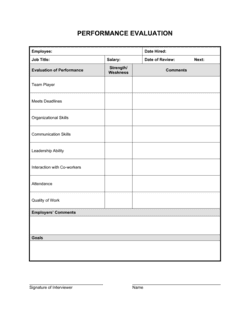
  • Employee and reviewer identification. Names the employee, their role, department, and the manager conducting the review to create an unambiguous record.
  • Review period. Specifies the start and end dates of the performance cycle being assessed, so the scope is clear.
  • Performance criteria or competencies. Lists the specific skills, behaviors, or output measures against which the employee is rated.
  • Rating scale. Defines the scoring system used — numeric, descriptive, or a combination — so ratings are applied consistently.
  • Goal-setting section. Documents measurable objectives agreed for the next review period, with deadlines and success metrics.
  • Employee comments or self-assessment. Gives the employee space to respond to ratings, add context, or flag disagreements before the form is finalized.
  • Development plan. Records training, coaching, or support the organization commits to providing to help the employee improve.
  • Signatures and acknowledgment. Both parties sign to confirm the review took place and the employee received the feedback, not necessarily that they agree.

How to write a performance management document

The format varies by document type, but every strong performance management record follows the same preparation and documentation sequence.

  1. 1

    Choose the right document type

    Match the template to your situation — appraisal form for a scheduled review, performance agreement for goal-setting, PIP guide for a corrective action.

  2. 2

    Gather objective performance data

    Collect sales figures, project outcomes, attendance records, customer feedback, or other measurable inputs before writing a single rating.

  3. 3

    Define the criteria being assessed

    List the competencies, behaviors, or output metrics that matter for this role — these should trace back to the job description.

  4. 4

    Rate performance against each criterion

    Use the agreed rating scale and write a brief evidence-based comment for each score to prevent ratings from appearing arbitrary.

  5. 5

    Document goals for the next period

    Set SMART goals — specific, measurable, achievable, relevant, and time-bound — so expectations are unambiguous going forward.

  6. 6

    Record the feedback conversation

    Note key discussion points, employee responses, and any commitments made during the review meeting.

  7. 7

    Obtain signatures and file the record

    Have both parties sign, provide the employee a copy, and store the original in the personnel file for future reference.

At a glance

What it is
Performance management documents are the written tools managers use to set expectations, evaluate results, deliver feedback, and improve or recognize employee performance. They create a documented, consistent record that supports fair decisions and protects the organization if disputes arise.
When you need one
Any time you're conducting a review cycle, addressing underperformance, setting measurable goals with an employee, or formalizing a performance committee — a written document is required.

Which Performance Management do I need?

The right template depends on where you are in the performance cycle — setting expectations, conducting a review, delivering feedback, or managing a gap.

Your situation
Recommended template

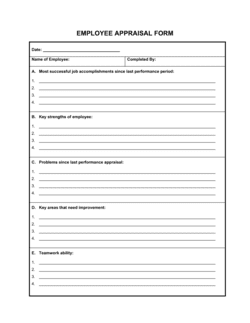
Conducting a scheduled annual or mid-year employee review

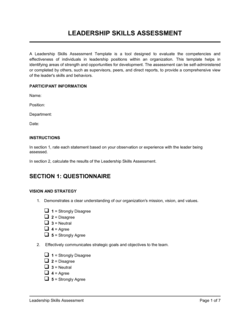
Structured scoring rubric covers competencies, goals, and overall rating.

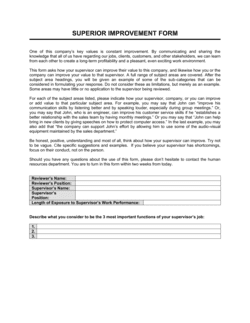
Appraising a manager or team leader's effectiveness

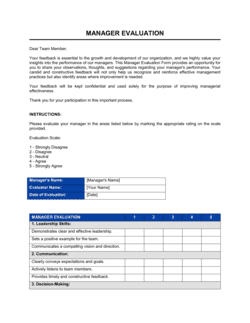
Focuses on leadership behaviors, team results, and strategic contribution.

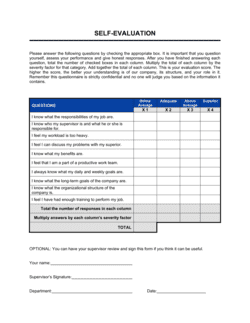
Collecting employee self-assessment or structured appraisal data

Two-way form captures both manager ratings and employee input.

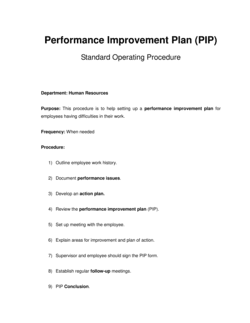
Putting an underperforming employee on a formal improvement plan

Step-by-step guide ensures the PIP is documented, fair, and actionable.

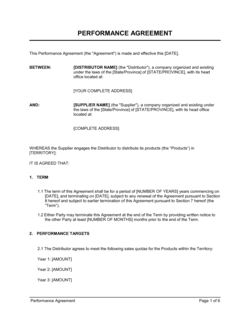
Setting measurable performance targets with an individual employee

Formalizes mutually agreed goals, timelines, and success criteria.

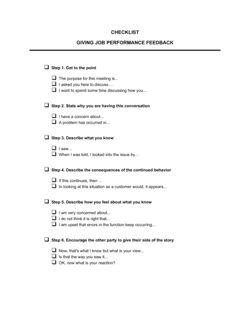
Preparing a manager to deliver structured feedback in a review meeting

Pre-meeting checklist keeps feedback specific, balanced, and constructive.

Granting a contractor extra time to meet a deliverable or milestone

Formally extends a deadline while preserving the original contract terms.

Establishing a board-level committee to oversee performance standards

Creates the governance structure that authorizes the committee's mandate.

Glossary

Performance evaluation
A structured, periodic assessment of how well an employee is meeting the requirements of their role.
Performance improvement plan (PIP)
A formal corrective document that sets specific, time-bound targets for an employee whose performance falls below acceptable standards.
Appraisal form
The written document used to record ratings, comments, and goal-setting during a performance review.
Rating scale
The scoring system applied to each performance criterion — for example, 1–5 numeric ratings or descriptors like 'meets expectations' and 'exceeds expectations.'
Competency
A specific skill, behavior, or attribute — such as communication, problem-solving, or leadership — used as a criterion in a performance review.
SMART goals
Goals that are Specific, Measurable, Achievable, Relevant, and Time-bound, used to make performance targets unambiguous.
Self-assessment
The portion of an appraisal where the employee rates or comments on their own performance before or alongside the manager's evaluation.
Development plan
A documented commitment to training, coaching, or other support the organization will provide to help an employee grow or improve.
360-degree feedback
A performance input method that gathers ratings from a manager, peers, direct reports, and sometimes customers, rather than the manager alone.
Performance agreement
A forward-looking contract between an employee and manager that documents agreed goals, responsibilities, and success criteria for a defined period.
Review period
The defined start and end dates of the performance cycle being assessed in a given appraisal.
Acknowledgment signature
A signature confirming that a performance review meeting took place and the employee received the feedback — not necessarily that they agree with the content.

What is performance management?

Performance management is the ongoing organizational process of setting expectations, monitoring progress, evaluating results, and developing employees so that individual output aligns with business goals. It is not a single annual event — it is a documented cycle that includes goal-setting at the start of a period, regular feedback during it, and a formal appraisal at the end. The documents produced at each stage create the written record that supports every compensation, promotion, and disciplinary decision a manager makes.

Performance management covers a wide spectrum of documents. At one end are structured appraisal forms and evaluation templates used in scheduled review cycles. At the other are corrective tools — performance improvement plans, feedback checklists, and performance agreements — used when an employee's output falls short or when expectations need to be reset. Governance-level documents, such as board resolutions establishing performance committees and performance-based contracts, sit at the organizational layer above individual reviews.

When you need a performance management document

Any time an organization makes a decision that affects an employee's role, compensation, or continued employment, there should be a written performance record behind it. Without documentation, those decisions are difficult to defend, impossible to audit, and inconsistent across managers.

Common triggers:

  • Conducting a scheduled annual, semi-annual, or quarterly employee review
  • Onboarding a new hire and establishing measurable 90-day or first-year goals
  • Promoting an employee and documenting the new performance expectations
  • Addressing a consistent gap between an employee's output and role requirements
  • Placing an employee on a formal performance improvement plan
  • Renewing or renegotiating a performance-based contractor or vendor agreement
  • Establishing a board-level committee to govern organizational performance standards
  • Managing a remote team where documented check-ins replace in-person observation

The cost of skipping formal performance documentation is not just administrative — it exposes the organization to wrongful dismissal claims, discrimination allegations, and internal inconsistency across departments. A clear, signed performance record is the foundation every fair and legally defensible employment decision requires.

Award-winning platform

  • Great Place to Work 2025
  • BIG Award — Product of the Year 2025
  • Smartest Companies 2025
  • Global 100 Excellence 2026
  • Best of the Best 2025

Create your document in 3 simple steps.

From template to signed document — all inside one Business Operating System.
1
Download or open template

Access over 3,000+ business and legal templates for any business task, project or initiative.

2
Edit and fill in the blanks with AI

Customize your ready-made business document template and save it in the cloud.

3
Save, Share, Send, Sign

Share your files and folders with your team. Create a space of seamless collaboration.

Save time, save money, and create top-quality documents.

★★★★★

"Fantastic value! I'm not sure how I'd do without it. It's worth its weight in gold and paid back for itself many times."

Managing Director · Mall Farm
Robert Whalley
Managing Director, Mall Farm Proprietary Limited
★★★★★

"I have been using Business in a Box for years. It has been the most useful source of templates I have encountered. I recommend it to anyone."

Business Owner · 4+ years
Dr Michael John Freestone
Business Owner
★★★★★

"It has been a life saver so many times I have lost count. Business in a Box has saved me so much time and as you know, time is money."

Owner · Upstate Web
David G. Moore Jr.

Owner, Upstate Web

Run your business with a system — not scattered tools

Stop downloading documents. Start operating with clarity. Business in a Box gives you the Business Operating System used by over 250,000 companies worldwide to structure, run, and grow their business.

Free Forever Plan · No credit card required