LLC Investment Agreement Template

Free Word download β€’ Edit online β€’ Save & share with Drive β€’ Export to PDF

3 pagesβ€’25–30 min to fillβ€’Difficulty: Complexβ€’Signature requiredβ€’Legal review recommended
Learn more ↓
FreeLLC Investment Agreement Template

At a glance

What it is
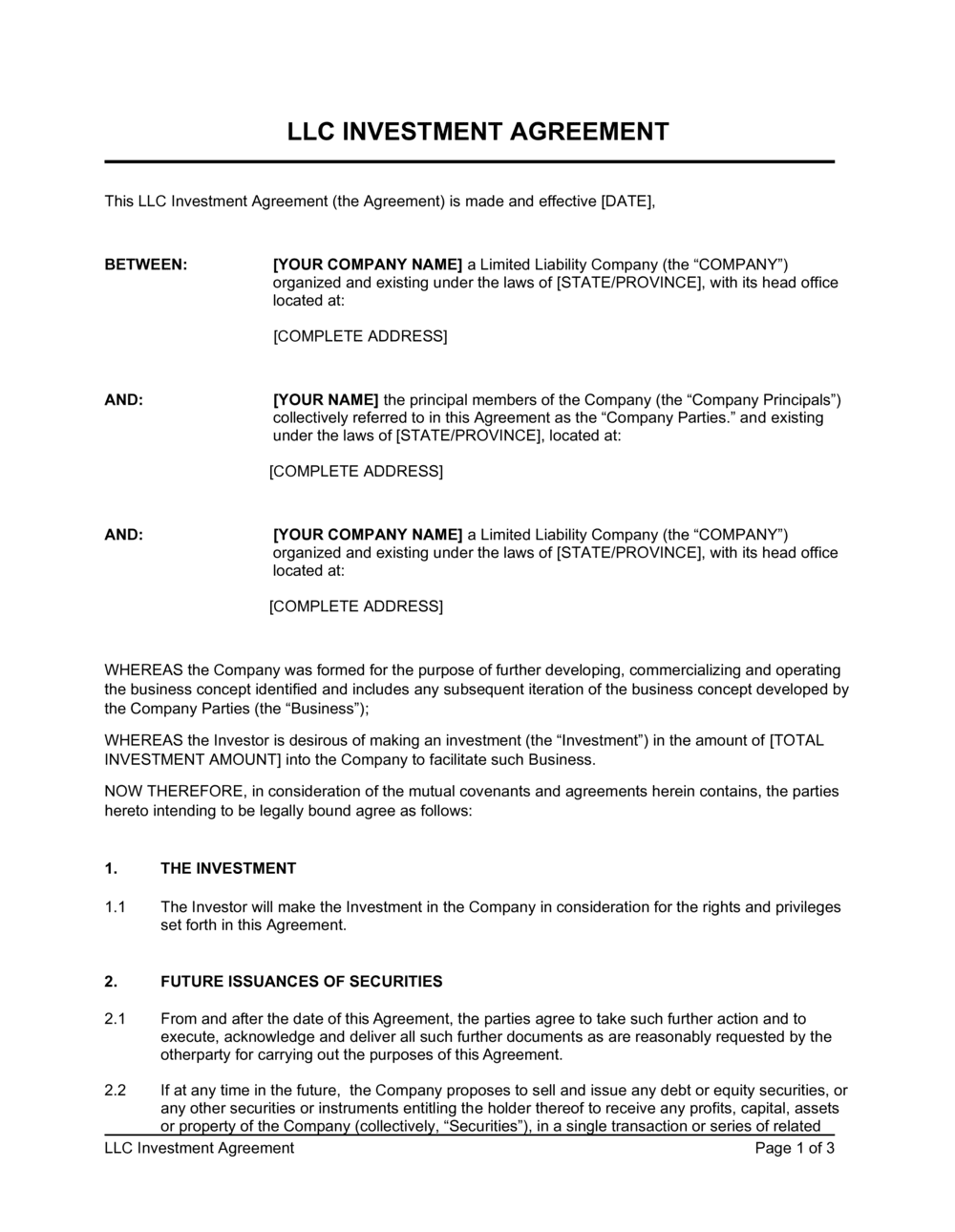
An LLC Investment Agreement is a legally binding contract under which an investor contributes capital to a limited liability company in exchange for membership interests β€” defining the unit count, price per unit, pre-money valuation, and the rights that attach to those units. This free Word download gives founders and investors a structured, attorney-reviewed starting point they can edit online and export as PDF before closing a funding round.
When you need it
Use it whenever an outside investor β€” angel, family office, or strategic partner β€” purchases a membership interest in your LLC for cash or other consideration. It is also appropriate when adding a new member to an existing LLC at a negotiated valuation, or when converting a convertible note into equity at a defined conversion price.
What's inside
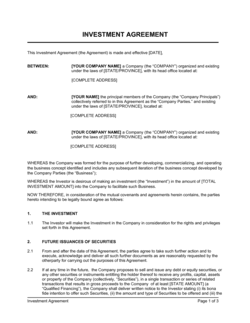
Capital contribution and unit issuance terms, pre-money valuation, investor representations and warranties, company representations and warranties, governance and information rights, transfer restrictions and right of first refusal, distribution preferences, and closing conditions. The agreement works alongside β€” and cross-references β€” the LLC's operating agreement.

What is an LLC Investment Agreement?

An LLC Investment Agreement is a legally binding contract under which an investor contributes capital to a limited liability company and receives newly issued membership units in return. The agreement fixes the terms of the transaction β€” the dollar amount of the contribution, the number and class of units issued, the pre-money and post-money valuation, the investor's economic rights (including any distribution preference), governance and information rights, and the restrictions that govern future transfers of those units. Because LLC membership interests are treated as securities under US federal law, the agreement also incorporates the investor representations needed to establish a valid securities exemption, most commonly under Regulation D. It works in tandem with the LLC's operating agreement, which must be amended at closing to reflect the new investor's unit class and rights.

Why You Need This Document

Accepting an investor's money into an LLC without a signed investment agreement leaves every material term of the deal unresolved β€” how much of the company the investor owns, what they are entitled to receive in distributions and on a sale, whether they have any vote, and what happens if they want to sell their units. Courts in most states will attempt to fill those gaps using statutory defaults or the existing operating agreement, but the outcome is rarely what either party intended. Beyond protecting the founders, the agreement protects the investor: without documented unit count, pricing, and waterfall terms, an investor contributing $250,000 has no written basis to claim their preferred return or block a dilutive new issuance. The securities compliance provisions β€” accredited investor reps and the Regulation D framework β€” also protect the company from rescission claims that can arise when unregistered securities are sold to unqualified buyers. A properly executed LLC investment agreement, paired with an amended operating agreement and a timely Form D filing, closes all of these gaps before the wire clears.

Which variant fits your situation?

If your situation is…Use this template
Investor is purchasing an existing member's units rather than subscribing for new onesMembership Interest Purchase Agreement
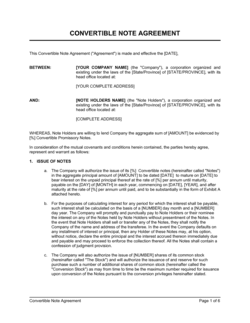
Investment is structured as a loan that may convert to equity laterConvertible Note Agreement
LLC has multiple investors with a lead investor setting termsLLC Operating Agreement (Multi-Member)
Investor is contributing property or services rather than cashContribution Agreement
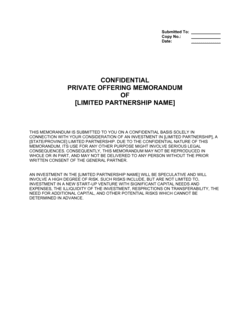
Raising capital from a large group of passive investors under Reg DPrivate Placement Memorandum
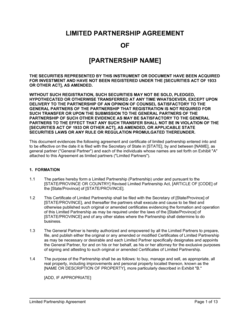
Investor requires preferred-return waterfall and carried interest structureLimited Partnership Agreement
Investment is a SAFE instrument rather than direct equitySAFE Agreement

Common mistakes to avoid

❌ Closing before amending the operating agreement

Why it matters: Until the operating agreement is updated to reflect the new investor's unit class, governance rights, and economic terms, those provisions exist only in the investment agreement β€” which may conflict with or be subordinated to the existing operating agreement.

Fix: Execute an Amended and Restated Operating Agreement simultaneously with the investment agreement as a condition to closing. Make both documents cross-reference each other.

❌ Skipping the accredited investor verification step

Why it matters: Accepting investment from a non-accredited investor in a Regulation D offering can void the securities exemption, triggering rescission rights for the investor and potential SEC enforcement.

Fix: Collect a completed investor questionnaire for every investor. For Rule 506(c) offerings, take affirmative steps to verify β€” tax returns, bank statements, or a CPA certification β€” rather than relying on self-certification.

❌ Expressing ownership only as a percentage rather than in units

Why it matters: A percentage stake becomes ambiguous the moment new units are authorized or an option pool is created. Investors have pursued litigation over percentage-versus-units disputes after subsequent capital raises.

Fix: State the unit count, the price per unit, and the post-closing percentage on a fully-diluted basis β€” all three. Attach the cap table as an exhibit to lock in the starting point.

❌ Omitting drag-along and tag-along rights entirely

Why it matters: Without drag-along rights, a single minority member can block a company sale by refusing to consent, even when the overwhelming majority wants to proceed. Without tag-along rights, minority investors can be left out of an exit that benefits majority members.

Fix: Include both provisions with clearly defined thresholds β€” typically 60–70% majority for drag-along trigger β€” and a minimum per-unit price floor below which the drag-along cannot be exercised.

❌ Using vague distribution language without a defined waterfall

Why it matters: Terms like 'pro-rata distributions' or 'equitable sharing' give members no basis for calculating what they are actually owed. Distribution disputes are among the most common LLC litigation categories.

Fix: Define the full distribution waterfall in sequential priority tiers: return of capital first, preferred return second, then remaining proceeds split at an agreed ratio. State whether the preferred return is cumulative and whether it compounds.

❌ Not filing a Regulation D Form D within 15 days of first sale

Why it matters: A late or missing Form D filing does not void the exemption but can trigger SEC comment letters, restrict your ability to rely on Rule 506 in future raises, and expose the company to state securities enforcement in jurisdictions that require notice filings.

Fix: Calendar the Form D deadline β€” 15 calendar days from the date the first investor signs and funds β€” and designate one person responsible for the filing. Check each investor's home state for parallel blue sky notice requirements.

The 10 key clauses, explained

Parties, recitals, and defined terms

In plain language: Identifies the LLC by its full registered name and state of formation, names each investor, and defines the key terms used throughout the agreement.

Sample language
This LLC Investment Agreement ('Agreement') is entered into as of [DATE] by and between [LLC NAME], a [STATE] limited liability company (the 'Company'), and [INVESTOR NAME] ('Investor'). Capitalized terms not otherwise defined herein have the meanings set forth in the Company's Operating Agreement dated [DATE].

Common mistake: Using the trade name instead of the full registered legal name. If the entity name on the agreement doesn't match the state registration, enforcing transfer restrictions or IP provisions against the correct legal entity is complicated.

Capital contribution and unit issuance

In plain language: States the exact dollar amount the investor is contributing, the number of membership units being issued in exchange, the price per unit, and the closing date.

Sample language
Subject to the terms hereof, Investor agrees to contribute $[AMOUNT] (the 'Capital Contribution') to the Company, and the Company agrees to issue [NUMBER] Class [A/B] Membership Units ('Units') at a price of $[PRICE PER UNIT] per Unit, representing [X]% of the Company's total outstanding units post-closing.

Common mistake: Expressing the investment only as a percentage without specifying unit count and price per unit. If future rounds issue new units, a percentage-only grant dilutes in unpredictable ways and creates disputes about what the investor actually owns.

Valuation and capitalization table

In plain language: Records the pre-money valuation, post-money valuation, and the fully-diluted capitalization table immediately before and after closing.

Sample language
The parties agree that the pre-money valuation of the Company is $[AMOUNT]. The post-money valuation following the Capital Contribution shall be $[AMOUNT]. A complete capitalization table as of the Closing Date is attached as Exhibit A.

Common mistake: Omitting a capitalization table exhibit. Without it, each party may calculate their ownership percentage differently, and future investors will question the round's integrity.

Investor representations and warranties

In plain language: The investor certifies their legal capacity to invest, that the investment is for their own account, and β€” critically β€” that they meet the accredited investor definition under applicable securities law.

Sample language
Investor represents and warrants that: (a) Investor is an 'accredited investor' as defined in Rule 501 of Regulation D; (b) the Units are being acquired for Investor's own account for investment purposes only and not with a view to resale or distribution; (c) Investor has sufficient knowledge and experience to evaluate the merits and risks of this investment.

Common mistake: Collecting accredited investor reps without documenting verification. Under Rule 506(c), relying solely on a self-certification checkbox is insufficient β€” the company must take reasonable steps to verify the investor's status.

Company representations and warranties

In plain language: The LLC certifies that it is validly formed, has the authority to issue the units, has disclosed all material liabilities, and that the units being issued are free of encumbrances.

Sample language
The Company represents and warrants that: (a) it is duly organized and in good standing in [STATE]; (b) it has full authority to enter into this Agreement and issue the Units; (c) there are no undisclosed liabilities exceeding $[THRESHOLD]; (d) the Units, when issued, will be validly authorized, fully paid, and non-assessable.

Common mistake: Giving broad company reps without a materiality qualifier or disclosure schedule. A broad 'no undisclosed liabilities' rep without qualification exposes the company to rescission claims for immaterial items the founders simply forgot to list.

Governance and information rights

In plain language: Defines what voting rights the investor holds, whether they get a board or advisory seat, and the financial and operational information the company must provide on a recurring basis.

Sample language
Investor shall have [voting / non-voting] membership status. The Company shall provide Investor with: (a) unaudited quarterly financial statements within [45] days of each quarter-end; (b) annual financial statements within [90] days of fiscal year-end; (c) prompt written notice of any material adverse change in the Company's business.

Common mistake: Granting information rights without specifying a delivery deadline. Open-ended information rights create disputes about what 'reasonable' means and give founders no clear compliance standard.

Transfer restrictions and right of first refusal

In plain language: Prohibits the investor from freely selling or transferring units without first offering them to the company and other members at the same price, and restricts transfers to non-accredited investors.

Sample language
Investor may not Transfer any Units without the prior written consent of the Company, except pursuant to the ROFR procedure in Section [X]. Before any Transfer, Investor shall deliver written notice to the Company and each other Member stating the proposed price, number of Units, and identity of the transferee. The Company and Members shall have [30] days to exercise their ROFR.

Common mistake: Setting the ROFR window too short β€” 10 or 15 days is rarely enough for members to arrange financing to exercise the right β€” or omitting a deemed-consent provision for no response, which leaves transfers in legal limbo.

Distribution preferences and waterfall

In plain language: Establishes the order in which available cash is distributed β€” whether the investor receives a preferred return before other members share in profits, and whether that preference is cumulative.

Sample language
Prior to any distribution to Class B (common) Members, Investor shall receive a cumulative preferred return of [X]% per annum on its unreturned Capital Contribution. After return of Capital Contribution plus the preferred return, remaining distributions shall be split [X]% to Investor and [X]% to Class B Members.

Common mistake: Using vague language like 'pro-rata distributions' without specifying whether the preference is cumulative, whether it compounds, and at what point the waterfall flips to pari-passu sharing.

Drag-along and tag-along rights

In plain language: Gives the majority members the ability to compel all members to sell in a company-wide acquisition, while giving minority investors the right to participate in any sale on identical terms.

Sample language
If Members holding [X]% or more of outstanding Units approve a Sale of the Company, they may require all other Members to vote in favor of and participate in such Sale on the same per-unit price and terms ('Drag-Along'). Investor shall have Tag-Along rights: if any Member sells Units to a third party, Investor may sell a pro-rata portion of its Units on the same terms.

Common mistake: Including drag-along rights without a minimum price floor or an independent board approval requirement. Without a floor, majority members can drag a minority investor out at a price that wipes out their return.

Closing conditions and governing law

In plain language: States what must happen before the investment closes β€” execution of an amended operating agreement, delivery of funds, and any regulatory filings β€” and specifies which state's law governs.

Sample language
Closing shall occur on [DATE] or such other date as the parties agree in writing. Obligations of each party are conditioned on: (a) execution of an Amended and Restated Operating Agreement by all Members; (b) wire transfer of the Capital Contribution to the Company's account; (c) no material adverse change having occurred. This Agreement shall be governed by the laws of [STATE], without regard to conflicts-of-law principles.

Common mistake: Closing the investment before the operating agreement is amended to reflect the new investor's unit class and rights. Until the operating agreement is updated, the investor's governance and economic rights have no contractual basis within the LLC.

How to fill it out

  1. 1

    Enter the LLC's registered name and state of formation

    Use the exact legal name as it appears on the Articles of Organization β€” not a DBA or trade name. Include the state and the date the LLC was formed.

    πŸ’‘ Pull the name directly from your Secretary of State's online entity search to avoid a one-character discrepancy that can complicate enforcement.

  2. 2

    Specify the capital contribution, unit count, and price per unit

    Enter the dollar amount being invested, the number of units being issued (not just a percentage), and the price per unit. Calculate post-money ownership as a percentage of total fully-diluted units and state it explicitly.

    πŸ’‘ Express ownership in units, not percentages only. A 20% interest today becomes ambiguous the moment you issue a new option pool β€” units are more durable.

  3. 3

    Attach a capitalization table as Exhibit A

    Prepare a table showing all members, their unit counts and classes, and the pre-closing and post-closing ownership percentages. Include any reserved but unissued option pool.

    πŸ’‘ Use a spreadsheet with a separate column for fully-diluted percentages β€” investors and future counsel will expect it, and it reduces disputes at future rounds.

  4. 4

    Complete the investor representations section

    Confirm the investor's accredited status by having them check the applicable qualification category (income, net worth, or entity type) and sign the representation. Collect supporting documentation if the round is structured as Rule 506(c).

    πŸ’‘ For Rule 506(b) rounds, keep a record of each investor's accredited-investor self-certification and any questionnaire completed. The SEC expects this documentation to be on file if you are ever audited.

  5. 5

    Negotiate and fill in the distribution preference and waterfall

    Define whether the investor receives a preferred return, the percentage rate (typically 6–10% for angel deals), whether it is cumulative, and the profit-split ratio after the preferred is satisfied.

    πŸ’‘ A non-cumulative preferred return is standard for simple angel deals. Cumulative preferred β€” where unpaid returns accrue β€” is more common in institutional rounds and significantly increases the investor's economic priority.

  6. 6

    Set transfer restriction windows and ROFR mechanics

    Enter the ROFR notice period (30 days is standard), identify who holds the right (company first, then other members), and state what happens to units if no one exercises β€” typically the transfer may proceed to the proposed buyer on the same terms.

    πŸ’‘ Add a lock-up period of 12–24 months during which no transfers are permitted at all. This reduces early secondary-market activity and protects the LLC's ability to control its cap table.

  7. 7

    Confirm closing conditions and amend the operating agreement

    List every condition that must be met at closing β€” signed amended operating agreement, wire receipt, bring-down of reps β€” and set a specific closing date. Circulate the amended operating agreement for all members to sign before or simultaneously with the investment agreement.

    πŸ’‘ Never close the investment before the operating agreement is fully executed by all members. The investment agreement alone does not create the investor's rights within the LLC β€” the operating agreement must reflect them.

  8. 8

    File any required securities exemption notices

    For US raises, determine whether a Regulation D Form D must be filed with the SEC within 15 calendar days of first sale. Check for state-level blue sky notice filing requirements in the investor's home state.

    πŸ’‘ A missed Form D filing does not invalidate the exemption but can restrict your ability to rely on it in future raises and attracts scrutiny from state regulators.

Frequently asked questions

What is an LLC investment agreement?

An LLC investment agreement is a contract under which an investor contributes capital to a limited liability company in exchange for membership units β€” defining the unit count, price per unit, pre-money valuation, investor rights, and the conditions that must be met at closing. It is the primary document governing the terms of an equity investment in an LLC and works alongside the company's operating agreement, which it typically amends or restates.

Is an LLC investment agreement the same as an operating agreement?

No. An operating agreement governs the ongoing internal management of the LLC β€” member voting, manager authority, profit allocation, and dissolution. An investment agreement documents the specific transaction in which a new investor purchases membership units. The two documents work together: the investment agreement creates the investor's rights, and the operating agreement β€” amended simultaneously β€” gives those rights ongoing legal effect within the LLC.

Does issuing membership interests in an LLC require securities compliance?

Generally yes. Membership interests are typically treated as securities under US federal law, meaning their offer and sale must either be registered with the SEC or qualify for an exemption. Most small-business LLC raises use Regulation D Rule 506(b) β€” which limits investors to up to 35 non-accredited sophisticated investors and an unlimited number of accredited investors β€” or Rule 506(c), which permits general solicitation but requires verified accredited investors only. A Form D must be filed within 15 calendar days of the first sale. Consult a securities attorney for the specific exemption that fits your raise.

What is the difference between an LLC investment agreement and a SAFE?

A SAFE (Simple Agreement for Future Equity) is a convertible instrument β€” the investor gives the company cash today and receives the right to convert into equity at a future priced round, typically at a discount. No units are issued at signing. An LLC investment agreement issues membership units immediately at a defined valuation. SAFEs are simpler and defer the valuation conversation; LLC investment agreements provide the investor with defined rights and ownership from day one.

What rights should an investor receive in an LLC investment agreement?

The most common investor rights are: economic rights (preferred return and a defined share of distributions and exit proceeds), information rights (quarterly and annual financials within defined deadlines), a right of first refusal on new unit issuances to avoid dilution, tag-along rights to participate in any majority-member exit, and anti-dilution protections in some cases. Governance rights β€” board seats, observer status, or approval rights over major decisions β€” are negotiated based on the size of the investment.

Can an LLC have both voting and non-voting membership interests?

Yes. Most states permit LLCs to create multiple classes of membership interest with different voting, economic, or transfer rights, provided the operating agreement authorizes them. Investors in passive or silent partnerships commonly receive non-voting economic interests, while founders retain voting control. The investment agreement must specify which class the investor's units fall into, and the operating agreement must define the rights of each class in detail.

What is a distribution preference and how does it work in an LLC?

A distribution preference gives one class of membership interest the right to receive cash distributions β€” from operations or a sale β€” before other classes receive anything. For example, an investor with a 10% cumulative preferred return must receive that return on their unreturned capital before common members share in profits. After the preferred return is satisfied, remaining distributions are split at a negotiated ratio. The preference can be non-cumulative (unpaid returns don't accrue) or cumulative (unpaid returns compound until paid).

What happens if an LLC takes on a new investor without a signed investment agreement?

Without a signed agreement, the investor's rights β€” economic, governance, and transfer-related β€” depend entirely on whatever the existing operating agreement says about admitting new members. In most cases, the operating agreement either requires all-member consent without specifying the economic terms or is silent on the issue. This creates disputes about ownership percentage, what distributions the investor is entitled to, and whether they have any governance rights at all. Courts in most states will attempt to fill gaps, but the outcome is unpredictable.

Do I need a lawyer to prepare an LLC investment agreement?

For straightforward angel investments in simple LLCs, a well-drafted template reviewed by an attorney is often sufficient. Engage a securities or business lawyer when the raise involves complex waterfall structures, institutional investors, cross-border capital, or convertible features. A 2–4 hour attorney review of a completed template typically costs $600–$1,500 and is worthwhile for any investment above $50,000 or any deal where the investor will receive governance rights.

How this compares to alternatives

vs LLC Operating Agreement

An operating agreement governs the ongoing management, voting, and economic rights of all members of the LLC β€” it is the LLC's constitutional document. An investment agreement documents a specific capital transaction and the rights the new investor receives. The two must be executed together: the investment agreement creates the rights; the amended operating agreement gives them permanent, internal effect.

vs Membership Interest Purchase Agreement

A membership interest purchase agreement covers the sale of existing units from one member to another or to a third party β€” no new units are issued and no new capital enters the company. An LLC investment agreement involves the company issuing new units in exchange for fresh capital, which dilutes existing members and changes the LLC's total capitalization.

vs Convertible Note Agreement

A convertible note is a debt instrument that converts into equity at a future priced round β€” the investor lends money now and receives units later, typically at a discount. An LLC investment agreement issues units immediately at a defined valuation, giving the investor ownership and rights from day one. Convertible notes are simpler and defer valuation; investment agreements provide certainty of ownership.

vs Limited Partnership Agreement

A limited partnership agreement governs an LP structure where limited partners contribute capital and have no management role, while a general partner manages operations and bears liability. An LLC investment agreement operates within an LLC structure, where all members have limited liability and governance rights are defined by contract rather than by statutory general-partner authority.

Industry-specific considerations

Real estate

Passive investors hold non-voting economic interests with preferred returns and a defined equity split on property sale, structured as a waterfall tied to project-level cash flows.

Technology / SaaS

Investor units typically include anti-dilution protections, a pro-rata right to participate in future rounds, and information rights covering MRR, churn, and quarterly P&L.

Food and beverage

Restaurant and CPG LLC investments commonly include a preferred cash-on-cash return of 8–12% before profits are split, with drag-along rights to facilitate a brand acquisition.

Professional services

Silent investors in law firms, accounting practices, or consulting LLCs require carefully drafted non-participation clauses to avoid professional licensing violations in states that restrict non-lawyer or non-CPA ownership.

Jurisdictional notes

United States

Membership interests are securities under federal and most state laws β€” issuances must be registered or exempt, typically under Regulation D Rule 506(b) or 506(c). A Form D must be filed with the SEC within 15 calendar days of first sale. State blue sky laws vary: some require parallel notice filings in the investor's home state. California, New York, and Texas impose the most active state-level securities oversight.

Canada

Canada does not have a direct LLC equivalent β€” the analogous entity is a limited partnership or, in some provinces, a corporation. British Columbia and Alberta permit unlimited liability companies (ULCs) that US investors sometimes use for cross-border structures. Securities regulations are province-specific; an offering to Canadian investors typically requires reliance on a prospectus exemption under the relevant provincial Securities Act, with a corresponding report of exempt distribution filed within 10 days of closing.

United Kingdom

UK law does not recognize the US LLC form directly. Investors and companies using this agreement with a UK nexus typically do so in the context of a US LLC with UK-resident investors. UK investors receiving securities of a non-UK entity must consider whether the Financial Promotions Order applies, which restricts who can receive and act on investment promotions. Qualified investors or high-net-worth individuals may fall under applicable exemptions.

European Union

EU member states do not recognize the US LLC as a domestic entity type, but EU-resident investors may participate in US LLC investment rounds subject to applicable national securities law and the EU Prospectus Regulation. GDPR obligations apply to any personal data collected during investor onboarding. Cross-border distributions from a US LLC to EU investors may trigger withholding tax considerations under the applicable US tax treaty.

Template vs lawyer β€” what fits your deal?

PathBest forCostTime
Use the templateSimple angel or friends-and-family rounds under $100K with a single non-institutional investorFree1–2 hours
Template + legal reviewRounds of $50K–$500K with accredited investors, preferred return structures, or governance rights$600–$1,5003–5 business days
Custom draftedInstitutional investors, complex waterfall structures, cross-border capital, or rounds above $500K with multiple investors$2,500–$10,000+2–4 weeks

Glossary

Membership Interest
An ownership stake in an LLC, expressed as a percentage or unit count, that entitles the holder to economic distributions and, in some cases, voting rights.
Capital Contribution
The cash, property, or services an investor transfers to the LLC in exchange for the membership interest being issued.
Pre-Money Valuation
The agreed value of the LLC immediately before the investor's capital is added β€” used to calculate what percentage of the company the investment purchases.
Post-Money Valuation
Pre-money valuation plus the total new capital contributed β€” the value of the LLC immediately after closing.
Representations and Warranties
Statements of fact made by each party as of the closing date β€” a breach entitles the other party to indemnification or rescission.
Right of First Refusal (ROFR)
A contractual right allowing existing members to purchase a transferring member's units before they can be sold to an outside third party.
Distribution Preference
A provision giving one class of membership interest the right to receive distributions before other classes β€” analogous to preferred stock in a corporation.
Drag-Along Right
A right held by majority members to require minority members to approve and participate in a sale of the entire company on the same terms.
Tag-Along Right
A right that allows minority members to join a majority member's sale of units to a third party on the same price and terms.
Accredited Investor
An individual or entity meeting SEC income or net-worth thresholds (e.g., $200K annual income or $1M net worth excluding primary residence) that is permitted to invest in unregistered securities.
Operating Agreement
The LLC's core governance document β€” an LLC investment agreement amends or supplements the operating agreement for the new investor's unit class and rights.
Dilution
The reduction in an existing member's ownership percentage caused by issuing new membership units to additional investors.

Part of your Business Operating System

This document is one of 3,000+ business & legal templates included in Business in a Box.

  • Fill-in-the-blanks β€” ready in minutes
  • 100% customizable Word document
  • Compatible with all office suites
  • Export to PDF and share electronically

Create your document in 3 simple steps.

From template to signed document β€” all inside one Business Operating System.
1
Download or open template

Access over 3,000+ business and legal templates for any business task, project or initiative.

2
Edit and fill in the blanks with AI

Customize your ready-made business document template and save it in the cloud.

3
Save, Share, Send, Sign

Share your files and folders with your team. Create a space of seamless collaboration.

Save time, save money, and create top-quality documents.

β˜…β˜…β˜…β˜…β˜…

"Fantastic value! I'm not sure how I'd do without it. It's worth its weight in gold and paid back for itself many times."

Managing Director Β· Mall Farm
Robert Whalley
Managing Director, Mall Farm Proprietary Limited
β˜…β˜…β˜…β˜…β˜…

"I have been using Business in a Box for years. It has been the most useful source of templates I have encountered. I recommend it to anyone."

Business Owner Β· 4+ years
Dr Michael John Freestone
Business Owner
β˜…β˜…β˜…β˜…β˜…

"It has been a life saver so many times I have lost count. Business in a Box has saved me so much time and as you know, time is money."

Owner Β· Upstate Web
David G. Moore Jr.
Owner, Upstate Web

Run your business with a system β€” not scattered tools

Stop downloading documents. Start operating with clarity. Business in a Box gives you the Business Operating System used by over 250,000 companies worldwide to structure, run, and grow their business.

Start freeΒ Β·Β No credit card required