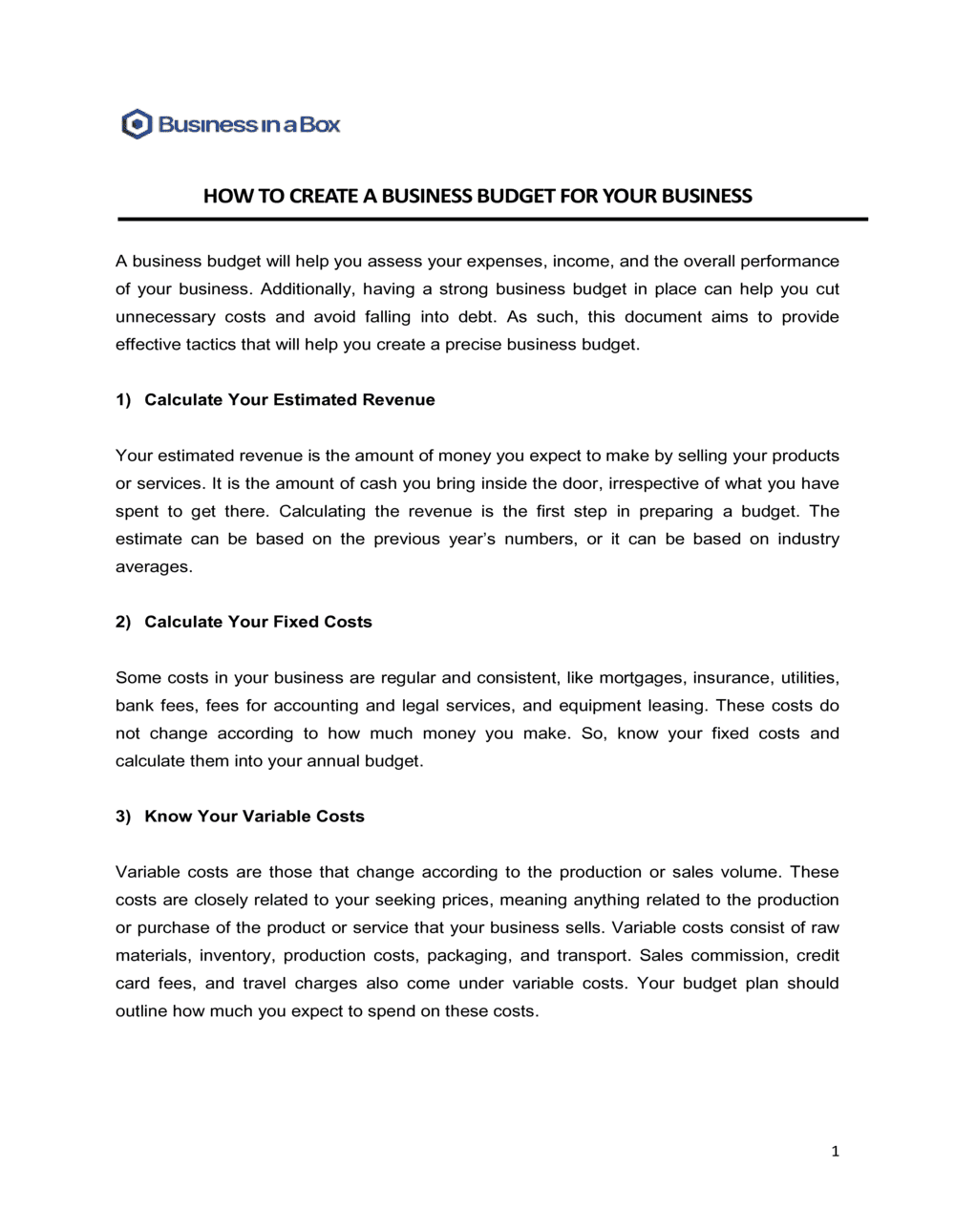
How To Create A Business Budget For Your Business

Free download β€’ Use as a template β€’ Print or share

4 pagesβ€’20–30 min to useβ€’Difficulty: Standard
Learn more ↓
FreeHow To Create A Business Budget For Your Business Template

At a glance

What it is
A Business Budget is a structured planning document that maps your expected revenue, fixed and variable costs, capital expenditures, and net cash position across a defined period β€” typically monthly, quarterly, or annually. This free Word download gives you a ready-to-edit framework you can fill in with your own numbers and export as PDF to share with your leadership team, accountant, or lender.
When you need it
Use it at the start of a new fiscal year, when launching a business, when applying for a loan or line of credit, or any time you need to align spending decisions with revenue reality.
What's inside
Revenue projections by stream, fixed and variable expense categories, gross and net profit calculations, capital expenditure planning, cash flow summary, and a variance tracking section to compare actuals against the plan month by month.

What is a Business Budget?

A Business Budget is a structured financial planning document that estimates your expected revenue, categorizes your fixed and variable costs, projects gross and net profit, and maps the cash position of your business across a defined period β€” most commonly 12 months with monthly columns. It functions as both a planning tool and an ongoing management control: you build it before the period begins to commit resources to priorities, then compare actuals against it every month to identify where the business is running ahead or behind plan. Unlike a one-time financial forecast prepared for a lender, a working business budget is a live document that drives spending decisions throughout the year.

Why You Need This Document

Operating without a budget means spending decisions get made in isolation β€” a new hire here, a software subscription there β€” until the bank balance tells you that you have overspent without realizing it. The cost of skipping a formal budget is concrete: businesses without one are significantly more likely to exhaust cash before reaching profitability, miss loan covenants, and discover cost problems only at year-end when the damage is already done. A budget that breaks out revenue by stream, separates fixed from variable costs, and includes a cash flow projection gives you a 30-second answer to the question "can we afford this?" every time it comes up. It also satisfies the first document most banks and SBA lenders request when you apply for financing. This template gives you a ready-to-fill structure so you can build a credible, actionable budget in a single working session rather than starting from a blank spreadsheet.

Which variant fits your situation?

If your situation is…Use this template
Planning the full company operating budget for a fiscal yearAnnual Business Budget
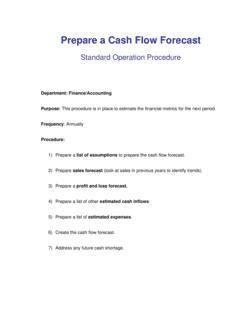
Forecasting cash inflows and outflows on a monthly basisMonthly Cash Flow Forecast
Budgeting for a single project with a defined start and end dateProject Budget Template
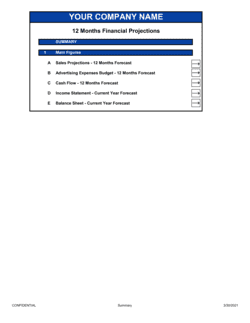
Modeling 12-month revenue and expense projections for investors or lendersFinancial Projections (12 Months)
Tracking actual spend against the approved budget each monthBudget vs. Actual Report
Planning departmental spend for marketing, HR, or ITDepartment Budget Template
Budgeting startup costs before the business generates any revenueStartup Cost Estimate

Common mistakes to avoid

❌ Budgeting revenue without breaking out streams

Why it matters: A single revenue line hides which products or services are underperforming. By the time you notice total revenue is off, it is too late to course-correct individual streams.

Fix: Create a separate row for each product, service line, or customer segment. Review each independently during monthly variance meetings.

❌ Ignoring cash flow timing and modeling profit only

Why it matters: A profitable business can run out of cash if collections lag behind payables. Net 30 customers, quarterly insurance premiums, and annual software renewals all create cash gaps that a P&L budget will not reveal.

Fix: Build a parallel cash flow section that shows the actual timing of cash in and cash out each month, and confirm the closing cash balance stays above a defined floor.

❌ Using last year's budget as a copy-paste baseline without review

Why it matters: Costs change β€” vendor contracts renew at higher rates, headcount shifts, and new tools are added mid-year. Carrying forward stale numbers produces a budget that is wrong before the period even starts.

Fix: Review every line against current contracts and actuals before rolling forward. Apply zero-based scrutiny to any category that grew more than 15% without a documented reason.

❌ Updating the budget to match actuals when variances appear

Why it matters: A budget that is revised to eliminate variances has no value as a control tool. It becomes a record of what happened rather than a plan to manage against.

Fix: Record variances without changing the original budget. If the business has fundamentally changed, create a revised forecast in a separate column labeled 'Revised Forecast' β€” and preserve the original.

The 9 key sections, explained

Revenue Projections

Cost of Goods Sold (COGS)

Fixed Operating Expenses

Variable Operating Expenses

Gross Profit and Operating Profit Summary

Capital Expenditure (Capex) Plan

Cash Flow Projection

Variance Tracking (Budget vs. Actual)

Assumptions and Notes

How to fill it out

  1. 1

    Define the budget period and structure

    Choose whether the budget covers a calendar year, fiscal year, or a shorter rolling period. Decide whether you will break it down monthly, quarterly, or both β€” monthly is standard for most small businesses.

    πŸ’‘ Monthly columns are worth the extra setup time β€” quarterly budgets miss seasonal cash crunches that only show up month by month.

  2. 2

    List every revenue stream separately

    Enter each product line, service type, or customer segment as its own row. For each, enter your projected monthly revenue based on price, volume, and expected growth rate.

    πŸ’‘ Start from last year's actuals if available, then apply a documented growth assumption. If you have no history, use a bottom-up estimate: units sold Γ— price.

  3. 3

    Calculate cost of goods sold for each revenue stream

    Assign the direct costs β€” materials, direct labor, third-party production β€” tied to each revenue line. Calculate gross margin for each stream so you can see which products or services are most profitable.

    πŸ’‘ If gross margin varies significantly across streams, flag the lowest-margin lines for a pricing or cost review before finalizing the budget.

  4. 4

    Enter all fixed operating expenses

    List every recurring cost that does not change with volume: rent, base salaries, insurance, software subscriptions, and loan repayments. Verify each amount against current contracts and invoices.

    πŸ’‘ Pull your last 12 months of bank statements and categorize every expense β€” most business owners discover 2–3 forgotten subscriptions during this step.

  5. 5

    Estimate variable operating expenses

    For each variable cost category, express the cost as a percentage of revenue or a per-unit rate, then multiply by your projected revenue or volume. Include commissions, ad spend, and payment processing fees.

    πŸ’‘ Budget ad spend as a fixed dollar amount with a defined return target (e.g., 4Γ— ROAS) rather than as an uncapped percentage β€” this prevents runaway spend in high-revenue months.

  6. 6

    Plan capital expenditures separately

    List any planned asset purchases with their cost and acquisition date. Record only the depreciation expense in the P&L; show the full cash outflow in the cash flow section.

    πŸ’‘ If a capex purchase is conditional on hitting a revenue milestone, note the trigger explicitly so the decision is documented and reviewable.

  7. 7

    Build the cash flow projection

    Take your profit plan and adjust for timing: add the collections lag on receivables, note the timing of large payables, and insert any loan draws or repayments. Confirm the closing cash balance stays positive every month.

    πŸ’‘ Any month where closing cash drops below one month of fixed expenses is a danger zone β€” model a mitigation action (line of credit draw, delayed capex) alongside the warning.

  8. 8

    Set up variance tracking and schedule monthly reviews

    Enter actuals against each budget line at month-end, calculate variances, and schedule a 30-minute monthly review to investigate anything more than 10% off plan.

    πŸ’‘ Assign one person β€” owner, CFO, or bookkeeper β€” as the single owner of the monthly budget review. Shared ownership means it never gets done.

Frequently asked questions

What is a business budget?

A business budget is a forward-looking financial plan that estimates expected revenue, costs, and cash position for a defined period β€” typically a month, quarter, or year. It gives business owners a target to manage against and a baseline for identifying when the business is over- or under-performing. Unlike a financial forecast, which is purely predictive, a budget is also a decision-making and control tool.

Why does every business need a budget?

Without a budget, spending decisions are made reactively rather than strategically β€” money runs out before priorities are funded, and profitable months mask structural cost problems that only appear at year-end. A budget forces you to confirm that your revenue plan covers your cost structure before you commit to expenses. Banks and investors also routinely require a budget as part of any financing application.

What should a business budget include?

A complete business budget covers revenue projections broken out by stream, cost of goods sold, fixed and variable operating expenses, gross and net profit summaries, a capital expenditure plan, a cash flow projection, and a variance tracking section. Most small business budgets also include a documented assumptions page so the logic behind the numbers can be reviewed and updated as conditions change.

What is the difference between a budget and a cash flow forecast?

A budget is a profit plan β€” it projects revenue and expenses on an accrual basis regardless of when cash actually moves. A cash flow forecast tracks the timing of actual cash inflows and outflows, including collections lag on receivables and the timing of large payables. A business can show a budgeted profit and still run out of cash if it has slow-paying customers or lumpy expenses. Both documents are needed for complete financial visibility.

How far in advance should I budget?

Most small businesses budget 12 months forward with monthly columns, then roll the budget forward quarterly to incorporate updated assumptions. Growth-stage companies and those seeking financing often build 3-year projections. Budgeting further than 18–24 months with monthly precision is generally not useful β€” annual targets with quarterly milestones are more practical for longer horizons.

What is zero-based budgeting and when should I use it?

Zero-based budgeting requires every expense to be justified from scratch each period rather than carried forward from the prior year. It is most useful for businesses that have grown quickly and accumulated legacy costs, or after a merger or restructuring where the cost base needs a hard reset. For most small businesses in normal operation, a review-and- adjust approach to the prior year's budget is more practical.

How often should I review my business budget?

Compare actuals against budget at month-end β€” every month without exception. A 30-minute monthly review that flags variances over 10% is sufficient for most small businesses. Quarterly, do a deeper review to assess whether the full-year plan still holds and whether the assumptions behind the revenue and cost projections remain valid. Annual budgets should be rebuilt, not just rolled forward, each year.

What is a good gross margin target for a small business?

Gross margin benchmarks vary widely by industry. Software and SaaS businesses typically target 70–80% gross margins. Professional services firms run 40–60%. Retail businesses often operate at 30–50%, and manufacturing or food businesses may target 25–40%. The right target for your business depends on your industry and operating model β€” what matters most is that your gross margin is high enough to cover your fixed operating expenses and still produce a net profit.

Do I need accounting software to use a business budget template?

No β€” this Word template is designed to be filled in manually and works as a standalone planning document. However, connecting the budget to your accounting software (QuickBooks, Xero, or Wave) makes variance tracking significantly faster because actuals pull directly from your books. For businesses processing more than 50 transactions per month, accounting software integration will save several hours per month-end close.

How this compares to alternatives

vs Financial Projections (12 Months)

Financial projections are forward-looking statements built to show investors or lenders what the business could achieve under stated assumptions. A business budget is an internal operating plan with specific spending limits, variance tracking, and accountability ownership. Projections tell the story of potential; a budget is the commitment you manage the business against every month.

vs Cash Flow Projection

A cash flow projection focuses exclusively on the timing of cash in and cash out β€” it answers whether the business will have enough cash to pay its bills each month. A business budget covers the full P&L including non-cash items like depreciation. Both are needed: the budget tells you if the business is profitable; the cash flow tells you if it can stay solvent.

vs Business Plan

A business plan is a comprehensive external document covering market analysis, competitive positioning, strategy, team, and financials β€” used to raise capital or align stakeholders. A business budget is the internal financial operating plan for a specific period. The budget is often one component extracted from the business plan and used as a live management tool.

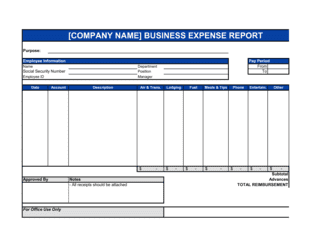
vs Expense Report

An expense report records actual costs already incurred by an individual or team, typically for reimbursement purposes. A business budget projects future costs at a company or department level and tracks whether actual spending stays within planned limits. Expense reports are inputs to the actuals side of budget variance analysis.

Industry-specific considerations

Retail and E-commerce

Inventory purchasing budget tied to sales forecasts, seasonal revenue swings, return rates as a variable cost line, and fulfillment cost per order.

Professional Services

Billable utilization rate drives revenue projections; key cost lines are salaries and benefits, with professional indemnity insurance as a significant fixed expense.

Food and Beverage

Food cost percentage (target 28–35% of revenue) and labor cost percentage (target 25–35%) are the two critical budget ratios that determine whether the business is financially viable.

Construction and Trades

Project-by-project revenue scheduling, materials and subcontractor costs as COGS, equipment depreciation or rental as a significant capex or opex line.

SaaS and Technology

MRR/ARR as the revenue baseline, cloud infrastructure and hosting as a variable COGS line, and R&D headcount as the largest fixed operating expense.

Nonprofit Organizations

Grant income recognized by disbursement schedule rather than award date; program expenses tracked separately from administrative overhead to maintain the ratios required by funders.

Template vs pro β€” what fits your needs?

PathBest forCostTime
Use the templateSmall business owners, freelancers, and early-stage founders building a first annual budgetFree4–8 hours to build; 30 minutes per monthly review
Template + professional reviewBusinesses applying for a bank loan, line of credit, or presenting to investors$300–$800 for a bookkeeper or accountant review session1–2 weeks including accountant turnaround
Custom draftedMulti-department companies, businesses with complex cost structures, or those integrating the budget into accounting software$1,000–$5,000 for a fractional CFO or financial consultant engagement2–4 weeks

Glossary

Fixed Costs
Expenses that remain constant regardless of sales volume β€” rent, salaries, and insurance premiums are common examples.
Variable Costs
Expenses that rise or fall in proportion to revenue or production β€” cost of goods sold, commissions, and shipping costs are typical examples.
Gross Profit
Revenue minus the direct cost of goods sold or cost of services delivered, before deducting operating expenses.
Net Profit
Revenue minus all expenses β€” cost of goods sold, operating costs, interest, and taxes β€” representing the bottom-line result.
Capital Expenditure (Capex)
Spending on long-term assets such as equipment, vehicles, or property that are depreciated over time rather than expensed immediately.
Operating Expense (Opex)
Day-to-day costs required to run the business that are fully expensed in the period they are incurred, such as rent, utilities, and payroll.
Cash Flow
The net movement of cash into and out of the business during a period β€” distinct from profit, which is an accounting measure that may include non-cash items.
Variance
The difference between a budgeted figure and the actual result β€” a favorable variance means actual costs were lower or revenue was higher than planned.
Burn Rate
Monthly net cash outflow β€” how quickly the business is spending its available cash, particularly relevant for pre-revenue startups.
Zero-Based Budgeting
A budgeting method where every expense must be justified from scratch each period, rather than using the prior year's figures as a baseline.

Part of your Business Operating System

This document is one of 3,000+ business & legal templates included in Business in a Box.

  • Fill-in-the-blanks β€” ready in minutes
  • 100% customizable Word document
  • Compatible with all office suites
  • Export to PDF and share electronically

Create your document in 3 simple steps.

From template to signed document β€” all inside one Business Operating System.
1
Download or open template

Access over 3,000+ business and legal templates for any business task, project or initiative.

2
Edit and fill in the blanks with AI

Customize your ready-made business document template and save it in the cloud.

3
Save, Share, Send, Sign

Share your files and folders with your team. Create a space of seamless collaboration.

Save time, save money, and create top-quality documents.

β˜…β˜…β˜…β˜…β˜…

"Fantastic value! I'm not sure how I'd do without it. It's worth its weight in gold and paid back for itself many times."

Managing Director Β· Mall Farm
Robert Whalley
Managing Director, Mall Farm Proprietary Limited
β˜…β˜…β˜…β˜…β˜…

"I have been using Business in a Box for years. It has been the most useful source of templates I have encountered. I recommend it to anyone."

Business Owner Β· 4+ years
Dr Michael John Freestone
Business Owner
β˜…β˜…β˜…β˜…β˜…

"It has been a life saver so many times I have lost count. Business in a Box has saved me so much time and as you know, time is money."

Owner Β· Upstate Web
David G. Moore Jr.
Owner, Upstate Web

Run your business with a system β€” not scattered tools

Stop downloading documents. Start operating with clarity. Business in a Box gives you the Business Operating System used by over 250,000 companies worldwide to structure, run, and grow their business.

Start freeΒ Β·Β No credit card required