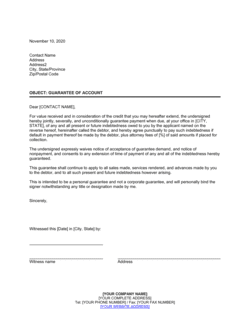
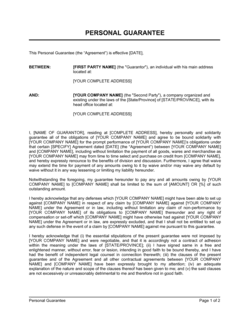
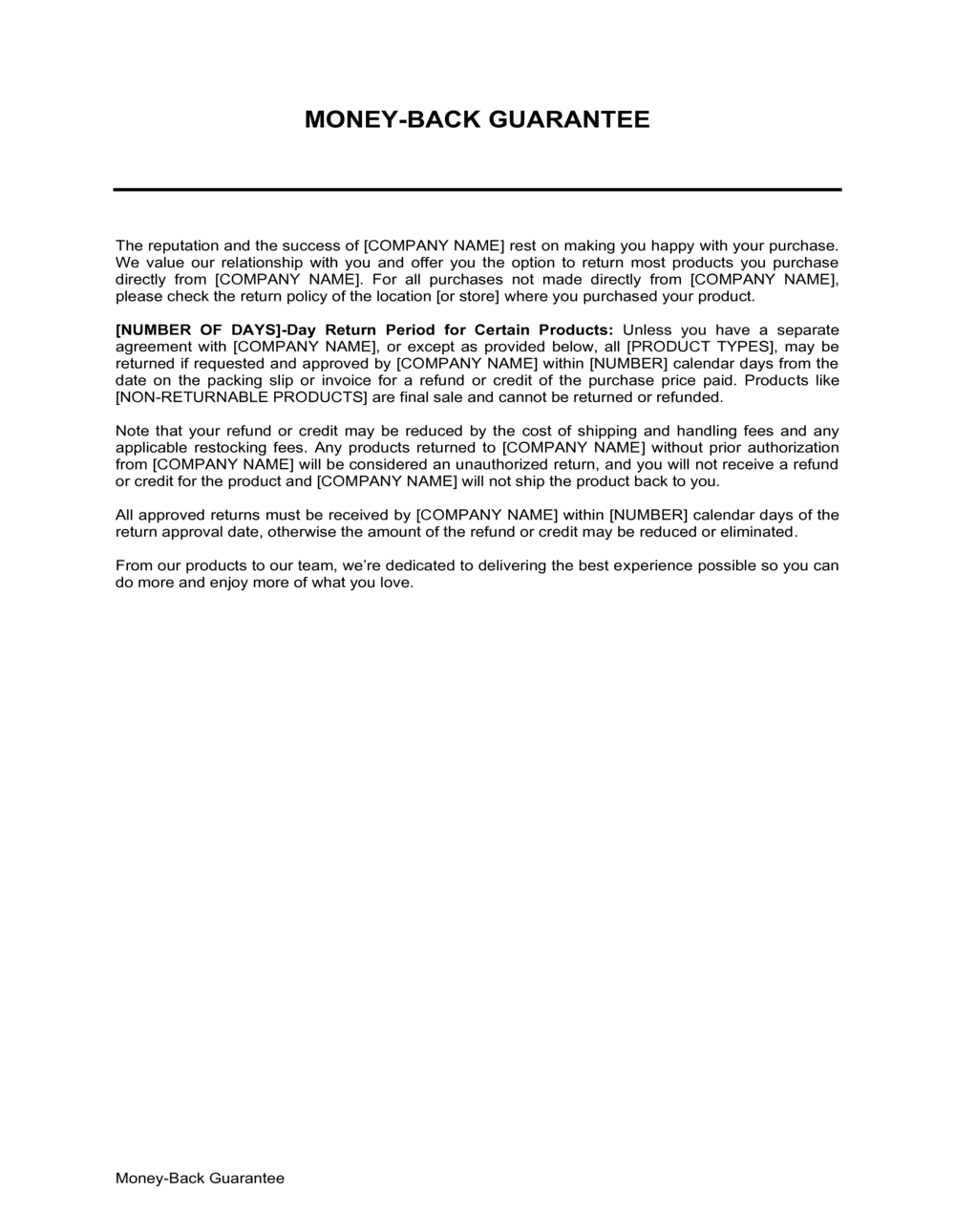
Money Back Guarantee Template

Free Word download β€’ Edit online β€’ Save & share with Drive β€’ Export to PDF

1 pageβ€’20–30 min to fillβ€’Difficulty: Standardβ€’Signature requiredβ€’Legal review recommended
Learn more ↓
FreeMoney Back Guarantee Template

At a glance

What it is
A Money Back Guarantee is a legally binding commitment from a seller to a buyer that a full or partial refund will be issued if the product or service fails to meet specified conditions within a defined timeframe. This free Word download gives you a structured, enforceable document that clearly states the guarantee period, eligible products or services, refund conditions, the claim process, and any exclusions β€” ready to edit online and export as PDF for display on your website, in your checkout flow, or with your sales materials.
When you need it
Use it when launching a new product or service and you want to reduce buyer hesitation, when your business model depends on subscription or course sales where chargebacks are a recurring risk, or when you need a written record of your refund commitment that can withstand a payment processor dispute or consumer protection inquiry.
What's inside
Eligible products and services, guarantee period, qualifying conditions for a refund claim, the step-by-step claim process, exclusions and limitations, a dispute resolution clause, and the governing law provision.

What is a Money Back Guarantee?

A Money Back Guarantee is a legally binding written commitment from a seller to a buyer that a full or partial refund will be issued if the product or service fails to meet specified conditions within a defined period. It functions simultaneously as a sales tool and a legal document: at the point of purchase, it lowers buyer hesitation by reducing financial risk; after the sale, it defines the precise conditions, process, and limitations under which a refund is owed. A properly structured guarantee identifies the eligible products or services, sets the guarantee period, states any qualifying conditions the buyer must satisfy, describes the exact claim process, and lists exclusions β€” giving both parties a clear, enforceable reference point if a dispute arises.

Why You Need This Document

Operating without a written money back guarantee creates risk on two fronts. First, dissatisfied customers who cannot find a clear refund path bypass your process entirely and file chargebacks directly with their bank β€” each disputed transaction costs $15 to $100 in fees on top of the refund itself, and a chargeback rate above 1% can trigger account holds or termination by payment processors like Stripe and PayPal. Second, a vague or informal refund commitment leaves your business exposed to consumer protection enforcement: regulators in the US, Canada, the UK, and the EU treat published guarantee language as a binding express warranty, and failing to honor it can result in penalties or civil liability. A signed, documented money back guarantee closes both gaps β€” it gives good-faith customers a fast, friction-free refund path that keeps them away from chargebacks, and it gives you a clear contractual basis to deny abusive or fraudulent claims. This template provides that structure in a single document you can edit and publish in under an hour.

Which variant fits your situation?

If your situation is…Use this template
Full unconditional refund within a fixed window (no questions asked)Unconditional Money Back Guarantee
Refund only if specific performance conditions are not metConditional Satisfaction Guarantee
Partial refund or store credit in lieu of a full cash refundPartial Refund Policy
Product return with refund for physical goodsReturn and Refund Policy
Subscription cancellation with prorated refundSubscription Cancellation and Refund Policy
Service-level guarantee tied to measurable outcomesService Level Agreement (SLA)
Written warranty covering defects for physical productsProduct Warranty

Common mistakes to avoid

❌ Starting the guarantee period on the delivery date without accounting for shipping delays

Why it matters: If a product takes 10 days to arrive and the guarantee window is 14 days, the customer has only 4 days to evaluate it β€” creating frustration, disputes, and chargebacks rather than goodwill.

Fix: Start the clock on the purchase date for digital products and on the confirmed delivery date for physical goods, and state the trigger date explicitly.

❌ No fraud-prevention or abuse clause

Why it matters: Unconditional guarantees without an abuse reservation are routinely exploited β€” particularly for digital products where the content is consumed immediately and a refund is then requested.

Fix: Include a clause reserving the right to deny claims where purchasing-to-refund behavior is evident, and track refund rates by customer to identify repeat abusers.

❌ Offering store credit as the sole remedy without disclosing it pre-purchase

Why it matters: Customers who expected a cash refund and receive store credit instead escalate to chargebacks at a high rate β€” and consumer protection laws in the EU, UK, and several US states may require cash refunds regardless of what the document says.

Fix: Display the refund remedy type (cash, credit, or replacement) on the product page and at checkout, not only in the guarantee document linked from the footer.

❌ No processing-time commitment in the claim procedure

Why it matters: Without a stated turnaround, customers who wait more than a week without confirmation routinely file chargebacks β€” which cost $15–$100 in dispute fees on top of the refund itself.

Fix: Commit to a specific processing window (10 business days is standard) and set up an automated acknowledgment email so customers know their claim was received.

❌ Using 'all sales final' language on digital products in the EU or UK

Why it matters: Consumer protection law in both jurisdictions grants buyers a 14-day cooling-off right on most digital purchases β€” contractual 'no refund' terms are void and unenforceable against these statutory rights.

Fix: Add a statutory rights savings clause: 'Nothing in this Guarantee limits any statutory refund or cancellation rights you may have under applicable law.'

❌ Choosing a governing law with no nexus to the business or its customers

Why it matters: A US business selecting Cayman Islands law to govern a consumer guarantee will find the clause ignored by US courts β€” and EU or UK consumer statutes apply to their residents regardless of any contractual choice.

Fix: Choose the jurisdiction where your business is incorporated or primarily operates, and add a savings clause preserving local statutory consumer rights.

The 10 key clauses, explained

Parties and Scope

In plain language: Identifies the business offering the guarantee and the customers it covers, and specifies which products or services are included.

Sample language
This Money Back Guarantee ('Guarantee') is offered by [COMPANY LEGAL NAME] ('Company') to purchasers ('Customer') of [ELIGIBLE PRODUCTS / SERVICES] made directly through [WEBSITE URL / SALES CHANNEL].

Common mistake: Defining scope so broadly that the guarantee unintentionally covers wholesale, B2B, or reseller purchases where the business never intended it to apply β€” creating unlimited refund exposure.

Guarantee Period

In plain language: States the exact number of days from the purchase date during which a claim may be submitted.

Sample language
The Company guarantees a full refund of the purchase price if the Customer submits a valid claim within [30] calendar days of the original purchase date ('Guarantee Period').

Common mistake: Using 'from delivery' rather than 'from purchase date' without accounting for shipping delays β€” this can extend the effective window far beyond intended.

Qualifying Conditions for a Claim

In plain language: Sets out what the buyer must demonstrate or have done to be eligible β€” for example, having used the product, contacted support first, or completed required steps.

Sample language
To qualify for a refund, Customer must (a) submit the claim within the Guarantee Period, (b) provide proof of purchase, and (c) [CONDITION β€” e.g., have completed all course modules / returned the product unused / contacted support at least once before submitting a claim].

Common mistake: Setting conditions so onerous β€” such as requiring documented proof of every use attempt β€” that the guarantee becomes effectively unenforceable and invites chargebacks instead.

Claim Process

In plain language: Explains exactly how a customer initiates a refund claim, including the contact method, required information, and the company's response timeframe.

Sample language
To submit a claim, Customer must email [REFUND EMAIL ADDRESS] with subject line 'Refund Request – [ORDER NUMBER]', including their name, order number, date of purchase, and reason for the request. The Company will process eligible claims within [10] business days.

Common mistake: Omitting a processing timeframe β€” customers who do not hear back within a week typically file a chargeback, which costs the business an additional $15–$100 in dispute fees.

Refund Remedy

In plain language: Specifies what the customer actually receives β€” a full cash refund to the original payment method, store credit, a replacement, or a partial refund.

Sample language
Approved refunds will be issued to the original payment method within [10] business days of approval. The Company, at its sole discretion, may offer a replacement or store credit in lieu of a cash refund where [CONDITION].

Common mistake: Offering store credit as the default remedy without disclosing this at the point of sale β€” several jurisdictions require cash refunds on demand and void contractual store-credit-only provisions.

Exclusions and Limitations

In plain language: Lists the specific circumstances, product categories, or buyer behaviors that disqualify a refund claim.

Sample language
This Guarantee does not apply to: (a) claims submitted after the Guarantee Period; (b) products damaged by misuse, modification, or neglect; (c) digital downloads accessed in full; (d) custom or bespoke orders; or (e) purchases made through third-party retailers.

Common mistake: Using a blanket 'all sales are final' exclusion for digital products without checking local law β€” in the EU and UK, this is void against consumers where the product was not as described.

Limitation of Liability

In plain language: Caps the company's total financial exposure under the guarantee at the amount the customer actually paid, and disclaims consequential or indirect damages.

Sample language
The Company's liability under this Guarantee is limited to the original purchase price paid by the Customer. In no event shall the Company be liable for indirect, incidental, or consequential damages arising from the purchase or use of the product or service.

Common mistake: No limitation of liability clause at all β€” without it, a buyer could theoretically claim consequential losses (lost business, wasted time) far exceeding the purchase price.

Dispute Resolution

In plain language: States how disagreements about whether a refund is owed will be handled β€” typically informal resolution first, then mediation or arbitration.

Sample language
In the event of a dispute regarding this Guarantee, the parties shall first attempt to resolve the matter in good faith within [15] days. Unresolved disputes shall be submitted to binding arbitration administered by [AAA / JAMS] in [CITY, STATE].

Common mistake: Specifying arbitration without carving out the right to seek injunctive relief in court β€” without this carve-out, enforcing an injunction against a fraudulent mass-refund scheme requires going through arbitration first.

Non-Abuse and Fraud Prevention

In plain language: Reserves the company's right to deny claims where the refund process is being abused β€” for example, repeat purchases followed by immediate refund requests.

Sample language
The Company reserves the right to deny refund claims where, in its reasonable judgment, the Customer is engaging in fraudulent or abusive purchasing behavior, including but not limited to purchasing and consuming a product with the intent to claim a refund.

Common mistake: No fraud prevention clause at all β€” serial refunders on digital products (courses, software) routinely exploit unconditional guarantees. Without this clause, the business has no contractual basis to deny obviously abusive claims.

Governing Law

In plain language: States which jurisdiction's laws govern the guarantee and where disputes will be resolved.

Sample language
This Guarantee shall be governed by and construed in accordance with the laws of [STATE / PROVINCE / COUNTRY], without regard to its conflict-of-laws provisions. Nothing in this Guarantee limits any statutory consumer rights the Customer may have under applicable law.

Common mistake: Choosing a governing law with no connection to where most customers are located β€” consumer protection statutes in the customer's home jurisdiction may apply regardless of the clause, making it unenforceable as written.

How to fill it out

  1. 1

    Identify the legal entity and eligible products

    Enter your registered business name and specify exactly which products, services, or plans the guarantee covers. Exclude anything you do not intend to back β€” custom orders, reseller purchases, third-party channel sales.

    πŸ’‘ If you sell across multiple brands or entities, issue a separate guarantee per legal entity rather than combining them β€” commingling creates enforcement ambiguity.

  2. 2

    Set the guarantee period

    Choose a fixed number of calendar days (14, 30, or 60 are the most common). Decide whether the clock starts on the purchase date, the delivery date, or access date for digital products, and state this explicitly.

    πŸ’‘ 30 days from purchase date is the most defensible standard for payment processor dispute windows β€” Stripe and PayPal both use a 120-day chargeback window, but 30 days signals good faith.

  3. 3

    Define the qualifying conditions

    List the specific steps or criteria the buyer must meet. For digital products, this may be completing a module or contacting support first. For physical goods, returning the item in original condition. Keep conditions clear and easy for a customer to satisfy honestly.

    πŸ’‘ Conditions that require documentation most customers cannot produce (receipts, screenshots, support logs) will push dissatisfied buyers straight to chargebacks instead of your process.

  4. 4

    Write out the claim process step by step

    Enter the exact email address, subject-line format, and information the customer must submit. State the processing time in business days and what happens after approval.

    πŸ’‘ An auto-reply confirming receipt of the refund request cuts follow-up emails by roughly half and resets the customer's urgency clock.

  5. 5

    Specify the refund remedy

    State whether the refund is cash to the original payment method, store credit, or a replacement product. If store credit is acceptable in lieu of cash, disclose this prominently at the point of sale β€” not only in the guarantee document.

    πŸ’‘ Defaulting to the original payment method is the safest option across all jurisdictions and reduces payment processor dispute rates.

  6. 6

    List exclusions explicitly

    Name each product category or scenario that is excluded from the guarantee. Use a numbered or lettered list so exclusions are easy to read and reference in a dispute.

    πŸ’‘ Frame exclusions as specific behaviors or product states ('damaged by misuse') rather than broad blanket carve-outs ('at company's sole discretion') β€” vague exclusions are unenforceable in most consumer protection contexts.

  7. 7

    Add the governing law and make the guarantee accessible

    Select the governing law jurisdiction, confirm the dispute resolution mechanism, and publish the final document where customers can find it before purchase β€” website footer, checkout page, and order confirmation email.

    πŸ’‘ A guarantee customers can only find after they complain is less effective at reducing chargebacks than one displayed prominently at checkout.

  8. 8

    Have both parties sign or acknowledge the document

    For B2B transactions, have the buyer sign or click-to-accept the guarantee as part of the order process. For consumer sales, a checkout acknowledgment checkbox referencing the guarantee URL typically satisfies the signature requirement.

    πŸ’‘ Store a timestamped record of each customer's acceptance β€” this is your primary defense in a chargeback or consumer protection investigation.

Frequently asked questions

What is a money back guarantee?

A money back guarantee is a written commitment from a seller to refund all or part of a buyer's payment if specified conditions are not met within a defined period. It functions as both a marketing signal β€” reducing buyer risk β€” and a legal document that defines exactly when and how a refund is owed. A properly drafted guarantee protects the business by setting clear conditions and exclusions while giving customers a documented basis for their refund rights.

Is a money back guarantee legally binding?

Yes. A money back guarantee is generally enforceable as a binding contractual commitment when it is accepted by the buyer β€” through a signature, a checkout acknowledgment, or any other mechanism showing mutual assent. Courts and consumer protection agencies treat published guarantees as express warranties. If a business fails to honor its stated guarantee, it may face consumer protection enforcement actions, payment processor penalties, or civil liability.

What is the difference between a money back guarantee and a refund policy?

A refund policy is a general statement of a business's standard return and refund rules β€” typically covering all products and focusing on logistics. A money back guarantee is a specific, affirmative commitment tied to customer satisfaction or product performance, often used as a sales tool. The guarantee typically sets higher expectations (full refund, no questions asked) than a standard refund policy and is usually displayed more prominently at the point of sale.

How long should a money back guarantee period be?

Thirty days from purchase is the most common and defensible window for digital products, online courses, and SaaS subscriptions. Physical products often use 30 or 60 days from confirmed delivery. Shorter windows (14 days) are common in regulated categories. Longer windows (90 days or lifetime) can significantly increase perceived value but also increase refund exposure β€” particularly for consumable or downloadable products.

Can I exclude digital downloads from my money back guarantee?

In the US, you can generally exclude digital products that have been accessed or downloaded, provided this is disclosed clearly before purchase. In the EU and UK, however, consumers have a statutory 14-day cooling-off right on digital content β€” which can only be waived if the consumer explicitly consents to immediate access before the period expires. A blanket 'no refunds on digital products' clause is not enforceable against EU or UK consumers without that specific consent mechanism at checkout.

How does a money back guarantee reduce chargebacks?

Chargebacks typically occur when a customer is dissatisfied and cannot find a direct refund path β€” or does not trust the business to honor one. A clearly published guarantee with a simple claim process gives customers an alternative to filing a dispute with their bank. Payment processors including Stripe and PayPal consider chargeback rate when evaluating account risk; businesses with documented guarantee policies and low chargeback rates face fewer account holds and lower dispute fees.

Do I need a lawyer to draft a money back guarantee?

For straightforward domestic consumer sales, a well-structured template is typically sufficient. Legal review is worth the cost when you sell to customers in multiple jurisdictions with different consumer protection laws, when your products carry high per-unit value (over $500), when your guarantee is a central element of a high-volume sales funnel, or when you operate in a regulated industry such as financial services or health products where refund commitments are subject to additional scrutiny.

What happens if a customer files a chargeback despite the guarantee?

A documented, customer-acknowledged money back guarantee is your primary evidence in a chargeback dispute. You submit the signed or accepted guarantee, the claim procedure the customer did not follow, and any correspondence showing the customer did not contact you first. Payment processors typically find in favor of the merchant when the guarantee terms are clear, accessible, and the customer bypassed the stated process. Without documentation, merchants lose chargebacks at a rate exceeding 60%.

Can a money back guarantee be used for B2B services?

Yes, though the structure differs from consumer guarantees. B2B guarantees typically tie the refund trigger to measurable performance outcomes β€” a service-level metric, a deliverable not completed by a deadline, or a result not achieved within a defined period. They are usually negotiated as part of a service agreement and signed by both parties rather than accepted through a checkout flow. Consumer protection statutes generally do not apply to B2B transactions, so the parties have more freedom to define the terms.

How this compares to alternatives

vs Refund Policy

A refund policy documents standard return and refund procedures for all transactions β€” it is procedural, not promotional. A money back guarantee is a specific, affirmative commitment used to reduce purchase hesitation, typically with a satisfaction-based trigger. Both documents are needed: the guarantee is the marketing-facing promise; the refund policy is the operational process behind it.

vs Product Warranty

A product warranty covers defects in materials or workmanship for a specified period and typically requires the seller to repair or replace the defective item. A money back guarantee covers dissatisfaction or unmet expectations and typically results in a cash refund. Warranties are common for physical goods; guarantees are more common for services, digital products, and subscriptions.

vs Service Level Agreement (SLA)

An SLA defines measurable performance standards β€” uptime percentages, response times, delivery deadlines β€” and specifies remedies (credits, refunds, termination rights) if those standards are not met. A money back guarantee is simpler and broader, typically offering a full refund on satisfaction grounds without tying the remedy to specific performance metrics. SLAs are standard in B2B technology; guarantees are standard in consumer sales.

vs Terms and Conditions

Terms and conditions govern the entire customer relationship β€” acceptable use, IP ownership, payment, privacy, and dispute resolution across all transactions. A money back guarantee is a single, focused commitment about refund rights that is typically incorporated by reference into the terms and conditions. The guarantee should be readable and accessible on its own; the terms provide the broader legal framework.

Industry-specific considerations

E-commerce and Retail

Physical product returns with condition requirements, shipping cost allocation for return logistics, and exclusions for opened, used, or customized items.

SaaS and Software

Guarantee period aligned to the free-trial window, proration for annual subscriptions, and exclusions for accounts that exceeded usage thresholds during the guarantee period.

Online Education and Coaching

Completion-based qualifying conditions (e.g., watched X% of course content), exclusions for live cohort sessions already attended, and fraud-prevention clauses for serial course purchasers.

Health, Wellness, and Supplements

FTC compliance requirements for satisfaction guarantees on health products, partial-use return policies, and mandatory disclosure that results may vary β€” claims that the product will deliver specific health outcomes are tightly regulated.

Jurisdictional notes

United States

The FTC's Mail, Internet, and Telephone Order Rule requires refunds to be processed within 7 business days for credit card transactions and within 30 days for other payment methods. State consumer protection statutes vary β€” California, New York, and Massachusetts impose additional disclosure requirements. Health product guarantees are subject to FTC enforcement against deceptive claims; financial service guarantees may trigger SEC or FINRA scrutiny.

Canada

Provincial consumer protection acts set minimum cancellation and refund rights that a guarantee cannot contract below β€” Ontario's Consumer Protection Act and Quebec's Consumer Protection Act are among the most prescriptive. In Quebec, all consumer-facing documents including guarantees must be available in French. Digital product refund rights are less codified than in the EU but courts generally apply a reasonableness standard.

United Kingdom

The Consumer Rights Act 2015 gives UK consumers a 30-day right to reject faulty goods for a full refund and a 14-day cooling-off right on distance sales under the Consumer Contracts Regulations 2013. For digital content, the statutory 14-day cancellation right can only be waived if the consumer explicitly consents to immediate supply before the period expires. Any guarantee terms that fall below these statutory minimums are void.

European Union

The EU Consumer Rights Directive mandates a 14-day right of withdrawal for distance contracts β€” including digital purchases β€” which cannot be excluded by a guarantee document. The EU Sale of Goods Directive requires a minimum 2-year legal guarantee on physical goods separate from any commercial guarantee offered. GDPR applies to personal data collected during the refund claim process. Guarantee documents directed at EU consumers must be clear, plain, and in the consumer's language.

Template vs lawyer β€” what fits your deal?

PathBest forCostTime
Use the templateDomestic consumer sales with straightforward products and a standard 30-day refund windowFree30 minutes
Template + legal reviewMulti-jurisdiction sales, high-ticket products over $500, or guarantees central to a high-volume sales funnel$300–$7002–5 business days
Custom draftedRegulated industries (health products, financial services), enterprise B2B performance guarantees, or businesses with recurring chargeback disputes$1,000–$3,500+1–3 weeks

Glossary

Guarantee Period
The fixed window of time β€” typically 14, 30, or 60 days from purchase β€” during which a buyer may submit a valid refund claim.
Qualifying Condition
The specific requirement a buyer must satisfy to be eligible for a refund β€” such as completing a course, requesting within the guarantee window, or returning an unused product.
Unconditional Guarantee
A refund promise that requires no justification from the buyer β€” sometimes called a 'no questions asked' policy.
Conditional Guarantee
A refund promise that is only triggered when the buyer meets defined criteria, such as demonstrating the product did not perform as described.
Chargeback
A forced reversal of a payment initiated by a cardholder through their bank, bypassing the seller β€” a documented guarantee policy reduces chargeback exposure.
Exclusion Clause
A provision in the guarantee that lists specific circumstances, products, or buyer actions that disqualify a refund claim.
Refund Remedy
The specific relief offered under the guarantee β€” a full cash refund, store credit, replacement, or partial refund.
Dispute Resolution
The mechanism for resolving disagreements about whether a refund is owed β€” typically mediation, binding arbitration, or a specified court.
Consumer Protection Law
Statutory rules in each jurisdiction that set minimum refund and warranty rights for consumers, which a guarantee cannot contract below.
Material Misrepresentation
A false or misleading statement about a product or service that, if proven, typically entitles the buyer to a refund regardless of guarantee terms.
Proration
Calculating a partial refund based on the unused portion of a subscription or service period rather than issuing a full refund.

Part of your Business Operating System

This document is one of 3,000+ business & legal templates included in Business in a Box.

  • Fill-in-the-blanks β€” ready in minutes
  • 100% customizable Word document
  • Compatible with all office suites
  • Export to PDF and share electronically

Create your document in 3 simple steps.

From template to signed document β€” all inside one Business Operating System.
1
Download or open template

Access over 3,000+ business and legal templates for any business task, project or initiative.

2
Edit and fill in the blanks with AI

Customize your ready-made business document template and save it in the cloud.

3
Save, Share, Send, Sign

Share your files and folders with your team. Create a space of seamless collaboration.

Save time, save money, and create top-quality documents.

β˜…β˜…β˜…β˜…β˜…

"Fantastic value! I'm not sure how I'd do without it. It's worth its weight in gold and paid back for itself many times."

Managing Director Β· Mall Farm
Robert Whalley
Managing Director, Mall Farm Proprietary Limited
β˜…β˜…β˜…β˜…β˜…

"I have been using Business in a Box for years. It has been the most useful source of templates I have encountered. I recommend it to anyone."

Business Owner Β· 4+ years
Dr Michael John Freestone
Business Owner
β˜…β˜…β˜…β˜…β˜…

"It has been a life saver so many times I have lost count. Business in a Box has saved me so much time and as you know, time is money."

Owner Β· Upstate Web
David G. Moore Jr.
Owner, Upstate Web

Run your business with a system β€” not scattered tools

Stop downloading documents. Start operating with clarity. Business in a Box gives you the Business Operating System used by over 250,000 companies worldwide to structure, run, and grow their business.

Start freeΒ Β·Β No credit card required