Finance Strategy

Free Word download β€’ Edit online β€’ Save & share with Drive β€’ Export to PDF

8 pagesβ€’25–30 min to fillβ€’Difficulty: Complex
Learn more ↓
FreeFinance Strategy Template

At a glance

What it is
A Finance Strategy is a structured planning document that defines how an organization will manage its financial resources to achieve its business objectives over a 1–5 year horizon. This free Word download gives you a ready-to-edit framework covering revenue targets, capital allocation, funding sources, cost management, and financial risk β€” exportable as PDF for board, investor, or executive review.
When you need it
Use it when entering a new fiscal year, preparing for a funding round, realigning operations after a strategic pivot, or building a long-range plan to present to a board of directors or lenders.
What's inside
Executive summary of financial direction, current financial position, revenue and growth targets, capital allocation plan, funding strategy, cost management framework, key financial metrics and KPIs, and risk management approach with contingency provisions.

What is a Finance Strategy?

A Finance Strategy is a structured planning document that defines how an organization will manage, allocate, and grow its financial resources to achieve its business objectives over a 1–5 year period. It covers the full financial picture β€” current position, revenue targets, capital allocation, funding structure, cost management priorities, key performance metrics, and financial risk mitigation β€” in a single coherent framework. Unlike a budget, which is a tactical line-item spending plan for a single year, a finance strategy sets the principles and priorities that govern every major financial decision the business makes across its planning horizon.

Why You Need This Document

Operating without a written finance strategy means financial decisions get made reactively β€” in response to cash pressure, board questions, or investor requests β€” rather than against a pre-agreed framework. The consequences are concrete: capital gets allocated to the loudest department rather than the highest-return opportunity, covenant obligations on debt get missed because no one was tracking them against targets, and downside scenarios arrive with no pre-agreed response plan, triggering delays at exactly the moment speed matters most. A finance strategy forces alignment before the year begins β€” ensuring that revenue targets, spending limits, funding plans, and risk responses are agreed by leadership and visible to the board. This template gives you the structure to build that alignment in days, not weeks.

Which variant fits your situation?

If your situation is…Use this template
Annual budgeting and cost allocation for an existing businessAnnual Budget Plan
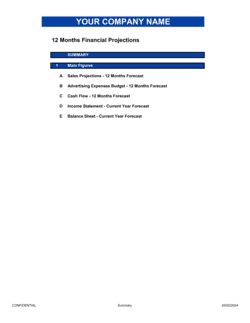
12-month revenue and expense forecastingFinancial Projections (12 Months)
Raising equity capital and communicating financial strategy to investorsBusiness Plan
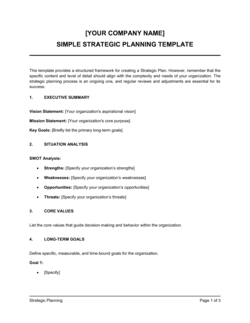
Long-range strategic planning across all business functionsStrategic Planning Template
Tracking ongoing financial performance against targetsFinancial Report
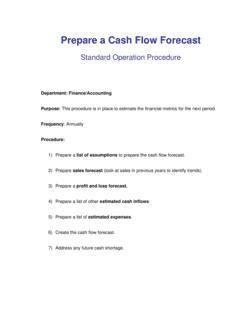
Managing and forecasting cash flow over the next 12 monthsCash Flow Forecast
Planning capital expenditure for assets and infrastructureCapital Expenditure Budget

Common mistakes to avoid

❌ No link between financial targets and operational assumptions

Why it matters: A revenue target with no supporting assumptions cannot be defended in a board meeting or investor review β€” and cannot be used to hold teams accountable when performance lags.

Fix: For each financial target, write one line stating the assumption that drives it: number of customers, average deal size, churn rate, or unit volume.

❌ Treating the strategy as a static annual document

Why it matters: A finance strategy written in January and reviewed the following December cannot course-correct when market conditions shift mid-year, wasting months of misdirected spending.

Fix: Schedule a quarterly review cadence with a formal comparison of actuals to targets and a documented decision on whether assumptions need updating.

❌ Omitting downside scenario actions

Why it matters: A downside scenario that describes a bad outcome but prescribes no response is a risk list, not a plan β€” the team has no pre-agreed playbook and debates options while cash drains.

Fix: For each downside scenario, list at least three specific actions with the trigger metric and timeline that activates each one.

❌ Setting more than 10 KPIs without prioritization

Why it matters: A 15-metric dashboard with no hierarchy means all metrics are equal β€” reporting becomes noise, and the signal that action is needed arrives too late.

Fix: Designate three to five primary KPIs that drive all executive decisions, and relegate the rest to a supporting dashboard reviewed at the operational level.

❌ Ignoring covenant obligations on existing debt

Why it matters: A covenant breach β€” triggered by missing a debt-service coverage ratio or leverage threshold β€” can freeze discretionary spending, trigger cross-default clauses, and require immediate repayment.

Fix: List every covenant threshold in the funding section and include them as monitored metrics in the KPI dashboard.

❌ Presenting the document without a current financial position baseline

Why it matters: A strategy built on outdated or estimated figures will produce targets that are either too easy or impossible β€” both destroy credibility with boards and investors.

Fix: Require a sign-off from the finance team that all baseline figures in the Current Financial Position section reflect the latest closed management accounts before distributing the document.

The 10 key sections, explained

Executive Summary

Current Financial Position

Financial Goals and Targets

Revenue Strategy

Capital Allocation Plan

Funding and Capital Structure

Cost Management Framework

Key Financial Metrics and KPIs

Financial Risk Management

Scenario Analysis and Contingency Plan

How to fill it out

  1. 1

    Pull your current financial position data

    Gather the most recent management accounts β€” trailing 12-month P&L, current balance sheet, and cash flow statement. Enter the headline figures into the Current Financial Position section.

    πŸ’‘ Use figures no older than the prior month-end close. If management accounts lag, use the most recent bank reconciliation for the cash figure.

  2. 2

    Define specific financial goals for each year of the strategy period

    Set revenue, margin, and cash flow targets for each of the next 1–3 years. Each target should be a specific number, not a range, so performance can be unambiguously measured.

    πŸ’‘ Anchor each target to an assumption β€” e.g., revenue target assumes [X] new customers at $[Y] ACV. Assumptions without targets are wishes; targets without assumptions are guesses.

  3. 3

    Map your revenue strategy by stream

    List each revenue stream, its current contribution, and its projected growth rate. Identify which streams you will invest in, maintain, or wind down during the strategy period.

    πŸ’‘ Sort revenue streams by gross margin percentage, not absolute revenue. A high-volume, low-margin stream may be consuming resources that a smaller, higher-margin stream needs.

  4. 4

    Allocate capital across spending buckets

    Divide available capital into operations, growth investment, debt service, and contingency. Express each as both a percentage and a dollar amount so the allocation is easy to audit.

    πŸ’‘ Keep a minimum of 10–15% of available capital in contingency unless you have a committed credit facility β€” unexpected costs arrive faster than new funding does.

  5. 5

    Document your funding and capital structure

    Record your current debt-to-equity mix, any outstanding facility terms, and planned funding events. Note covenant obligations with their specific thresholds.

    πŸ’‘ If you have a revolving credit facility, note the draw conditions and any MAC (material adverse change) clauses β€” these can block access exactly when you need it most.

  6. 6

    Set cost targets by department and define the variance review process

    Assign a cost ratio target to each major spending category and name the person responsible for reviewing monthly actuals against budget.

    πŸ’‘ A cost target without a named owner and a review date is aspirational. Add both before finalizing the section.

  7. 7

    Select 6–10 KPIs and assign reporting ownership

    Choose the financial metrics that most directly signal whether the strategy is on track. For each, record the baseline, the target, and who is responsible for reporting it monthly.

    πŸ’‘ If you cannot get the data for a KPI within 5 business days of month-end close, it is too lagging to be useful β€” replace it with a leading indicator.

  8. 8

    Build the three scenarios and pre-commit to downside actions

    Model base, upside, and downside cases with specific revenue and cost assumptions for each. Write the downside response actions in full β€” freeze capex, draw credit, reduce headcount β€” and set the trigger metrics that activate each action.

    πŸ’‘ Share the downside scenario with your board or investors before the strategy is finalized. Pre-alignment on the playbook prevents delayed decision-making if the downside materializes.

Frequently asked questions

What is a finance strategy?

A finance strategy is a planning document that defines how a business will manage, allocate, and grow its financial resources over a defined period β€” typically 1–5 years. It covers revenue targets, capital allocation, funding sources, cost management priorities, key financial KPIs, and risk mitigation. Unlike a budget, which is a tactical spending plan, a finance strategy sets the principles and priorities that drive all financial decisions.

What is the difference between a finance strategy and a financial forecast?

A financial forecast is a projection of future revenue, costs, and cash flow β€” numbers in a spreadsheet. A finance strategy is the document that explains the logic behind those numbers: why certain revenue streams are prioritized, how capital will be deployed, which risks are being managed and how. The forecast is one output of the strategy, not a substitute for it.

Who should write a finance strategy?

In larger organizations, the CFO leads the process with input from the CEO, department heads, and the board. In small businesses and startups, the founder or managing director typically owns it, often with input from an accountant or financial advisor. The key requirement is access to accurate current financial data and clear alignment with the business's strategic goals.

How long should a finance strategy document be?

A well-structured finance strategy runs 8–15 pages for most small and mid-sized businesses, excluding appendices such as the detailed financial model. Longer is not better β€” a document that takes more than 30 minutes to read will not be used as a working reference. The goal is a document concise enough to be reviewed quarterly and updated annually.

How often should a finance strategy be updated?

A full update is standard at the start of each fiscal year, aligned with the annual budgeting cycle. A formal quarterly review β€” comparing actuals to targets and updating assumptions where needed β€” keeps the strategy live between annual rewrites. Major events such as a funding round, acquisition, or market disruption warrant an immediate off-cycle update.

What financial KPIs should a finance strategy track?

The most commonly tracked KPIs in a finance strategy are revenue growth rate, gross margin percentage, EBITDA margin, cash runway, CAC payback period, net revenue retention, days sales outstanding, and debt-service coverage ratio. Choose the 6–10 metrics most relevant to your business model and stage β€” a SaaS company weights NRR and CAC payback differently than a manufacturing business weights inventory turns and capex utilization.

Does a finance strategy need to be approved by the board?

For companies with a formal board of directors, the finance strategy is typically presented and approved as part of the annual board cycle, alongside the budget. For privately held businesses without a formal board, it still benefits from sign-off by the owner, the CFO or finance lead, and any external investors or lenders β€” ensuring all parties are aligned on priorities and constraints before the year begins.

Can a small business use this template, or is it only for large companies?

A finance strategy is arguably more valuable for small businesses than large ones, because small businesses have less margin for financial missteps and fewer people watching for early warning signs. The template scales down easily β€” a 10-person business may condense several sections and use simpler KPIs, but the core structure (targets, capital allocation, risk management, scenarios) applies regardless of company size.

What is the difference between a finance strategy and a business plan?

A business plan covers the full scope of a business β€” market, competition, operations, team, and financials β€” primarily as an external document for investors and lenders. A finance strategy focuses exclusively on the financial dimension and is primarily an internal management document. Companies typically produce both: the business plan to raise capital, and the finance strategy to manage the business once capital is in hand.

How this compares to alternatives

vs Annual Budget Plan

A budget is a detailed, department-level allocation of spending and revenue for a single fiscal year. A finance strategy sets the multi-year priorities, principles, and capital structure decisions that the budget must reflect. The strategy comes first and informs the budget β€” not the reverse. If your budget contradicts your finance strategy, one of them is wrong.

vs Strategic Planning Template

A strategic plan covers the full scope of the business β€” market positioning, product roadmap, talent, and operations β€” with financial implications as one component. A finance strategy focuses exclusively on financial goals, capital, cost management, and risk. Most organizations need both: the strategic plan sets direction, and the finance strategy defines the financial constraints and commitments that bound all strategic choices.

vs Financial Projections (12 Months)

Financial projections are forward-looking numerical statements β€” P&L, cash flow, balance sheet β€” for the next 12 months. A finance strategy is the narrative and decision framework that justifies those projections and governs financial decisions when actuals diverge. You need the projections as an output of the strategy, not as a replacement for it.

vs Business Plan

A business plan is an external-facing document covering market, competition, team, and financials β€” used to raise capital from investors or lenders. A finance strategy is an internal management document focused solely on financial priorities and execution. A company raising capital needs a business plan; the same company managing its finances post-raise needs a finance strategy.

Industry-specific considerations

SaaS / Technology

Emphasis on ARR growth rate, net revenue retention, CAC payback, and burn rate management as the primary financial levers.

Retail / E-commerce

Inventory financing, gross margin by SKU category, seasonal cash flow planning, and payment terms with suppliers drive the strategy.

Professional Services

Billable utilization targets, revenue per employee, client concentration risk, and working capital tied to project milestone billing.

Manufacturing

Capex planning for equipment and facilities, cost-of-goods breakdown by material and labor, and supply chain financing terms.

Healthcare / MedTech

Reimbursement cycle management, regulatory investment budgeting, and the capital structure implications of long product development timelines.

Financial Services

Regulatory capital requirements, liquidity coverage ratios, stress-testing frameworks, and the interaction between funding strategy and compliance obligations.

Template vs pro β€” what fits your needs?

PathBest forCostTime
Use the templateSmall businesses, startups, and teams building their first structured financial strategyFree1–2 weeks (15–30 hours of financial data gathering and drafting)
Template + professional reviewCompanies preparing for a funding round, board presentation, or bank financing where financial credibility is being evaluated$500–$2,000 for a CFO advisor or accountant review2–3 weeks
Custom draftedComplex multi-entity structures, regulated industries, or pre-IPO companies requiring a fully modeled, investor-grade finance strategy$5,000–$20,000 for an interim CFO or financial advisory firm engagement4–8 weeks

Glossary

Capital Allocation
The process of deciding how to distribute available financial resources across investments, operations, debt repayment, and reserves.
Working Capital
Current assets minus current liabilities β€” the liquid funds available to cover day-to-day operating needs.
EBITDA Margin
EBITDA divided by total revenue, expressed as a percentage β€” a measure of operating profitability before financing and accounting decisions.
Cost of Capital
The minimum rate of return a company must earn on its investments to satisfy its debt holders and equity investors.
Debt-to-Equity Ratio
Total liabilities divided by shareholders' equity, indicating how much of the business is financed by debt relative to owner investment.
Revenue Run Rate
Current period revenue extrapolated to an annualized figure β€” commonly used to project future revenue from a recent month or quarter.
Burn Rate
Monthly net cash outflow β€” how quickly a company is spending its cash reserves before reaching profitability or securing additional funding.
Financial Risk
The possibility that a business will be unable to meet its financial obligations or that market, credit, or liquidity conditions will reduce its value.
Capex (Capital Expenditure)
Spending on physical or intangible assets with a useful life beyond one year β€” equipment, software, property, or infrastructure.
Opex (Operating Expenditure)
Day-to-day costs required to run the business β€” salaries, rent, utilities, and software subscriptions β€” expensed in the period incurred.
Scenario Analysis
A planning technique that models financial outcomes under different sets of assumptions β€” typically a base case, an upside, and a downside.

Part of your Business Operating System

This document is one of 3,000+ business & legal templates included in Business in a Box.

  • Fill-in-the-blanks β€” ready in minutes
  • 100% customizable Word document
  • Compatible with all office suites
  • Export to PDF and share electronically

Create your document in 3 simple steps.

From template to signed document β€” all inside one Business Operating System.
1
Download or open template

Access over 3,000+ business and legal templates for any business task, project or initiative.

2
Edit and fill in the blanks with AI

Customize your ready-made business document template and save it in the cloud.

3
Save, Share, Send, Sign

Share your files and folders with your team. Create a space of seamless collaboration.

Save time, save money, and create top-quality documents.

β˜…β˜…β˜…β˜…β˜…

"Fantastic value! I'm not sure how I'd do without it. It's worth its weight in gold and paid back for itself many times."

Managing Director Β· Mall Farm
Robert Whalley
Managing Director, Mall Farm Proprietary Limited
β˜…β˜…β˜…β˜…β˜…

"I have been using Business in a Box for years. It has been the most useful source of templates I have encountered. I recommend it to anyone."

Business Owner Β· 4+ years
Dr Michael John Freestone
Business Owner
β˜…β˜…β˜…β˜…β˜…

"It has been a life saver so many times I have lost count. Business in a Box has saved me so much time and as you know, time is money."

Owner Β· Upstate Web
David G. Moore Jr.
Owner, Upstate Web

Run your business with a system β€” not scattered tools

Stop downloading documents. Start operating with clarity. Business in a Box gives you the Business Operating System used by over 250,000 companies worldwide to structure, run, and grow their business.

Free Forever PlanΒ Β·Β No credit card required