Notice of Disputed Account Template

Free Word download β€’ Edit online β€’ Save & share with Drive β€’ Export to PDF

1 pageβ€’15–25 min to fillβ€’Difficulty: Standard
Learn more ↓
FreeNotice of Disputed Account Template

At a glance

What it is
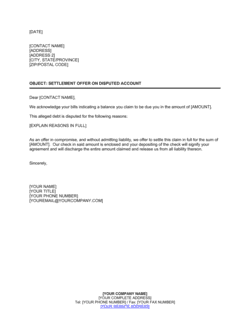
A Notice of Disputed Account is a formal written letter one party sends to another β€” typically a vendor, creditor, or service provider β€” to challenge an incorrect charge, disputed balance, or billing error on an account. This free Word download gives you a professionally structured notice you can edit online and export as PDF, creating a documented paper trail from the moment you raise a dispute.
When you need it
Use it whenever you receive an invoice, statement, or account balance that contains an error, unauthorized charge, or amount you believe is incorrect. Sending a formal written notice β€” rather than a phone call or email β€” starts a documented dispute record that protects you if the matter escalates.
What's inside
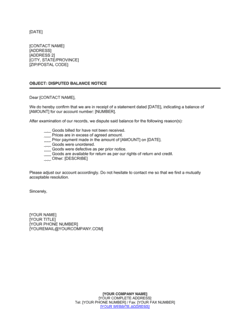
Sender and recipient identification, the account or invoice reference number, a clear statement of the disputed amount, a concise explanation of the basis for the dispute, a request for correction or supporting documentation, and a response deadline.

What is a Notice of Disputed Account?

A Notice of Disputed Account is a formal written letter a business or individual sends to a vendor, creditor, or service provider to challenge an incorrect charge, billing error, or account balance discrepancy. It identifies the specific amount in dispute, cites the account and invoice references, explains the factual basis for the challenge, and requests a defined corrective action β€” typically a corrected invoice or credit note β€” by a stated deadline. Unlike a phone call or informal email, a written notice creates a verifiable paper trail that documents when the dispute was raised, on what grounds, and what resolution was requested.

Why You Need This Document

Without a formal written dispute notice, you have no documented record of when you raised a billing error or on what basis β€” leaving you vulnerable if the vendor later claims the charge was never contested, adds late fees to the disputed amount, or refers the balance to a collection agency. Many vendor contracts and credit agreements require disputes to be filed within 30 to 60 days of the statement date; a missing paper trail can be treated as acceptance of the charge. A clear, professionally structured notice also signals to the recipient that the dispute is serious and documented, which consistently produces faster resolution than a verbal complaint. This template gives you a ready-to-send notice in under 30 minutes, with the structure and language needed to protect your position from the moment an error appears on your account.

Which variant fits your situation?

If your situation is…Use this template
Disputing a specific charge on a vendor invoiceNotice of Disputed Account
Formally demanding repayment of an overcharged amount already paidDemand for Refund Letter
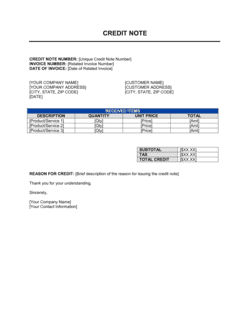
Requesting a credit note to offset an overbilled invoiceCredit Note
Escalating an unresolved dispute to a formal debt collection noticeCollection Letter
Disputing a charge and simultaneously placing payment on holdLetter of Withholding Payment
Challenging an account balance carried into a new statement periodAccount Statement Dispute Letter
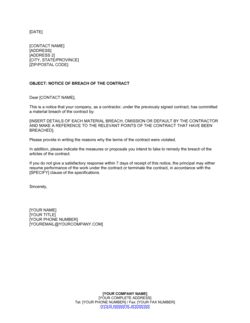
Notifying a supplier of a contract pricing discrepancyNotice of Contract Breach

Common mistakes to avoid

❌ Disputing verbally before sending a written notice

Why it matters: A phone call or informal email creates no verifiable paper trail. If the dispute is later denied, you have no documented record of when you raised it or on what grounds.

Fix: Always follow up any verbal dispute with a formal written notice sent on the same day, citing the account reference and the basis for the dispute.

❌ Withholding payment on the entire invoice when only one line item is disputed

Why it matters: Withholding the full amount can trigger late fees, damage your credit terms with the supplier, or result in account suspension β€” even if your underlying dispute is valid.

Fix: Pay the undisputed portion on time and clearly state in the notice which specific amount you are withholding and why.

❌ Missing the contractual or statutory dispute window

Why it matters: Many vendor agreements and credit card contracts require disputes to be raised within 30 to 60 days of the statement date. Sending the notice late can waive your right to contest the charge.

Fix: Review your vendor agreement for dispute-filing deadlines the moment you identify an error, and send the notice within that window regardless of whether the issue is fully resolved.

❌ Failing to include a specific response deadline

Why it matters: Without a deadline, the recipient has no urgency to respond. Disputes without a stated deadline routinely remain unresolved for 60–90 days while both parties wait for the other to act.

Fix: State a specific calendar date β€” typically 10 to 15 business days from the notice date β€” by which you need a response, and state what you will do if no response is received.

The 9 key clauses, explained

Sender and recipient identification

In plain language: Opens the letter with the sender's full name or business name and contact information, the recipient's name, title, and address, and the date of issue.

Sample language
[SENDER BUSINESS NAME] | [ADDRESS] | [CITY, STATE ZIP] | [DATE] | To: [RECIPIENT NAME], [TITLE] | [COMPANY NAME] | [ADDRESS]

Common mistake: Addressing the letter to a general department (e.g., 'Billing Department') without naming a specific contact. Letters without a named recipient are more easily deprioritized or lost in routing.

Subject line with account reference

In plain language: A concise subject line identifying the document as a formal dispute and citing the account or invoice number so the recipient can pull the correct record immediately.

Sample language
Re: Notice of Disputed Account β€” Account No. [ACCOUNT NUMBER] / Invoice No. [INVOICE NUMBER] dated [DATE]

Common mistake: Omitting the account or invoice number from the subject line. Without it, the recipient must search their system before they can act, adding days to resolution time.

Opening statement of dispute

In plain language: A direct first paragraph stating that the sender is formally disputing a charge or balance, naming the amount and the document it appears on.

Sample language
We are writing to formally notify you that we dispute the charge of $[AMOUNT] appearing on Invoice No. [INVOICE NUMBER] dated [DATE], which we received on [RECEIVED DATE].

Common mistake: Opening with background context before stating the dispute. Recipients process dozens of letters β€” the dispute amount and reference should appear in the first two lines.

Basis for the dispute

In plain language: A concise explanation of why the charge is incorrect β€” e.g., the amount exceeds the contract price, the goods were not delivered, the service was not performed, or a payment was already made.

Sample language
The charge is disputed on the following grounds: the unit price of $[BILLED PRICE] exceeds the contracted rate of $[CONTRACT PRICE] per [UNIT] as set out in Purchase Order No. [PO NUMBER] dated [DATE].

Common mistake: Providing a vague reason such as 'the amount is incorrect.' Without a specific basis, the recipient cannot investigate and resolve the dispute efficiently.

Reference to supporting documentation

In plain language: Directs the recipient to attached documents β€” purchase orders, contracts, prior payment confirmations, or delivery records β€” that support the sender's position.

Sample language
Please refer to the enclosed documents: (a) Purchase Order No. [PO NUMBER], (b) signed Delivery Receipt dated [DATE], and (c) our prior payment confirmation of $[AMOUNT] dated [DATE].

Common mistake: Referencing documents in the body but forgetting to attach them. An enclosure list at the bottom of the letter prevents this and creates a checklist the sender can verify before sending.

Amount accepted as undisputed

In plain language: Where applicable, states the portion of the invoice or account balance the sender accepts as correct and intends to pay, isolating exactly what is in dispute.

Sample language
We acknowledge and accept the undisputed balance of $[UNDISPUTED AMOUNT] and will remit payment by [DATE], pending resolution of the disputed amount of $[DISPUTED AMOUNT].

Common mistake: Withholding the entire invoice when only part of it is disputed. Withholding undisputed amounts can trigger late fees or damage the supplier relationship unnecessarily.

Request for correction or response

In plain language: Asks the recipient to take a specific action β€” issue a corrected invoice, provide documentation to justify the charge, or issue a credit note β€” by a stated deadline.

Sample language
We respectfully request that you issue a corrected invoice reflecting the contracted amount of $[CORRECT AMOUNT], or provide written documentation justifying the billed amount, no later than [RESPONSE DATE].

Common mistake: Not specifying what action is requested. A letter that disputes a charge but does not ask for a specific resolution leaves the recipient unsure how to respond.

Consequences of non-response

In plain language: States what the sender will do if the dispute is not acknowledged or resolved by the deadline β€” such as withholding payment of the disputed amount or escalating the matter.

Sample language
If we do not receive a response by [RESPONSE DATE], we will withhold payment of the disputed amount of $[AMOUNT] and reserve the right to pursue further remedies available to us.

Common mistake: Threatening disproportionate action (e.g., immediate legal action) for a first dispute notice. Escalating language in an initial letter can damage the business relationship before a simple billing error has had a chance to be corrected.

Closing and contact information

In plain language: A professional closing paragraph inviting the recipient to contact the sender to discuss the matter, followed by a signature block with name, title, and direct contact details.

Sample language
Please do not hesitate to contact [NAME] at [PHONE] or [EMAIL] if you have any questions regarding this notice. We look forward to your prompt response. Sincerely, [AUTHORIZED SIGNATORY NAME] | [TITLE] | [COMPANY NAME]

Common mistake: Closing with a generic sign-off and no direct contact. If the recipient has a question or needs clarification, they will call the main number, adding delay. A direct contact name and number speeds resolution.

How to fill it out

  1. 1

    Identify the account and gather documentation

    Locate the invoice or account statement containing the disputed charge. Gather the original purchase order, contract, delivery records, or prior payment confirmation that supports your position.

    πŸ’‘ Organize documents chronologically before writing the letter β€” the timeline of the transaction is the core of your argument.

  2. 2

    Enter sender and recipient details

    Fill in your business name, address, and contact information, then add the recipient's full name, title, company name, and address. Use the accounts payable contact if known.

    πŸ’‘ Call the vendor's AP line to confirm the correct contact name and email before sending β€” misdirected dispute letters are a leading cause of delayed resolution.

  3. 3

    Complete the subject line with account references

    Add the account number and invoice number to the subject line exactly as they appear on the billing document. Include the invoice date.

    πŸ’‘ Copy and paste reference numbers directly from the invoice to avoid transcription errors that slow the recipient's lookup.

  4. 4

    State the disputed amount and the basis for dispute

    In the opening paragraph, write the exact dollar amount disputed and which document it appears on. In the next paragraph, state the specific reason β€” incorrect rate, duplicate charge, goods not received, or prior payment already made.

    πŸ’‘ Be factual and neutral in tone. Accusations of fraud or bad faith in a first notice can escalate a simple billing error into a relationship dispute.

  5. 5

    Specify the undisputed balance and payment intention

    If only part of the invoice is in dispute, state the undisputed amount and confirm you will pay it by the normal due date. This shows good faith and avoids triggering late-payment penalties on the valid portion.

    πŸ’‘ Pay the undisputed amount on time even while the dispute is pending β€” it keeps your account in good standing and demonstrates you are disputing in good faith.

  6. 6

    Set a response deadline and request a specific action

    State what you need β€” a corrected invoice, a credit note, or supporting documentation β€” and give the recipient a specific date to respond. Ten to fifteen business days is a reasonable standard.

    πŸ’‘ Align the response deadline with your own payment due date so you have time to act on the response before your account goes overdue.

  7. 7

    Attach supporting documents and send

    Attach copies (not originals) of every document referenced in the letter. Send by email with read receipt or by certified mail to create a delivery record.

    πŸ’‘ Keep a copy of the complete letter and all attachments in your accounts payable file β€” if the dispute escalates, this package is your evidence.

Frequently asked questions

What is a notice of disputed account?

A notice of disputed account is a formal written letter sent to a vendor, creditor, or service provider to challenge a charge, balance, or invoice the sender believes is incorrect. It identifies the account and disputed amount, explains the basis for the dispute, and requests a specific corrective action β€” such as a corrected invoice or credit note β€” by a stated deadline. It creates a documented record from the moment the dispute is raised.

When should I send a notice of disputed account?

Send it as soon as you identify a billing discrepancy β€” typically within 5 business days of receiving the invoice or statement. Many vendor contracts and credit agreements require disputes to be raised within 30 to 60 days of the statement date. Waiting too long can waive your right to contest the charge, so acting quickly protects your position.

Does a notice of disputed account need to be signed?

No formal signature is legally required for a dispute notice in most business contexts. However, including the name and title of an authorized representative adds credibility and ensures the recipient knows who to contact. For high-value disputes, having a manager or owner sign the letter demonstrates that the dispute has been reviewed at an appropriate level.

Can I withhold payment while a dispute is pending?

You can typically withhold payment on the disputed portion of an invoice while the dispute is under review, but you should pay the undisputed balance on time. Review your vendor agreement for specific terms β€” some contracts require you to pay first and seek a credit note afterward. In all cases, clearly state in the notice which amount you are withholding and the reason.

What documents should I attach to a notice of disputed account?

Attach copies of the documents that support your position β€” the original purchase order, the signed contract or agreed price list, delivery receipts confirming what was actually received, and any prior payment confirmations showing an amount already paid. Reference each attachment by name in the body of the letter and include an enclosure list at the bottom.

What is the difference between a notice of disputed account and a demand letter?

A notice of disputed account challenges a charge the sender believes is incorrect and requests a correction or explanation. A demand letter is a later-stage document that asserts a legal claim and demands payment or action under threat of formal proceedings. A dispute notice is typically the first step in resolving a billing disagreement; a demand letter is used when that process has failed.

How long does the recipient have to respond?

There is no universal legal requirement, but 10 to 15 business days is a common and reasonable standard for most commercial disputes. State the deadline explicitly in the notice. If the dispute involves a credit card or consumer account, federal regulations such as the US Fair Credit Billing Act impose specific timelines on creditors β€” typically 30 days to acknowledge and 90 days to resolve.

What should I do if the recipient ignores the notice?

If the deadline passes with no response, send a follow-up notice referencing the original letter and the missed deadline. If the dispute involves a significant amount and the vendor continues to be unresponsive, you may escalate to a formal demand letter, engage a mediator, or β€” as a last resort β€” pursue the matter through small claims court or arbitration as provided in your vendor agreement.

How this compares to alternatives

vs Demand Letter

A demand letter is a late-stage escalation document asserting a legal claim and threatening formal proceedings if the recipient does not act. A notice of disputed account is an earlier, less adversarial document focused on correcting a billing error through normal business channels. Send the dispute notice first; escalate to a demand letter only if it is ignored.

vs Credit Note

A credit note is issued by the supplier to reduce or cancel an invoice β€” it is the resolution document, not the dispute document. A notice of disputed account is what the buyer sends to request that credit note. You cannot issue a credit note yourself; you can only request one by sending a formal dispute notice.

vs Letter of Withholding Payment

A letter of withholding payment notifies a supplier that you are suspending payment on an invoice, often citing non-delivery or defective goods. A notice of disputed account challenges the accuracy of a charge without necessarily stopping all payment. Where only part of an invoice is incorrect, a dispute notice is more precise β€” it isolates the contested amount while confirming you will pay the rest.

vs Notice of Breach of Contract

A notice of breach of contract alleges that the other party has violated a contractual obligation and typically demands cure or termination. A notice of disputed account is narrower β€” it challenges a specific charge or balance, not the contract as a whole. If recurring billing errors signal a systemic failure to honor agreed pricing, a breach notice may be the appropriate next step after the dispute process fails.

Industry-specific considerations

Professional Services

Disputes typically involve billing rates that exceed the engagement letter, hours billed for work not in scope, or duplicate invoices across billing periods.

Construction and Trades

Change-order disputes, materials billed at a higher rate than the subcontract, and charges for work that failed inspection are common triggering events.

Retail and Wholesale

Supplier invoices that reflect a list price rather than the negotiated volume rate, or quantities billed in excess of the goods actually received, are frequent dispute scenarios.

Technology / SaaS

Billing disputes often arise from seat-count overcharges, auto-renewal charges the customer did not authorize, or usage-based fees that exceed the agreed cap.

Template vs pro β€” what fits your needs?

PathBest forCostTime
Use the templateBusinesses and individuals disputing standard billing errors, overcharges, or duplicate invoices with vendors or service providersFree15–30 minutes
Template + professional reviewDisputes involving amounts above $10,000, complex contract pricing terms, or accounts with an ongoing collection threat$100–$300 for a brief review by an accountant or business advisor1–2 days
Custom draftedHigh-value commercial disputes, multi-invoice pattern disputes, or situations where arbitration or litigation is a realistic next step$300–$800 for attorney-drafted correspondence2–5 days

Glossary

Disputed Amount
The specific dollar value being challenged in the notice β€” either a line item, partial balance, or full account total the sender believes is incorrect.
Account Reference Number
The unique identifier assigned by the creditor or vendor to the account, used to match the dispute letter to the correct record in their system.
Invoice Date
The date printed on the original invoice being disputed, used to establish the timeline and calculate whether a dispute is within any contractual or statutory window.
Credit Note
A document issued by the supplier that reduces or cancels a previously issued invoice, often the resolution sought in an account dispute.
Accounts Payable
The internal function responsible for receiving, reviewing, and paying supplier invoices β€” typically the team that originates or handles a notice of disputed account.
Reconciliation
The process of comparing two sets of records β€” for example, a vendor statement against internal purchase orders β€” to identify discrepancies that may require a dispute notice.
Response Deadline
The date by which the recipient is asked to confirm correction, provide documentation, or issue a credit note β€” stated explicitly in the notice to prevent open-ended delays.
Supporting Documentation
Records attached to or referenced in the dispute notice β€” such as the original purchase order, contract, or prior payment confirmation β€” that substantiate the sender's position.
Overcharge
A billing error in which the amount charged exceeds the agreed price, contract rate, or quantity actually delivered.
Account Statement
A periodic summary issued by a creditor or vendor showing all charges, payments, and the current balance on an account β€” the starting point for identifying disputable items.

Part of your Business Operating System

This document is one of 3,000+ business & legal templates included in Business in a Box.

  • Fill-in-the-blanks β€” ready in minutes
  • 100% customizable Word document
  • Compatible with all office suites
  • Export to PDF and share electronically

Create your document in 3 simple steps.

From template to signed document β€” all inside one Business Operating System.
1
Download or open template

Access over 3,000+ business and legal templates for any business task, project or initiative.

2
Edit and fill in the blanks with AI

Customize your ready-made business document template and save it in the cloud.

3
Save, Share, Send, Sign

Share your files and folders with your team. Create a space of seamless collaboration.

Save time, save money, and create top-quality documents.

β˜…β˜…β˜…β˜…β˜…

"Fantastic value! I'm not sure how I'd do without it. It's worth its weight in gold and paid back for itself many times."

Managing Director Β· Mall Farm
Robert Whalley
Managing Director, Mall Farm Proprietary Limited
β˜…β˜…β˜…β˜…β˜…

"I have been using Business in a Box for years. It has been the most useful source of templates I have encountered. I recommend it to anyone."

Business Owner Β· 4+ years
Dr Michael John Freestone
Business Owner
β˜…β˜…β˜…β˜…β˜…

"It has been a life saver so many times I have lost count. Business in a Box has saved me so much time and as you know, time is money."

Owner Β· Upstate Web
David G. Moore Jr.
Owner, Upstate Web

Run your business with a system β€” not scattered tools

Stop downloading documents. Start operating with clarity. Business in a Box gives you the Business Operating System used by over 250,000 companies worldwide to structure, run, and grow their business.

Free Forever PlanΒ Β·Β No credit card required